Luxury in India has entered a quieter, more assured chapter. Today’s most compelling boutique hotels are no longer competing on grandeur alone; they are distinguished by proportion, material intelligence, and a deep sensitivity to place. Design here is not ornamental—it is architectural storytelling, unfolding through courtyards, corridors, landscapes, and light.
From Rajasthan’s desert strongholds to forest-suspended modernism in the Western Ghats, these hotels share a common ethos: they do not impose themselves on their surroundings; they converse with them. Together, they represent India at its most visually confident—where heritage is edited rather than embalmed, and modernity is expressive without being cold.
What follows is a considered edit of the boutique hotels defining India’s design moment now.
Amet Haveli, Udaipur
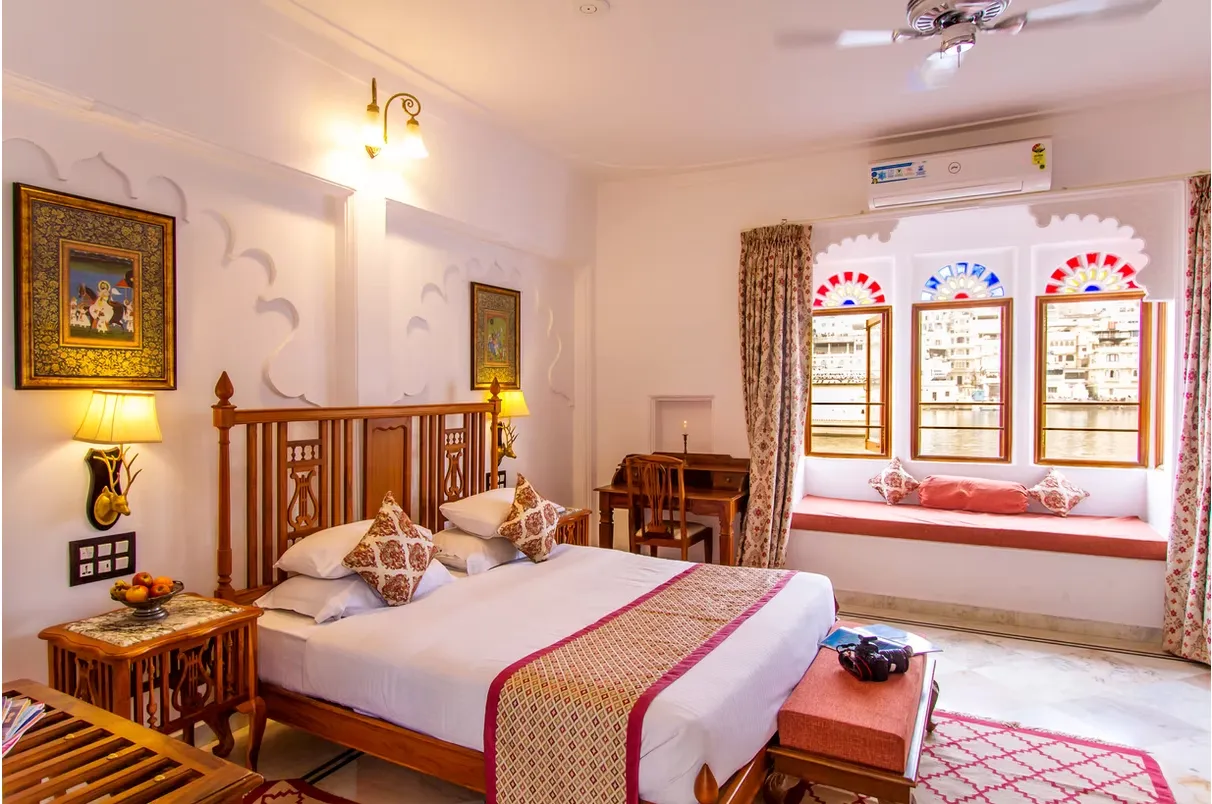
On the shores of Lake Pichola, Amet Haveli unfolds like a private home with centuries of memory. Whitewashed arches, stone stairways, and inward-looking courtyards allow the lake itself to become the dominant design element. Nothing distracts from the water, the light, or the stillness—an exercise in architectural humility that feels increasingly rare.
Villa Palladio, Jaipur
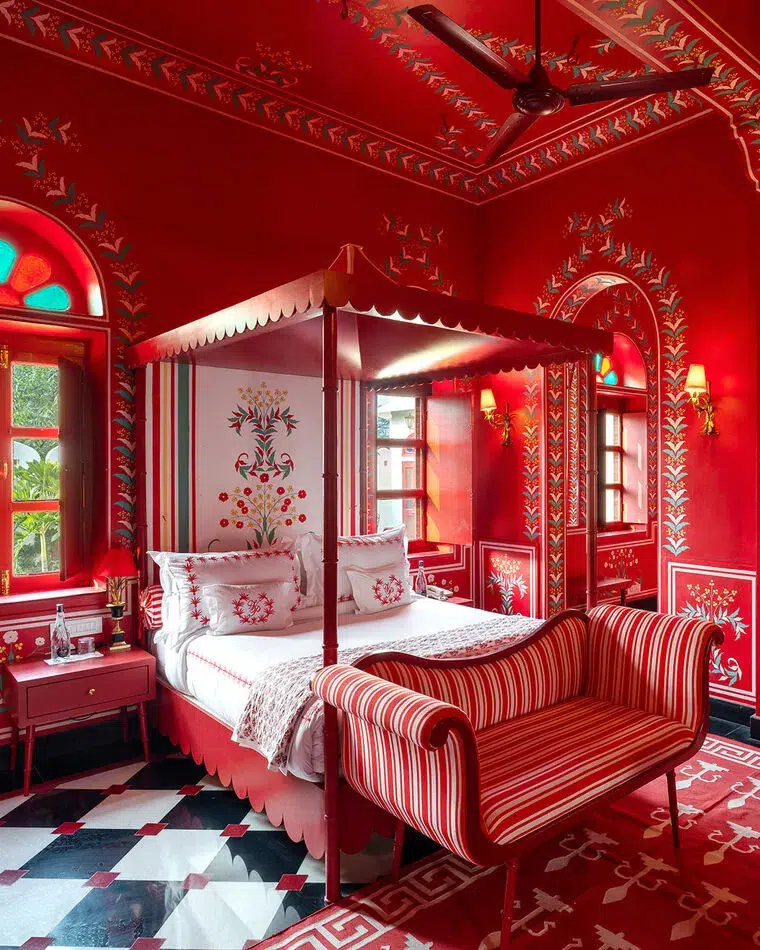
If Amet Haveli whispers, Villa Palladio sings. Saturated in lacquered reds, hand-painted stripes, and ornamental detail, the hotel is unapologetically expressive. Yet beneath the theatrical surface lies discipline—symmetry, repetition, and restraint keep the maximalism from tipping into excess.
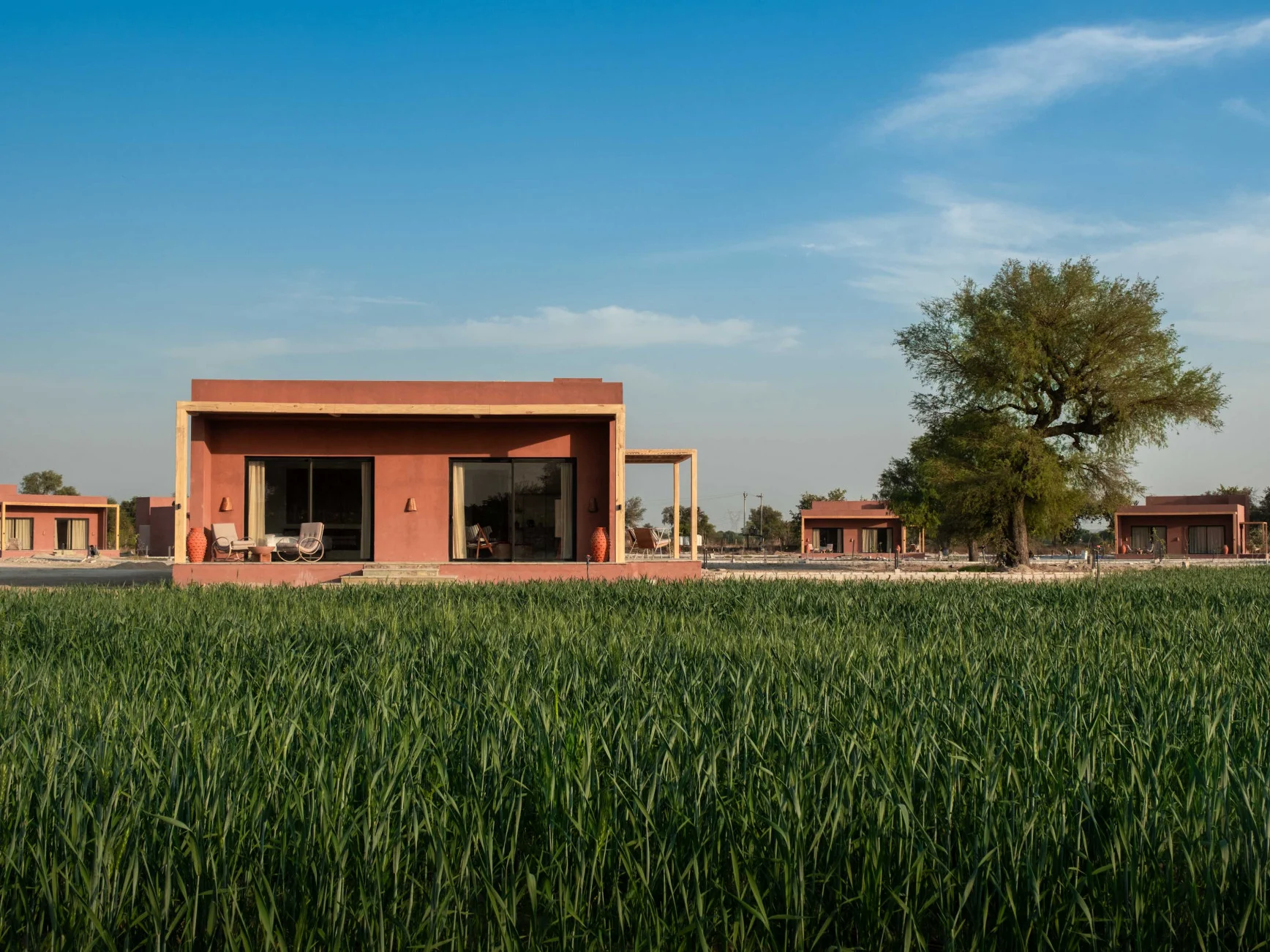
Mharo Khet, Jodhpur
Beyond the city walls, Mharo Khet offers a different idea of luxury: rural, tactile, and deeply grounded. Cottages built in natural tones blend seamlessly into farmland, while handmade details and open skies replace ornamentation. The design is slow, intentional, and rooted in daily rhythms.
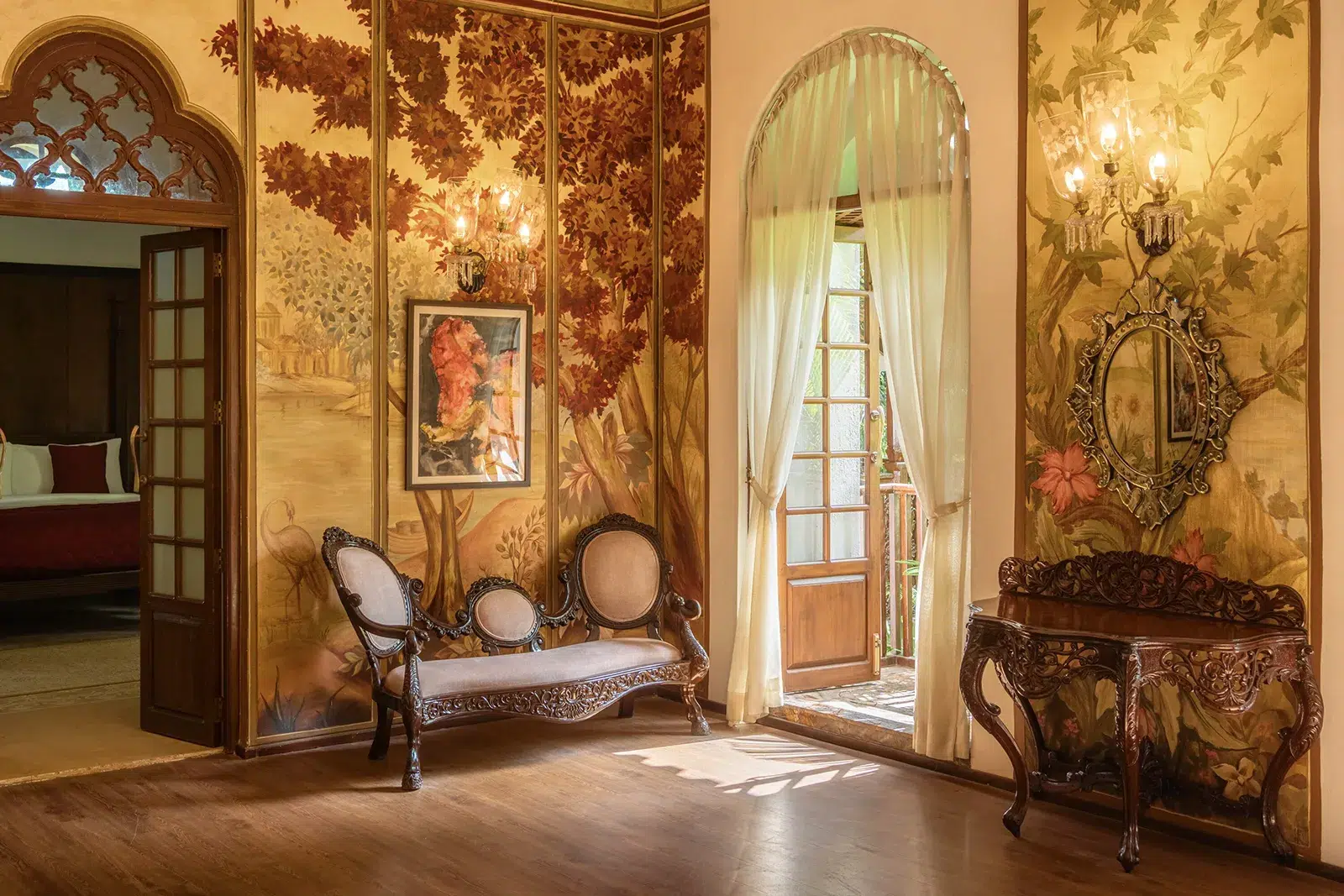
The Postcard Cuelim, South Goa
Goa is often defined by color and character; The Postcard Cuelim distinguishes itself through calm. Minimalist architecture, pale stone, and clean-lined interiors create a sense of visual breathing room. It’s a coastal retreat designed not to stimulate, but to restore.
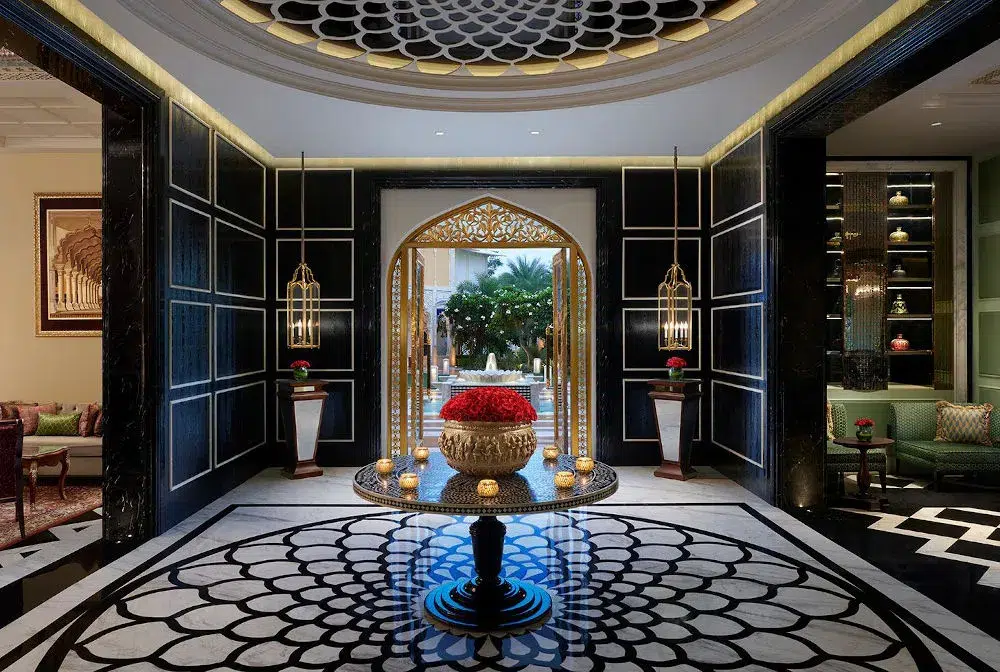
The Leela Palace Jaipur, Jaipur
While larger in scale than most boutique properties, The Leela Palace Jaipur earns its place through architectural symmetry and artisanal depth. Colonnaded courtyards, hand-painted ceilings, and art-led suites lend the property a stately elegance that feels ceremonial yet composed.
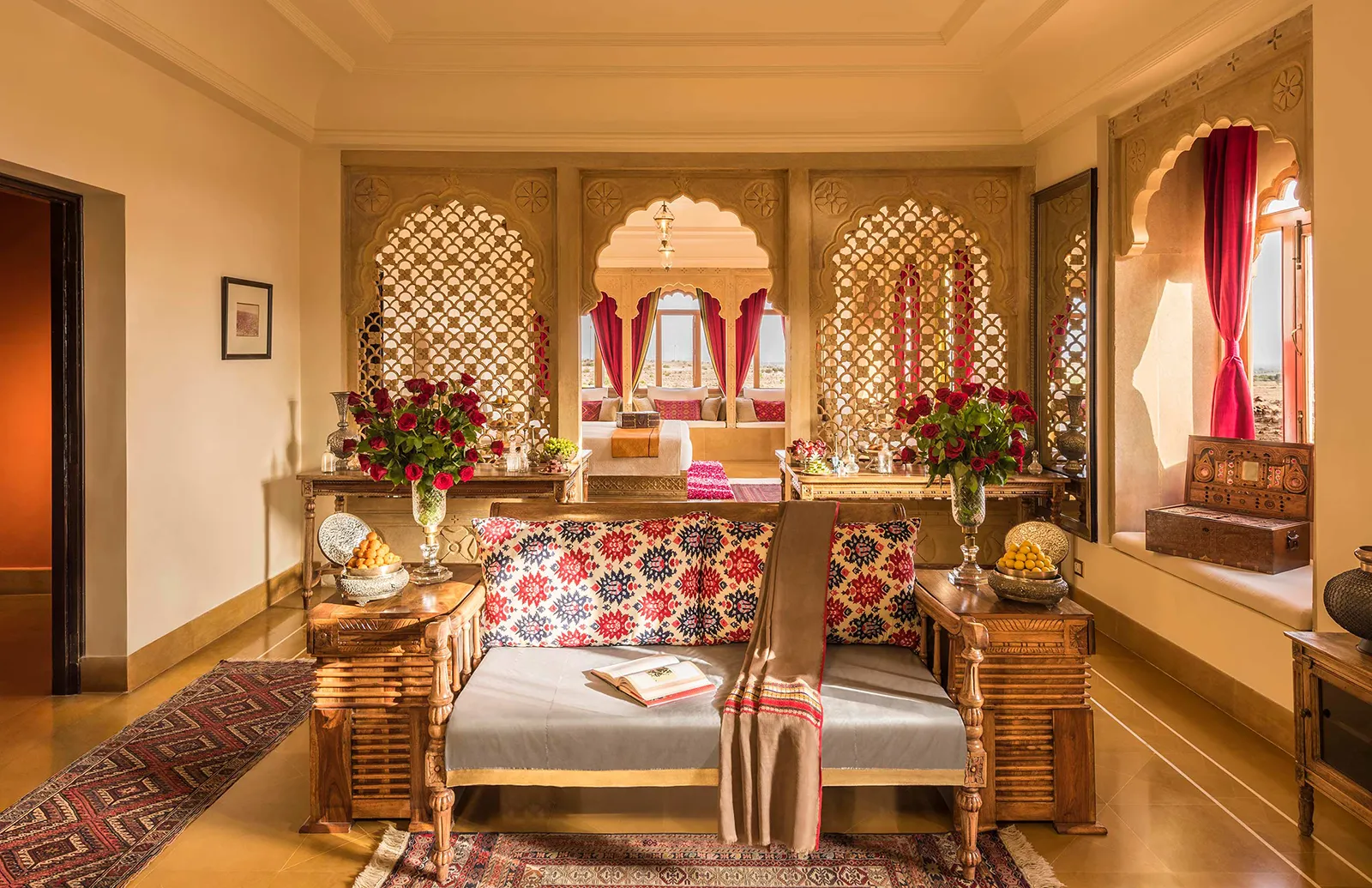
Suryagarh, Jaisalmer
Rising from the Thar Desert, Suryagarh is architecture as spectacle—monumental, cinematic, and meticulously controlled. Its fortress-like form is a contemporary interpretation rather than a replica, designed to command the horizon while respecting the silence of the desert.
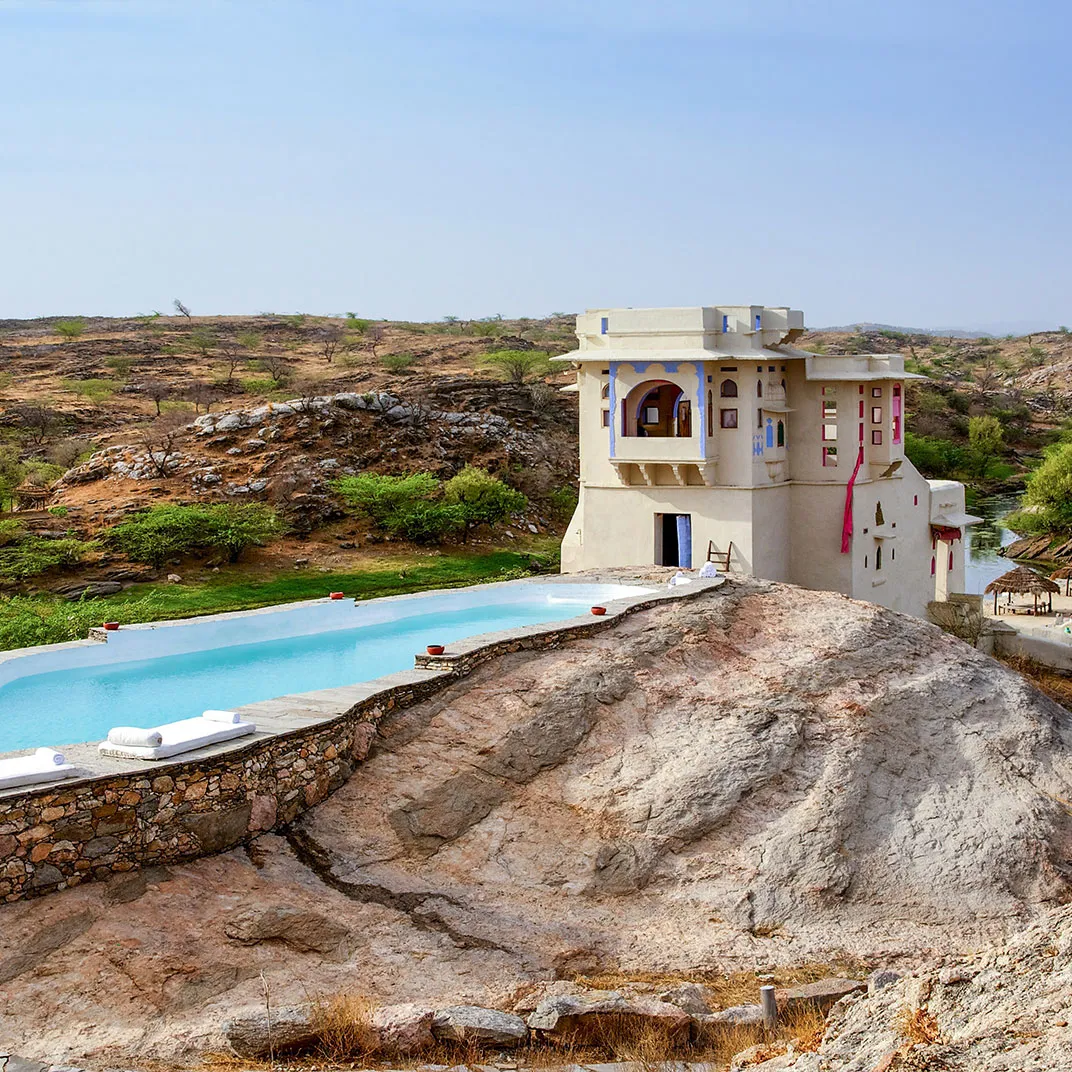
Brij Lakshman Sagar, Pali
At Brij Lakshman Sagar, sustainability is inseparable from design. Tented suites are carved into the land, materials are locally sourced, and the palette mirrors the surrounding terrain. The architecture feels inevitable—of the place, not placed upon it.
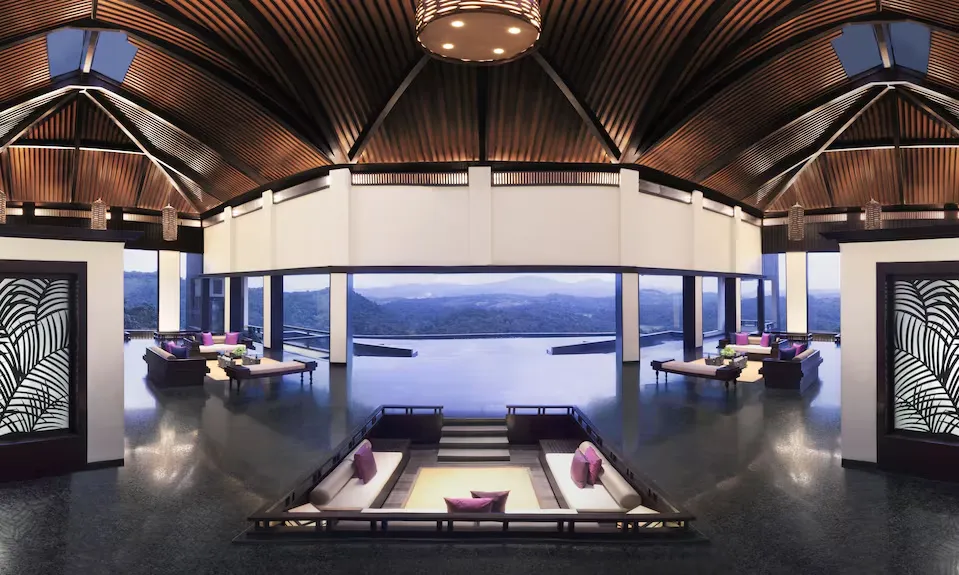
Taj Madikeri Resort & Spa, Coorg
Suspended above the rainforest canopy, Taj Madikeri is one of India’s boldest examples of contemporary nature architecture. Elevated walkways, angular forms, and expansive glazing create the sensation of floating within the forest—modern, immersive, and quietly dramatic.
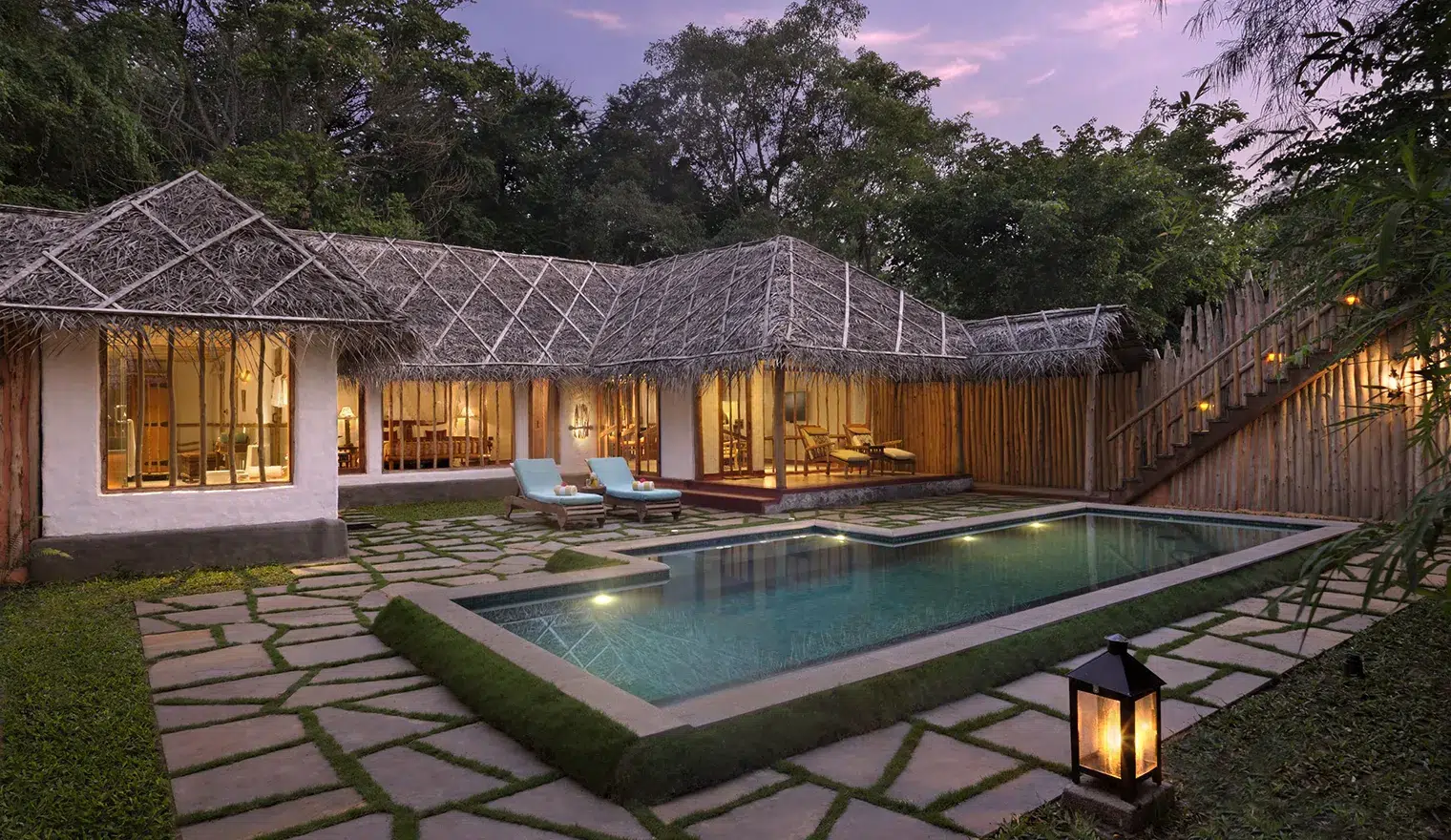
Evolve Back Kabini, Kabini
Here, architecture defers to wilderness. Earthy materials, tribal references, and river-facing geometry allow the Kabini landscape to remain the protagonist. The design is immersive without being theatrical—luxury shaped by context rather than concept.
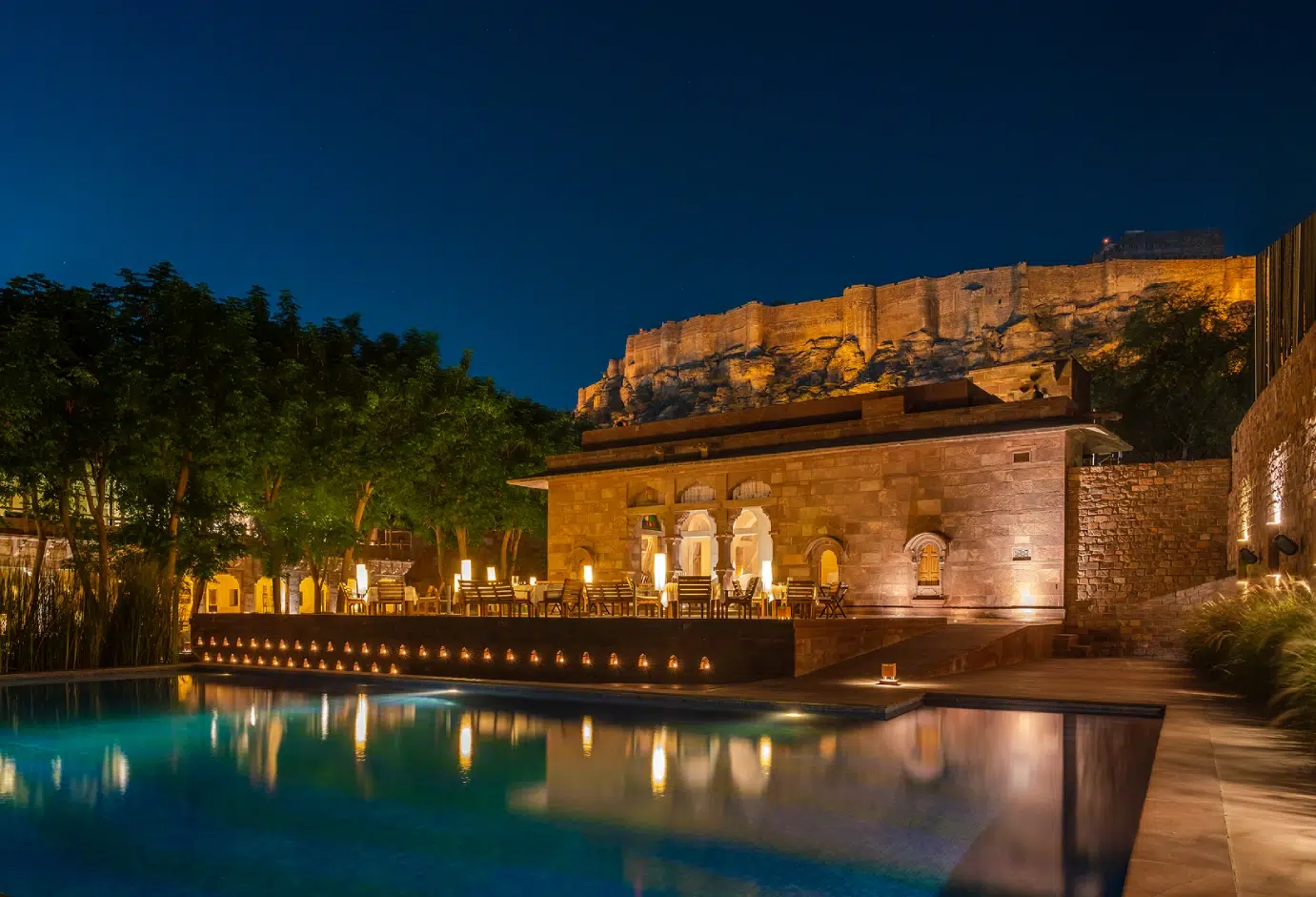
RAAS Jodhpur, Jodhpur
Set beneath the imposing Mehrangarh Fort, RAAS Jodhpur pioneered a new architectural language for Indian boutique hotels. Contemporary volumes in stone and glass stand in deliberate contrast to the ancient citadel above, creating one of the country’s most powerful visual dialogues between past and present.
A New Design Vocabulary
Taken together, these hotels reveal a clear shift in India’s luxury landscape. The most successful properties are not those that impress at first glance, but those that reward attention—spaces that reveal themselves slowly, through light, texture, and proportion.
In these boutique hotels, design is not decoration. It is identity. And it is reshaping how India is experienced—one beautifully considered stay at a time.