In the Tengger Desert, where the landscape reduces everything to its essentials, luxury is defined by how little it needs to assert itself.
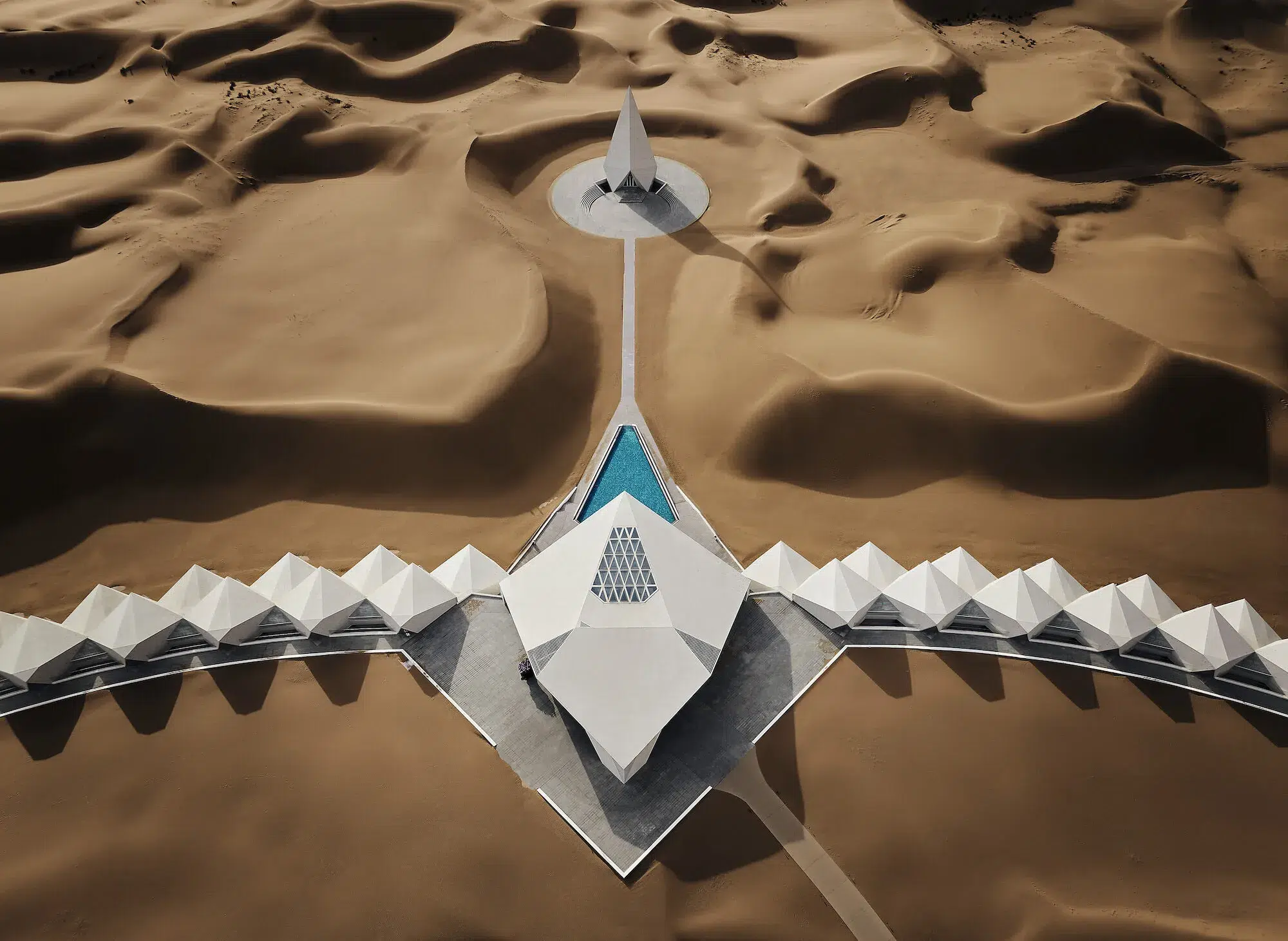
That principle finds its clearest expression at the Zhongwei Desert Diamond Hotel, a geometric composition set within the Shapotou Nature Reserve. From above, its faceted structures read as a deliberate intervention—precise, reflective, and calibrated against the vastness of the dunes.
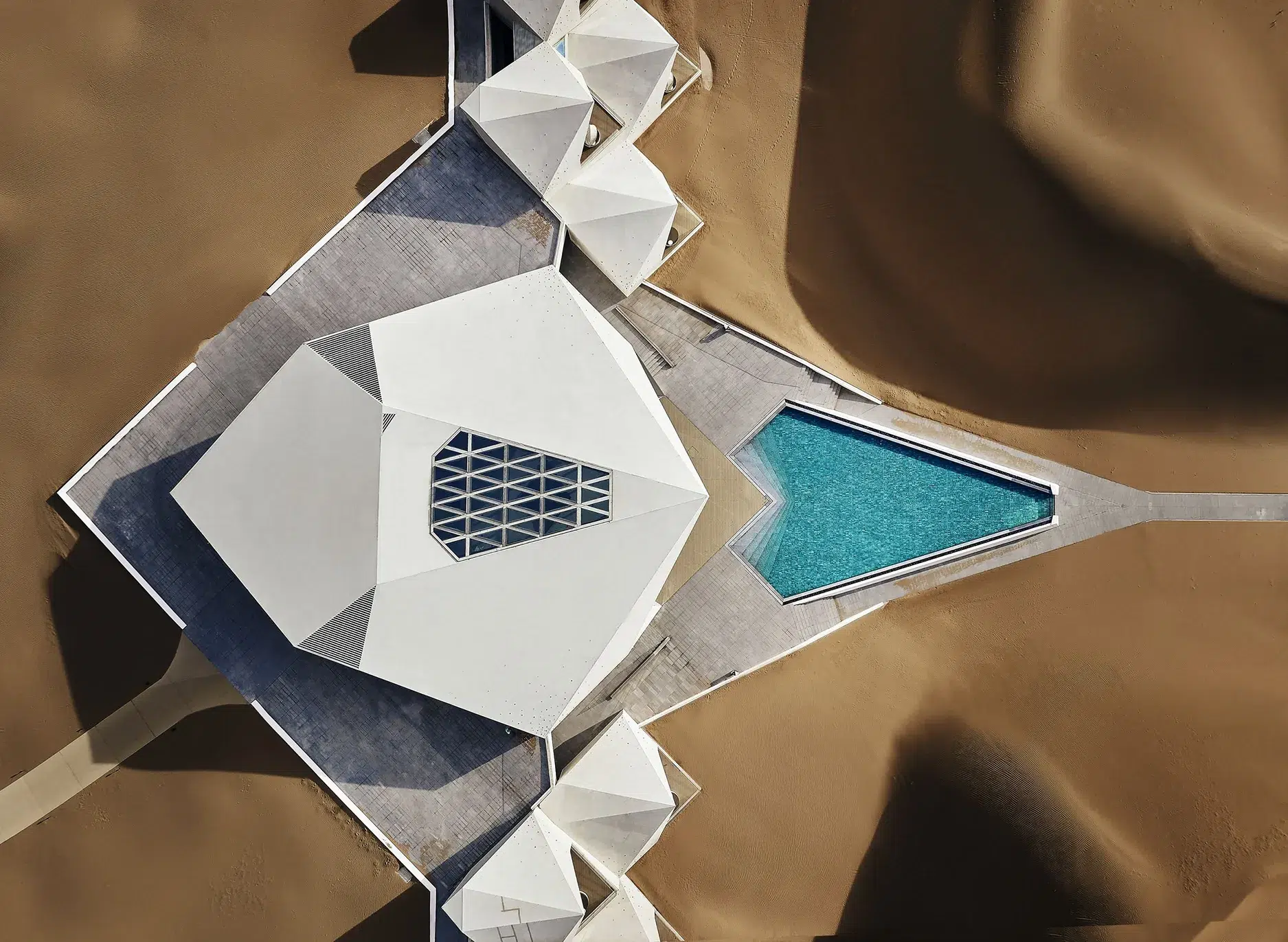
The effect is not minimalism, but control.
Outside, that control gives way to something more expansive. Private bubble pools offer an uninterrupted view of the night sky, where the absence of ambient light transforms stargazing into something immediate and immersive. Here, luxury is measured not in objects, but in access—to silence, to scale, to clarity.
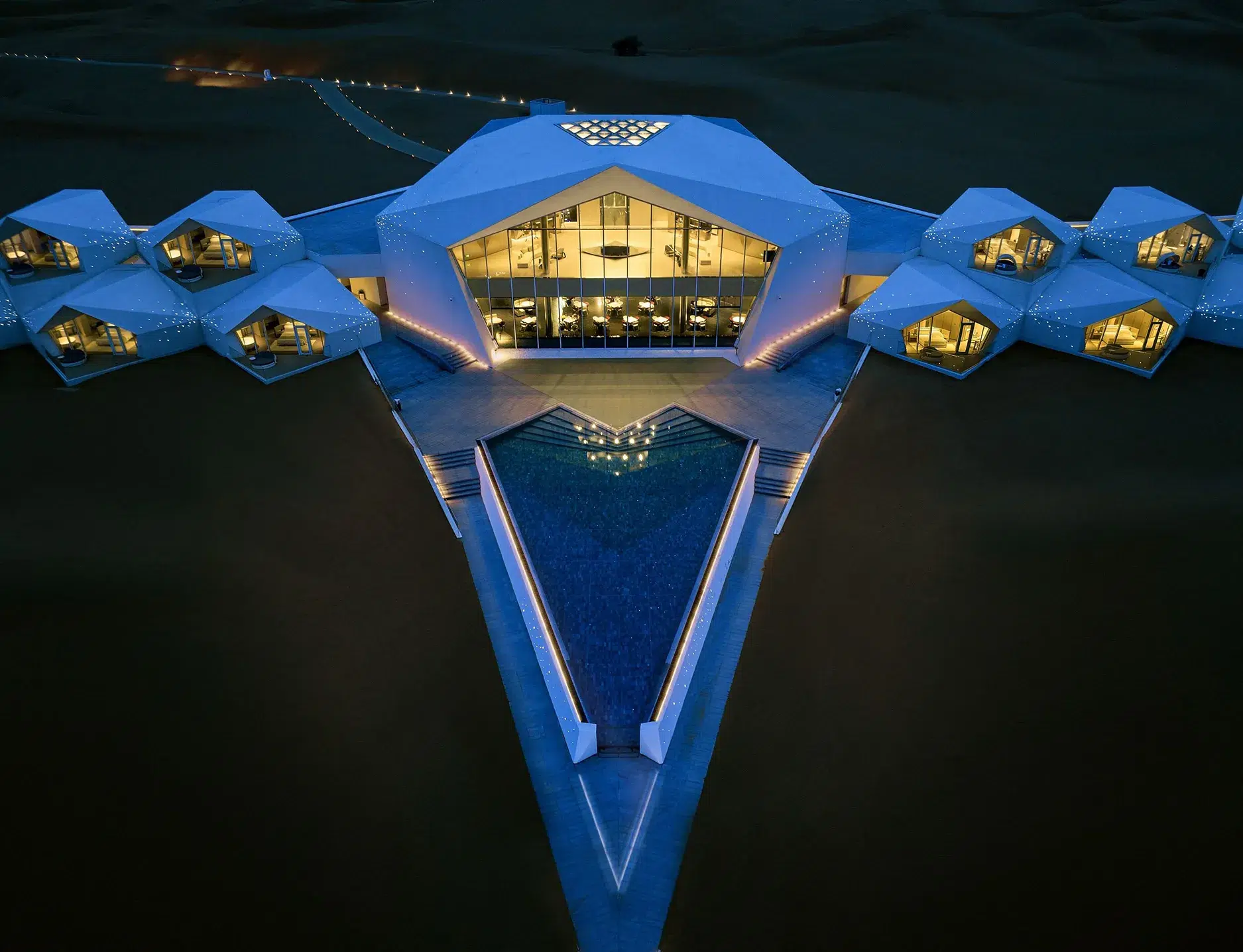
What distinguishes Zhongwei is not its isolation, but how precisely that isolation is interpreted. Rather than imposing itself on the landscape, the hotel operates in alignment with it—structured, intentional, and quietly resolved.
In a category increasingly defined by spectacle, that restraint feels increasingly rare.
And in the desert, where excess has nowhere to hide, it feels definitive.