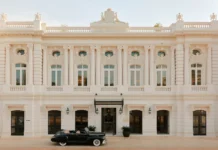
Indulgence began almost immediately upon arrival in Colombo, where I made my way to The Wallawwa, a discreet sanctuary just fifteen minutes from the airport, yet worlds removed in spirit. Colombo is home to a number of storied colonial-era hotels, each echoing the romance of another time, but The Wallawwa offers something more intimate: a refined retreat where past and present coexist with quiet harmony.
I went straight to the hotel’s Z Spa, drawn through a narrow outdoor corridor marked by a simple stripe that seemed to guide me into a garden of abundance and stillness. The atmosphere revealed itself gradually: the soft knock of bamboo in the wind, the sight of a croquet set resting casually on the lawn, the glimmer of a plunge pool just beyond. Inside, courtyards framed by tamarind tree-shaped pillars collected rainwater in sculptural gourds, while the drawing room, adorned with vintage “Fly BOAC to Ceylon” posters, played a gentle soundtrack to the experience. Set within five acres of tropical gardens, it felt less like a hotel and more like a private world.
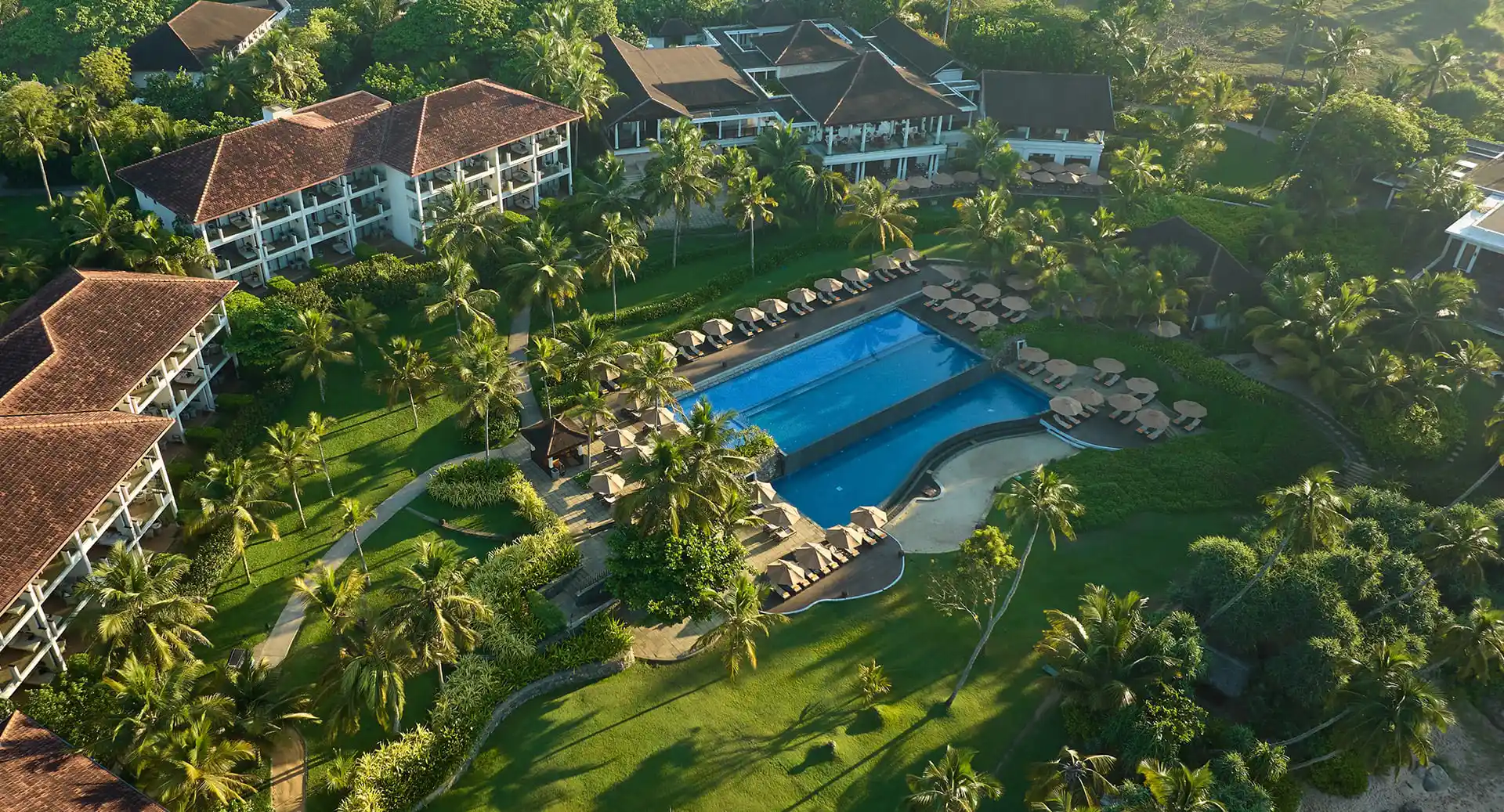
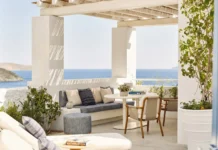
From there, I continued along the southern coastline, where the newly unveiled Anantara Peace Haven Tangalle Resort rises from a coconut plantation beside a sweeping crescent of golden sand. “Anantara,” meaning “without end” in Sanskrit, feels particularly apt here. The property is expansive yet thoughtfully composed, designed to evoke a sense of flow between spaces, between experiences, between moments of stillness and movement.
The rooms blend jac and teak wood with rattan furnishings and soft tweed textures, while subtle lighting, reminiscent of lobster baskets, casts delicate patterns across the walls at dusk. Lounge chairs, ingeniously set within elongated infinity pools, invite long, languid afternoons. It is a place of effortless tranquility, one that feels both indulgent and quietly restorative.
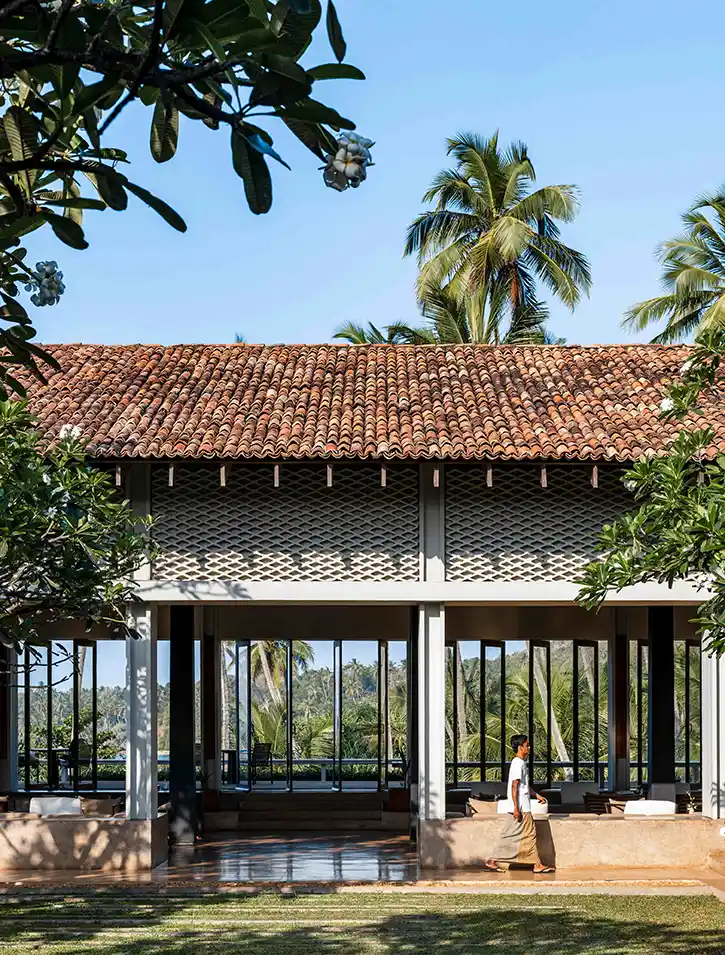
A short tuk-tuk ride away, I arrived at Amanwella, a property that embodies the understated elegance for which Aman is known. Tucked into a secluded cove, Amanwella enhances its natural surroundings rather than imposing upon them. Built in 2004 as a tribute to Geoffrey Bawa, its design reflects the principles of tropical modernism, clean lines, open spaces, and a seamless dialogue between interior and exterior.
The expansive swimming pool, rendered in a muted green, blends effortlessly with the surrounding landscape. Coconut palms provide both shade and discretion, concealing the 27 suites, each identical in layout yet entirely personal in experience. Inside, terrazzo floors in sandy tones echo the nearby beach, while timber panels slide open to dissolve the boundary between room and nature. It is a place that invites observation, rewarding those who notice the details.
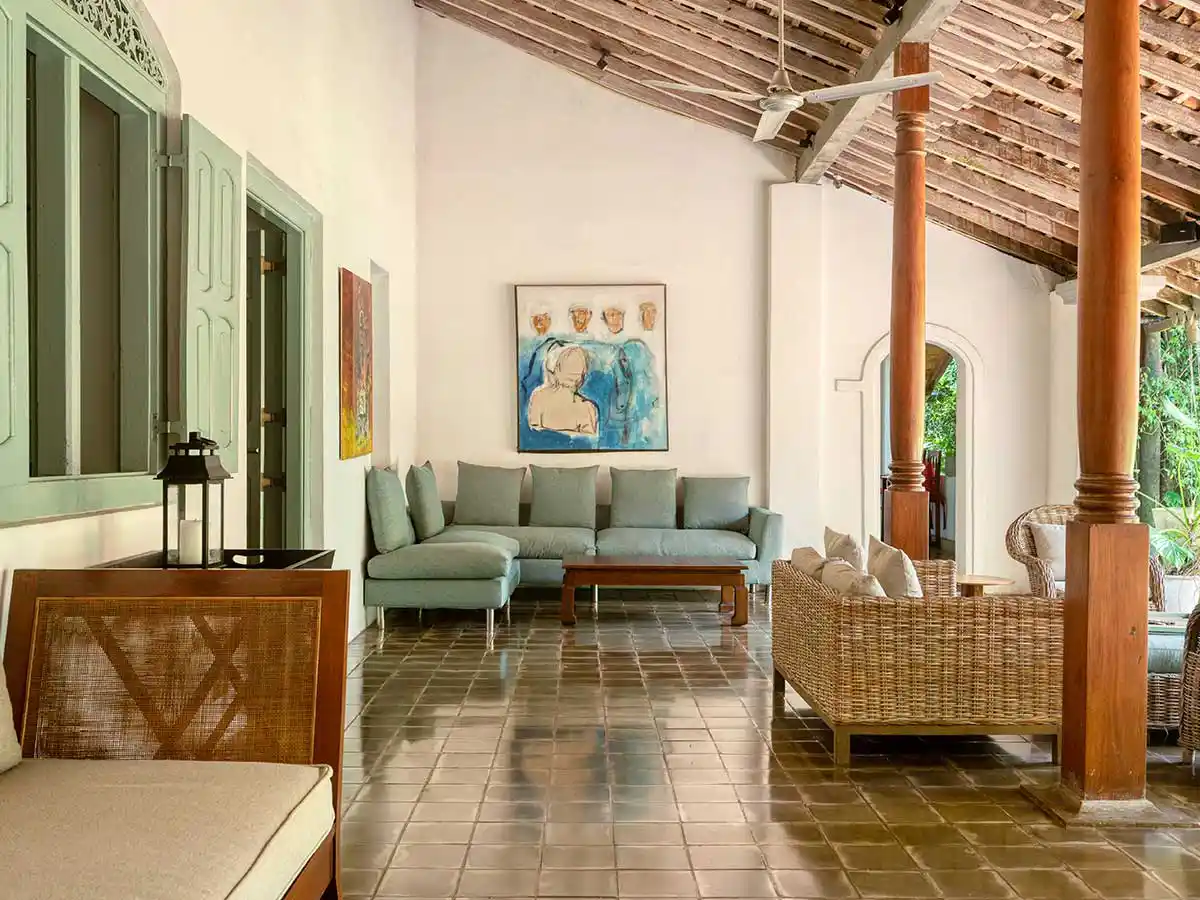
Venturing inland toward Koggala Lake, I reached Kahanda Kanda, perched atop a hill overlooking a twelve-acre tea estate. The ascent, marked by steep steps and saffron walls punctuated with glazed gourds, felt ceremonial in its design. Inside, the atmosphere shifts toward a distinctly colonial sensibility, high-beamed ceilings, scattered issues of Country Life, and a library that feels both curated and lived-in.
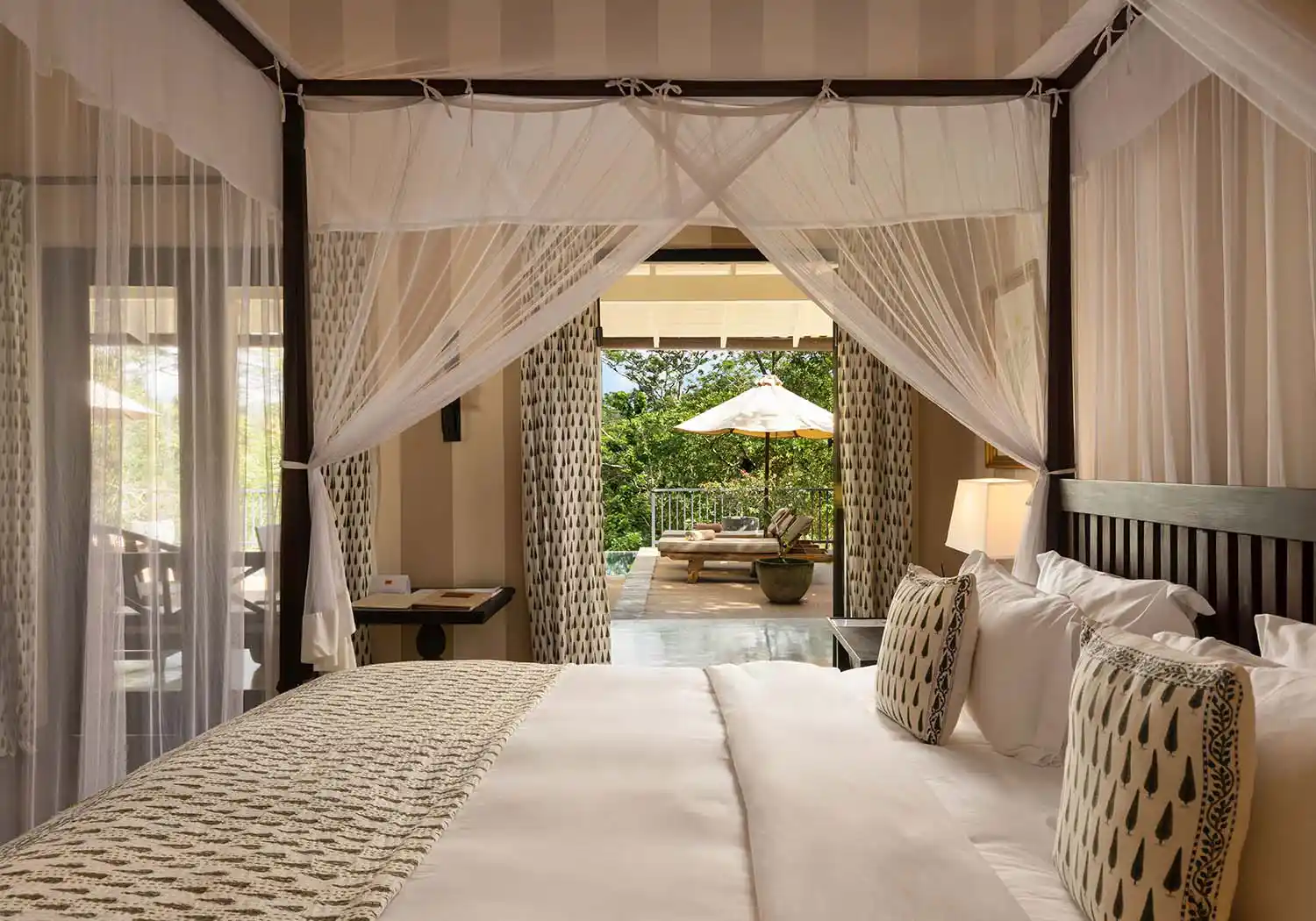
The ten suites are individually designed, each reflecting a different interpretation of colonial elegance. Four-poster beds, antique furnishings, equestrian oil paintings, and block-print textiles create a layered, almost nostalgic environment. Verandahs invite quiet contemplation, with game boards and sofas arranged to encourage lingering afternoons.
Nearby, Maliga Kanda offered a more private, residential experience. Part of the Hideaways Club collection, it caters to those who seek the comforts of a home without the responsibilities that accompany it. Perched high above the surrounding landscape, the property reveals itself gradually, culminating in a dramatic infinity pool that commands the view.
Inside, the design balances simplicity and craftsmanship, marble floors softened by dark wood furnishings, local artifacts, and rattan accents. Upstairs, a shaded verandah with planters’ chairs and ceiling fans captures the essence of slow living, while the attentive staff ensures that every need is anticipated before it is expressed.
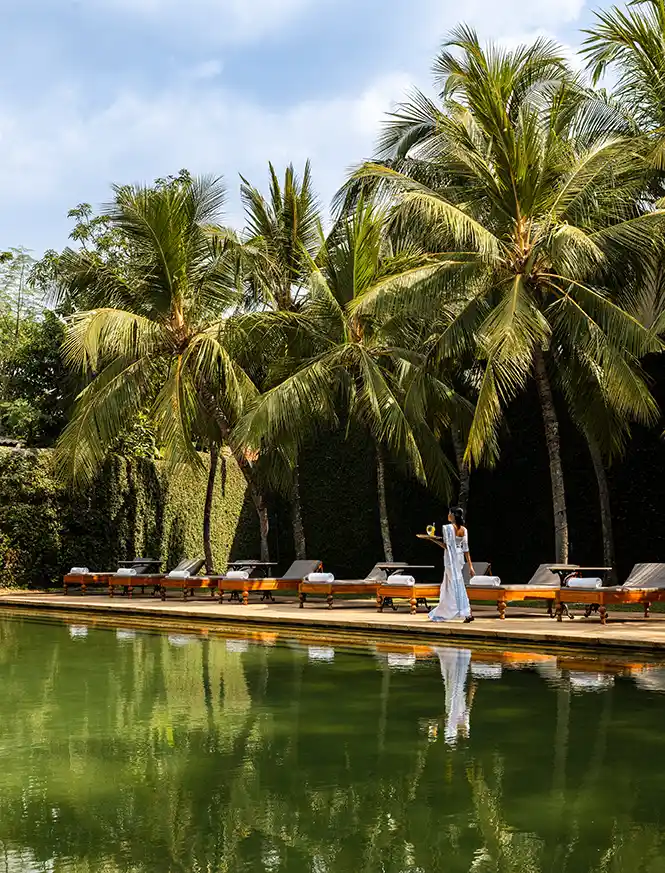
My journey then led me to Amangalla, a property steeped in history and character. Its architecture, marked by triangular stairwells, gently uneven tiles, and Portuguese terracotta, speaks to centuries of layered influence. The Zaal, or great hall, serves as both dining room and gathering space, its polished teak floors and restrained palette punctuated by a single, striking display of red heliconia flowers.
Dinner was a study in precision and restraint: avocado gazpacho, a delicately sliced beetroot and quinoa salad, and seared scallops paired with aubergine ravioli. The rooms continue the narrative, with freestanding baths, seagrass carpets, and Dutch-inspired blue bedspreads adorning four-poster beds. At the spa, aptly named “The Baths,” hydrotherapy recalls the rituals of a bygone era, inviting guests to slow down and reconnect.
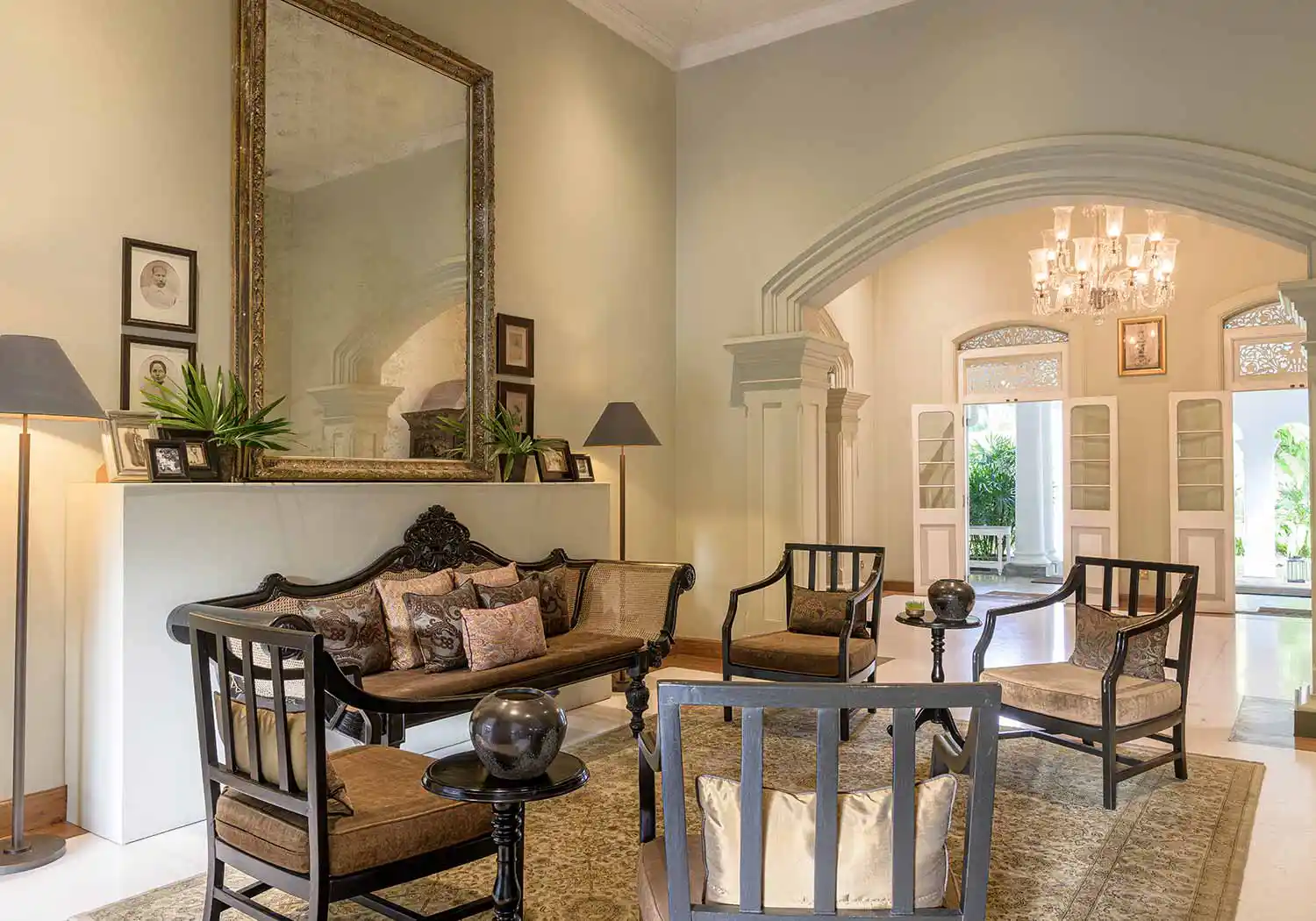
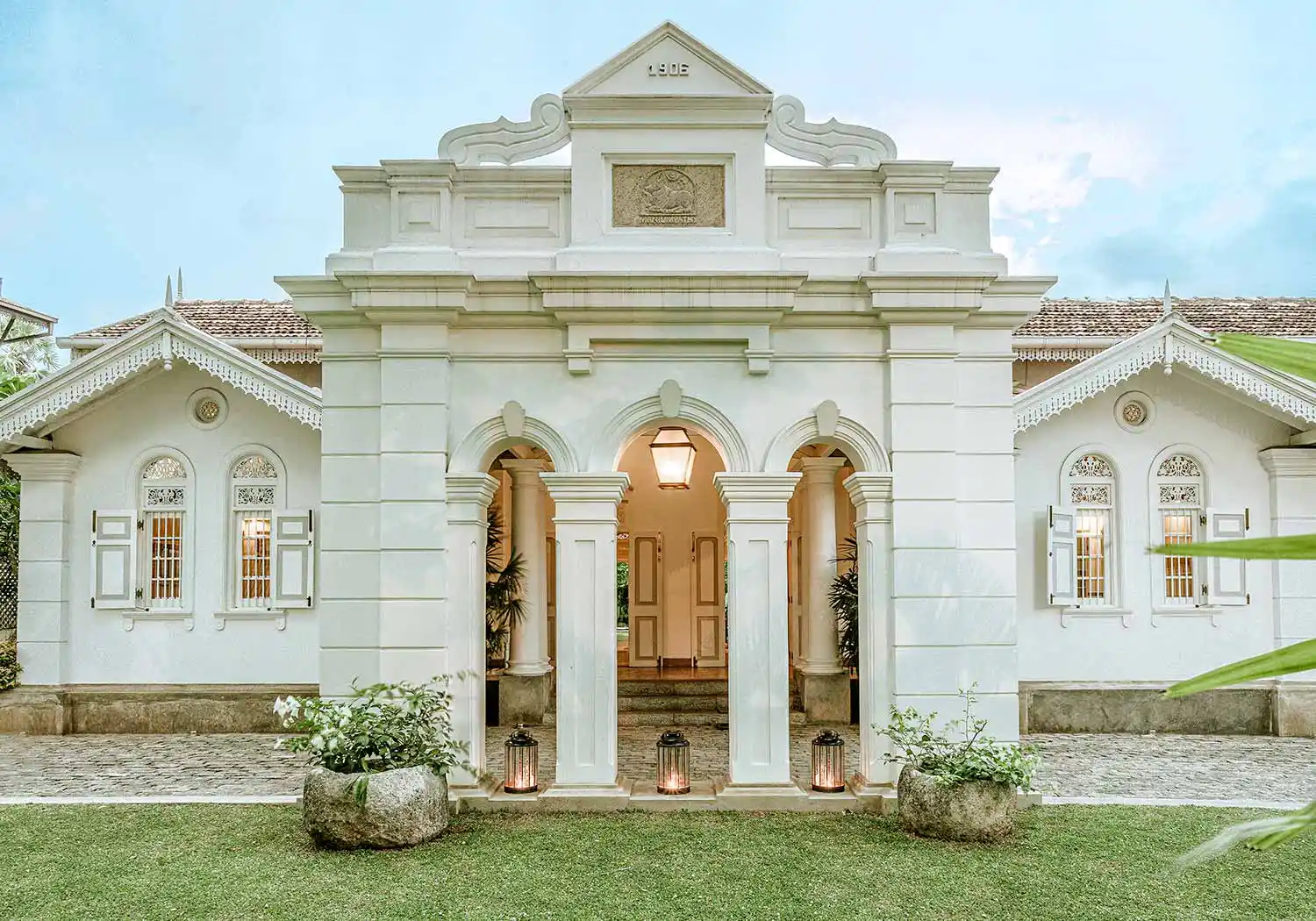
For my final evening, I retreated to Maniumpathy, a boutique property that feels entirely its own. Hidden behind a stately façade, it offers a sense of seclusion that is both rare and restorative. Inside, an elegant dining room centered around a long ebony table flows into a sitting room that feels warm and intimate. Teak, jac, and mahogany woods create a rich, tactile environment, softened by the gentle sounds of birds and the stillness of the surrounding gardens.
Built over a century ago and thoughtfully restored, Maniumpathy achieves a delicate balance between heritage and modern comfort. It is a fitting conclusion to a journey defined not by excess, but by nuance.
Unlike many tropical destinations that have yielded to overdevelopment, Sri Lanka remains remarkably unspoiled. Its past marked by conflict and natural disaster has given way to renewal, with improved infrastructure now connecting the island with ease.
And yet, what endures is its authenticity.
This is a destination that reveals itself gradually, rewarding those who take the time to experience it fully. And now, perhaps more than ever, is the moment to do so.