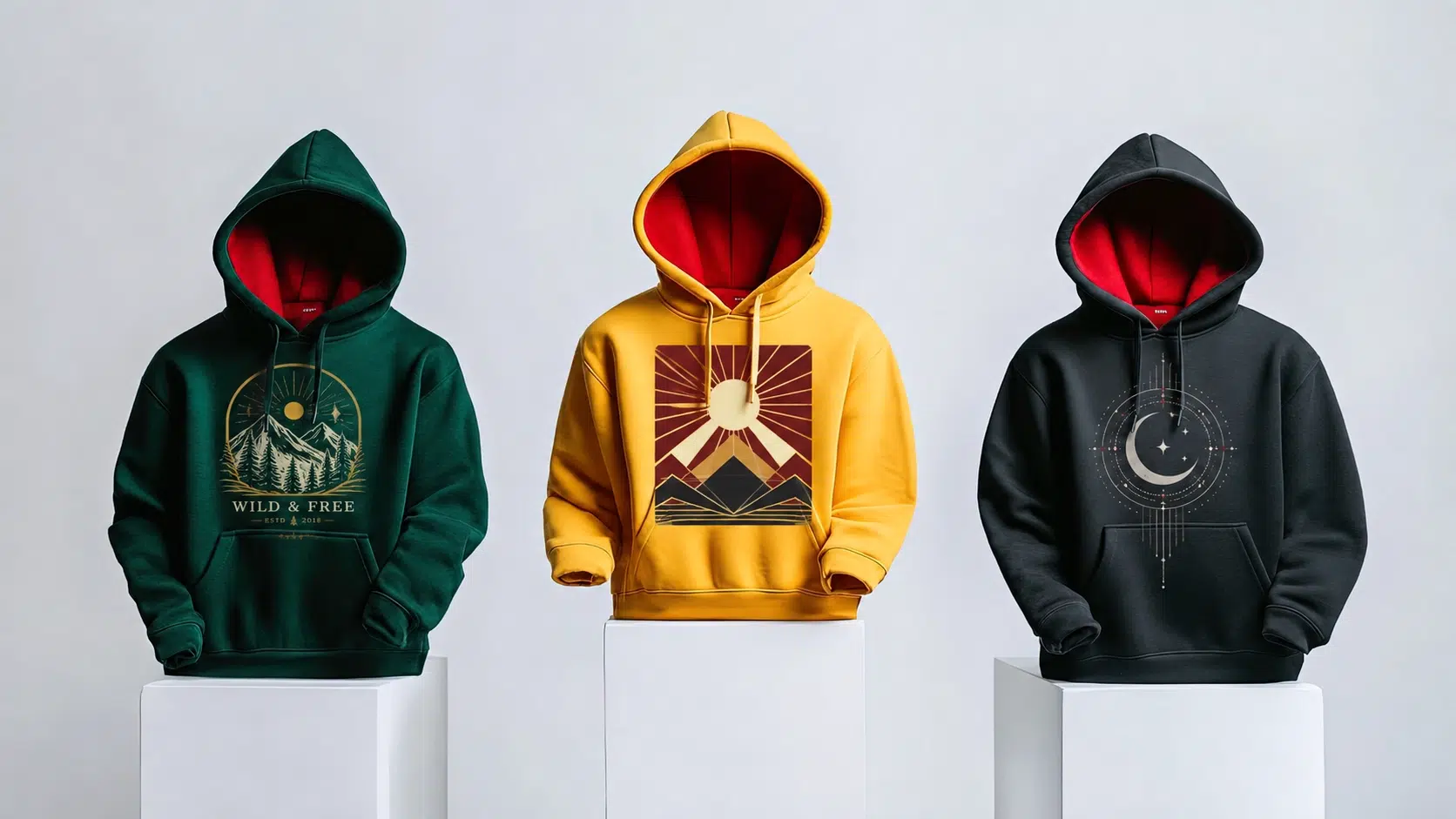
A blank hoodie is a wardrobe staple, but sometimes you want something less plain. Whether you are adding a logo, refreshing an old sweatshirt, or making a one-of-a-kind gift, a custom hoodie is a satisfying project, and you do not need to be a crafting expert to pull it off.
There is a method for every skill level and budget, from no-equipment options you can start today to hands-on techniques for makers. Here are six ways to make your own custom hoodies, and how to choose the one that fits your goal.
1. Design a Print-on-Demand Hoodie
If you want a custom hoodie without buying any equipment, print on demand is the easiest route. You upload a design to an online tool, place it on a blank hoodie, and a print partner produces and ships it, so you can order a single hoodie for yourself or sell to customers without holding any stock.
Printify keeps things simple. Open its free Product Creator, create your own hoodie with artwork, text, AI designs, or an all-over print, and preview it on a high-resolution mockup before ordering. No minimums, no upfront fees, and you are only charged once a hoodie is made.
Because Printify connects you to a network of print providers, you can choose the print method that suits your design, from direct-to-garment and direct-to-film to all-over-print sublimation or embroidery, and pick the provider with the best price or fastest delivery. If you plan to sell rather than just wear your hoodie, it links to marketplaces like Etsy and Shopify so orders are produced and shipped automatically. Printful is another well-known option in this space if you want a more premium, brand-led finish.
2. Heat Transfer Vinyl
If you have a Cricut or similar cutting machine, heat transfer vinyl (HTV) is a fun and affordable way to customize a hoodie at home. You create a design, send it to the cutter, weed away the excess vinyl, then press the design onto the fabric with a household iron or, ideally, a heat press.
Single-color designs are the easiest, but you can layer multiple colors of vinyl for something bolder. You can even buy printable HTV, print your design on an inkjet printer, and cut it out, which opens the door to photo-realistic artwork. It is affordable, beginner-friendly, and much less messy than screen printing.
3. Screen Printing
Screen printing is one of the most common ways to customize apparel, and it shines when you want the same design on several hoodies. The supplies are relatively affordable, and the process is straightforward, which is why it remains a favorite for team and event merch.
The catch is color. You make and use a separate screen for each color in a design, so screen printing works best for artwork that uses one or two colors rather than detailed, multicolor images. You do not need professional gear to try it, since basic home screen-printing kits are widely available.
4. Embroidery
Embroidery gives a hoodie a premium, textured finish that printed designs cannot match, which is why it is popular for logos, names, and branded workwear. Stitched designs are durable and hard-wearing, so they hold up wash after wash.
With an embroidery machine, you can add a logo or name in minutes, which is worth considering if you plan to launch a customization business. If you just want to personalize a gift or upcycle an old sweatshirt, hand embroidery is easy to learn, the supplies are cheap, and a little practice goes a long way.
5. Sublimation
Sublimation fuses ink directly into the fabric, creating vivid, all-over designs that will not crack, peel, or fade. With a sublimation printer and a heat press, you can add detailed photos and edge-to-edge patterns that other home methods struggle to achieve.
The trade-off is fabric. Sublimation only works well on polyester or high-polyester blends, so a 100-percent cotton hoodie is not a good candidate. If you love the look but prefer a cotton feel, an all-over-print hoodie ordered through a print-on-demand service is often the simpler way to get the same result.
6. Tie Dye and Fabric Dyeing
For one-of-a-kind, wearable art, tie dye is hard to beat, and it needs almost no special equipment. All you need is a blank hoodie and a tie dye kit, plus a little space to work.
For the most vibrant results, use a hoodie made from 100-percent cotton, since higher polyester content mutes the colors. It is a low-skill, high-fun option that makes every piece unique, and it pairs nicely with a printed or embroidered detail if you want to combine methods.
Which Method Should You Choose?
There is no single best way to make a custom hoodie, so let your goal decide. If you want the easiest path or plan to sell, a print-on-demand service like Printify lets you design and order without any equipment or inventory, and it scales from a single hoodie to a full store. Printful is a solid alternative when a premium, branded finish is the priority.
If you enjoy making things by hand, heat transfer vinyl, screen printing, embroidery, sublimation, and tie-dye each offer a different look and level of effort. Part of the fun is experimenting, so try a method that matches your budget and skill, and make a hoodie that is genuinely your own. A handmade hoodie also makes one of the more thoughtful personalized gifts, since the effort shows.
Frequently Asked Questions
What is the easiest way to make a custom hoodie?
Print on demand is the easiest route, since it needs no equipment and no craft skills. You design a hoodie online with a tool like Printify, and a print partner produces and ships it, so you can order one for yourself or sell without holding stock.
What fabric is best for a custom hoodie?
It depends on the method. Cotton or high-cotton hoodies are best for tie-dye and direct-to-garment printing, while sublimation needs polyester or a high-polyester blend to hold the design. Check the fabric against your chosen method before you start.
Can I make custom hoodies to sell without holding inventory?
Yes. A print-on-demand service like Printify lets you list a hoodie and only pay when a customer buys, with no minimums or upfront costs. It connects to marketplaces such as Etsy and Shopify so orders are produced and shipped automatically.
Do I need special equipment to make custom hoodies?
Only for the do-it-yourself methods. Heat transfer vinyl needs a cutting machine and a heat press or iron; embroidery needs a machine or hand-stitching supplies; and sublimation needs a sublimation printer. Print on demand needs none of this, since the printing is done for you.