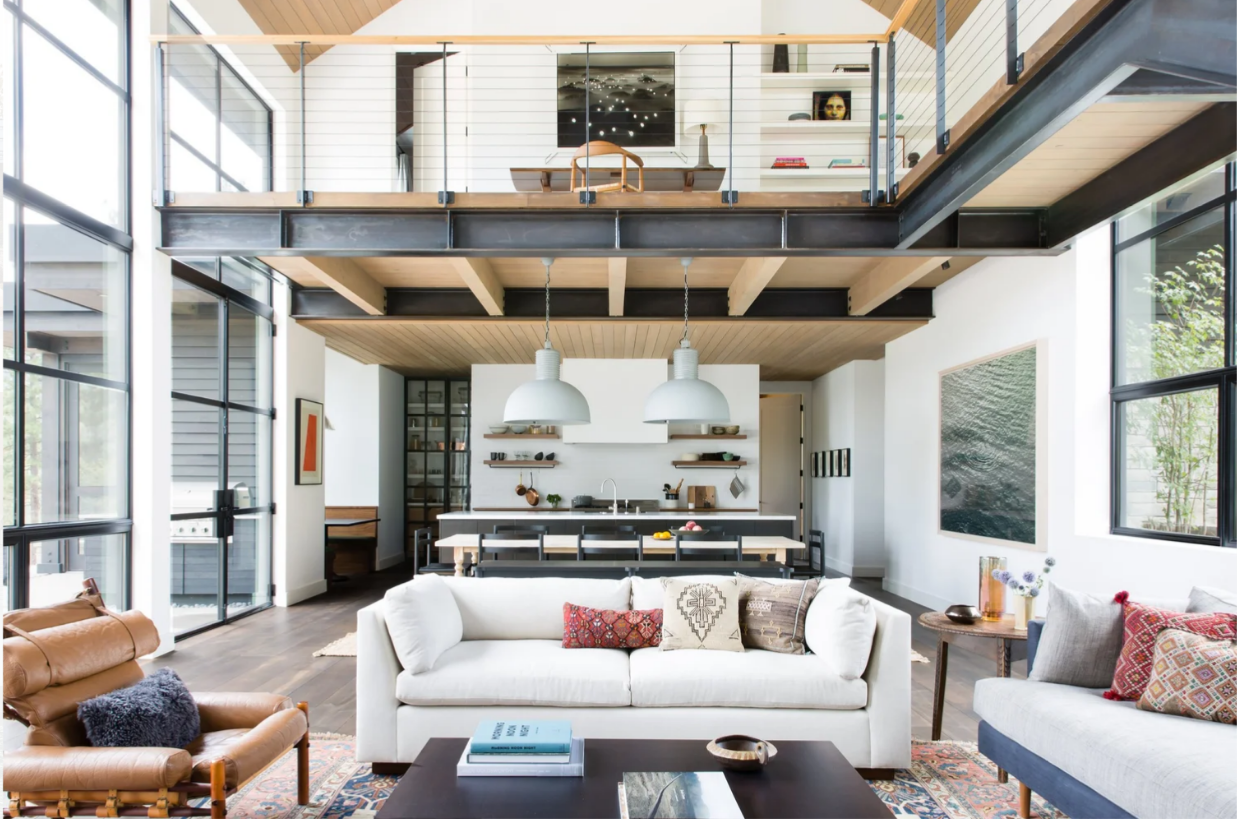
The most compelling interiors do more than look beautiful within four walls. They feel connected to where they are.
A mountain retreat surrounded by wilderness calls for a different response than a historic San Francisco residence or a compact urban flat. Architecture, natural light, landscape, scale, and the rhythms of a particular location can all inform the direction of a residential interior design project. Rather than treating those elements as background, thoughtful interiors allow them to influence decisions throughout the home.
Let the Surroundings Become Part of the Interior
Some homes have an immediate relationship with their surroundings. Expansive windows overlooking a wooded landscape, a city residence filled with changing natural light, or rooms that open directly onto a terrace can make the exterior an important part of the visual experience. The interior can respond without competing for attention.
In a contemporary mountain home, for example, floor-to-ceiling steel windows can create a strong sense of transparency between the great room and the wilderness outside. Against that expansive architecture, warmer materials, tactile surfaces, and handcrafted details introduce softness and depth. The result acknowledges the rugged landscape without attempting to recreate it indoors.
Start With the Architecture That Is Already There
Location is also embedded in a home’s architecture, particularly in cities with a rich mix of historic residential styles. A high-end interior designer knows to look at original proportions, moldings, flooring, fireplaces, and other architectural details as a foundation for the design rather than something to strip away during a renovation.
Contemporary design can build on that character through modern lighting, expressive textiles, painted accents, and a moodier palette, while existing furniture can be reconsidered alongside new and vintage additions. The contrast allows a home’s history to remain visible without making the interior feel fixed in another era.
For San Francisco-based luxury interior design studio ABD STUDIO, architectural context helps inform an approach that considers the existing home alongside each client’s lifestyle and vision.
Consider What the Location Asks of the Home
A property’s setting affects more than its appearance. It can also shape how the home needs to function. A mountain retreat used for summer escapes and winter ski trips must accommodate changing seasons and activities, while a city apartment may place greater importance on making every part of its footprint useful and adaptable.
The property’s physical relationship to its surroundings can influence the floor plan as well. When primary living spaces open directly to a terrace, garden, or other outdoor area, connecting the kitchen, dining, and living spaces can make that access a more integrated part of the home rather than something experienced from a single room.
Create a Sense of Place Without Becoming Literal
One of the more difficult aspects of location-responsive design is knowing when to stop.
There is a fine line between allowing a setting to influence an interior and allowing it to dictate an aesthetic. Wood, stone, plaster, metal, natural fibers, and richly textured textiles can respond to the architecture and environment without relying on recognizable motifs. Color can similarly draw from the atmosphere of a place rather than reproducing its most obvious visual cues.
International references can be just as subtle. European-inspired ease might emerge through layered textiles, pattern, vintage influences, and a relaxed mix of objects rather than overtly themed décor. A home’s location should provide inspiration, not a set of decorating instructions.
Design That Belongs Where It Is
Great interiors are rarely the result of design decisions made in isolation. The view outside the windows, the character of the architecture, and the way the home is used all become part of the design itself. Each offers something specific to respond to, giving designers the opportunity to create interiors that could never be fully replicated in another home.