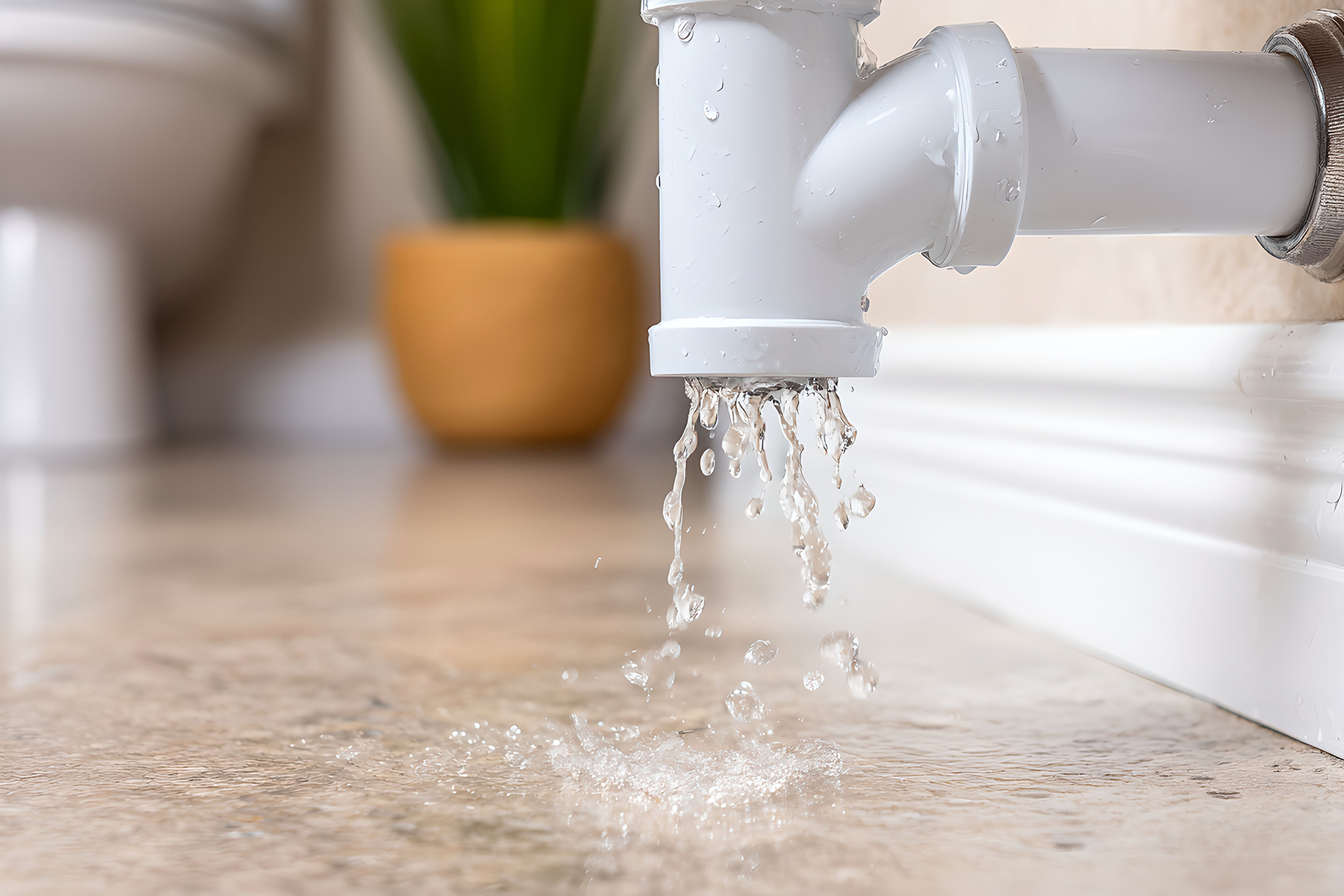
A single burst pipe can release 100 to 200 gallons of water per hour. A major flooding event can saturate wall cavities, corrode aging metal pipes, and compromise the entire supply system in ways that aren’t visible until weeks later. For Houston homeowners, neither scenario is unusual, and both demand a clear, methodical response.
The instinct after water damage is to act fast. That’s right. But acting fast without a logical order of operations can lead to missed damage, bad repair decisions, and insurance claims that fall apart. This guide walks through exactly what to do, in the right sequence.
Step One: Stop the Water and Make the Area Safe
Before any assessment happens, the water source needs to be cut off. Locate your main shut-off valve, typically near the water meter at the front of your property or in a utility closet, and close it completely. If you’re dealing with a slab leak or a burst pipe inside a wall, you may not see the source, but shutting off the main stops the flow regardless.
Once water is no longer actively spreading:
- Turn off electricity to any affected areas at the breaker panel
- Do not walk through standing water if electrical outlets or appliances are submerged
- Open windows and run fans to begin drying the space, but do not use gas-powered equipment indoors
The goal here is containment, not cleanup. You want to preserve evidence of the damage as much as possible before your plumber and insurance adjuster arrive.
Step Two: Document Everything Before You Touch It
This step is non-negotiable for insurance purposes, and most homeowners skip it or do it too late.
Before removing any water-damaged materials, photograph and video the affected areas thoroughly. The Institute for Business and Home Technology recommends documenting from multiple angles, capturing close-ups of the damage source, waterlines on walls, and any visible pipe failure. Time-stamp everything.
Specifically, document:
- The source point of the water intrusion (burst pipe, joint failure, exterior flooding entry)
- Water stain lines on walls, ceilings, and floors, which show how high and far the water traveled
- Damaged materials including flooring, drywall, insulation, and cabinetry
- Pipe condition if visible, including corrosion, joint separation, or cracks
- Serial numbers and models of any appliances or water heaters that were damaged
Create a written log alongside your photos. Note the date and time you discovered the damage, the sequence of events, and every action you took. Insurance adjusters look for timelines, and gaps in documentation create disputes.
Step Three: Assess the Plumbing System Methodically
Once the area is safe and documented, it’s time to understand what actually happened to your pipes. This is where a lot of homeowners either over-react or under-react, and both mistakes are costly.
Check Pipe Age and Material First
Houston’s housing stock includes a significant number of homes built between the 1960s and 1990s, many of which still have original galvanized steel or older copper supply lines. Galvanized pipe corrodes from the inside out. Over decades, rust and mineral buildup narrow the interior diameter, weaken the walls, and eventually cause pinhole leaks or full failures. A flood event or freeze-thaw cycle can accelerate that process dramatically.
If your home is 25 years old or more and you haven’t replaced the supply lines, the existing pipe material is critical context. A burst joint in a 30-year-old galvanized system is rarely a one-off event. It’s a symptom.
Look Beyond the Obvious Damage Point
Where water appeared is rarely where the damage started. Trace the supply lines from the failure point both upstream and downstream. Look for:
- Discoloration, staining, or mineral deposits on pipe surfaces
- Soft spots or corrosion at joints and elbows, where failures typically originate
- Evidence of previous repairs, patches, or compression fittings added over the years
- Low water pressure throughout the home after water is restored, which often signals internal corrosion narrowing the flow
If you’re finding multiple soft spots or old patches, that changes the conversation significantly.
Step Four: Repair vs. Repipe — How to Make the Right Call
This is the decision most homeowners find hardest, and it’s the one that matters most financially and practically.
A targeted pipe repair makes sense when:
- The failure is isolated to a single point with no corrosion or degradation visible upstream or downstream
- The pipe material is modern PEX or newer copper in good overall condition
- The home is less than 15 to 20 years old and there is no history of repeat leaks
- The damage was caused by an external force, like a nail, rather than internal pipe failure
A full repipe is warranted when:
- You’re dealing with galvanized steel pipe anywhere in the system
- There are multiple past repairs visible, patch fittings, or repeated leak history
- Water pressure is consistently low throughout the home, not just at one fixture
- Rust or brown discoloration is coming from the taps
- The home is 30-plus years old with original supply lines
Pipe repair methods available to Houston homeowners, from isolated fixes to full system replacement, help clarify which approach applies to your specific situation. The key is not defaulting to the cheaper option reflexively. A spot repair on a failing galvanized system often leads to another failure within 6 to 12 months.
Step Five: What to Ask a Licensed Plumber Before Authorizing Work
Not all plumbing assessments are equal. A generalist plumber doing a quick visual check is very different from a specialist who has seen hundreds of similar systems and knows exactly what to look for.
Before you authorize any work, ask these questions:
- Can you show me where the failure originated, not just where the water appeared? A thorough plumber traces the problem to its source and explains what caused it.
- Is this an isolated failure, or are there signs of systemic degradation? This forces a direct answer on repair versus repipe.
- What pipe material are you recommending, and why? If they’re proposing like-for-like replacement on a failing galvanized system, ask whether PEX-A is an option and what the long-term implications are of each choice.
- Does the quote include permits, pressure testing, and wall restoration? Many quotes cover the pipework only. Drywall repair, texture matching, and painting are often billed separately by a different contractor. Some repipe specialists include all of that in a single scope, which simplifies the process considerably.
- What warranty does the work carry, and is it transferable if I sell the home? A transferable lifetime warranty is a meaningful asset, particularly if you’re considering selling in the next few years.
- Do you carry a Texas plumbing license and liability insurance? This is basic due diligence, but it matters. Request the license number and verify it through the Texas State Board of Plumbing Examiners.
Step Six: Filing the Insurance Claim Correctly
Water damage claims are among the most commonly disputed homeowner insurance claims. The documentation you built in Step Two is your foundation, but there are additional steps worth knowing.
Contact your insurer as soon as possible after discovering the damage. Most policies require prompt notification, and delays can complicate the claim. Ask specifically:
- Whether sudden and accidental discharge is covered under your policy versus gradual leaks, which are often excluded
- Whether the cost of the pipe repair itself is covered or just the resulting damage; most policies cover consequential damage, not the failed pipe
- Whether you need to get multiple contractor quotes or whether you can choose your own licensed plumber
Keep every receipt for emergency mitigation work, hotel stays if you had to vacate, and any materials purchased. These all contribute to a recoverable loss.
Detailed pipe repair documentation, including photos, a plumber’s written assessment, and an itemized repair estimate, significantly strengthens a claim and speeds up adjuster review.
Key Takeaways
- Document everything before cleanup starts; photos, video, written logs, and timestamps all support your insurance claim
- Pipe age and material determine whether a spot repair is sensible or whether a full system replacement is the more logical path
- Low water pressure throughout the home, rusty water, and a history of repeated repairs are strong indicators that a targeted fix won’t hold
- Before authorizing any work, ask about permits, warranties, and whether wall restoration is included in the scope
- A transferable warranty on repiping adds real value if you plan to sell, since buyers and their inspectors will ask about it
Frequently Asked Questions
How do I know if a burst pipe was caused by the flooding or was already failing?
A plumber can usually tell by examining the failure point. External flooding typically causes uniform corrosion or physical displacement at entry points, whereas internal failure tends to show pinhole leaks, joint separation, or localized corrosion buildup. The pipe material and age are also strong context clues. If the pipe was galvanized and already corroded, the flood likely accelerated an existing problem rather than creating a new one.
Will homeowner’s insurance cover a full repipe after flood damage?
Generally, standard homeowner’s insurance covers sudden and accidental water damage, including the resulting damage to floors, walls, and ceilings, but not the cost of replacing the pipe itself unless the failure was sudden and unforeseeable. Gradual deterioration is typically excluded. Flood insurance through the NFIP is a separate policy and covers different losses. It’s worth a direct conversation with your insurer to clarify coverage limits before assuming either direction.
How long does a whole-house repipe take, and will I need to move out?
Most whole-house repipes are completed in one to two days. Reputable specialists typically restore water at the end of each working day, so the practical downtime is around five to six hours rather than multiple days without water. Most homeowners do not need to vacate their homes for the work itself, though you’ll want to plan around the drywall repair and painting stage that follows.
What’s the difference between PEX-A and standard PEX?
PEX-A is produced using the Engel method, which creates a more uniform cross-linking structure. This makes it more flexible, more resistant to freezing, and easier to work with in tight spaces than PEX-B or PEX-C. Uponor PEX-A is widely considered the premium residential repiping material, particularly relevant in Houston where occasional hard freezes can stress less flexible pipe materials.
Should I wait for the insurance adjuster before starting repairs?
Contact your insurer before doing any permanent repairs, but you don’t have to wait before doing emergency mitigation, stopping water intrusion, drying out the space, and removing material that poses a mold risk. Document everything before and during removal. Most insurers expect prompt mitigation and won’t penalize you for acting reasonably to prevent further damage. Just keep receipts and photos of everything.
Wrapping Up
Water damage is stressful, and the decisions that follow it are easy to get wrong when you’re under pressure. Taking the time to document properly, assess the full system rather than just the visible damage, and ask the right questions of a licensed plumber will save money and prevent repeat problems. The difference between a $500 repair and a $12,000 repipe isn’t just a number; it’s often a matter of understanding what’s actually failing and why.
If you’ve recently dealt with flooding or a pipe failure and you’re not sure whether your system needs a targeted fix or a full replacement, a qualified plumber’s on-site assessment is worth doing before committing either way