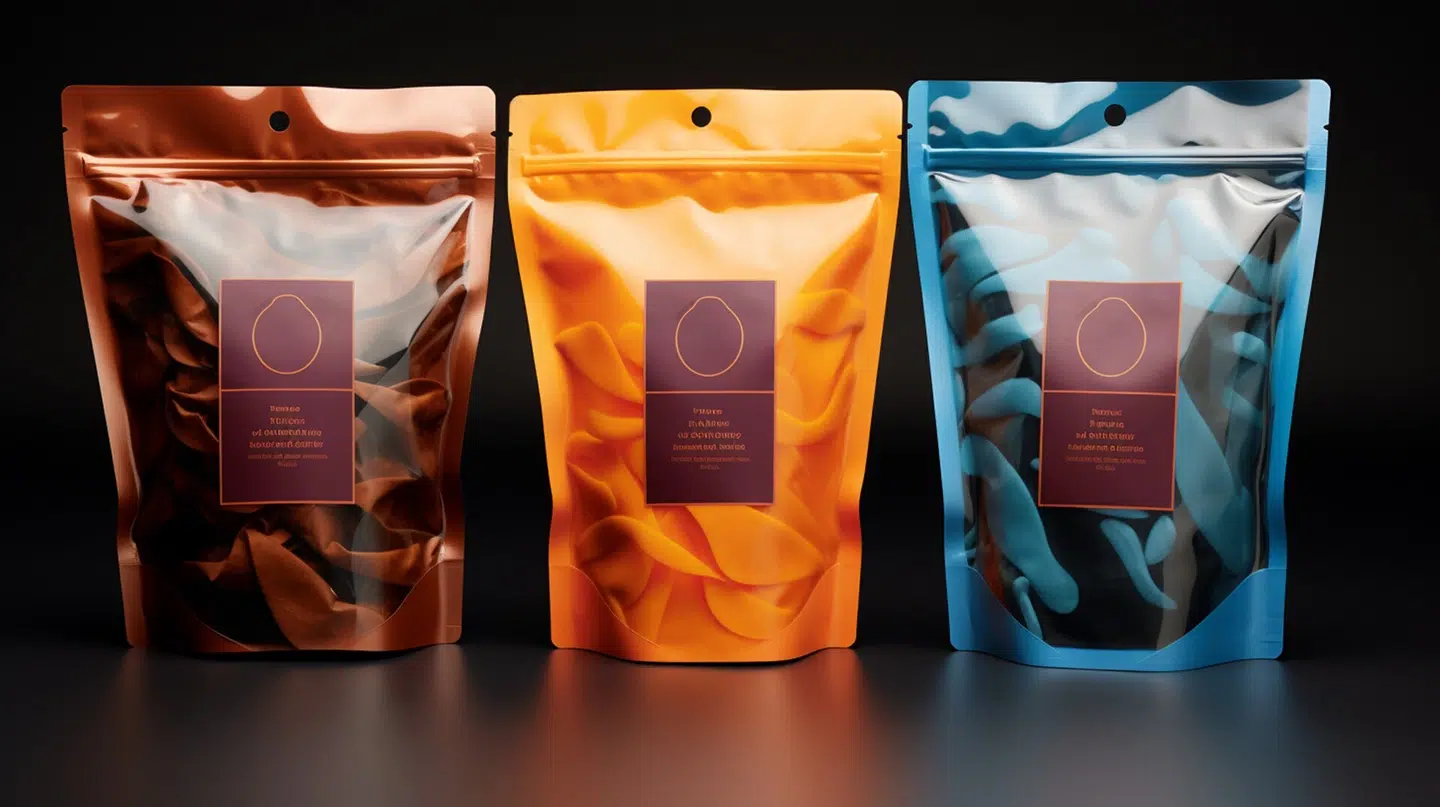
A lot of people would imagine that when they think of brand prestige, they would think of their brand having a premium logo, a beautiful website, a perfectly polished advertisement, or a beautifully designed store. Packaging, though? It can be as significant, if not more.
Your package can be seen by your customer before they use your product. The first impression they have of the brand can make a silent impact. When it comes to packaging, it can seem like a more valuable product when the package is well thought out, unique, and well-designed.
Here’s where custom flexible packaging can help.
Customized packaging, whether it’s pouches, bags, or flexible packs, can be a part of the brand experience, whereas generic packaging performs only its basic function. They allow businesses to show their personality and communicate the quality of their products, while helping to develop a brand identity for business products without unnecessarily complicating the packaging.
Packaging Is Part of the Brand Experience
Consider the last time you received a product that was extremely well packaged. It is likely that you noticed it.
Perhaps the hues were appealing. Maybe the substance was heavy. Or the product was printed sharp enough that it seemed more expensive than you would expect.
The reaction is not a random one.
Packaging is the silent means of communication. The product package is an opportunity to communicate qualities before a customer reads the product description or tries what’s inside, such as quality, reliability, freshness, creativity, or luxury.
A good Flexible Packaging Solution can provide businesses with the flexibility to make those ideas a reality in the physical product experience.
Also, flexible packaging can be made in a variety of shapes, sizes, finishes and designs, so companies do not have to accept something that looks like any other product on the shelf.
Customization Helps a Brand Stand Out
Now go into any supermarket, specialty shop, or online marketplace, and you will see the same thing—competition is everywhere!
Similar products can be found. It is possible that the prices are comparable. Product claims will even be nearly the same.
Another place to stand out is through packaging.
Specific shapes, colors, or text can be incorporated into the packaging design, such as:
- Specific design and text elements.Particular design and typography elements.
- One-of-a-kind pouches in shape and size
- High-quality product photography
- Simple or high quality art work.
- Matte, glossy, or specialty finishes
- Indicate clear areas that highlight the product
- Creating custom labels, patterns and illustrations
- Strategically placed logos and branding.
The aim is not to dump all the design elements on one package. In fact, it can actually have the reverse impact.
Modesty is the great gift of prestige. A clean design, appropriate typography, and a well-chosen color scheme can be a lot more sophisticated than a package that’s covered in too many graphics and text.
Premium Appearance Can Influence Perceived Value
An interesting fact about packaging is that the customer doesn’t always make the assessment based solely on the product.
They also rely on visual and tactile stimuli.
Packaging that seems to be poorly designed or printed might lead customers to presume that the product inside was not treated with the same care. Contrastingly, high-end packaging can instill confidence.
Attractive packaging is no guarantee of a higher-quality product. It cannot equal the quality of the product.
However, if the product is good and the packaging helps to maintain the quality, they can complement each other.
| Packaging Element | Potential Brand Impression |
| High-resolution printing | Professional and reliable |
| Matte finish | Modern and sophisticated |
| Gloss finish | Vibrant and attention-grabbing |
| Minimalist design | Premium and refined |
| Custom shape | Distinctive and memorable |
| Clear product window | Transparent and trustworthy |
| Consistent branding | Established and recognizable |
The key is consistency. The premium appearance should fit the other elements of the company’s brand, not as a standalone design experiment.
Flexible Packaging Creates More Design Freedom
Traditional packaging methods can restrict the brand’s presentation at times. With flexible packaging, there is more room for experimentation.
A pouch can be developed around the product instead of fitting a product into the established visual template.
For brands that stock snacks, coffee, pet food, cosmetics, supplements, dry foods, and consumer products, packaging can be of major importance in the presentation of the product, which can be particularly helpful.
Depending on the goals, a company will be able to select various dimensions, structures, printing methods, and finishing methods.
A small food company may opt to use a plain brown pouch that features clean typography and design. Alternatively, a kids snack may do it the other way around, with more playful graphics and colors.
Both can appear upscale, in different ways.
Consistent Packaging Builds Recognition
There is no single attractive package that creates brand prestige. It develops over time.
The more the same visual language is repeated as customers repeatedly encounter it on products, the easier it will be to recognize. They might see a certain pattern of colour, a logo, a certain illustration technique, or a certain shape of packaging and recognise the brand at once.
That’s valuable.
Suppose there are five products in a company. When everyone has totally different packaging, they may have a problem understanding they are from the same business.
With custom packaging, those products can share common design characteristics and yet be distinguishable as individual products.
This might include:
- Right placement of the logo.
- Matching typography
- A common color group
- Similar pouch structures
- Repeated design motifs
- Consistent information hierarchy
Little things count. They have a tendency to build a recognizable brand world over time.
The Physical Feel Matters, Too
Packaging isn’t only visual.
Customers touch it. They open it. They carry it. They store it.
The impression of quality can thus be conveyed through the material and the building itself.
A well-designed flexible pouch can be functional and yet still have a nice appearance. Resealable closures, tear notches, appropriate barrier qualities, and appropriate material structures are some of the features that can enhance usability.
This is important because a quality experience isn’t simply one you’re going to look at.
However great a package may look, it can lose its good looks quite rapidly if it is difficult to open or reseal.
Good packaging not only looks good but also performs its function.
Custom Packaging Can Support Better Storytelling
A brand story doesn’t have to take up a whole paragraph.
Occasionally, just a visual will suffice.
Packaging can convey information about where a product is from, why it’s unique, how it should be used, or why or how the company values it. It could be any of the above or short messages.
For instance, a natural food company can incorporate natural imagery and minimal copy to convey a connection to nature. A techy product might feature more plain lines and a more modern design.
The packaging area is a tiny storytelling platform.
This is particularly helpful for newer brands that are not as well-known as other bigger brands.
Sustainability Can Also Affect Brand Perception
The packaging discussion has shifted with Environmental expectations.
Today, consumers are interested in materials, packaging waste, recyclability, and responsible production. Flexible packaging can be engineered with various material combinations to meet product needs and packaging objectives.
But brands need to be cautious here.
Stating general environmental claims without proof can be as harmful as it is helpful. The sustainability claims should be genuine, measurable, and traceable to the packaging material and manufacturing process, if this is part of the brand message.
Authenticity matters. A lot.
Custom Flexible Packaging Is More Than a Wrapper
The most basic function of packaging is to protect the product.
However, for a modern brand, it can do a lot more.
With custom flexible packaging, a company can create a first impression that is more intentional, communicate quality, stand out, generate greater recognition, and enhance the ease of use for the customer.
Need not be showy. Does not need to look too expensive, but it does need to look elegant.
The best packaging is often the one that is treated with care: Each color serves a purpose, each word a function, and the material feels appropriate in the customer’s hand.
Custom Flexible Packaging is also an opportunity for brands to make a regular package more significant and part of a brand’s greater story.
Ultimately, it’s a cumulative process: prestige is created by lots of little signals. One of them is packaging, but it’s something customers can see, feel, and remember.
But when the details are managed well, the package becomes more than a container.
It’s all part of the branding.