AI tools have made video production faster to attempt. With the software available today, a still photograph can be given a voice, a smile, and the appearance of speech. The feature that usually gets called advanced is that talking photo. In parallel, an AI video generator is sold as a way to produce motion without a camera or a studio. Marketing, education, entertainment, and social feeds are all named as homes for the pair. Together they are described as a new generation of digital storytelling.
They are complementary only if the story never has to return. A face that talks once is not a house narrative, a seasonal campaign, or a short drama with a named rival. Advanced, in the useful sense, is a desk that remembers the cast and a generator that can last as a scene. Those are two jobs. They are not two talking-photo applications, and they should not be ranked as two “best generators.”
How Advanced AI Video Generation Actually Works
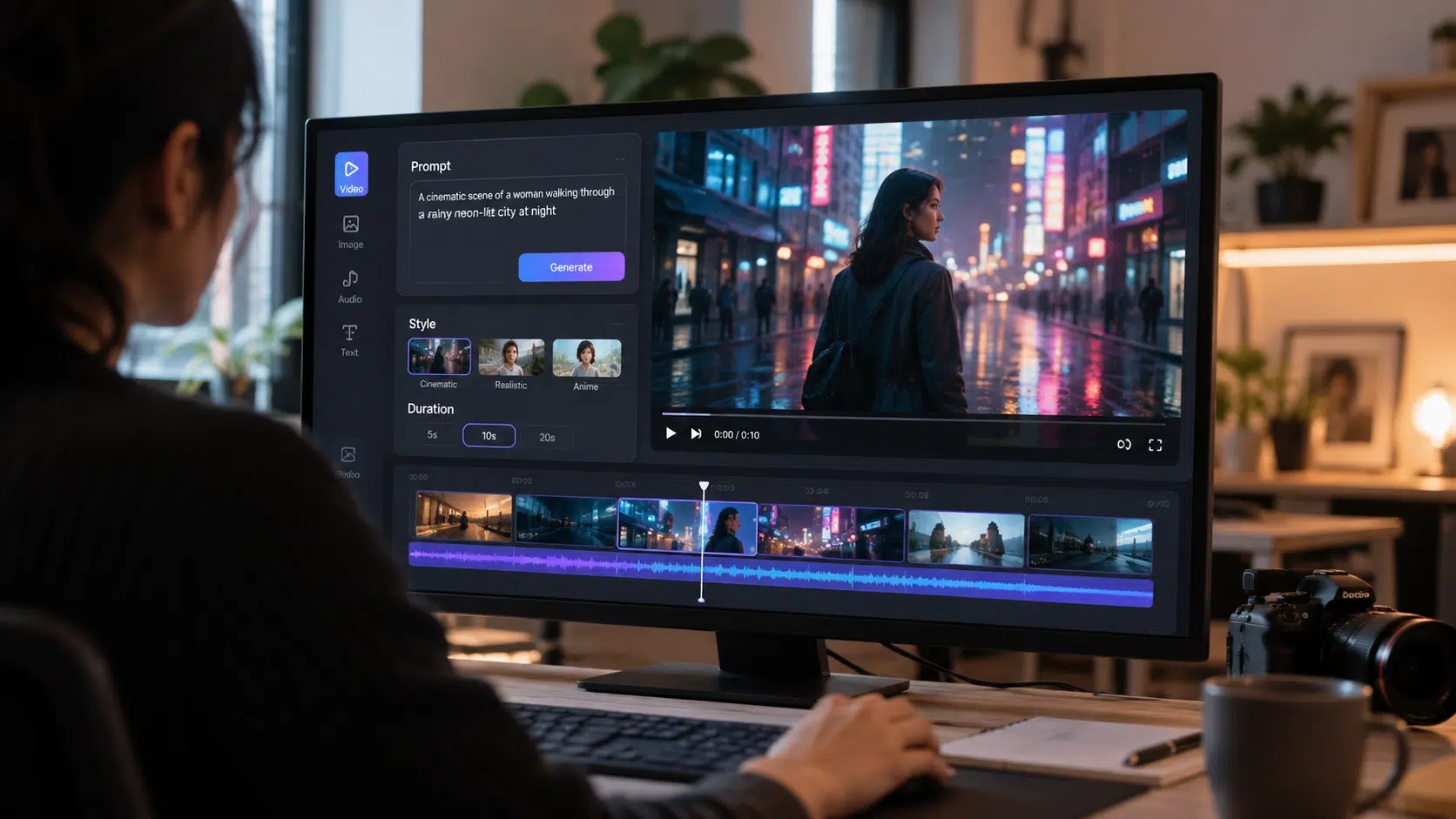
A typical AI video generator analyzes text, images, and sometimes sound, then produces motion. Talking-photo systems go further into the face: they map landmarks, estimate mouth shapes, and try to match a voice. That can look like a person. It does not know whether next week’s clip must use the same coat, the same room, or the same refusal.
Advanced work starts earlier. Story direction is planned. Characters, locations, and props are filed as records. Boards make shot order visible. Only then is a beat sent to generation. The model still has to be directed in seconds. Lip-sync on a stranger is a different aisle, and a consent problem if the still was never yours to animate.
No technical degree is required to open a project. Taste, rights, and a human pass still are. Software removes the afternoon spent pasting the same plot into a fourth tab. It does not remove watching the object — or the face.
From Talking Photos to Stories That Return
Talking-photo tools have moved from crude lip motion to fuller expressions. That is a real improvement in animation. It is not an improvement in continuity. A portrait that reacts to a script is still one file. Episode two will invent a jawline if the first file lived only in Downloads.
Serialized short drama — micro-drama, storytime, a weekly beat with the same two people — needs the opposite of a one-click talking head. It needs outlines, episode cards, reusable references, and a board you can fail before you pay for motion. Evolution here is not “more indistinguishable from a human.” It is “Tuesday still looks like Monday’s show.”
Features That Count as Advanced
Ease of use is advertised everywhere: voice options, automatic captions, background menus, videos in minutes. Those are conveniences. They are not a bible.
Drama Studio is a short-drama workbench, not a video model. You start from a one-line idea, an outline, a script, a novel chapter, or a serialized concept. An agent helps plan. The project holds editable outlines, episodes, characters, locations, props, scripts, and beat sheets instead of a chat you will lose. Storyboards show shot flow. Approved beats open with prompts, references, versions, continuation, post, and export. Voice and captions can sit in the same project. 9:16 is the usual frame for a phone; write it down.
Continuity improves when records exist first. It is not a guarantee if two haircuts fight in one folder. Credits are studio time. Generated faces are not testimonials, and they are not a borrowed celebrity. Use the desk when the next episode has to recognize this one. If you only need a still that appears to speak, say so and stay in a talking-photo tab.
Why Creators Are Moving Past a Single Talking Still
Time and cost are the usual reasons talking photos spread. No actor. No edit suite. One click. Global language menus. That is useful for a lesson that will never serialize, or a founder message you have the right to record.
Creators who need a presence — a channel, a maison story, a fiction test — prefer a project that can be reopened. They would rather assign a beat than re-describe a café. They would rather attach last week’s stills than hope the model remembers a colour. Influencers, educators, and enterprises still make promotional material. The ones who look advanced next season will be the ones whose characters did not reset.
Benefits Without the Studio Myth
Speed, cost, and scale are real. A first motion test can exist this afternoon. That suits industries that publish often. Engagement does not follow automatically from a moving mouth. A talking photograph of a historic figure may hold a classroom for a minute. It will not hold a series if the room teleports.
The useful split is quiet. Planning lives in the workbench. The demanding turn lives in a timed generate. Together they let a small team attempt a short drama without a crew. They do not replace a legal review, a caption you actually read, or music you are allowed to run.
Marketing, Education, and Editorial Work
Businesses already use generated video for demos, tutorials, and ads. Teachers already use animated presenters. Editorial teams already need motion around a still. In each case, the leak is the same: a face that was never cleared, a product that drifted, a location that never existed.
A product story can be a short drama with a recurring object and a named conflict. A lesson can be a serialized scene rather than a talking portrait of someone who did not agree. A luxury or lifestyle feature can follow one character through a place you have the right to show. None of that requires a camera truck. All of it requires records, then a clock.
Creative Possibilities When the Middle Has a Clock
Artists can still bring a portrait to life. They can still test an avatar. The complementary step, once a beat is approved, is a take that lasts long enough to hold a turn. Stitching five short orphans is how a café changes colour. A five-second talking smile is not a scene.
Seedance 2.5 is a multimodal model for about four to thirty seconds from text plus image, video, and audio references, with timing you can write in seconds. Hosted export is typically 1080p-class, not a 4K poster. Attach the stills from the drama board. Write the seconds.
“0–4s the same two faces; 4–14s the refusal on the same bench; 14–24s hold for a caption I will type — no extra crowd, no new street.” If second eighteen grows jewellery the character does not own, the folder is wrong. Fix the kit. Do not add a voice-clone to hide it.
Do not treat Seedance 2.5 as a second drama studio. One remembers the show. One shoots the demanding scene. Captions you approve still beat auto-subtitles you did not read. Eligible trials run on credits you can see before you generate. That is not unlimited free.
The Future of AI Video Technology
Models will get better at faces, voices, and apparent emotion. Digital humans will look closer to people who sat in a room. That will make talking photos more tempting, and more legally delicate. The tools that remain useful will be the ones that keep a story in a project and a beat on a clock.
Entertainment, communication, and brand work will still want motion without a studio day. The advanced stack is not a more realistic mouth on a JPEG. It is a workbench you can reopen, and a generator you can fail in seconds.
FAQs
What is an AI video generator?
It is software that turns text, images, and sometimes audio into moving pictures. A clip generator makes one take. A drama workbench keeps the story around that take. They are not the same purchase.
What should I expect from “advanced” features?
Expect records you can edit — characters, rooms, boards — and a model that can hold four to thirty seconds with timing you write. Do not expect a talking photo to remember episode two. Do not expect 4K posters from a 1080p-class export.
Are these tools easy to use?
Opening a project is easy. Directing a beat is a craft. Anyone can type a paragraph. Not everyone will watch second twelve.
Are talking photos the most realistic option?
They can look alive. Alive is not the same as cleared, and it is not the same as continuous. A still you do not have the right to animate should stay still.
Will businesses use AI video generation?
They already do, for drafts, ads, and lessons. The ones who keep trust will review the object, the face, and the claim before anything ships.
Conclusion
Impressive talking-photo features are easy to demonstrate. They make video faster to attempt, and they make a still appear to speak. The complementary technologies that actually carry a story are quieter: a drama studio that files the show, and a timed generate that can last as a scene. Use Drama Studio when Tuesday has to look like Monday. Call Seedance 2.5 when the turn has to hold. Post the file you watched — including the second that used to invent a new face.