Open any closet before Sunday, and you’ll probably find the same debate going on: wear something vibrant that lights up the room, or choose a quiet shade that feels calm and graceful? Both styles are popular right now, and both can look beautiful in church. The real question is which one suits you, your occasion, and the way you like to feel when you walk through the doors. Here’s a closer look at both directions and how to make either one work.
Why Color Matters on Sunday
Color shapes first impressions. A rich emerald can feel celebratory, while a soft ivory can feel peaceful. Many women choose their church outfit to match the mood of the day, whether that’s a joyful holiday service, a baptism, a wedding, or an ordinary Sunday. Color also affects how you feel. Wearing a shade you love can add confidence before you’ve said a word.
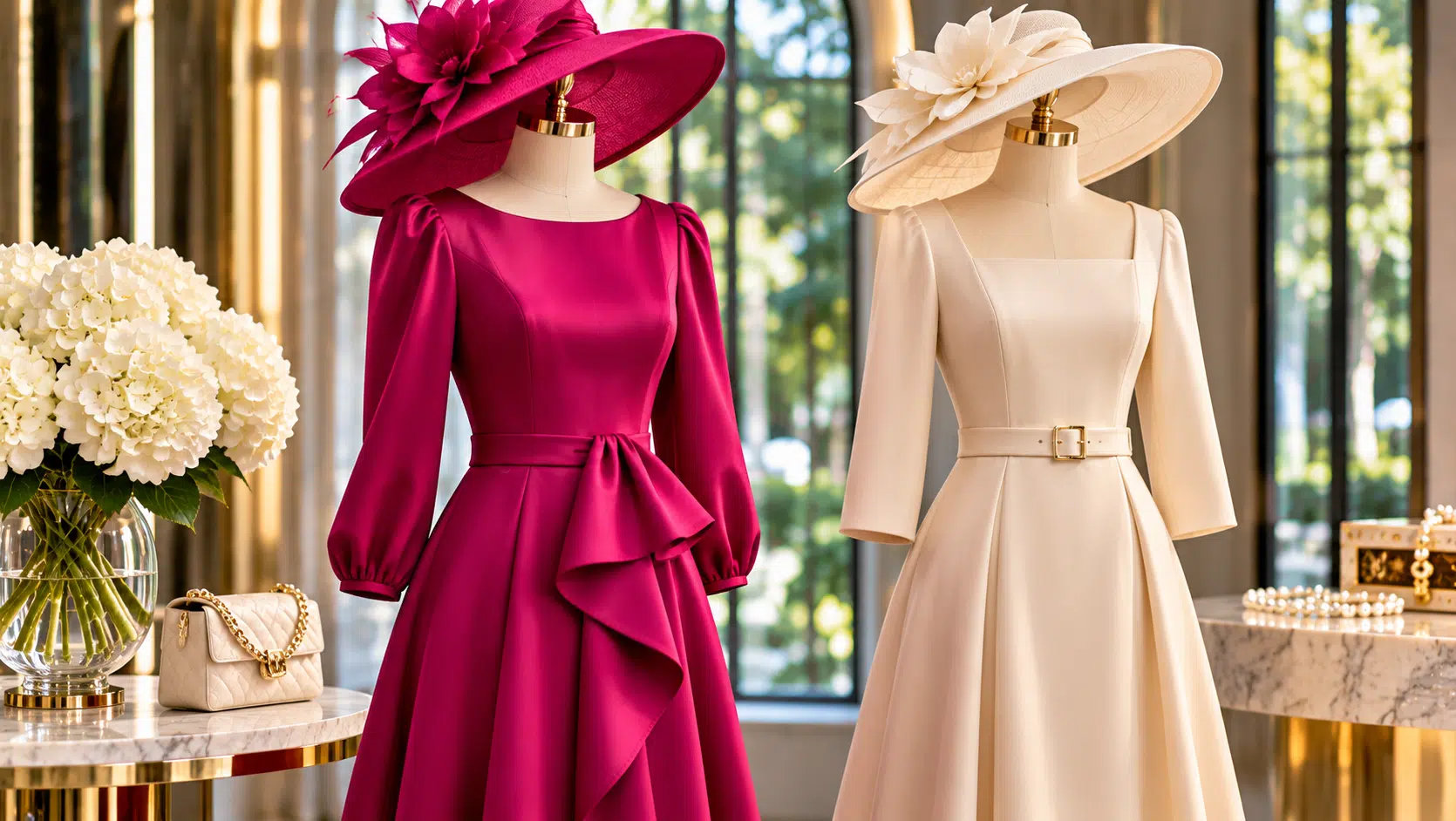
The Case for Bold Colors
Bold shades are having a moment, and it’s easy to see why. They photograph well, stand out in a crowd, and carry an energy that fits celebrations.
Popular bold shades
- Royal blue and cobalt: Rich and regal, flattering on nearly every skin tone.
- Emerald and jade green: Eye-catching, and especially lovely in autumn and holiday seasons.
- Ruby red and burgundy: Warm and confident, best with softer accessories.
- Fuchsia and magenta: Playful and cheerful for spring and summer services.
- Sunny yellow and mustard: Bright and uplifting, great for Easter and warm months.
- Deep purple: Elegant, and often associated with certain church seasons.
How to wear bold without overdoing it
Let the dress be the statement and keep everything else simple. Neutral shoes, a small clutch, and delicate jewelry stop the outfit from feeling busy. If you’re nervous about a bright shade, try a color-blocked design or a dress with bold accents to ease in.
The Case for Soft Neutrals
Soft neutrals are just as popular, and they bring a calm, refined feel. Think beige, taupe, blush, ivory, dusty rose, soft grey, and sage. These shades look graceful in natural light and blend beautifully with accessories.
Why women love neutrals
- They’re easy to mix and match with jackets, scarves, and hats
- They suit many occasions, from regular services to weddings
- They feel gentle and polished, with an effortless look
- They work across seasons when the fabric changes
How to keep neutrals interesting
The risk with neutrals is looking flat. Add depth through texture, such as lace, pleats, or a subtle shimmer, and layer tones in the same color family. A pop of color through a belt, earrings, or a hat can bring the whole look to life.
Finding Church Dresses That Match Your Personality
Whether you lean bold or soft, a good selection makes the decision easier. Browsing a wide range of church dresses lets you compare colors, lengths, sleeves, and silhouettes side by side, so you can see what makes you feel your best. Ask yourself a few simple questions as you shop:
- Does this color brighten my complexion?
- Can I sit, stand, and hug friends comfortably in it?
- Will it suit the season and the service?
- Can I style it in more than one way?
If you answer yes to most of these, you’ve found a keeper.
Silhouettes That Work in Both Palettes
Colors only tell half the story. The shape of the dress matters just as much.
- A-line dresses: Flattering on many body types, with a skirt that moves gracefully.
- Wrap and faux-wrap styles: Define the waist and adjust to your comfort.
- Sheath dresses: Sleek and polished, ideal for formal services.
- Peplum styles: Add shape and a playful touch.
- Midi and maxi lengths: Popular for their modest, elegant coverage.
Modesty and Comfort
Many church dressers value coverage without giving up style. Sleeves, modest necklines, and knee-length or longer hems are common choices. Fashionable options include elbow-length sleeves, lace overlays, and structured layers that keep the look polished. Remember that comfort counts, too. A dress you can move in will let you focus on worship instead of adjusting your outfit.
Fabrics and Finishes
Fabric changes how color looks. Crepe and chiffon give a soft, flowing feel. Satin brings a subtle shine that makes bold colors richer. Lace adds romance to neutrals, and ponte or jersey keeps things comfortable for long services. In warm months, lightweight and breathable fabrics keep you cool, while heavier options add warmth in cooler weather.
Mixing Bold and Neutral
You don’t have to pick one side. Some of the best looks combine both:
- A neutral dress with a bold jacket or scarf
- A bold dress with a nude or ivory topper
- Tonal dressing in shades of the same color
- A neutral dress with a colorful hat for a special occasion
This approach gives you more outfits from fewer pieces.
Accessories That Complete the Outfit
Hats, gloves, brooches, and statement earrings remain a beloved part of church dressing. Keep jewelry in proportion to the dress, and match shoe and bag colors to the overall palette. A simple rule: if the dress is bold, keep accessories quiet, and if the dress is neutral, you can add a bolder accent.
Conclusion
Bold colors and soft neutrals are both trending in church fashion right now, and neither one is better than the other. Bold shades bring joy and energy, while soft neutrals bring grace and calm. The best choice is the one that fits your personality, the day’s occasion, and your comfort. Try different shades, play with accessories, and mix the two when you’re unsure. When you feel good in what you wear, it shows, and that confidence is the best look of all.