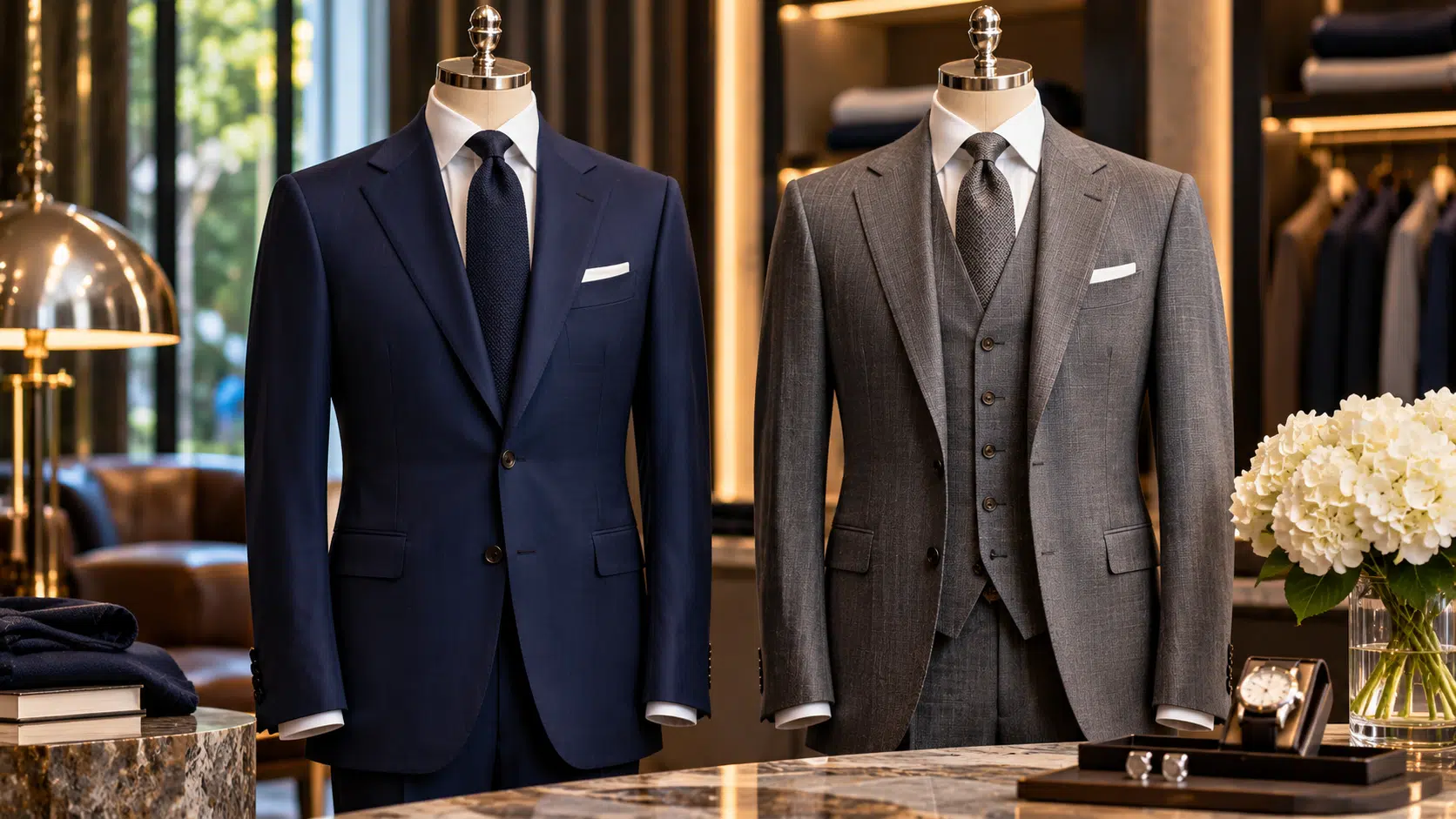
Every man eventually faces the same question in front of the mirror: should it be a classic two-piece or a polished three-piece? Both are excellent, but they send different messages and suit different moments. Choosing between them comes down to style, pattern, and overall look. This guide walks through the differences and gives you a simple framework for choosing with confidence.
The Basic Difference
A 2-piece suit includes a jacket and matching trousers. A 3-piece suit adds a vest, also called a waistcoat, in the same fabric. That extra layer changes the look. It adds structure at the waist, creates a clean vertical line, and gives the outfit a more formal and finished feel.
When a 2-Piece Suit Makes Sense
The two-piece is the everyday workhorse. It’s easier to wear in warm weather, quicker to dress in, and more flexible.
- Weekly office and business meetings
- Church services and community events
- Graduations and interviews
- Casual weddings and summer events
- Trips where you want to pack light
You can also wear the jacket and trousers separately, which gives you more outfits from one purchase.
When a 3-Piece Suit Shines
A three-piece suit shows effort and polish. It stands out in a room, especially at formal events.
- Weddings, as groom or guest
- Formal dinners and galas
- Important presentations and court appearances
- Cooler seasons when an extra layer is welcome
- Photoshoots and events where you want to look commanding
The vest also lets you take off your jacket and still look dressed up, which is handy at receptions.
Choosing by Style
Think about the impression you want to give.
- Classic and traditional: A navy or charcoal two-piece with a notch lapel never fails.
- Modern and sharp: A slim-fit three-piece with a high-cut vest looks current.
- Bold and fashionable: A three-piece in a rich color or distinctive pattern makes a statement.
- Relaxed and approachable: A soft two-piece in a lighter shade with an open collar works well.
Choosing by Pattern
Pattern changes the personality of the suit.
- Solid: The most versatile choice. A solid navy or grey suit works for almost any occasion.
- Pinstripe: Adds a confident, business-ready look and creates a lengthening effect.
- Check and plaid: Add character, best in smaller scales for a polished result.
- Herringbone: A subtle zigzag that adds depth without looking loud.
- Windowpane: A modern grid pattern that suits fashion-forward dressers.
If it’s your first suit, go solid. Add patterns once your wardrobe has a few reliable basics.
Where to Start When Shopping Mens Suits
With so many options, it helps to browse a well-organized range of mens suits and compare cuts, colors, and styles together. Look at the same fit in two-piece and three-piece versions to see how the vest changes your silhouette. Make a short list of what you need the suit for, such as work, events, or a mix of both, and choose from there.
Choosing by Body Shape
- Slim builds: Three-piece suits add visual weight and shape. Choose a trim fit that doesn’t swamp you.
- Athletic builds: Both styles work. A tapered waist keeps the jacket from looking boxy.
- Broader or fuller builds: A two-piece in a darker shade with clean lines is often the most comfortable and flattering. A well-fitted vest can also work if it sits smoothly.
- Tall builds: Three-piece suits balance your height nicely.
- Shorter builds: Keep jacket length proportionate and avoid heavy contrast between the vest and the jacket.
Choosing by Season and Climate
Heat matters. Wool, linen blends, and lightweight weaves keep you cool, and two-piece suits are easier to wear in summer. In autumn and winter, a three-piece suit adds welcome warmth, and heavier fabrics feel great on cold days.
Fit Checkpoints for Either Style
- Shoulders should sit flat with no puckering
- The jacket should button without strain
- The vest should lie flat and cover the waistband
- Trousers should hang cleanly without bunching
- Sleeves should show a hint of shirt cuff
If the vest rides up or gapes, ask a tailor to adjust it. Alterations make a noticeable difference.
Styling Tips
For a two-piece, try an open collar or a knit tie for a relaxed feel. For a three-piece, keep the shirt crisp, choose a tie that matches the vest tone, and consider a pocket square for a finishing touch. Leave the last vest button undone, as is traditional, and keep the jacket buttoned correctly when standing.
Common Mistakes to Avoid
- Wearing a vest that’s too long or too tight
- Mixing too many patterns without a clear anchor
- Choosing trendy shades that date quickly
- Ignoring fabric weight for the season
- Skipping alterations
Conclusion
There’s no single right answer between a two-piece and a three-piece, only the right choice for the moment. The two-piece suits everyday life, offers flexibility, and is easy to wear. The three-piece raises the level for formal events and adds depth to the outfit. Think about where you’ll wear it, the pattern that suits your style, and the fit that flatters your frame. Get those right, and either suit will make you look sharp and feel ready.