Cypress is earning renewed attention from homeowners who want real wood shutters that hold up outdoors. Its natural oils help it resist rot, decay, and insects; it takes paint and stain well, and it has a long history on traditional homes, especially in the American South. For many, it offers a strong balance of durability, beauty, and authenticity.
A wood with deep roots
Cypress has been used in American building for generations. Builders in humid, swampy regions valued it for siding, porches, boats, and shutters because it stood up to moisture better than many other woods. Older growth cypress, sometimes called the “wood eternal,” earned a reputation for lasting decades on homes exposed to heat and rain.
Today, homeowners restoring historic properties or building new homes with a classic look are rediscovering what earlier builders knew.
Why cypress resists rot
Cypress heartwood contains a natural compound called cypressene, an oil that helps repel water and discourages decay and insects. That built-in protection makes it a smart choice for exterior applications where shutters face sun, rain, and humidity year after year. Like any wood, it still benefits from a quality finish and periodic maintenance, but it starts with a natural advantage.
Appearance and finishing
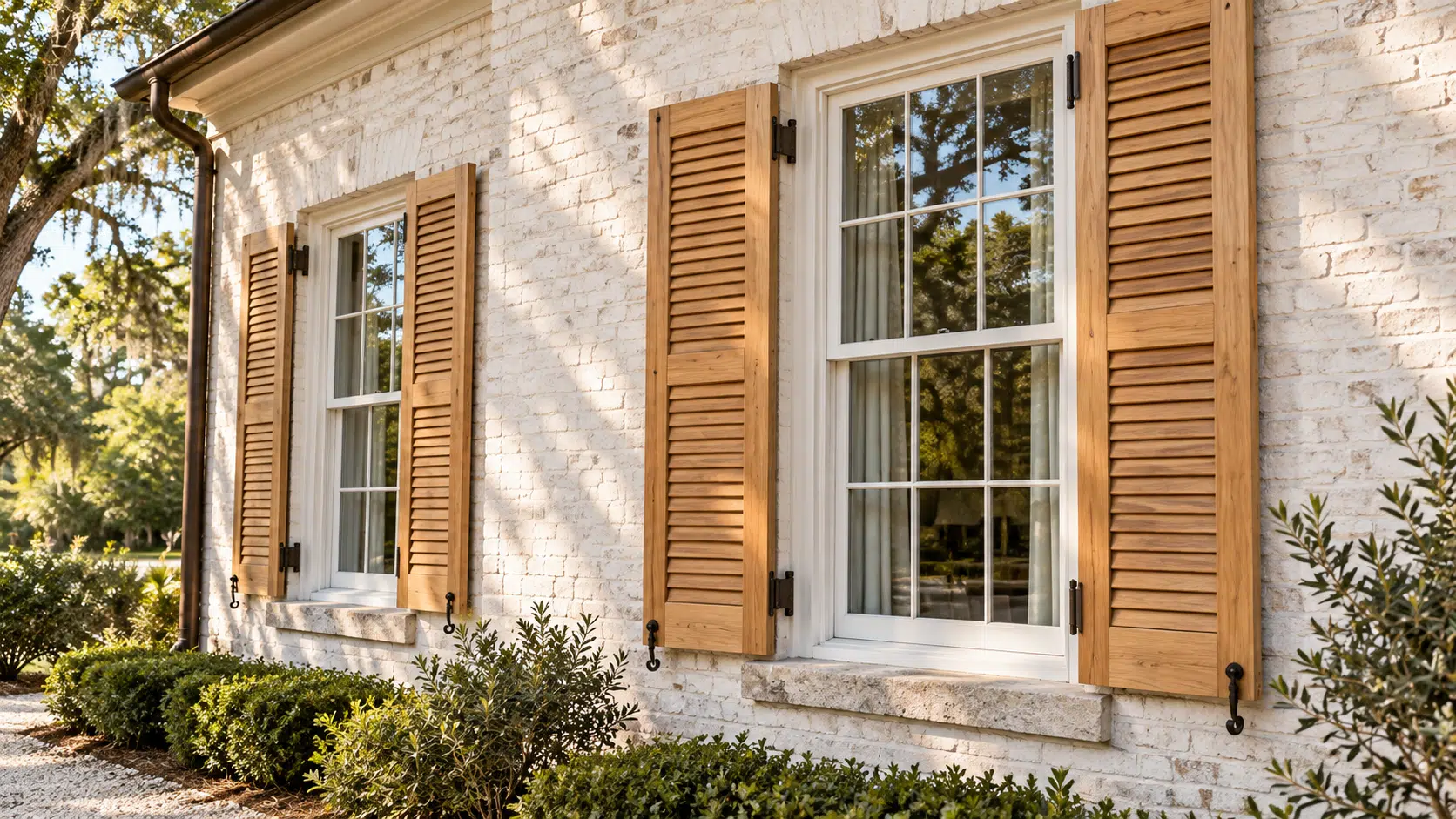
Cypress has a fine, straight grain and a warm, light color that ranges from pale yellow to soft reddish brown. It can be left to weather naturally, stained to show its grain, or painted in a classic color. Because it’s stable and machines cleanly, it works well for detailed styles such as louvered, raised panel, and board-and-batten designs.
Compared to many wood shutters, cypress tends to be lighter in weight than dense hardwoods, which can make hanging and operating functional shutters easier.
Is cypress right for your home?
Cypress may be a good fit if you:
- Live in a humid or rainy climate
- Want functional shutters made from real wood
- Own a historic or traditional-style home
- Prefer a natural material that can be painted or stained
If you want the lowest possible maintenance, a composite may suit you better. But for homeowners who value authenticity, cypress delivers character that synthetic materials can’t fully match.
Caring for cypress shutters
To keep cypress looking its best, inspect the finish each year and touch up any worn spots before moisture can get in. Clean shutters gently with mild soap and water, and keep hardware tight so panels stay square. With basic care, cypress can serve your home for many years.
A classic choice, renewed
The comeback of cypress reflects a broader interest in materials that last and look genuine. If you’re weighing real wood options, explore cypress shutters to see how this rot-resistant species can add timeless curb appeal to your home’s exterior.