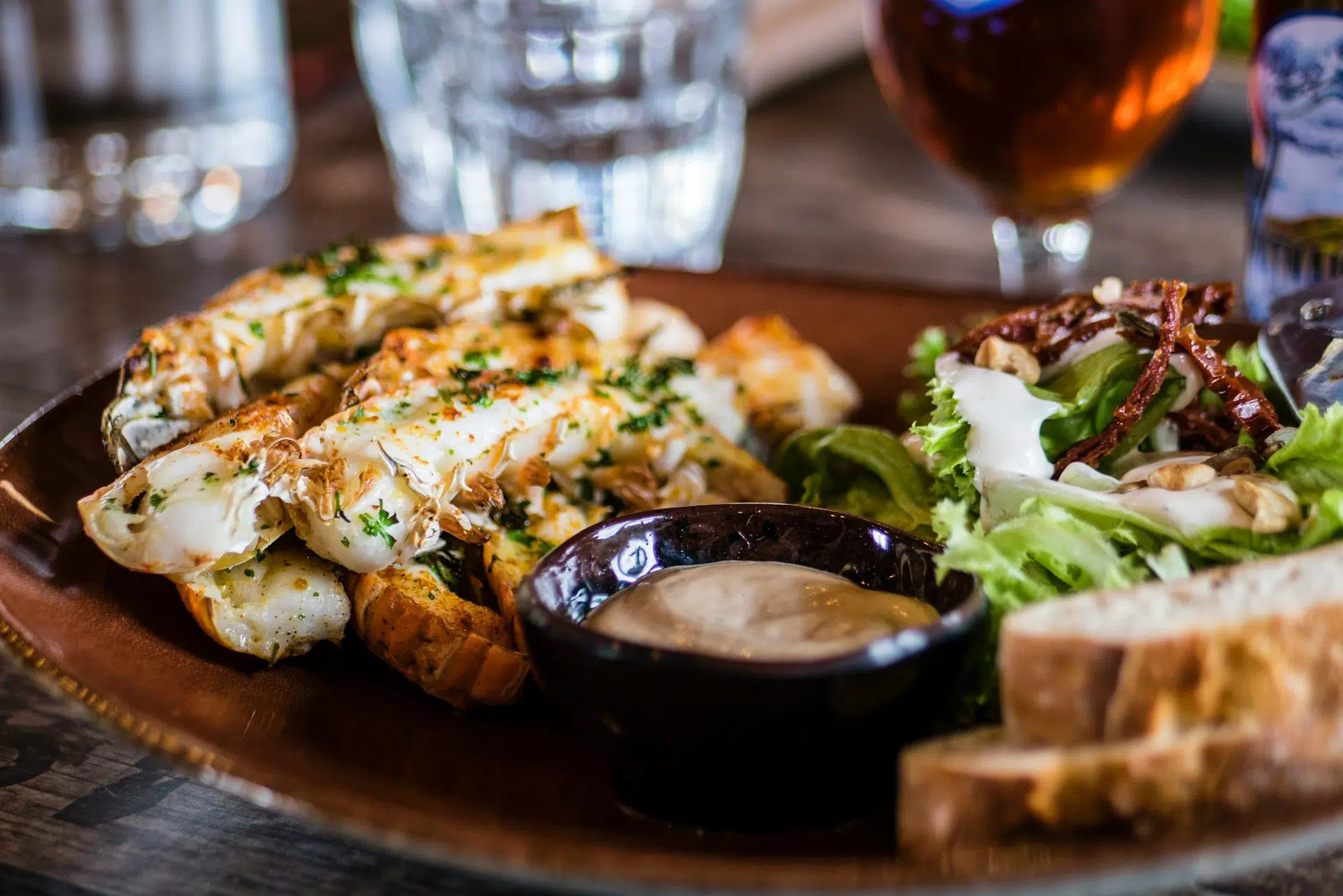
On the south-east coast of Cyprus, a proper dinner takes the whole evening. At a meze taverna, the waiter mostly wants to know how many people are eating. Bread and olives arrive first, then tahini and a salad, and the plates keep coming for the next two or three hours. Anyone planning a trip around Cyprus food and wine should start with that slow, shared meal.
The stretch of coast between Larnaca and Protaras rewards this kind of trip. Larnaca has fishing harbours to the west and a young wine route in the hills behind it. Inland from Ayia Napa and Protaras, red soil farmland supplies much of the island’s produce. Both sit within easy reach of the coast, so a week can take in all of them.
How a Cypriot meze works
Meze is a sequence of small dishes. According to a guide published by the Cyprus Mail, a taverna may serve anywhere from 15 to more than 30 small plates. Cold starters come first: village bread, olives, tahini, hummus, tzatziki, and seasonal salads. Halloumi, grilled vegetables and local sausages follow, then the main meat or seafood courses, and the meal usually ends with fruit or traditional sweets.
It is ordered per person, usually for a minimum of two, and shared by the whole table. The guide advises against ordering extra starters or salads before it arrives, and suggests allowing at least two hours and not worrying about finishing every plate.
There are two broad kinds. A meat meze builds towards sheftalia, souvlaki, sausages and grilled meats from the charcoal. A fish meze swaps these for fresh fish, octopus, prawns and calamari, and it costs more. Coastal villages are the place to eat the second kind.
Protected Cyprus food and wine: halloumi and Commandaria
Halloumi turns up at almost every meze, usually grilled, and it now has legal protection. The European Commission registered halloumi as a protected designation of origin on 12 April 2021, and the protection took effect that October. Under the registration, only halloumi produced on Cyprus according to the traditional recipe can be sold under that name in the EU.
Cyprus’s most famous wine has a longer history. Commandaria is a sweet wine made only from two indigenous grapes, the white Xynisteri and the red Mavro. The grapes are left to overripen, then usually dried in the sun for seven to ten days before pressing, and the wine must age for at least two years in oak. Production is limited to 14 designated villages, and the wine holds protected designation of origin status in the EU, the United States, and Canada.
The name comes from the Crusades. The Knights Templar, and later the Knights Hospitaller, held an estate at Kolossi known as La Grande Commanderie, and the wine they exported took the region’s name. It is often described as the oldest named wine still in production, a claim recorded by Guinness World Records.
Larnaca: fishing shelters and a mountain wine route
Larnaca makes a practical base for the western half of this trip. About 40 km from the town, the village of Zygi is built around a fishing shelter, and the Larnaca region’s tourism board describes the harbour as ringed by fish taverns that draw diners from across the island. The village name comes from the Greek word for weighing: carob exporters once brought their beans here to be weighed before storage. The Cyprus Mail singles out Zygi as one of the best places on the island for a fish meze.
Inland, the Mountainous Larnaka to Lefkosia Wine Route links villages including Skarinou, Lefkara, Kato Drys, Vavla and Ora. The route lies outside the island’s traditional wine regions, and winemakers here have planted a mix of grapes: Maratheftiko and Xynisteri alongside Assyrtiko, Malvasia Aromatica, Chardonnay, Cabernet and Merlot. Ktima Christoudia in Kato Drys offers cellar tours with tastings, and Ktima Dafermou, in the hills of the Lefkara valley, works with Maratheftiko and Xynisteri. Lefkara itself is known for handmade lace and filigree silver, which makes it an easy stop between tastings. Opening hours vary throughout the year, so check with each winery before setting out.
Visitors who prefer to start with dinner close to the beach have options on the coast too. Larnaca’s Golden Bay Beach Hotel runs To Petrino, an open-air tavern laid out like a Byzantine castle courtyard, which serves Cypriot grill meze in the warmer months.
Protaras and the red soil villages
The eastern half of the trip is about produce. Inland from Ayia Napa and Protaras lie the Kokkinochoria, the red soil villages, whose mineral-rich earth is known across Cyprus for its crops. Avgorou grows potatoes, vegetables and citrus fruit, and celebrates its harvest with a Potato Festival each July. Liopetri, a municipal quarter of Ayia Napa, grows potatoes, watermelons and carrots and holds a Carrot Festival in summer.
The same village has a quieter side by the water. Potamos Liopetriou, just west of Ayia Napa, is a small fishing enclave where traditional and modern boats line the riverbanks, and the regional tourism site notes two fish taverns there, which makes it a good stop for lunch on a day in the villages.
Back in Protaras, the Golden Coast Beach Hotel has a Mediterranean restaurant set up as a traditional tavern, cooking Cypriot and Greek dishes outdoors from mid-May, and an Italian trattoria overlooking the Protaras fishing shelter.
When to go and how to plan it
Many of the open-air tavernas on this coast work on a summer timetable, and village festivals cluster in the warmer months, with Avgorou’s in July. Spring and early summer suit a food and wine trip well: the outdoor restaurants are open, the farmland is green, and the heat has not yet peaked. Winter visitors can still find meze in town tavernas all year, but should confirm opening times for anything seasonal.
A Cyprus food and wine week splits neatly in two. Spend a few days near Larnaca for fish at Zygi and tastings on the wine route, then move east for the red soil villages and the harbours around Ayia Napa and Protaras. Leave the evenings free, because a meze rarely finishes on schedule.