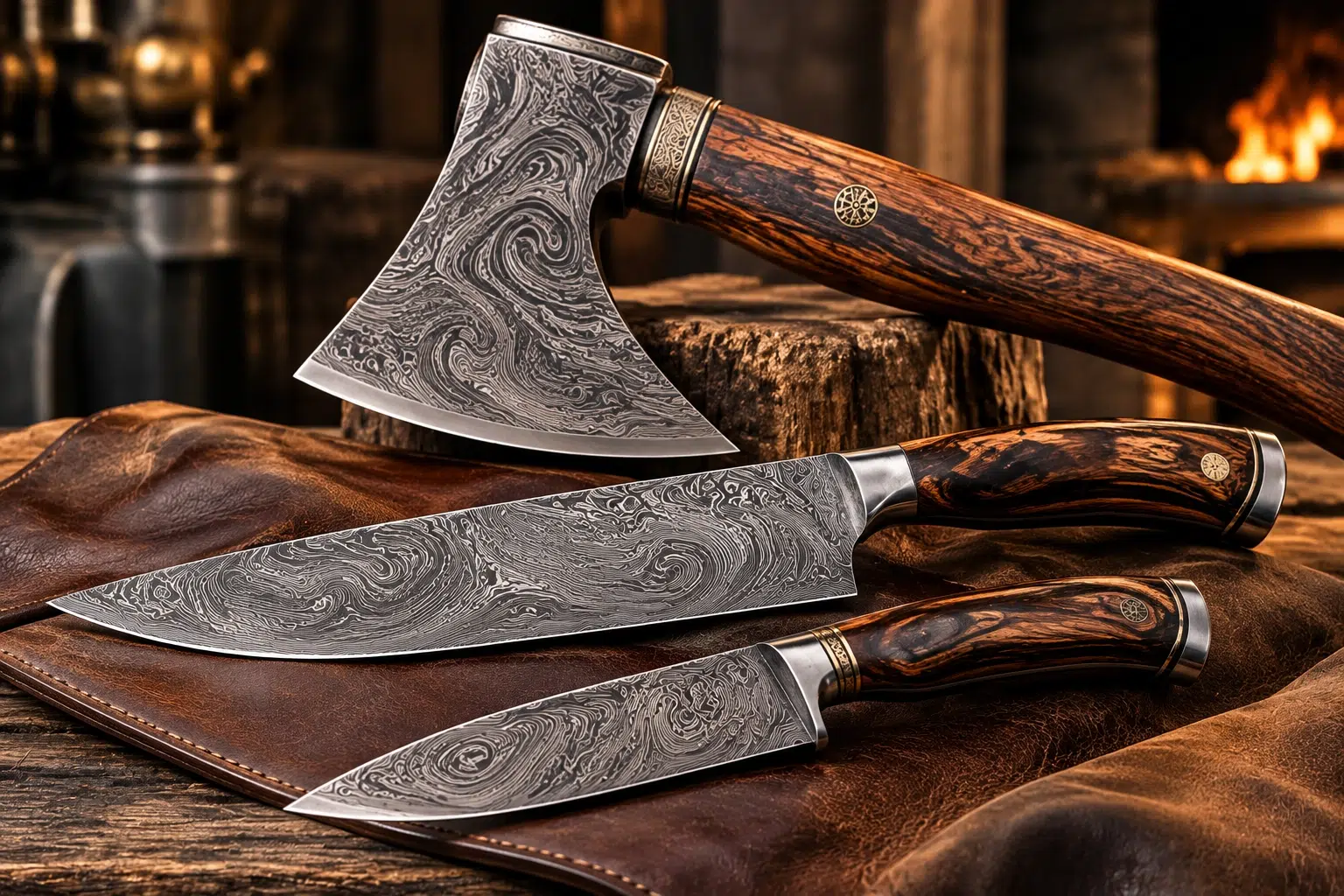
Damascus steel knives and axes are admired for their distinctive patterns, traditional craftsmanship, and combination of functionality and artistic design. From outdoor hunting knives to beautifully crafted Viking axes, these tools represent a blend of traditional metalworking techniques and modern manufacturing practices. Today, enthusiasts and collectors appreciate them for their appearance, construction, and practical applications. Exploring the world of handmade Damascus blades helps you understand what makes these tools distinctive and what to consider when choosing a quality piece.
What Is Damascus Steel?
Damascus steel is commonly associated with metal featuring distinctive flowing, wavy, or layered patterns across its surface. Modern Damascus steel is generally produced through a process called pattern welding, in which different steel layers are forge-welded together and manipulated to create decorative patterns.
Historically, the term Damascus steel has also been associated with ancient crucible steel, sometimes known as wootz steel. Although historical Damascus steel and modern pattern-welded Damascus are not necessarily produced using the same methods, both have contributed to the reputation of Damascus blades.
The visible patterns are one of the most recognizable characteristics of modern Damascus steel. They make each finished blade visually distinctive while reflecting the metalworking process behind its creation.
How Are Damascus Steel Knives and Axes Crafted?
Creating a Damascus steel knife or axe requires careful material selection, controlled heating, forging, shaping, and finishing. The process involves several stages that contribute to the final appearance and performance of the tool.
1. Selecting the Steel
The process begins with selecting suitable steel materials. In modern pattern-welded Damascus, different steel types may be combined to create contrasting layers.
The choice of steel is important because it influences properties such as hardness, toughness, edge retention, and corrosion resistance. Proper material selection is essential for producing a reliable finished blade.
2. Forge Welding and Layering
The selected steel pieces are stacked and heated to a temperature suitable for forge welding. Under controlled conditions, the layers are joined through pressure and hammering.
The resulting steel billet can be manipulated through folding, twisting, cutting, and restacking to develop different patterns.
3. Shaping the Blade
After the layered steel has been prepared, the blacksmith shapes it into the desired blade design. Knives and axes require different shapes depending on their intended applications.
Knife blades are generally designed around cutting precision, while axe heads are shaped to provide suitable weight distribution and impact performance.
4. Heat Treatment
Heat treatment is an important stage in blade production. It involves controlled heating and cooling processes that help develop the required mechanical properties of the steel.
The correct treatment depends on the steel composition and intended application. Proper heat treatment helps balance hardness and toughness.
5. Grinding, Polishing, and Finishing
The final stages involve grinding, sharpening, polishing, and finishing the blade. In many modern Damascus products, an etching process is also used to reveal the contrasting patterns within the layered steel.
The handle, fittings, and other decorative elements are then completed to create the finished knife or axe.
Exploring Damascus Knives and Ready-to-Ship Options
Damascus knives are available in many different designs, sizes, and configurations. Some are created for outdoor activities, while others are designed for kitchen applications, everyday utility, or collecting.
For buyers interested in exploring different styles without waiting for a custom manufacturing process, the ready to ship collection offers an opportunity to browse available knives and axes.
Understanding the different types of Damascus knives can help buyers identify the features that best match their requirements.
Different Types of Damascus Steel Knives
Damascus steel knives are available in several styles, each designed for a particular purpose.
1. Hunting Knives
Hunting knives are commonly designed with fixed blades and durable handles. Their shapes vary depending on their intended outdoor applications.
Common design features include:
- Fixed-blade construction.
- Comfortable and secure handles.
- Practical blade shapes.
- Protective leather sheaths.
2. Folding Knives
Folding knives feature blades that fold into their handles when not in use. Their compact construction makes them convenient to store and carry where legally permitted.
Popular features include locking mechanisms, decorative handles, and different blade profiles.
3. Bowie Knives
Bowie knives are recognized for their large blades, distinctive profiles, and traditional outdoor styling. Many feature clip-point blade designs and substantial handles.
They are popular among collectors and enthusiasts who appreciate traditional knife designs.
4. Chef Knives
Damascus chef knives combine practical kitchen design with distinctive blade patterns. They are used for various food preparation tasks, including slicing, chopping, and dicing.
Their performance depends on factors such as blade geometry, steel quality, sharpening, and handle ergonomics.
Damascus Steel Axes and Their Unique Features
Damascus steel axes combine traditional axe designs with the distinctive appearance of layered steel. They are available in different shapes and sizes, ranging from compact hatchets to larger traditional axe designs.
Each type serves different purposes and has its own construction characteristics.
1. Camping and Bushcraft Axes
Camping and bushcraft axes are generally designed for outdoor tasks. Depending on their size and construction, they may be used for preparing firewood, processing small branches, and other camp-related activities.
A suitable handle length, balanced head, and comfortable grip are important considerations when selecting an outdoor axe.
2. Viking Axes
Viking-style axes are inspired by historical Norse designs. They are often recognized by their distinctive blade profiles, decorative engravings, and traditional wooden handles.
Some modern versions feature patterned Damascus steel heads and artistic handle designs, making them attractive to collectors and historical design enthusiasts.
3. Hatchets
Hatchets are smaller axes designed for portability and lighter outdoor applications.
Their compact size makes them easier to transport than larger axes. However, the intended task, head weight, handle design, and overall construction should always be considered before selecting one.
What Makes Damascus Steel Knives and Axes Unique?
Several characteristics contribute to the popularity of Damascus steel products.
Distinctive Patterns
One of the most recognizable features is the patterned appearance of the steel. Different forging and manipulation techniques can create flowing, twisted, ladder-like, and other decorative designs.
These patterns give Damascus blades their distinctive visual identity.
Traditional Craftsmanship
The production of pattern-welded Damascus steel involves several metalworking stages. Forging, shaping, heat treatment, and finishing all require attention to detail.
The craftsmanship involved is an important part of the appeal for people who appreciate traditional metalworking.
Variety of Designs
Damascus knives and axes are available in different blade profiles, handle materials, sizes, and finishes.
Some feature natural wood handles, while others incorporate materials such as resin, bone, or other decorative components.
Functional Construction
A Damascus pattern alone does not guarantee superior cutting performance or durability. The actual performance of a knife or axe depends on its steel composition, heat treatment, geometry, edge condition, and overall construction.
A well-made blade should be evaluated based on these factors rather than appearance alone.
How to Choose the Right Damascus Knife or Axe
Choosing the right Damascus product requires understanding your intended use and the features that matter most.
Consider the following factors before making a decision:
- Intended Purpose: Identify whether you need a knife for kitchen work, outdoor activities, collecting, or another suitable application. For axes, consider whether you need a compact hatchet or a larger design.
- Steel Quality: Check the available information about the steel composition and manufacturing process. Quality materials and appropriate heat treatment are essential for reliable performance.
- Handle Material: Handle materials influence grip, comfort, appearance, and maintenance requirements. Wood, resin, and other materials offer different characteristics.
- Blade Design: Consider blade length, thickness, shape, and overall geometry. These features should match the intended application.
- Construction and Finishing: Examine the fit between the blade and handle, surface finishing, edge quality, and overall construction.
- Maintenance Requirements: Consider whether you can provide the necessary cleaning, drying, sharpening, and storage to maintain the product properly.
How to Maintain Damascus Steel Knives and Axes
Proper maintenance helps preserve the appearance and condition of Damascus steel products.
Clean After Use
Clean the blade after use to remove moisture, dirt, and other residue. Use a suitable cleaning method and avoid leaving the blade wet for extended periods.
Dry Thoroughly
Dry the entire blade carefully after cleaning. Moisture can contribute to corrosion, especially when the steel contains carbon-rich components.
Apply Protective Oil
Applying a thin layer of suitable blade-protective oil can help reduce the risk of rust during storage.
Store Properly
Store knives and axes in a dry environment. Avoid keeping them in damp conditions or storing them for extended periods inside wet leather sheaths.
Maintain the Edge
Regular sharpening helps maintain cutting performance. Use an appropriate sharpening method for the blade geometry and steel type.
Damascus Steel vs. Ordinary Steel: What Is the Difference?
Damascus steel and conventional steel blades can differ in appearance, construction, and manufacturing methods.
| Feature | Damascus Steel | Conventional Steel |
| Appearance | Distinctive layered patterns | Usually uniform appearance |
| Manufacturing | Often involves forge welding layers | Depends on the steel and production method |
| Design | Wide range of decorative patterns | Usually simpler visual finish |
| Performance | Depends on composition and heat treatment | Depends on composition and heat treatment |
| Maintenance | Depends on steel type and corrosion resistance | Depends on steel type and corrosion resistance |
It is important to understand that Damascus steel is not automatically stronger, sharper, or more durable than every conventional steel. The quality of the materials and manufacturing process matters much more than the pattern alone.
Why Damascus Knives and Axes Remain Popular
Damascus knives and axes continue to attract interest because they combine distinctive visual designs with traditional metalworking techniques.
Collectors appreciate their unique patterns, handle designs, and craftsmanship. Outdoor enthusiasts may also value particular designs for their intended applications, provided they are properly constructed and maintained.
The availability of different styles means buyers can explore a variety of options, from compact folding knives to traditional hunting knives and decorative Viking-style axes.
Ultimately, the best choice depends on personal preferences, intended applications, construction quality, and maintenance requirements.
Frequently Asked Questions (FAQs)
1. What makes Damascus steel knives different?
Damascus steel knives are recognized for their distinctive layered patterns, which are generally produced through modern pattern-welding techniques. Their actual cutting performance depends on steel composition, heat treatment, and blade geometry.
2. Are Damascus steel knives durable?
They can be durable when manufactured using suitable materials and proper heat treatment. However, durability varies between individual products and depends on construction quality and maintenance.
3. What are Damascus steel axes used for?
Depending on their design and construction, Damascus steel axes may be intended for outdoor activities, camping-related tasks, collecting, or decorative purposes.
4. Do Damascus steel knives require special maintenance?
They generally require regular cleaning, thorough drying, appropriate storage, and occasional protective oiling, particularly when made with corrosion-prone steel.
5. Are all Damascus steel patterns the same?
No. Different forging and manipulation techniques can produce various patterns, including twisted, ladder, and flowing designs.
6. Is Damascus steel better than ordinary steel?
Not necessarily. Damascus steel offers distinctive aesthetics and layered construction, but its performance depends on the quality of the materials, heat treatment, and manufacturing process.
Final Thoughts
Damascus steel knives and axes represent an interesting combination of traditional craftsmanship, distinctive patterns, and modern metalworking techniques. From hunting and folding knives to camping hatchets and Viking-inspired axes, different designs offer different features and applications.
Understanding steel quality, blade construction, handle materials, and maintenance requirements can help buyers make informed decisions. Whether you appreciate these products for their craftsmanship, visual appeal, or practical design, choosing a well-made piece is always more important than focusing on appearance alone.