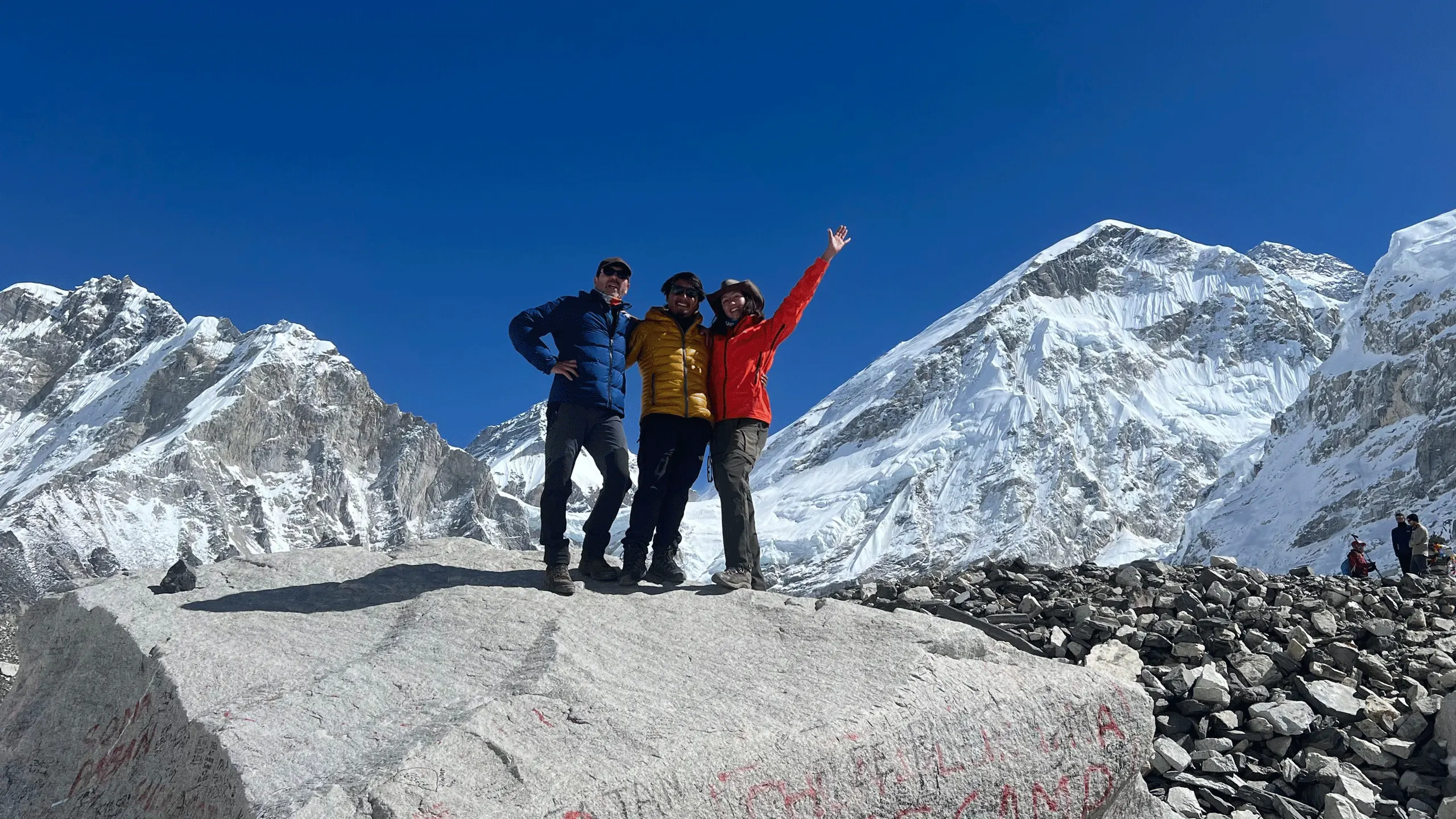
You want to see Everest. Fine. But then the questions start piling up. Do I have enough days off? Can my knees and lungs handle 5,000 metres? Do I actually need to stand at Base Camp, or do I just want to be in those mountains?
That’s really the choice between the Everest Base Camp Trek and the Everest Panorama Trek. Same region, very different trips. The first pushes deep into the high Khumbu toward the famous destination. The second is shorter and built around mountain views, Sherpa villages, and monasteries. Here’s the quick answer: pick the Everest Base Camp Trek if reaching Base Camp is the whole point, and pick the Everest Panorama Trek if you want a shorter, gentler first taste of the Khumbu. What people remember afterwards is rarely just the endpoint, though. It’s the villages, the cold mornings, the pace, the people on the trail.
Everest Base Camp Trek vs Everest Panorama Trek at a Glance
| Factor | Everest Base Camp Trek | Everest Panorama Trek |
| Main experience | Reaching Everest Base Camp | Himalayan views and Khumbu culture |
| Trek length | Longer | Shorter |
| Maximum altitude | About 5,364m at Base Camp | Usually around the Namche and Tengboche area |
| Main highlights | Base Camp, Kala Patthar, high Khumbu landscape | Namche, Tengboche, mountain panoramas |
| Physical demand | Higher | Moderate compared with Base Camp |
| Best for | Dedicated trekkers | Time-limited travelers |
| Overall character | Expedition-style journey | Short Himalayan immersion |
Neither one is automatically better. The right call depends on your time, how you handle altitude, your fitness, and what you actually want out of Nepal.
What the Everest Base Camp Trek Really Feels Like
From Lukla Into the Khumbu
Most people start in Lukla, after a short, slightly nerve-wracking flight. From there, the trail eases you into the Khumbu. Suspension bridges swing over river gorges, prayer wheels spin beside the path, and long mani walls force you to pass on the left. Sherpa villages come one after another, each a bit higher than the last.
Namche Bazaar is the big milestone. It’s a busy mountain town, and it’s also where most trekkers spend a day letting their bodies catch up with the height. Beyond it, the valley opens up, the trees thin out, and the air starts to feel different.
The Journey Becomes the Destination
Here’s the thing about the Everest Base Camp Trek: standing at Base Camp is only one moment in a long walk. Tengboche, Dingboche, Lobuche and Gorak Shep each feel like a different chapter. Days get shorter and slower. Mornings are properly cold. Something as simple as climbing a staircase can leave you breathing hard, and that’s normal at this height.
That slow build is a big part of the appeal. By the time you arrive, you’ve actually earned it.
What Makes the Everest Panorama Trek Different?
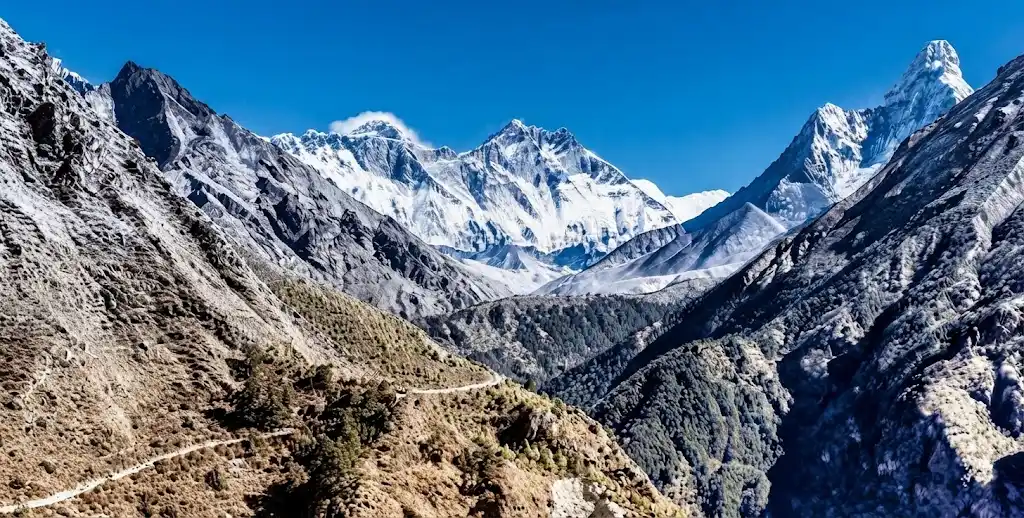
It’s easy to treat the Everest Panorama Trek as a “lite” version of the longer route. That undersells it. It’s a different kind of trip, one that stays in the lower and middle Khumbu and spends its time on the things that make the region special.
You’ll typically pass through Namche Bazaar, visit the area around the Everest View Hotel, and reach Tengboche and its well-known monastery. On a clear day, the skyline takes in Everest, Lhotse and Ama Dablam, with Sherpa villages scattered below. The maximum altitude is noticeably lower than on the Base Camp route, and you skip the long stretch in the high, thin-aired interior.
Some people find that watching prayer flags snap in the wind with Everest sitting on the horizon is more memorable than ticking off one famous spot. The Everest Panorama Trek is built for exactly that kind of day.
The Biggest Difference Is Not Distance, It Is the Experience
Depth vs Accessibility
The Base Camp route takes you far into the Khumbu. The Panorama route gives you a shorter way in, with less risk of running out of holiday days.
Destination vs Perspective
One trek is organised around reaching Base Camp and usually Kala Patthar. The other is about perspective, seeing the big mountains from good viewpoints while living in the villages beneath them.
Physical Commitment
Altitude plus many consecutive walking days make the Base Camp trek the tougher of the two. The Panorama route is gentler on the body, though it’s still real trekking.
Time
If you only have a short window in Nepal, the Panorama route usually fits far more comfortably.
Which Trek Fits Your Travel Style?
Choose Everest Base Camp If…
Getting to Base Camp matters to you personally, and you can spare the extra days. You’re ready for long stretches of walking and some serious altitude, and you want to see how the valley changes as it climbs.
Choose Everest Panorama If…
Your time in Nepal is limited, or the scenery matters more to you than the destination. You’d like to see Namche and Tengboche without going as high as Base Camp.
If you’re still weighing the two, it helps to talk it through with people who know the region. Travelers often compare routes and sort out an itinerary with a local operator such as Nepal Independent Guide, which makes it easier to match the plan to your dates and fitness.
Altitude, Acclimatization and What Travelers Should Not Underestimate
Altitude is the real difference between these two trips. The Base Camp route climbs far higher, and that changes everything: sleep, appetite, energy, mood.
Walk slowly. Seriously. Going slow at altitude isn’t a weakness; it’s the smart way to do it. Take the acclimatization days seriously, drink plenty of water, rest when you need to, and pay attention to how you feel. Headache, nausea, or unusual dizziness shouldn’t be brushed off, and symptoms that get worse mean you stop climbing.
The Panorama route involves much less extreme altitude, but you still shouldn’t treat it as a stroll. Namche and Tengboche are high enough to affect some people.
Is the Everest Panorama Trek easier than Everest Base Camp? Generally, yes. The maximum altitude is lower, and the overall physical commitment is smaller, though how you personally respond to height and your fitness still vary a lot.
The Places That Give Both Treks Their Character
Both routes share a lot of ground, and it’s the places that make them more than a mountain-view outing. Lukla is the doorway. Namche Bazaar is the cultural and trading heart of the Khumbu Valley. Tengboche has the Buddhist monastery and a wide-open view of Ama Dablam. The Everest View Hotel area gives a famous vantage point toward Mount Everest and Lhotse.
Along the way, you’re walking through Sherpa villages, past monasteries, prayer flags, and mani stones. It’s high-altitude trekking, sure, but it’s also a very human landscape, and that’s easy to forget when you’re only thinking about summits.
How to Decide in One Minute
Choose the Everest Base Camp Trek if reaching Base Camp is the reason you’re coming to the Khumbu.
Choose the Everest Panorama Trek if you want the Everest region, mountain views, and Sherpa culture, but don’t need to reach Base Camp.
More time and a wish for a deeper journey point to Base Camp. Scenery, culture, and a shorter route point to Panorama.
Everest Is More Than One Destination
Everest doesn’t have to be experienced one way. The Everest Base Camp Trek gives you the deeper physical journey toward the mountain. The Panorama route gives you a shorter trip built around views, villages, monasteries, and the feel of the Khumbu. The better choice is simply the one that fits your time, your preparation, and your reason for coming to Nepal.
Frequently Asked Questions
Is the Everest Panorama Trek easier than the Everest Base Camp Trek?
Usually, yes. It’s shorter, stays lower and asks less of your body, although individual fitness and altitude response differ.
Can you see Mount Everest on the Everest Panorama Trek?
Yes, from established viewpoints in the Khumbu. Whether you get a clear look depends on the weather and where you’re standing that day.
How high is the Everest Base Camp Trek?
Everest Base Camp sits at roughly 5,364m. Kala Patthar, the popular viewpoint nearby, is higher still.
How long is the Everest Panorama Trek?
It depends on the itinerary and how the route is designed, so there’s no single number that fits every trip.
Which trek is better for first-time visitors to Nepal?
It depends. The Panorama route can be a gentler introduction, while the Base Camp route suits people whose main goal is getting to Base Camp.
Can I experience Sherpa culture on both treks?
Yes. Both pass through important Sherpa settlements, and the Panorama route leans a bit more on villages and monasteries at lower elevations.