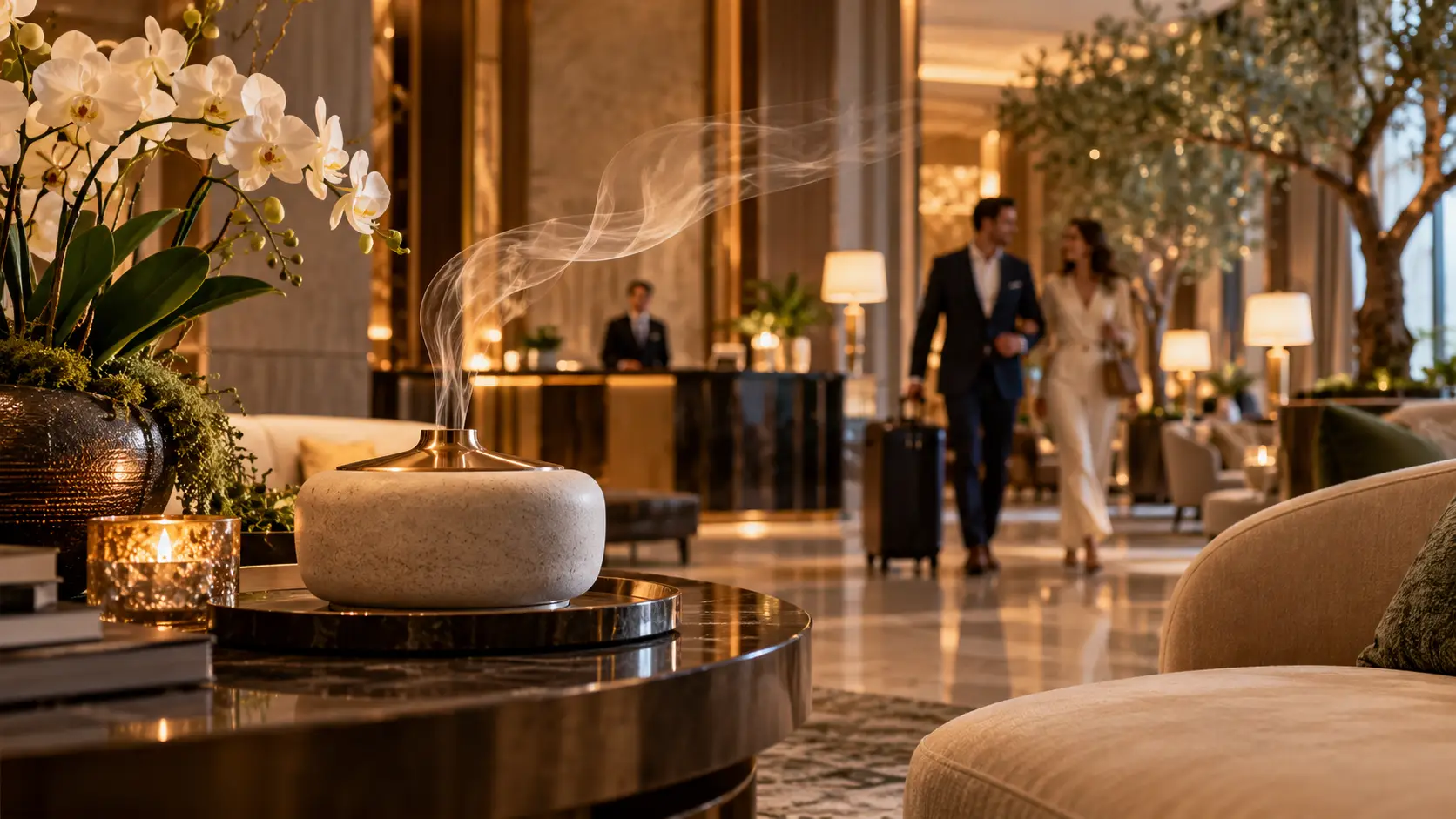
When people think about a memorable hotel, they often remember the comfortable bed, elegant lobby, friendly service, or beautiful view. But there is another part of the experience that may be much less obvious: scent.
Many hotels pay careful attention to how their spaces smell. A subtle fragrance in a lobby, hallway, spa, or guest area can become part of the atmosphere of the property. In some cases, hotels develop a distinctive fragrance specifically associated with their brand. This is commonly known as a signature hotel scent.
The idea is simple. People experience places through more than their eyes. We notice sounds, textures, temperatures, tastes, and smells. Because scent has a particularly interesting relationship with emotion and memory, fragrance can contribute to how guests perceive and remember a hotel.
What Is a Signature Hotel Scent?
A signature hotel scent is a fragrance selected or created to represent the atmosphere or identity of a hotel. Instead of using unrelated air fresheners in different areas, a property may use a consistent fragrance profile throughout selected spaces.
The scent might contain fresh citrus, soft florals, woods, herbs, spices, or other fragrance notes. The exact combination usually depends on the character the hotel wants to create.
A modern city hotel, for example, might prefer a clean and understated fragrance. A coastal resort could choose something fresh and botanical, while a traditional luxury property might use warmer woody or amber-like notes.
There are no universal rules. The important point is that fragrance is selected intentionally rather than simply used to cover unwanted odors.
Why Is Smell So Closely Connected to Memory?
Scent has an unusual ability to remind us of past experiences. The olfactory system, the sensory system responsible for smell, has close connections with areas of the brain involved in memory and emotional processing. This helps explain why a familiar smell can sometimes bring back a memory almost instantly.
Think about the smell of freshly baked bread, coffee, rain, sunscreen, old books, or a particular perfume. For some people, these aromas can immediately bring a specific person, place, or moment to mind.
Hotels can potentially benefit from this association. When guests repeatedly encounter a distinctive fragrance during a stay, the scent may become one of several sensory cues associated with that experience. Encountering something similar later could remind them of the hotel, just as a photograph or song might.
Of course, scent and memory are highly personal. The same fragrance will not create an identical reaction in everyone.
The First Impression Begins Before Check-In
Hotel lobbies are carefully designed environments. Lighting is considered. Furniture is positioned intentionally. Music may be selected to create a particular atmosphere. Staff presentation and service are planned. Even details such as flowers, artwork, and materials can contribute to the first impression. Fragrance can become another part of this environment.
When guests enter a clean, subtly fragranced lobby, the aroma becomes part of their initial sensory experience. They may not consciously think, “This hotel has an interesting fragrance.” Instead, they may simply perceive the environment as pleasant or distinctive.
This is one reason subtlety matters. An overpowering fragrance can become distracting or uncomfortable. A carefully controlled scent is generally intended to complement the environment rather than dominate it.
Scent Can Support a Hotel’s Identity
Brand identity is usually discussed in visual terms. Companies have logos, colors, typography, photography styles, and interior design standards. But a brand can also have sensory characteristics.
Consider a peaceful wellness resort. Its visual identity might include natural materials, muted colors, plants, and soft lighting. A fragrance based around botanical or woody notes could potentially reinforce that atmosphere.
A glamorous urban hotel might create a completely different sensory experience with darker interiors, dramatic lighting, polished surfaces, and a richer fragrance profile.
Neither approach is automatically better. The goal is consistency. When the scent, architecture, lighting, music, service, and overall design communicate a similar character, the experience can feel more coherent.
Why Luxury Hotels Often Use Subtle Fragrances
One interesting characteristic of sophisticated scent design is that the fragrance does not necessarily need to be strong. In fact, subtle fragrance can often be more effective in shared environments.
Hotels serve many different people, and fragrance preferences vary widely. A scent one guest loves might be disliked by another. Some people may also be sensitive to fragranced products.
For this reason, carefully managed intensity is important. The fragrance should not overwhelm the lobby or compete with restaurants, flowers, cleaning products, or other natural smells within the property.
This principle is similar to background music. If the music becomes so loud that guests cannot comfortably talk, it stops supporting the environment and starts controlling it. Scent works in much the same way.
How Hotel Scents Influence the Perception of a Space
Smell does not physically change the furniture or architecture of a room, but it can contribute to the overall perception of the environment.
Fresh or green fragrance profiles may feel compatible with bright, airy interiors. Woody notes can complement natural materials and warmer spaces. Floral fragrances may work with elegant or garden-inspired environments.
These associations are not universal psychological rules. Culture, memories, personal preferences, and previous experiences influence how individuals interpret fragrance.
This is why scent design is more nuanced than simply choosing a fragrance described as “luxurious.” A successful fragrance needs to make sense within the actual environment.
The Role of Scent Marketing
When businesses intentionally use fragrance as part of the customer experience or brand identity, the practice is often described as scent marketing or olfactory branding.
Hotels are particularly suited to this approach because guests spend significant time inside the environment. They may encounter the hotel’s fragrance when entering the lobby, walking through shared spaces, visiting a spa, or returning after a day outside.
This repeated exposure can make fragrance part of the property’s overall identity.
However, scent marketing should not be understood as a guaranteed way to make people buy something or return to a hotel. Human behavior is far more complicated than that.
Fragrance is one component of the experience. Cleanliness, service, comfort, value, location, food quality, room design, and many other factors are likely to have a much more direct influence on guest satisfaction.
Why Some Guests Want to Recreate Hotel Scents at Home
An interesting extension of signature hotel fragrance is the desire to recreate aspects of the hotel experience at home.
People already do this with other hospitality products. Hotel-style bedding, towels, mattresses, lighting, robes, and bathroom products have all influenced residential design.
Fragrance follows the same pattern. If someone associates a particular hotel scent with a relaxing holiday or enjoyable experience, they may want a similar atmosphere in their own living space. Home fragrance products, candles, and diffusers make it possible to introduce comparable fragrance families into residential environments.
The attraction is not necessarily the smell alone. It may be the memory attached to it. A fragrance can become a reminder of travel, relaxation, celebration, or simply being somewhere different from everyday life.
Scent Cannot Replace Cleanliness
There is an important distinction between scenting a space and keeping it clean. Fragrance should never be used simply to hide unpleasant odors. Good hotels first address cleanliness, ventilation, humidity, waste management, fabrics, bathrooms, food odors, and other potential sources of unwanted smells. Fragrance can then be introduced as an additional sensory element.
Trying to cover an unpleasant odor with another strong smell can make an environment less comfortable rather than more pleasant.
In other words, a signature scent should be part of environmental design—not a substitute for good housekeeping.
Not Everyone Experiences Fragrance the Same Way
Scent is extremely subjective. A fragrance that one person describes as relaxing might remind another person of something unpleasant. Cultural background and personal history can also influence fragrance preferences.
Some individuals may experience headaches, respiratory irritation, allergies, or other sensitivities around fragranced products. Hotels therefore need to consider accessibility and guest comfort when deciding how and where fragrance is used.
This is another reason why controlled, thoughtful scenting is generally preferable to filling every part of a property with a strong aroma.
Good hospitality design should make people comfortable rather than force them to experience a particular fragrance.
The Psychology Is Really About Association
The most interesting part of signature hotel scents may not be the fragrance itself.
It is an association. During a hotel stay, many experiences happen at the same time. Guests see the interior, interact with staff, sleep in the rooms, eat meals, hear music, explore the destination, and experience the property’s fragrance.
Together, these details create memories. If a particular scent appears consistently within that experience, it can become one of the cues associated with those memories.
That is why someone might encounter a familiar hotel-like fragrance months or years later and suddenly think about a particular holiday or destination.
The scent has become connected with something larger than itself.
The Invisible Side of Hospitality Design
The rise of the signature hotel scent reflects a broader change in how hospitality spaces are designed.
A hotel is not simply a building filled with beds. It is an environment experienced through multiple senses.
Interior design determines what guests see and touch. Acoustic design influences what they hear. Food and beverages contribute taste. Temperature, lighting, materials, and service influence comfort. Fragrance adds another subtle dimension.
When these elements work together, the hotel can develop a distinctive sense of place.
This is why scent has become such an interesting part of modern hospitality. It is invisible, yet it can contribute to how an environment feels and how people remember being there.
The best signature hotel scent may therefore be one guests barely notice while they are staying, but somehow recognize when they encounter it again.