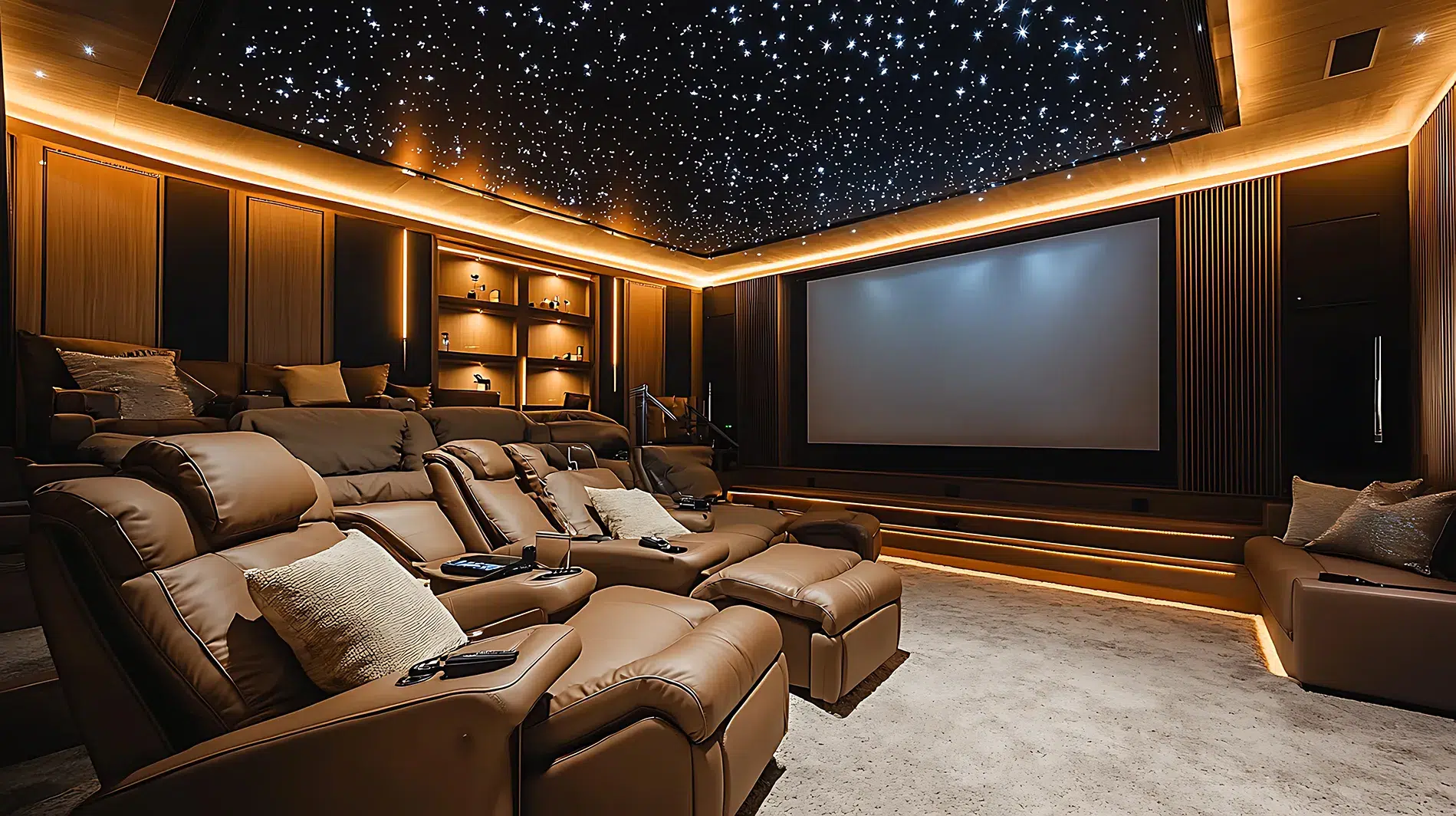
Luxury home cinemas used to mean a dark room, oversized recliners, and a projector that felt impressive at the time. That version now feels dated. Today’s spaces are immersive, architectural, and often the emotional center of the home. Not just for movies. For sport, gaming, streaming marathons, and even quiet solo escapes after a long day.
A recent project revealed just how far expectations have shifted. A client insisted the cinema shouldn’t feel like a separate room. It needed to flow with the rest of the house. Open sightlines. Hidden tech. Seamless transitions. That request alone reshaped the entire design approach.
Many homeowners now consider these spaces early in a whole home remodel, rather than treating them as an afterthought. It makes sense. Retrofitting luxury rarely works as well as planning it from the ground up.
Design That Feels Like an Experience
Step inside a modern luxury cinema and the difference is immediate. It doesn’t scream “theater.” It whispers comfort, precision, and intent. Acoustic paneling blends into sculptural walls. Lighting is layered and adjustable, shifting from bright and social to dim and cinematic in seconds.
There’s also a stronger focus on materials. Velvet is still around, but it’s often paired with stone, timber, or brushed metals. Texture matters. It changes how sound travels, but also how the room feels. Cold, echoing spaces are out. Warm, enveloping ones are in.
One designer admitted something interesting during a walkthrough. The goal wasn’t to impress guests anymore. It was to create a space people actually use. That shift has quietly changed everything.
Technology That Disappears
The best technology now does something unexpected. It disappears.
Screens retract. Speakers hide behind walls. Control systems operate with a single tap or voice command. No clutter. No confusion. Just a smooth, almost invisible experience.
A homeowner once complained about their previous setup. Too many remotes. Too many settings. It turned movie night into a chore. After upgrading to an integrated system, they joked that even their guests could run it without asking for help. That’s the benchmark now.
This level of integration often pairs naturally with home extensions, especially when homeowners want to carve out a dedicated entertainment wing without disrupting the main living areas.
Beyond Movies: Multi-Use Luxury
Here’s where things get interesting. These rooms are no longer just for films.
They host game nights. They double as private concert venues with high-fidelity audio. Some even function as presentation spaces for business owners who prefer to host clients at home. Versatility is no longer a bonus. It’s expected.
A recent survey of high-end homeowners showed that entertainment spaces are used at least four times more frequently when they serve multiple purposes. Not surprising. People want value from every square foot.
There’s also a growing trend toward hybrid layouts. Think tiered seating that converts into lounge zones. Or screens that shift between cinematic formats and ultra-wide gaming displays. It’s clever. And a little indulgent.
Comfort Is the Real Luxury
Forget rigid rows of identical chairs. Comfort has taken over.
Seating is now deeply personal. Adjustable loungers, oversized sofas, even custom-built daybeds. Some homeowners prefer a more relaxed, almost living-room feel. Others still want that structured theater vibe, but with better ergonomics and spacing.
Temperature control plays a bigger role, too. Subtle climate adjustments keep the room comfortable without drawing attention. It’s one of those details that’s easy to miss until it’s done right.
One homeowner described their cinema as the only place in the house where everyone agrees on something. That alone says a lot.
Lighting That Sets the Mood
Lighting can make or break the experience. Harsh overhead lights? Gone. Instead, layered lighting creates depth and flexibility.
Soft wall washes. Hidden LED strips. Floor-level guides that feel almost cinematic before the movie even starts. It’s all carefully calibrated not just for aesthetics, but for function.
There’s also a psychological aspect. Dim, warm lighting helps the brain switch off. It signals relaxation. That’s part of the appeal. The space becomes a retreat, not just a room.
Interestingly, lighting design often becomes a focal point during a whole-home remodel, especially when homeowners want a consistent ambiance across different zones, including entertainment spaces.
Sound That Feels Alive
Visuals might grab attention first, but sound is what pulls people in.
Modern systems deliver layered, directional audio that feels almost physical. A whisper behind the viewer. A rumble beneath the floor. It’s immersive in a way older setups simply couldn’t achieve.
But here’s the catch. Poor acoustics can ruin even the most expensive system. That’s why design and engineering need to work together from the start. No shortcuts.
A client once upgraded their speakers without addressing the room itself. The result? Marginal improvement. Once acoustic treatments were added, the difference was dramatic. Night and day.
Privacy and Personal Escape
Luxury today leans heavily into privacy. Home cinemas fit perfectly into that mindset.
They offer an escape without leaving the house. No crowds. No distractions. Just complete control over the environment. It’s a quiet kind of luxury, but a powerful one.
This demand has also influenced how these spaces are positioned within a home. Tucked away. Soundproofed. Sometimes, even hidden behind sliding panels or disguised entrances. A little theatrical, but undeniably appealing.
For larger properties, these spaces often emerge during home extensions, allowing homeowners to expand their living areas while maintaining a sense of separation and exclusivity.
Where It’s All Heading
The future of luxury home cinemas feels less about excess and more about intention. Cleaner design. Smarter tech. Spaces that adapt rather than dictate.
And maybe that’s the real shift. It’s not about recreating a commercial theater anymore. It’s about creating something better. Something personal.
Because at the end of the day, the best room in the house isn’t the one that looks impressive. It’s the one people keep coming back to.