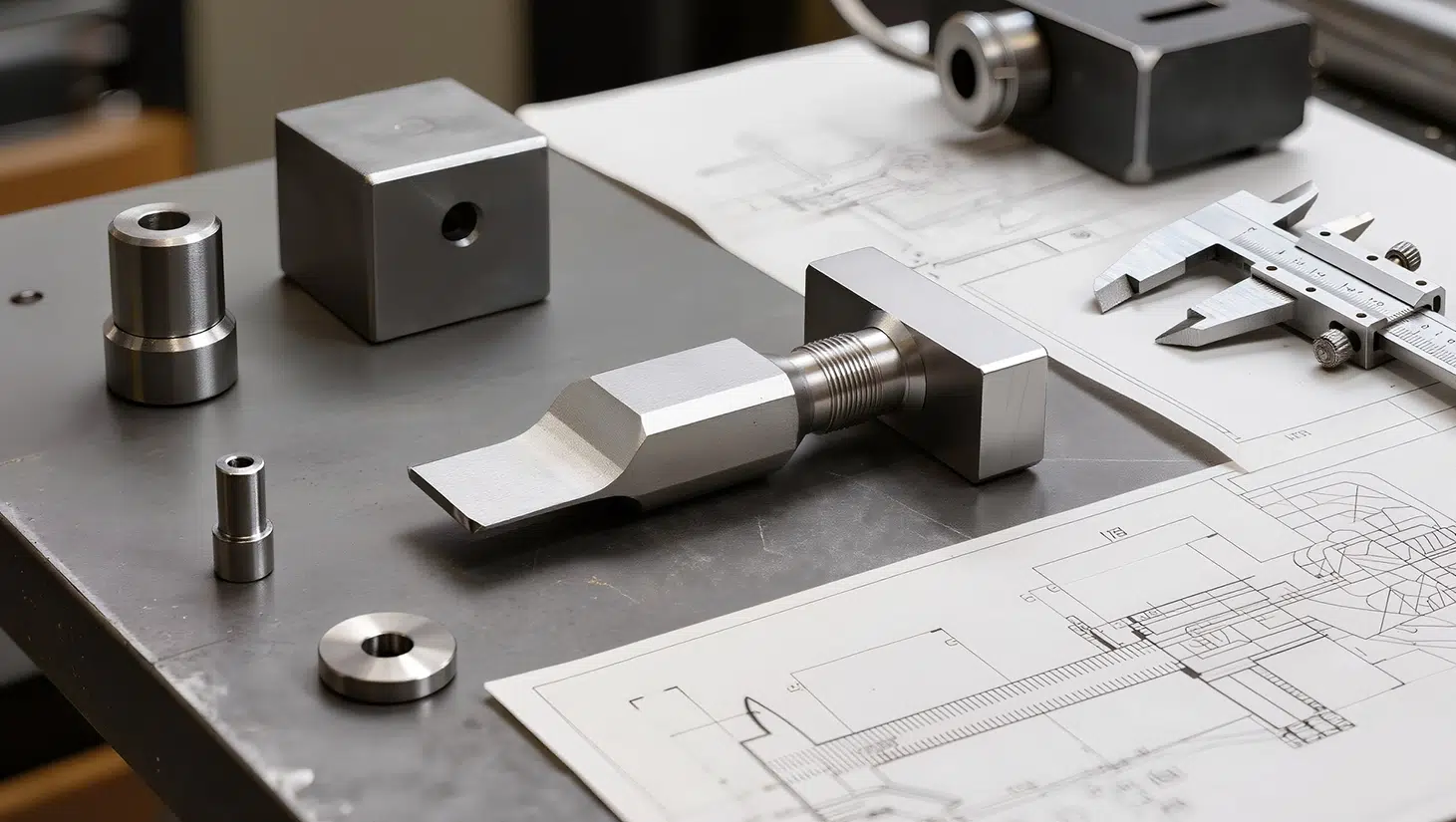
Product development has evolved far beyond creating visually appealing concepts. Today, manufacturers and product developers are expected to deliver products that perform consistently, withstand demanding operating conditions, and can be produced efficiently at scale. Achieving these objectives requires an engineering-driven design approach—one that integrates technical analysis, manufacturing constraints, and performance validation from the earliest stages of development.
Unlike design processes that prioritize appearance before functionality, engineering-driven product design begins by defining how a product must perform. Factors such as material properties, load conditions, thermal behavior, manufacturing methods, and assembly requirements are evaluated before a design reaches production. This reduces costly redesigns, shortens development cycles, and minimizes manufacturing risks.
For organizations developing industrial equipment, automotive components, consumer products, or medical devices, investing in professional mechanical design servicess provides a structured pathway from concept to production-ready designs while improving product quality and reducing lifecycle costs.
Why Engineering-Driven Design Starts with the Right Expertise
Engineering decisions made during the conceptual design phase have a lasting impact on every downstream process—from prototyping and testing to production and maintenance. Studies consistently show that the majority of manufacturing costs are committed during the design stage, making early engineering involvement one of the most effective ways to control project risks.
The Importance of Engineering Support from the Beginning
Every product is expected to satisfy multiple requirements simultaneously:
- Structural integrity
- Functional performance
- Manufacturability
- Cost efficiency
- Regulatory compliance
- Serviceability
Attempting to optimize one parameter without considering the others often results in engineering trade-offs later in the project.
For example, increasing the wall thickness of a housing may improve strength but also increase material costs, machining time, weight, and cooling cycles during injection molding. Engineering teams evaluate these competing factors before finalizing a design.
Instead of relying on trial-and-error during prototyping, engineers use analytical methods and simulation tools to predict product behavior under real operating conditions.
CAD Design and Drafting as the Foundation
Engineering begins with accurate digital models rather than physical prototypes.
Professional mechanical CAD design and drafting services create production-ready 3D models and manufacturing drawings that become the single source of truth throughout the product lifecycle.
These models enable engineering teams to:
- Validate assemblies before fabrication
- Detect interferences between components
- Verify tolerances
- Generate manufacturing documentation
- Support CNC machining and additive manufacturing
- Simplify collaboration between design and production teams
Rather than discovering design flaws after tooling has been manufactured, companies can identify and resolve issues digitally—saving both time and capital.
What Is Engineering-Driven Product Design?
Engineering-driven product design is a systematic development methodology where engineering principles guide every design decision.
Instead of asking:
“Does this product look good?”
Engineers ask:
- Will it survive cyclic loading?
- Can it be manufactured consistently?
- Are tolerances achievable?
- Can the assembly process be simplified?
- Is the material appropriate for the operating environment?
- What failure modes are most likely?
These questions transform product development from a creative exercise into an optimized engineering process.
Engineering vs. Design-Only Approaches
A purely industrial design approach often focuses on user interaction, ergonomics, and aesthetics.
Engineering-driven design expands the scope by incorporating:
| Design-Focused Approach | Engineering-Driven Approach |
| Visual appearance | Functional performance |
| User experience | Structural integrity |
| Styling | Manufacturing feasibility |
| Concept sketches | Engineering analysis |
| Prototype testing | Simulation + validation |
Both disciplines are essential. However, engineering ensures that an attractive product can actually perform reliably throughout its intended service life.
Balancing Performance, Cost, and Manufacturability
One of the most challenging aspects of engineering design is balancing competing objectives.
For example, aerospace engineers often pursue lightweight designs to improve fuel efficiency. However, reducing material thickness can introduce higher stress concentrations or fatigue concerns.
Similarly, consumer electronics manufacturers seek compact designs while still accommodating thermal management, structural support, and manufacturable assemblies.
Engineering-driven design involves evaluating these competing requirements until an optimal balance is achieved.
Why Cross-Functional Collaboration Matters
Modern product development rarely occurs within a single department.
Successful projects require collaboration among:
- Mechanical engineers
- Manufacturing engineers
- Industrial designers
- Materials specialists
- Quality engineers
- Supply chain teams
Early collaboration prevents scenarios where a component is technically functional but difficult—or prohibitively expensive—to manufacture.
This cross-functional approach aligns engineering intent with manufacturing realities.
How Engineering Improves Product Performance
Product performance depends on more than selecting high-quality materials. It results from understanding how every component behaves individually and as part of a complete assembly.
Engineering-driven design incorporates analytical techniques that reduce uncertainty before physical testing begins.
Material Selection Based on Real Applications
Selecting materials involves much more than comparing strength values.
Engineers evaluate characteristics such as:
- Yield strength
- Ultimate tensile strength
- Elastic modulus
- Fatigue resistance
- Corrosion resistance
- Thermal conductivity
- Wear resistance
- Weight-to-strength ratio
Consider a gearbox housing.
Using aluminum instead of cast iron reduces weight significantly, but engineers must also evaluate vibration damping, thermal expansion, machining characteristics, and expected service loads.
Choosing the wrong material may not cause immediate failure but can reduce fatigue life, increase maintenance requirements, or introduce manufacturing challenges.
Material selection therefore becomes a multidisciplinary engineering decision rather than simply a procurement choice.
Structural Optimization and Load Management
Products fail when stresses exceed the material’s allowable limits or when repeated loading causes fatigue over time.
Engineering teams study:
- Static loading
- Dynamic loading
- Impact forces
- Buckling
- Vibration
- Stress concentrations
Instead of uniformly increasing material thickness, engineers optimize geometry to distribute loads efficiently.
For example:
A rib added to a plastic enclosure can significantly increase stiffness without substantially increasing material consumption.
Similarly, introducing fillets at sharp internal corners reduces stress concentrations that commonly become crack initiation points during fatigue loading.
This approach improves structural performance while minimizing unnecessary weight and manufacturing costs.
CAD, Simulation, and Virtual Validation Reduce Guesswork
One of the most significant advances in modern engineering is the ability to validate designs digitally before manufacturing begins.
Computer-Aided Design (CAD) platforms integrated with simulation tools enable engineers to evaluate:
- Stress distribution
- Thermal behavior
- Modal frequencies
- Fluid flow
- Assembly motion
- Contact interactions
Finite Element Analysis (FEA), for instance, divides complex geometries into thousands of small elements, allowing engineers to calculate localized stresses and deformations under simulated operating conditions.
Instead of building multiple physical prototypes, design teams can compare several design iterations digitally, identifying weaknesses long before production tooling is commissioned.
This engineering workflow provides measurable advantages:
- Faster design iterations
- Reduced prototype costs
- Improved confidence in design decisions
- Better compliance with performance requirements
Simulation does not replace physical testing, but it significantly reduces development uncertainty and allows engineers to focus physical validation on optimized designs rather than preliminary concepts.
Tolerance Stack-Up: A Hidden Performance Factor
Even well-designed components can perform poorly if manufacturing tolerances are not managed correctly.
Tolerance stack-up occurs when dimensional variations from multiple components accumulate within an assembly.
For example, a shaft, bearing, housing, and retaining ring may all fall within individual manufacturing tolerances, yet their combined variation could create excessive clearance or interference.
Engineering teams perform tolerance analyses to ensure that assembled products function correctly despite normal manufacturing variation.
This seemingly small consideration directly influences:
- Rotational accuracy
- Noise levels
- Wear rates
- Product reliability
- Assembly efficiency
Ignoring tolerance stack-up often leads to inconsistent product quality and expensive post-production adjustments.
Performance Optimization Is an Iterative Engineering Process
Engineering-driven design is not a linear activity where a product is modeled once and sent directly to production.
Instead, the process follows a continuous cycle:
- Define functional requirements.
- Develop initial CAD concepts.
- Analyze performance using engineering simulations.
- Refine geometry based on analytical results.
- Validate manufacturability.
- Prototype and verify critical performance metrics.
- Finalize production documentation.
Each iteration improves confidence in the final design while reducing uncertainty before manufacturing investments are made.
This iterative methodology explains why engineering-driven organizations consistently produce products with higher performance, lower warranty claims, and shorter development timelines compared to projects that rely primarily on physical prototyping.
Building Reliability into Every Product
A product’s performance is only valuable if it can be maintained consistently throughout its intended service life. Reliability engineering focuses on ensuring that products continue to function under expected operating conditions while minimizing failures caused by wear, fatigue, environmental exposure, or manufacturing variation.
Engineering-driven design incorporates reliability considerations from the beginning rather than treating failures as issues to be addressed after production.
Designing for Durability
Durability is achieved by understanding how a product behaves throughout its lifecycle—not just during initial operation.
Engineers evaluate factors such as:
- Cyclic loading and fatigue
- Thermal expansion and contraction
- Corrosion and oxidation
- Abrasion and wear
- Environmental exposure (moisture, dust, chemicals, UV radiation)
- Vibration and shock loads
For example, an industrial gearbox operating continuously in a manufacturing plant experiences repeated loading cycles. While the applied load during each cycle may remain below the material’s yield strength, microscopic cracks can gradually develop due to fatigue. Over time, these cracks propagate, eventually resulting in component failure.
Engineering teams address this by selecting appropriate materials, optimizing geometry, eliminating stress concentrations, and applying suitable surface treatments or coatings.
Rather than designing components that simply “meet the minimum requirement,” engineering-driven development focuses on achieving predictable performance over thousands—or even millions—of operating cycles.
Eliminating Failures Before Production
One of the primary objectives of engineering-driven design is identifying potential failure modes before manufacturing begins.
Instead of relying solely on prototype testing, engineers use analytical techniques such as:
- Failure Mode and Effects Analysis (FMEA)
- Finite Element Analysis (FEA)
- Root Cause Analysis (RCA)
- Design verification testing
- Fatigue and lifecycle simulations
These methods allow teams to evaluate questions such as:
- Which component is most likely to fail first?
- What happens if loading conditions exceed expectations?
- How will elevated temperatures affect dimensional stability?
- Could manufacturing tolerances compromise assembly performance?
Addressing these issues during design is significantly more cost-effective than modifying tooling, replacing defective products, or managing warranty claims after production.
Consistent Quality Through Engineering Standards
Reliable products require repeatable manufacturing processes.
Engineering documentation—including detailed CAD models, GD&T (Geometric Dimensioning and Tolerancing), bill of materials (BOM), and manufacturing drawings—ensures that every manufactured component aligns with the original design intent.
This level of documentation reduces ambiguity for production teams while improving quality control throughout the manufacturing process.
International standards such as ISO GPS (Geometrical Product Specifications) and ASME Y14.5 further support dimensional consistency by defining standardized methods for specifying tolerances and geometric controls.
When engineering documentation is complete and unambiguous, manufacturers spend less time interpreting drawings and more time producing consistent, high-quality components.
Engineering for Manufacturability (DFM)
A technically sound design is not necessarily a manufacturable one.
Design for Manufacturability (DFM) is an engineering methodology that ensures products can be produced efficiently, economically, and consistently without compromising quality.
Rather than treating manufacturing as a downstream activity, DFM integrates production considerations into the design process from the outset.
According to the American Society of Mechanical Engineers (ASME), incorporating manufacturing considerations early in product development reduces redesigns, improves production efficiency, and shortens time to market.
Simplifying Manufacturing Processes
Complex designs often introduce unnecessary production challenges.
Examples include:
- Excessive machining operations
- Difficult tool access
- Complex assembly sequences
- Tight tolerances that exceed manufacturing capabilities
- Components requiring specialized fixtures
Engineering teams simplify these issues by redesigning features that maintain functionality while reducing manufacturing complexity.
For instance, replacing multiple welded components with a single cast or machined component may reduce assembly time while improving structural integrity.
Similarly, standardizing hole sizes and fasteners minimizes tooling changes and simplifies inventory management.
These improvements directly translate into lower production costs and improved manufacturing throughput.
Lowering Production Costs Without Sacrificing Quality
Manufacturing cost is influenced by far more than raw material pricing.
Engineering decisions affect:
- Machining time
- Tool wear
- Production setup
- Scrap rates
- Inspection requirements
- Assembly labor
- Packaging and logistics
A design that reduces machining operations from six setups to three may significantly lower production costs without altering product performance.
Likewise, selecting standard components instead of custom-designed hardware simplifies procurement while reducing lead times.
Engineering optimization focuses on maximizing value rather than simply minimizing cost.
Designing Components That Are Easier to Assemble
Assembly efficiency has become increasingly important in modern manufacturing.
Design for Assembly (DFA), often implemented alongside DFM, evaluates how easily products can be assembled using manual or automated processes.
Engineering teams aim to:
- Reduce part count
- Eliminate unnecessary fasteners
- Improve accessibility during assembly
- Prevent incorrect assembly through poka-yoke (error-proofing) features
- Standardize component orientation
For example, self-locating features, alignment pins, and snap-fit designs reduce assembly time while minimizing operator error.
Although these changes may appear minor individually, they can significantly improve production efficiency when manufacturing thousands of units.
Minimizing Rework and Production Delays
Manufacturing problems frequently originate from incomplete engineering documentation rather than poor workmanship.
Common issues include:
- Missing dimensions
- Conflicting tolerances
- Inconsistent revision control
- Undefined surface finish requirements
- Ambiguous assembly instructions
Engineering-driven workflows establish clear documentation practices that reduce production interruptions and improve communication between design, manufacturing, suppliers, and quality assurance teams.
As highlighted by Autodesk’s Design for Manufacturing resources, integrating manufacturability reviews into the design phase helps reduce waste, improve production efficiency, and shorten development timelines.
Industries That Benefit Most from Engineering-Driven Product Design
Although engineering-driven methodologies are widely applicable, some industries rely on them more heavily due to strict performance, safety, and regulatory requirements.
Automotive
Automotive components must withstand vibration, thermal cycling, fatigue loading, and long operational lifespans.
Engineering-driven design supports:
- Powertrain components
- Suspension systems
- Brake assemblies
- Battery enclosures
- Electric vehicle structures
Simulation and validation reduce physical prototyping while improving safety and reliability.
Aerospace
Aerospace products demand exceptional structural efficiency because every kilogram directly affects fuel consumption and payload capacity.
Engineering optimization focuses on:
- Lightweight structures
- Fatigue resistance
- Composite material integration
- Thermal performance
- Regulatory compliance
Even minor design improvements can produce significant operational benefits over an aircraft’s lifecycle.
Medical Devices
Medical equipment requires exceptional precision and reliability.
Engineering teams must balance:
- Biocompatible materials
- Sterilization compatibility
- Tight manufacturing tolerances
- Regulatory compliance
- Ergonomic usability
Engineering validation ensures that devices perform consistently under clinical conditions.
Industrial Equipment
Industrial machinery often operates continuously under demanding conditions.
Engineering-driven design improves:
- Load-bearing capability
- Wear resistance
- Maintainability
- Service life
- Energy efficiency
Design optimization reduces maintenance costs while increasing operational uptime.
Consumer Products
Even everyday consumer products benefit from engineering-driven development.
Examples include:
- Household appliances
- Power tools
- Electronics enclosures
- Sporting equipment
- Furniture systems
Engineering refinement improves product quality while simplifying mass production.
Best Practices for Engineering-Driven Product Development
Successful engineering projects consistently follow several best practices that reduce uncertainty and improve product quality.
Involve Engineers Early
Engineering input should begin during concept development—not after industrial design is complete.
Early collaboration prevents costly redesigns while improving technical feasibility.
Validate Designs Digitally Before Prototyping
Modern CAD, simulation, and engineering analysis software allow teams to evaluate structural behavior, thermal performance, assembly feasibility, and manufacturability before physical prototypes are produced.
This accelerates development while reducing prototype costs.
Design with Manufacturing in Mind
Engineering teams should collaborate closely with manufacturing personnel throughout product development.
Understanding production capabilities, tooling limitations, and assembly workflows helps create designs that move smoothly into production.
Optimize Continuously
Engineering-driven design is an iterative process.
Every simulation, prototype, and manufacturing review provides valuable feedback that can be used to refine the design.
Organizations that embrace continuous optimization generally achieve:
- Higher product quality
- Lower production costs
- Improved reliability
- Faster product launches
- Reduced warranty claims
Conclusion
Engineering-driven product design is fundamentally about making informed technical decisions that improve product performance throughout its entire lifecycle. Rather than relying on assumptions or repeated physical prototyping, this approach integrates engineering analysis, simulation, material science, and manufacturing expertise from the earliest stages of development.
The benefits extend far beyond stronger or more efficient products. Engineering-led workflows reduce design iterations, improve manufacturing consistency, simplify assembly, and enhance long-term reliability. By incorporating methodologies such as Design for Manufacturability (DFM), Design for Assembly (DFA), tolerance analysis, and simulation-driven validation, organizations can reduce development risks while accelerating time to market.
Whether developing industrial machinery, automotive systems, medical devices, or consumer products, investing in high-quality mechanical design services enables businesses to bridge the gap between innovative concepts and production-ready solutions. As product complexity continues to increase across industries, engineering-driven design remains one of the most effective strategies for delivering products that perform reliably, can be manufactured efficiently, and provide lasting value throughout their operational life.