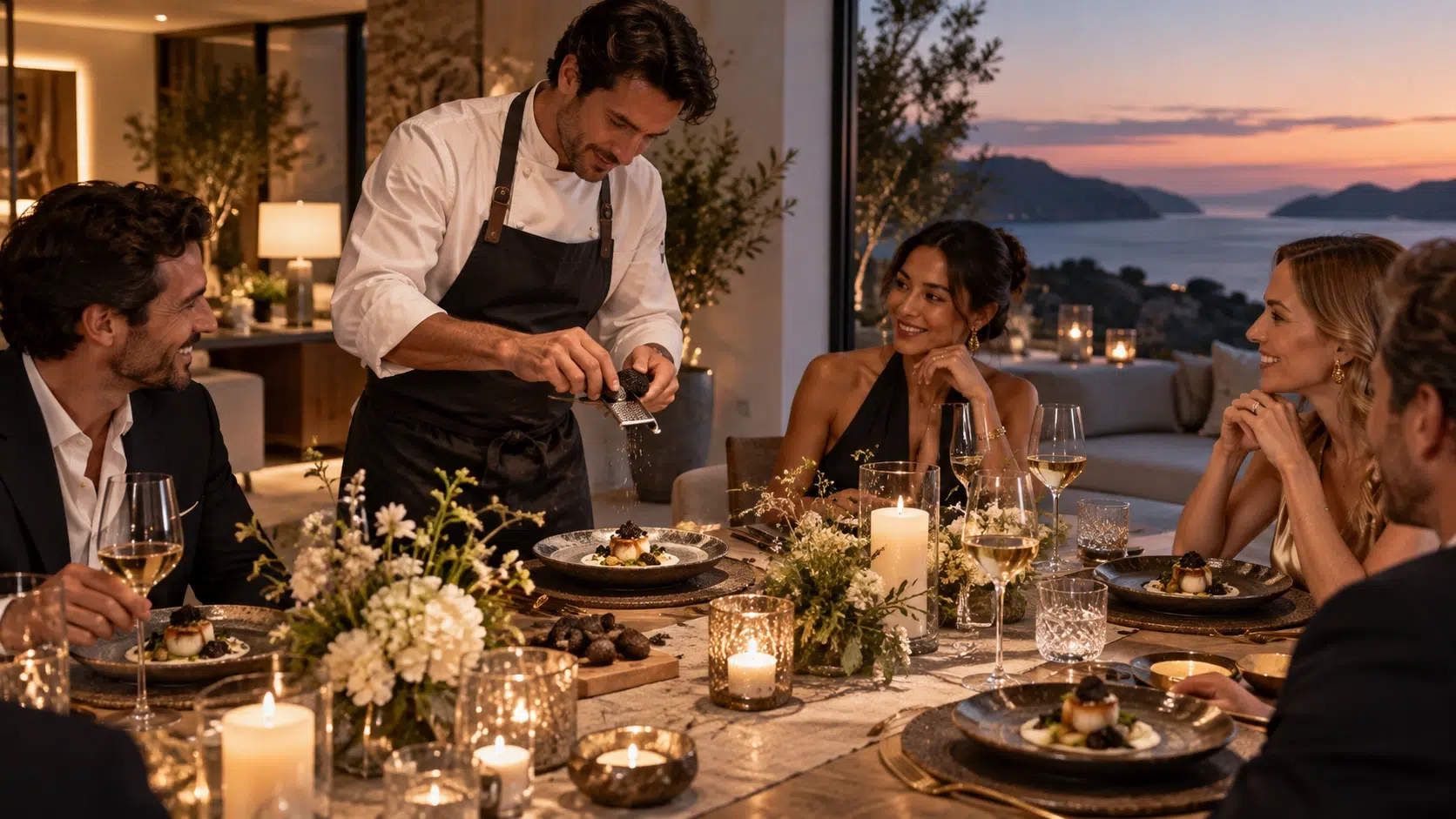
For years, entertaining at home followed a fairly predictable formula: prepare the house, set the table, serve dinner, and hope the conversation carries the evening. That approach still has its place, but many hosts are beginning to think about gatherings differently. Instead of treating food as one part of the event, they are making the meal itself part of the experience.
The shift is easy to understand. People increasingly value gatherings that feel personal, relaxed, and memorable without requiring the formality of a restaurant reservation or a large event venue. A backyard, patio, terrace, or open-plan dining area can become the setting for an evening that feels polished while still retaining the comfort of home.
What has changed most is the role of the host. The goal is no longer simply to serve a good meal. It is to create an atmosphere in which guests feel involved.
The Meal Is Becoming the Entertainment
Traditional dinner parties tend to separate preparation from participation. Most of the cooking happens before guests sit down, leaving the finished dishes to take center stage.
Experiential dining reverses that relationship.
When guests can see food being prepared, hear it cooking, interact with the person preparing it, and watch the meal develop in real time, dinner becomes more social. There is less pressure to fill every quiet moment with conversation because something interesting is already happening in the room—or, increasingly, in the backyard.
This is one reason live cooking formats have become particularly well suited to private celebrations. Experiences such as interactive hibachi dining turn the cooking process into a shared focal point, combining dinner with performance without requiring hosts to organize separate entertainment.
The appeal goes beyond novelty. Guests naturally gather around the cooking area, conversations start more easily, and the event develops its own rhythm. Instead of everyone waiting for a formal dinner service, the evening feels active from the beginning.
Home Offers Something Restaurants Cannot
Restaurants provide atmosphere, service, and convenience, but entertaining at home offers a different kind of luxury: control.
Hosts can decide exactly how they want the evening to feel. Music can be louder or softer. Children can move around freely. Guests do not have to leave a table because another reservation is waiting. An outdoor dinner can continue late into the evening without the sense that the experience is on a schedule.
There is also greater freedom in how the space is designed.
A long communal table can make a dinner feel celebratory. Lounge seating can create a more casual flow before and after the meal. Soft lighting, candles, lanterns, or simple outdoor string lights can change an ordinary patio without requiring elaborate décor.
The most successful gatherings usually avoid over-designing the space. A few deliberate details tend to feel more sophisticated than a heavily themed setup.
The same principle applies to food. Guests generally remember the quality of the experience more than the number of dishes offered.
Interaction Creates Better Memories
A beautifully presented meal is enjoyable, but participation tends to make an event more memorable.
That participation can take many forms. Guests might assemble their own appetizers, sample several small courses, watch a chef finish dishes in front of them, or simply gather around a live cooking station.
What matters is that the experience gives people something to respond to together.
This is especially useful when a guest list includes people who do not know one another well. Birthdays, graduation parties, neighborhood gatherings, engagement celebrations, and extended-family dinners often bring together different social circles. An interactive food experience creates an immediate common subject.
Instead of asking guests to manufacture conversation, the event gives them something to talk about.
That seemingly small distinction can change the entire atmosphere of a gathering.
Outdoor Spaces Are Becoming Dining Rooms
The rise of experiential entertaining also reflects a broader change in how homeowners use outdoor space.
Backyards and patios are no longer treated simply as places for a grill and a few chairs. Many now function as extensions of the home, with dining tables, lighting, outdoor kitchens, fire features, and comfortable seating areas designed for longer gatherings.
Yet creating an enjoyable outdoor dinner does not require a major renovation.
The essential elements are surprisingly simple: enough room for guests to move comfortably, practical lighting, seating that encourages conversation, and a clear focal point for the meal.
A live cooking area can provide that focal point naturally.
It also allows the gathering to move through several stages without feeling overly structured. Guests can arrive and have a drink, gather around the cooking area, sit down to eat, and then move back into conversation afterward.
The result feels planned without feeling programmed.
Less Formal Can Still Feel Luxurious
Luxury entertaining is often associated with elaborate tablescapes, expensive ingredients, and highly formal service. But modern luxury is increasingly defined by ease.
An evening can feel elevated precisely because the host is not spending the entire time rushing between the kitchen and the table.
When much of the food preparation becomes part of the guest experience, the host has more opportunity to participate in the gathering. That changes the emotional tone of the event. Guests are not watching someone manage a complicated production behind the scenes; everyone is sharing the same experience.
Thoughtful simplicity is often what makes the evening feel sophisticated.
Good lighting, comfortable seating, quality ingredients, and a dining format that encourages interaction can have more impact than elaborate decorations.
A More Personal Way to Gather
The renewed interest in entertaining at home is not simply about convenience. It reflects a desire for gatherings that feel more personal.
People still enjoy restaurants, but private celebrations offer something fundamentally different. The guest list is intentional. The environment belongs to the host. The evening can unfold at its own pace.
Experiential dining adds another layer by making the meal part of the story of the event.
Guests may forget the exact menu months later, but they are more likely to remember standing around a grill laughing with friends, watching dinner being prepared in front of them, or sharing an unexpected moment during the meal.
That is ultimately what good entertaining has always been about.
Not creating the most elaborate event, but creating one people genuinely enjoy being part of.