
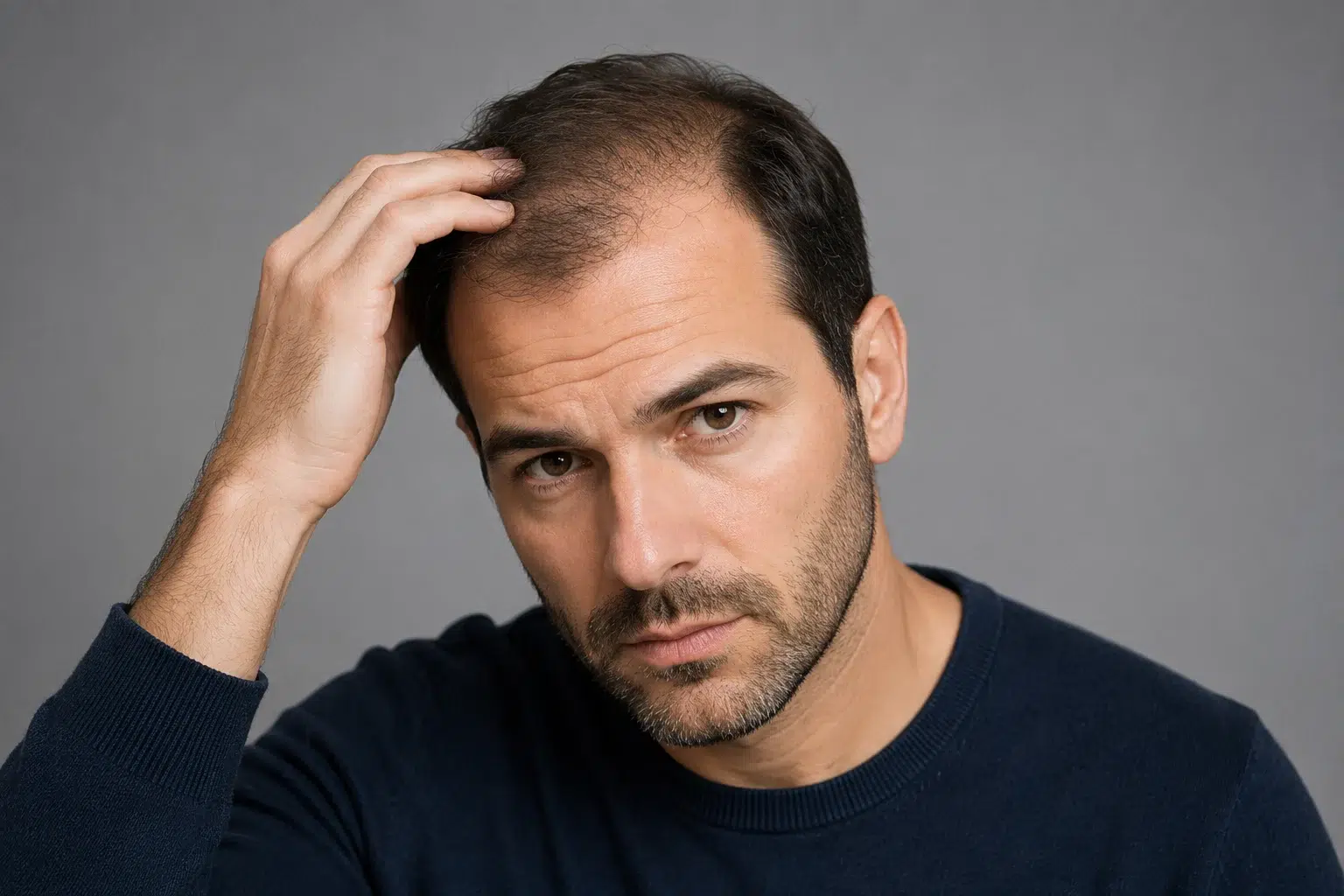
In fashion editorials, every detail matters. The lighting, clothing, skin texture, posture, facial expression, and hairstyle all work together to create a perfect final image. When we look at magazine covers, luxury campaigns, or runway portraits, the result often feels effortless. The model appears confident, stylish, and naturally polished.
But behind the lens, nothing is truly accidental.
Top model agencies and creative teams understand that hair plays a powerful role in visual storytelling. Hair can change the mood of a photo. It can make a face look softer, sharper, younger, stronger, or more luxurious. For male models, a clean and balanced hairline can be especially important because it frames the face and affects how the camera reads age, confidence, and structure.
This is why hair thinning is handled carefully in professional shoots. It is not always discussed openly, but it is often managed with expert styling, lighting techniques, grooming products, and modern hair replacement solutions. In the fashion world, the goal is not to create an artificial look. The goal is to create a natural, camera-ready appearance that supports the image.
Today, these same behind-the-scenes solutions are no longer limited to professional models. Men outside the fashion industry are also discovering how a fuller, natural-looking hairstyle can improve their confidence in photos, meetings, social events, and daily life.
Why Hair Matters So Much in Editorial Photography
In everyday life, minor hair thinning may not always be obvious. But cameras can make small details more noticeable. High-resolution photography, studio lighting, and close-up portraits can reveal thin areas, receding temples, scalp shine, and uneven density.
This is especially true in editorial shoots, where the face and hair are often the focus. A model may wear a simple outfit, but the hair must still carry the image. If the hairstyle looks flat, sparse, or unbalanced, the entire photo can feel weaker.
Hair affects several visual elements:
It frames the face.
It balances facial proportions.
It adds texture and movement.
It creates a younger or more refined impression.
It supports the fashion concept.
It helps the model look more confident.
For male models, the hairline is often one of the most important details. A strong hairline can make the jawline appear sharper, and the face look more structured. A thinning hairline can sometimes distract from the clothing, expression, or overall mood of the image.
That is why agencies and stylists treat hair as part of the full styling process, not as a small extra detail.
The Reality Behind Perfect Editorial Hair
Many people assume that models naturally have perfect hair. In reality, even professional models need help before a shoot. Some have fine hair. Some have thinning at the crown. Some have uneven hairlines. Some have hair that looks full in person but flat under studio lights.
Fashion teams are used to solving these problems.
Before a shoot, hairstylists may use volumizing sprays, texture powders, matte products, scalp concealers, blow-drying techniques, and strategic parting. They may also adjust the hairstyle based on the lighting setup. For example, strong overhead lighting can make thinning areas more visible, while softer side lighting may create a fuller appearance.
Photographers also play a role. They may change camera angles, use shadows carefully, or avoid poses that expose sparse areas. Retouchers can refine the final image, but professional teams prefer to solve as much as possible during the shoot. A natural result on set usually looks better than heavy editing later.
For more advanced cases of hair thinning, temporary products may not be enough. This is where modern non-surgical hair solutions can make a major difference.
Why Agencies Prefer Natural-Looking Solutions
In fashion, subtlety is everything. A hairstyle must look believable from every angle. If the hair looks too thick, too shiny, too flat, or too perfect, the camera will notice.
That is why top creative teams prefer solutions that blend naturally with the model’s real hair and skin tone. The goal is never to make the hair look fake. The goal is to make the model look like himself at his best.
This is one reason modern hair systems for men have become a practical option for men who want natural-looking coverage without surgery. A well-designed system can help create realistic density, a soft front hairline, and flexible styling options for different looks.
Unlike old-fashioned hairpieces, today’s systems can be lightweight, breathable, and highly customized. They can match different hair colors, textures, wave patterns, densities, and base types. This makes them suitable not only for daily wear but also for camera-focused environments where details matter.
For men in the visual industries, this can be a powerful advantage. Whether someone is modeling, acting, presenting, creating online content, or working in a client-facing role, hair can influence how confident and polished they appear.
The Camera Does Not Forgive Poor Hairlines
A natural hairline is one of the most difficult details to fake. Under normal lighting, a poorly designed hairline may be less noticeable. But under editorial lighting, it can become obvious.
Professional stylists know that a good hairline should not look like a straight line. Natural hairlines usually have small irregularities, softer density at the front, and gradual blending. The temples should also look realistic because they strongly influence the overall shape of the face.
For male models, the right hairline depends on several factors:
Age
Face shape
Forehead size
Natural side hair
Hair color
Skin tone
Preferred hairstyle
The concept of the shoot
A younger model may suit a slightly lower and fuller hairline. A mature model may look better with a more age-appropriate hairline that appears full but not unrealistic. Editorial work is about character, not just youth. The best hairline supports the model’s natural identity.
This same principle applies to everyday men. The most successful hair replacement result is not always the thickest one. It is the one that looks natural, balanced, and believable.
Hair Density and the Luxury Look
In fashion photography, luxury often comes from restraint. The same rule applies to hair density.
Too much density can look heavy and unnatural, especially at the front. It may also limit styling options because the hair does not move naturally. On camera, overly dense hair can appear like a solid block, which makes the result less realistic.
A professional look usually requires controlled density. The front hairline should be softer, while the middle and back can have more fullness. This creates a natural transition and allows the hairstyle to move better.
For men with thinning hair, this is an important lesson. The goal should not be to create impossible thickness. The goal should be to restore balance.
A well-balanced hairstyle can make a man look younger without making the change obvious. It can improve face shape, soften the forehead, and make the overall image more refined.
Common Editorial Tricks for Hair Thinning
Behind the scenes, stylists use many techniques to manage thinning hair before the camera starts clicking.
1. Strategic Haircutting
A good haircut can hide thinning and improve volume. Shorter sides may make the top look fuller. Textured layers can create movement. A messy crop can disguise thin areas better than a flat, slicked-down style.
2. Matte Styling Products
Shiny products can reflect light and make the scalp more visible. Matte products are often preferred because they add texture without creating too much shine.
3. Blow-Drying for Lift
Proper blow-drying can add root volume and create the illusion of thicker hair. Stylists often lift the hair at the roots and direct it into a shape that supports the face.
4. Controlled Lighting
Lighting can either expose or soften thinning areas. Professional teams use lighting angles carefully to flatter the model’s hair and face.
5. Temporary Concealers
Hair fibers and scalp powders can help in mild cases. However, they may not work well for severe thinning or styles that expose the hairline.
6. Hair Replacement Systems
For a more complete transformation, a high-quality hair system can provide immediate coverage and styling freedom. When properly fitted and cut, it can look natural both in person and on camera.
Why Non-Surgical Hair Replacement Fits Modern Men
Modern men want practical solutions. They want results that look natural, feel comfortable, and fit their lifestyle. Not everyone wants surgery. Not everyone wants to wait months for visible improvement. Not everyone is a good candidate for a hair transplant.
Non-surgical hair replacement offers a different path. It can provide immediate visual improvement and can be customized to match the wearer’s preferred look.
For men who are often photographed, this can be especially useful. The right system can hold up in professional settings, social events, videos, and close-up images. It also allows men to try different hairstyles without depending only on their existing hair density.
This is why brands like TopUnique Hair are relevant in the modern grooming conversation. The focus is not just on replacing lost hair. It is helping men create a natural, confident image that fits their personal and professional lives.
Confidence Behind the Lens
Hair thinning can affect confidence, especially when someone knows they will be photographed. Many men become aware of certain angles. They may avoid bright lighting, close-up selfies, outdoor photos, or wet-hair situations. Some may feel anxious before important events because they are worried about how their hair will look.
In the modeling world, confidence is essential. If a model feels insecure, it can show in posture, expression, and movement. The same is true outside the fashion industry. When a man feels good about his appearance, he often carries himself differently.
A natural-looking hair solution can reduce that self-conscious feeling. Instead of worrying about the scalp showing, the hairline moving, or a thin crown appearing in photos, the wearer can focus on the moment.
That confidence is often what makes the final image powerful.
From Editorial Shoots to Everyday Style
The techniques used by top model agencies are not only for fashion professionals. Every day, men now live in a highly visual world. Photos and videos are part of daily life. Business profiles, social media, dating apps, online meetings, weddings, and events all place men in front of cameras more often than before.
A polished hairstyle can make a real difference.
It can help a man look more professional in headshots.
It can make him feel more comfortable during video calls.
It can improve confidence at social events.
It can support a more youthful and energetic image.
It can make personal style feel complete.
The editorial secret is simple: hair is part of image control. It is not about vanity. It is about presentation.
Choosing the Right Hair System for a Camera-Ready Look
For men interested in a natural, editorial-style result, choosing the right system is important. The best choice depends on individual needs.
A lace base may offer a very natural front hairline and breathability. A thin skin base may be easier to clean and can create a realistic scalp effect. A hybrid base may combine different benefits for comfort and durability.
Hair color should match carefully, including the grey percentage if needed. Texture should also match the natural side and back hair. Density should suit the wearer’s age, face, and lifestyle. Most importantly, the final cut-in should be done professionally so the system blends naturally.
A good system should not look like a separate piece. It should look like part of the wearer.
Final Thoughts
The perfect editorial hairstyle is rarely effortless, even when it looks that way. Behind the lens, top model agencies and creative teams use expert techniques to manage every detail, including hair thinning. From styling products and lighting to advanced hair replacement solutions, the goal is always the same: create a natural, confident, camera-ready image.
For men experiencing hair thinning, the fashion industry offers an important lesson. You do not need to accept a look that makes you feel less confident. You also do not need to choose an extreme or unnatural transformation.
The best solution is subtle, realistic, and designed around you.
A strong hairline, balanced density, and well-styled hair can change how the camera sees you and how you see yourself. That is the true editorial secret.


