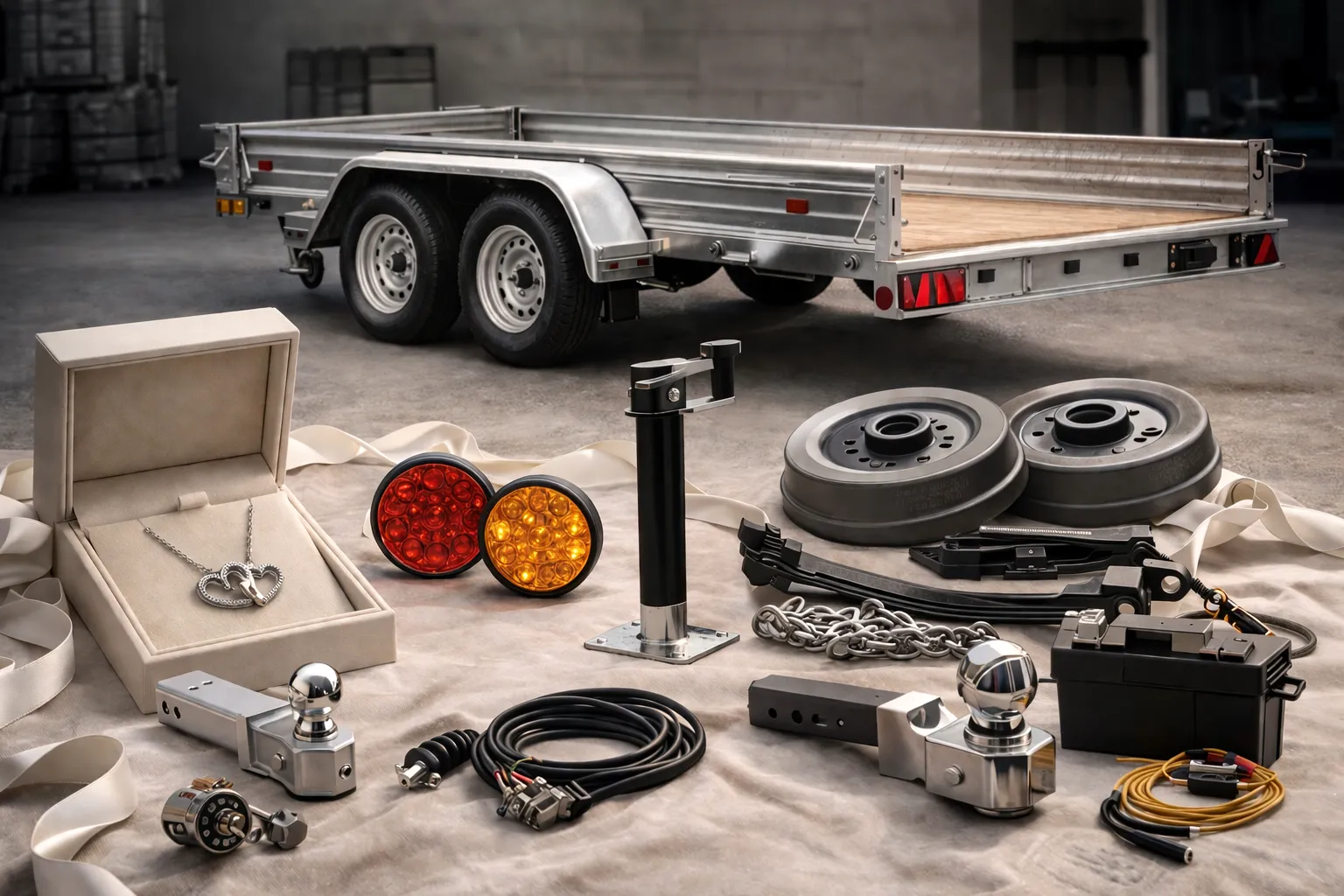
Trailer performance depends on how well each component is matched to your trailer’s design and workload.
Installing the wrong tarp, system, or hardware can lead to faster wear, repeated replacements, and unplanned downtime. For operators who run on tight schedules, these failures are both costly and time-consuming.
But is there any way to avoid this? Yes, but only if you select your trailer parts correctly from the start.
Different trailers require components matched to crucial factors such as loads, speeds, and stresses. A tarp that works on one can fail on another if the usage conditions are different.
To understand the process clearly and practically, this guide explains everything that you need to identify the right trailer parts for your trailer model.
Key Trailer Parts That Impact How Your Trailer Runs
Before you order anything, it helps to know which parts actually impact how your trailer runs and how long they last.
This makes it easier to focus on what your trailer really needs instead of replacing parts just to fix a problem temporarily.
| Trailer Part | What It’s For | Why It Matters |
| Trailer Tarp Systems | Opens, closes, and holds the tarp in place | The wrong size leads to bent arms and early failure |
| Solid Trailer Tarps | Fully covers fine or loose loads | Prevents spills and dust loss |
| Trailer Mesh | Covers loads while letting air through | Reduces wind drag and tarp strain |
| Dump Trailer Tarp System | Handles vibration and dumping cycles | Protects arms and system parts |
| Semi Trailer Tarps | Built for long, high-speed runs | Stands up to highway wind |
| Trailer Wind Deflector | Pushes air over the tarp | Stops flapping and tearing |
| Mounting Hardware | Keeps the system aligned | Worn parts cause uneven wear |
Steps to Select the Right Trailer Parts for Your Trailer Model
Before you start selecting parts, it’s important to understand how your trailer is used day to day.
Step 1: Confirm Your Trailer Model & How You Use It
Start with the basics, including your trailer make, model, and year. A dump trailer hauling aggregate daily needs stronger arms and hardware than one you use for light material.
Similarly, a semi-trailer running long distances needs parts that can handle the constant wind stress.
Once you have the information, ask yourself these questions :
- Is the trailer used on a daily basis or occasionally?
- What type of material does your trailer haul?
- Does it run highway routes, job sites, or both?
- Is it part of the fleet or a standalone unit?
Step 2: Match Parts to the Load You Haul Most Often
Load type affects which trailer part can last longer and which is going to fail early. If your load changes seasonally, it’s crucial to include it in your planning.
Many operators rotate tarp types based on material to extend lifespan. For example :
- Trailer mesh works best for uneven and bulky loads, where airflow reduces stress
- Solid trailer tarps are essential for fine, loose, or dusty materials
- Semi-trailer tarps are ideally suited for high-speed hauling
- Dump trailer tarp systems handle vibration and repeated dumping cycles
Step 3: Measure Your Trailer for Fit
Even if the trailers have the same model name, their dimensions can still be different. Always measure your trailer before you order. This includes:
| Key Measurements | Why It’s Important |
| Inside trailer length | Confirms full load coverage |
| Outside trailer length | Ensures correct system sizing |
| Width at top rail | Prevents edge tearing and flapping |
| Mounting surface depth | Keeps brackets secure |
| Clearance for arms and rollers | Avoids contact and binding |
Step 4: Evaluate Route Conditions & Wind Exposure
Route conditions directly affect part wear. A trailer running at highway speeds experiences constant air pressure that lifts tarps and strains the overall system.
Over time, it can cause issues such as edge tearing, loose mounting hardware, and spring or motor fatigue.
In this case, using a trailer wind deflector helps to stabilize the tarp and reduce ongoing stress.
Step 5: Inspect Wear Pattern Before Replacing Parts
Your trailer shows signs of what needs attention, so give it a proper inspection.
- Frayed edges often point to incorrect tarp sizing or tension
- Uneven wear indicates misalignment
- Bent arms suggest the system is undersized for the load
- Excessive flapping can be a sign of airflow or tension issues
- Frequent replacements often mean using the wrong tarp material
If the damage goes beyond routine replacement parts, professional service may be the better option. Operators dealing with recurring alignment issues, damaged hardware, bent components, or structural wear may want to consult a qualified Michigan trailer repair provider to inspect the system before installing new parts. Addressing the underlying issue first can help prevent premature wear and repeated replacements.
Step 6: Plan for Emergency Replacements
Instead of waiting for the last minute to change your trailer parts, track replacement patterns.
Especially look for :
- Track how long tarps last by load type
- Seasonal wear patterns
- Common failure points by trailer model
- Adjustment frequency
Conclusion
Choosing the right trailer parts is not a one-time task. However, the more accurately parts are matched to your trailer model, load type, and route conditions, the lower the chances you have of replacing them.
Read the patterns before you replace the parts, plan, and upgrade strategically so the tools can perform to their best instead of being consumables. The approach helps reduce breakdowns and make your maintenance predictable.
Looking for tailor-made tarp systems and components designed with real-world demands in mind?
At Roll Rite, find your solutions built especially for working trailers, engineered for fit and long-term performance.
Browse To Find Tarp Systems Recommended For Your Fleet
FAQs
How do I know if my trailer parts will fit my trailer model?
Measure key dimensions and match parts to your load type and route conditions.
What’s the difference between trailer mesh and solid tarps?
Mesh tarps allow better airflow and reduce drag, while solid tarps provide full containment.
When should I replace a dump trailer tarp system?
Look for signs like excessive flapping, needing frequent adjustments, and no longer closing fully.
Do semi-trailer tarps need a different tension system?
Yes. A longer span requires a stronger system to evenly distribute the tension.
Can I upgrade individual parts without replacing the full system?
Yes, especially arms, rollers, and tarps. These can be upgraded if the frame is sound.