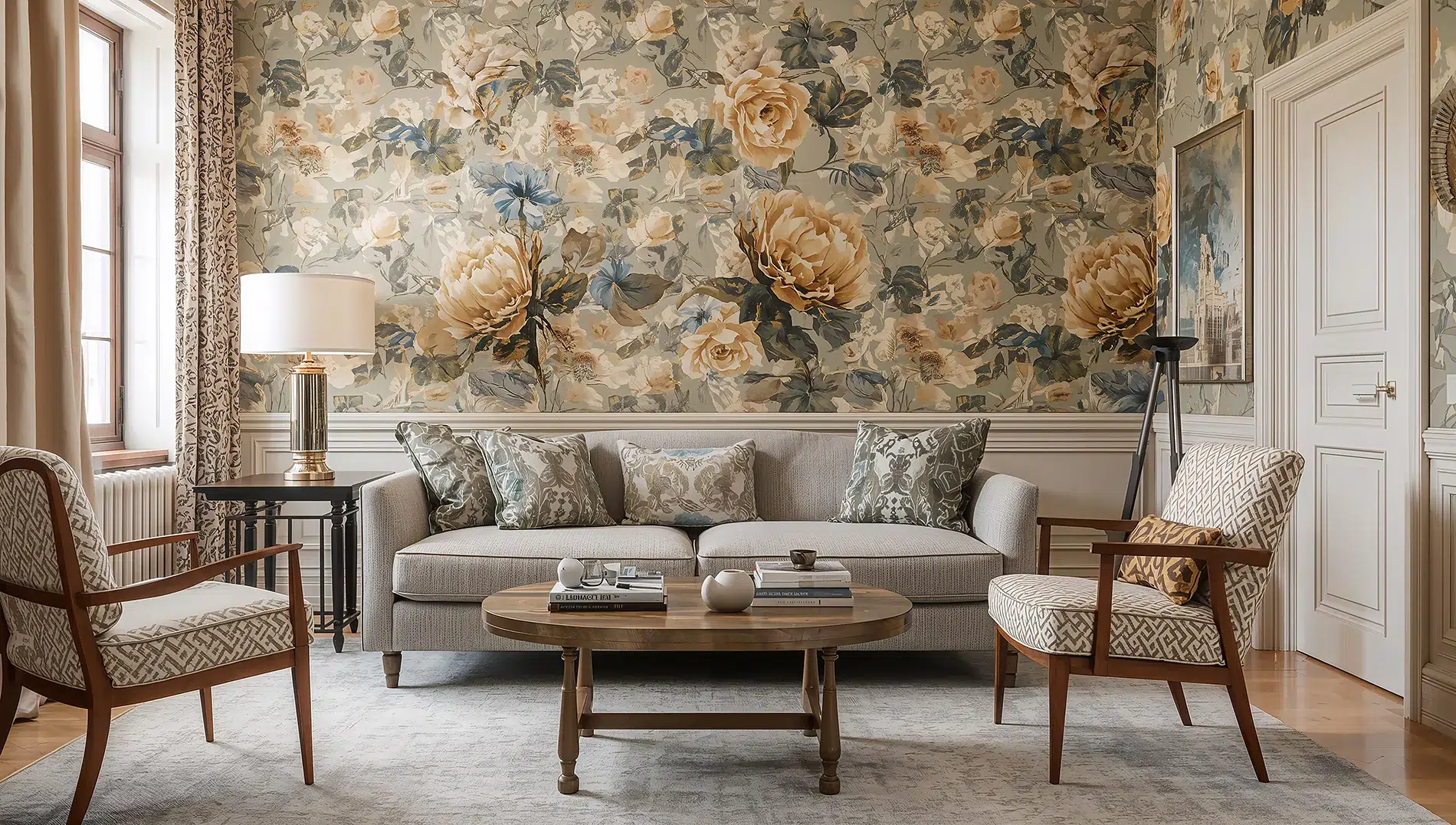
There is a reason professional interior designers keep coming back to botanical wallpaper. It does something that very few other design choices can: it brings the energy and visual richness of the natural world indoors, in a way that feels permanent, intentional, and effortlessly stylish. Plants on a windowsill are lovely. A room wrapped in botanical wallpaper is a statement.
The trend has deep roots too. Botanical illustration as an art form dates back centuries, and the best botanical wallpaper designs draw on that heritage while feeling completely current. Whether the style is loose and painterly, precise and scientific, or bold and graphic, botanical wallpaper carries a sense of craft and considered beauty that resonates across a wide range of interior styles.
Right now, as biophilic design, the practice of connecting interior spaces to the natural world, continues to gain traction in both residential and commercial interiors, botanical wallpaper is one of the most accessible and impactful ways to bring that philosophy into a home without a full renovation.
Why botanical wallpaper works in almost any room
Most wallpaper styles work better in some rooms than others. Botanical wallpaper is unusual in that it translates well across virtually every room in the house, and the reasons for that are rooted in how we respond to natural imagery.
Research into biophilic design consistently shows that exposure to natural patterns, including representations of plants and foliage, reduces stress and increases a sense of wellbeing. That makes botanical wallpaper particularly valuable in spaces where those qualities matter most: bedrooms where you want to feel calm, living rooms where you want to feel at ease, home offices where you want to feel focused but not hemmed in, and bathrooms that benefit from a spa-like sense of tranquility.
The organic nature of botanical patterns also means they are forgiving in a way that geometric or abstract designs are not. They tend to work with rather than against existing furniture and furnishings, and they rarely make a room feel over-designed or try-hard.
Choosing the right style of botanical print
Botanical wallpaper covers a wide range of visual styles, and the distinctions between them are worth understanding before you make a choice.
Classic botanical illustration prints, the kind that reference the detailed scientific drawings of the 18th and 19th centuries, bring a sense of heritage and quiet sophistication. They work particularly well in studies, libraries, dining rooms, and bedrooms where a timeless, considered aesthetic is the goal. These designs tend to feature clearly defined plants on a plain background, often in muted or earthy tones, and they pair naturally with traditional furniture and warm wood finishes.
More painterly or watercolor botanical prints feel looser and more romantic. They suit bedrooms, living rooms, and any space where softness is a priority. The slightly imprecise quality of a watercolor botanical gives a room warmth without the formality of a more structured print.
Bold, graphic botanical designs, those with high contrast colors, strong outlines, or oversized tropical leaves, bring energy and drama. These are the prints that work as genuine statement walls and suit contemporary or maximalist interiors where a quieter design would get lost.
For a collection that spans all of these styles and gives you genuine options across the full range of botanical design, the botanical wallpaper range at Think Noir is a strong starting point. Having the variety in one place makes it much easier to compare styles and find the one that fits your room rather than compromising on a design that is almost right.
How to Use Botanical Wallpaper Room by Room
Bedroom: The bedroom is arguably the natural home of botanical wallpaper. A feature wall behind the bed with a lush, leafy design creates an immersive quality that makes the room feel like a retreat. Softer, more muted botanical prints work well for a calming atmosphere, while richer, deeper colored designs create a cocooning effect that is particularly effective in rooms with limited natural light.
Living Room: In the living room, botanical wallpaper works best as a considered feature wall rather than on all four surfaces. Choose the wall that frames the room’s main seating area and let the pattern create a backdrop that ties the space together. Pair it with natural materials like rattan, linen, and wood to reinforce the connection to the natural world.
Home Office: A botanical feature wall behind a desk adds life to what can easily become a sterile, functional space. The natural imagery provides a visual resting point during long working hours and brings a sense of the outdoors into a room that can often feel cut off from it. Avoid very busy or high-contrast designs in a workspace as they can become distracting over time. A medium-scale print with a calm background color is the better choice here.
Bathroom: Botanical wallpaper in a bathroom is a move that is still underused, which makes it all the more effective when it is done well. A moisture-resistant botanical wallpaper in a bathroom transforms a purely functional space into something genuinely pleasurable to spend time in. The natural imagery works with the water-adjacent atmosphere of a bathroom in a way that feels completely coherent. Choose designs with deeper, richer tones for a luxurious feel, or lighter, airier prints for a fresh and clean aesthetic.
Hallway: The hallway is one of the best rooms in the house for a bolder botanical choice. Because it is a transitional space that you move through rather than linger in, it can carry a more dramatic pattern than rooms where you spend extended time. A floor-to-ceiling botanical print in a hallway creates an immediate impression and sets the tone for the rest of the home from the moment you walk through the door.
Styling botanical wallpaper: What works
Botanical wallpaper pairs naturally with certain materials and furnishings, and understanding those relationships makes the styling process much more straightforward.
Natural materials are the most obvious companions: rattan, cane, jute, linen, cotton, and unfinished or lightly finished wood all reinforce the natural theme without making the room feel themed or overly coordinated. Terracotta, warm stone tones, and earthy ceramics work in the same way.
Real plants are an obvious addition, and they work well alongside botanical wallpaper rather than competing with it. The two-dimensional print and the three-dimensional living plant create an interesting layering effect that feels rich and considered. Keep the plant choices relatively simple though. A few well-placed larger plants tend to work better than a crowded collection of smaller ones.
Metallic accents in brass or bronze add warmth and a slightly vintage quality that complements botanical designs particularly well. Gold-toned frames, brass hardware, and bronze light fittings all sit naturally alongside botanical prints and elevate the overall finish of the room.
The lasting appeal of botanical wallpaper
Trends in interior design come and go with predictable regularity, but botanical wallpaper has demonstrated a staying power that sets it apart from most decorating fashions. The reason is straightforward: it connects to something fundamental in how people want to feel in their homes. Calm. Grounded. Connected to something beyond the built environment.
That is not a trend. It is a need. And botanical wallpaper meets it in a way that is beautiful, practical, and endlessly adaptable to the specific character of any space it inhabits. Whether you choose a single feature wall or commit to a full room, the result is an interior that feels alive in the truest sense of the word.