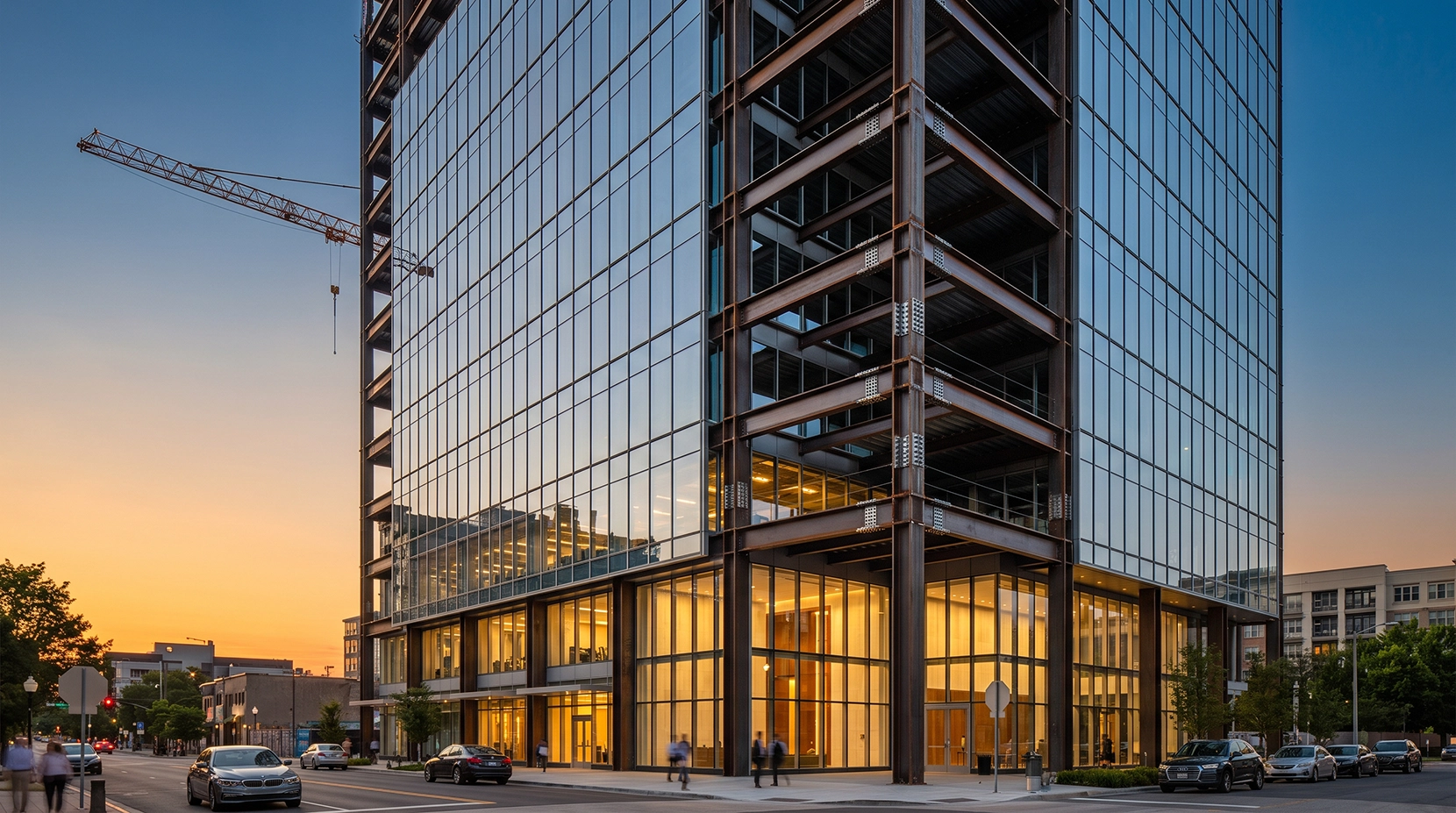
Steel frames are the skeletons of modern buildings. When wind or quakes hit, moment connections keep every joint rigid.
Old-school field welds worked until the 1994 Northridge quake cracked hundreds and idled buildings. Owners demanded faster, cheaper repairs.
Enter bolted, field-replaceable joints. Pre-welded in the shop, they bolt together on site and confine damage to parts you can swap in a shift.
Take Simpson Strong-Tie’s Yield-Link® fuse: it absorbs seismic energy, spares the beam and column, and trims build time and repair costs.
Ahead, we’ll reveal five prequalified options that speed erection, open plans, and protect investments. Let’s dive in.
What moment connections do and why they had to change
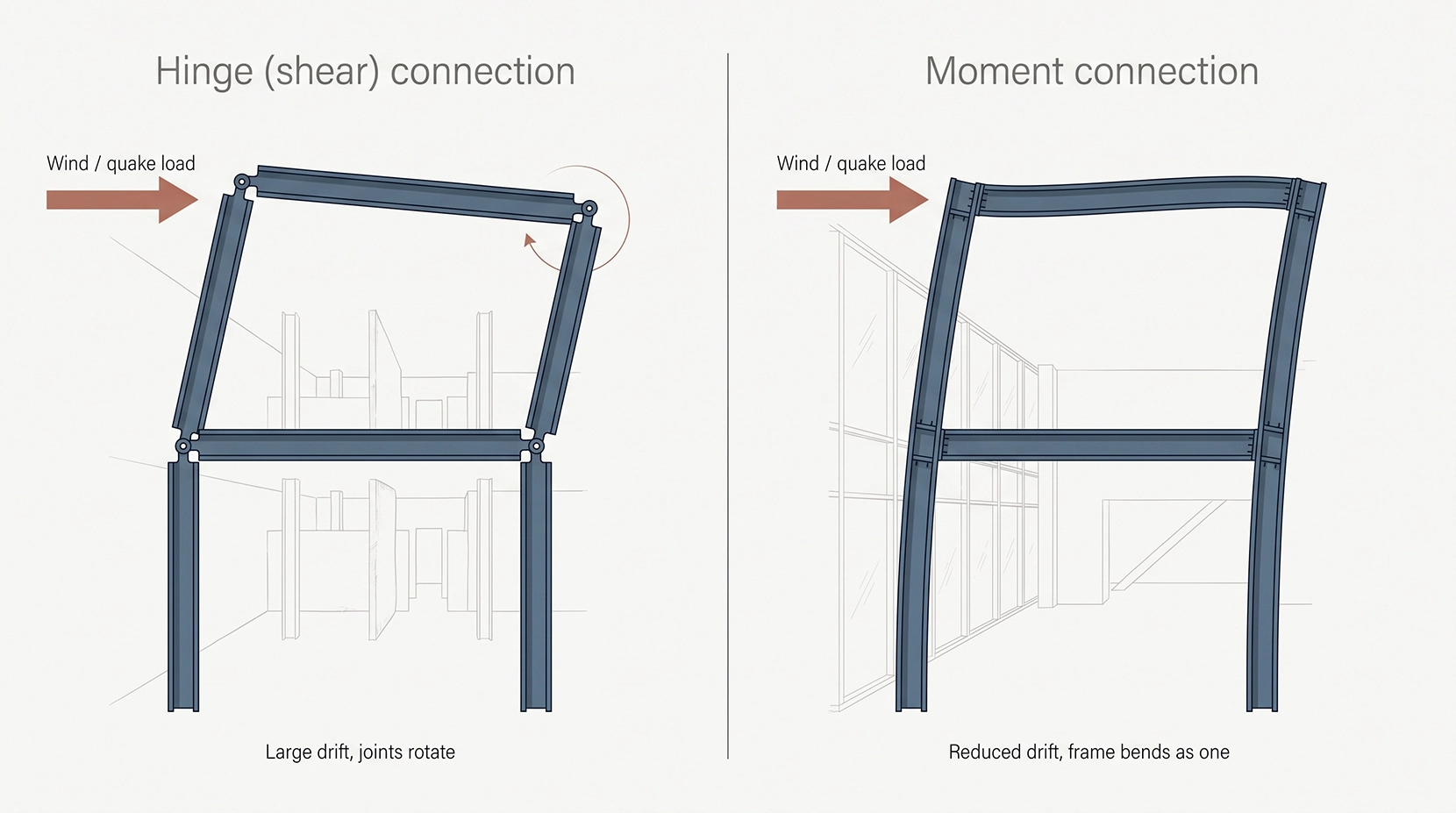
Picture two steel beams meeting at a column.
If that joint resists shear only, it acts like a door hinge, free to swing when wind or quakes push the frame.
A moment connection adds rotational muscle.
Thick plates and bolts clamp the beam to the column so tightly that the entire frame bends as one piece.
That rigidity unlocks the wide-open floor plans and wall-to-wall glass prized in luxury spaces.
For years, crews welded every flange on site.
That approach held until the 1994 Northridge earthquake cracked hundreds of hidden welds and sidelined buildings for months.
Owners asked, “Why can’t we build joints that install faster and bounce back quicker?”
Engineers answered.
They moved the weak link from brittle welds to replaceable steel fuses or pre-welded plates fabricated in the shop.
Field teams now tighten bolts instead of striking arcs, trimming days from schedules and skipping post-weld inspections.
Building codes soon reflected the shift.
The 2022 AISC standards prequalify a growing roster of bolted connections, proving that speed and resilience now stand alongside strength in the rulebook, according to the updated AISC seismic standards.
That evolution sets the stage for our five picks.
Each connection you will meet next grew from Northridge’s lessons and is tuned for today’s architecture: quick to erect, easy to repair, and strong enough to let your design imagination run wild.
Top 5 bolted, field-replaceable moment connections
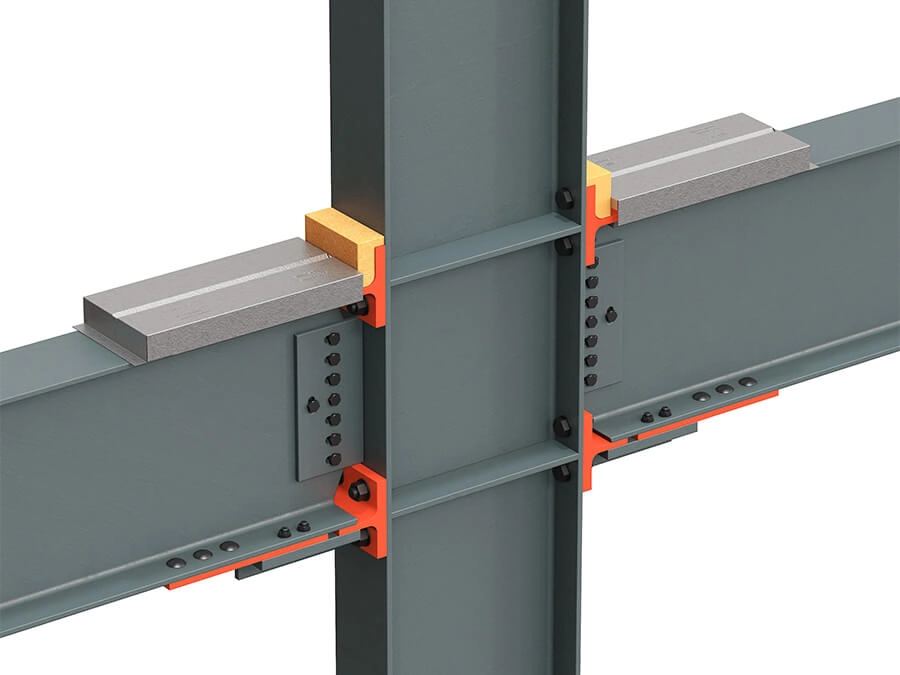
1. Yield-Link® replaceable link connection
Think of Yield-Link as a built-in “crumple zone” for steel frames.
Prequalified in AISC 358 and ICC-ES ESR-2802, the pre-welded plate bolts between beam and column, eliminating on-site welding, trimming, inspection, and labor costs. Connection for Steel Construction.
During a serious quake, that plate yields first, absorbing energy while the heavy members stay elastic.
Simpson Strong-Tie Yield-Link replaceable link connection official product image
No on-site welding lets crews lift the beam, tighten the bolts, and move on.
According to Simpson Strong-Tie field reports, contractors trim days from erection schedules and skip costly weld inspections.
For luxury projects, less time on scaffolds translates to earlier grand openings and lower carrying costs.
If the fuse deforms, we simply unbolt it and slide in a fresh plate.
Owners avoid cutting out damaged beams or, worse, closing the building for months.
Engineers gain code confidence too: Yield-Link is prequalified in AISC 358 and carries an ICC-ES listing, so it fits seismic designs without extra testing.
Designers welcome the freedom.
With the hinge set away from the column face, beams need no auxiliary bracing, and slim profiles leave room for mechanical runs.
The result is a frame strong enough for high seismic zones yet elegant enough for a glass-wrapped penthouse.
That blend of speed, resilience, and aesthetic latitude earns Yield-Link the top spot on our list.
The next four connections each add their own twist, yet none balance construction efficiency and post-event repair quite like this bolted fuse.
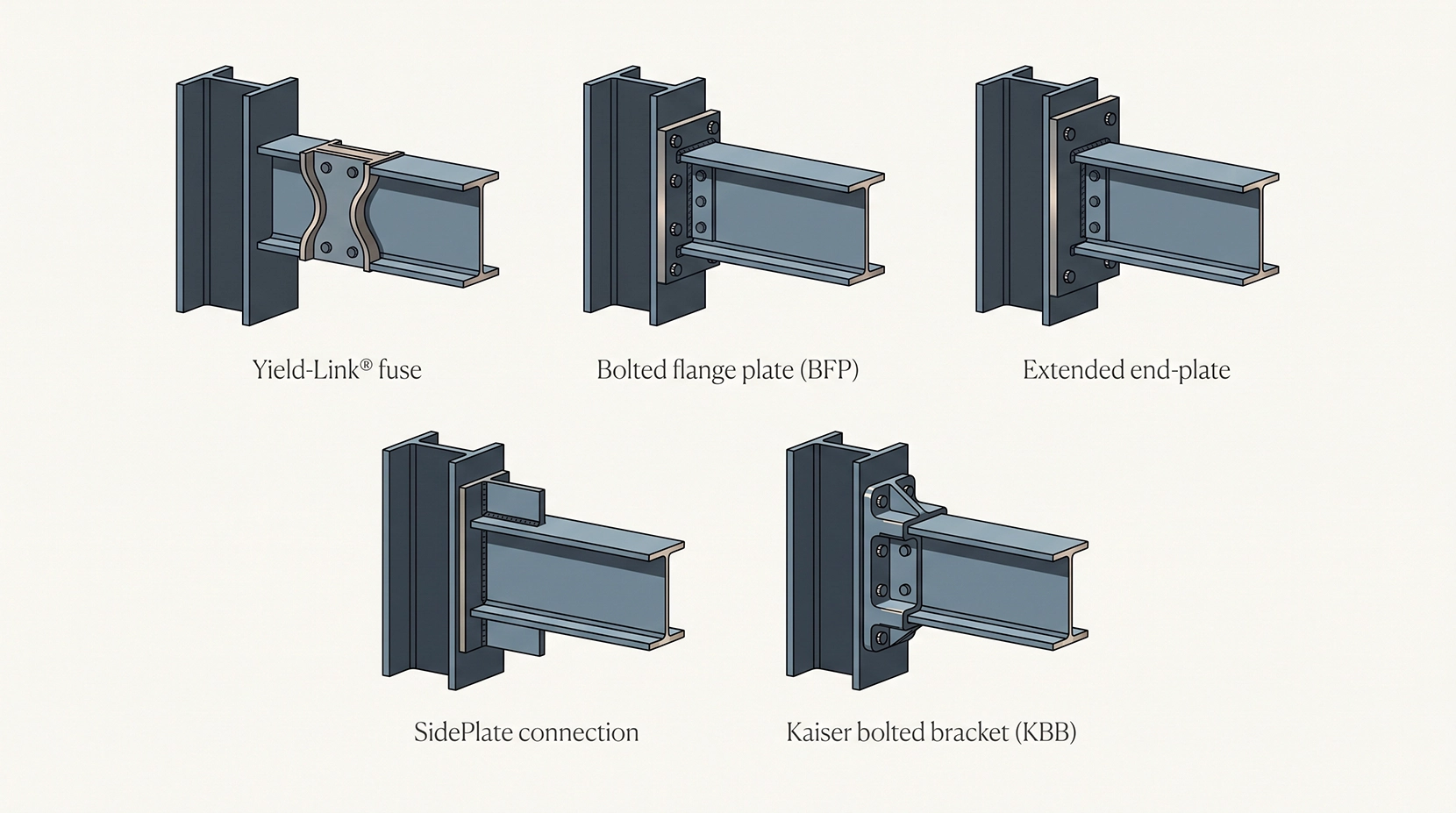
2. Bolted flange plate (BFP) connection
If Yield-Link is the flashy newcomer, the Bolted Flange Plate is the seasoned pro crews rely on every day.
Fabricators weld thick plates to the column flanges in the shop.
Everything arrives on site square, clean, and ready to fly.
Ironworkers slide the beam between the plates, align the holes, and torque high-strength bolts in minutes, with no sparks, weather delays, or weld inspections.
Performance is equally dependable.
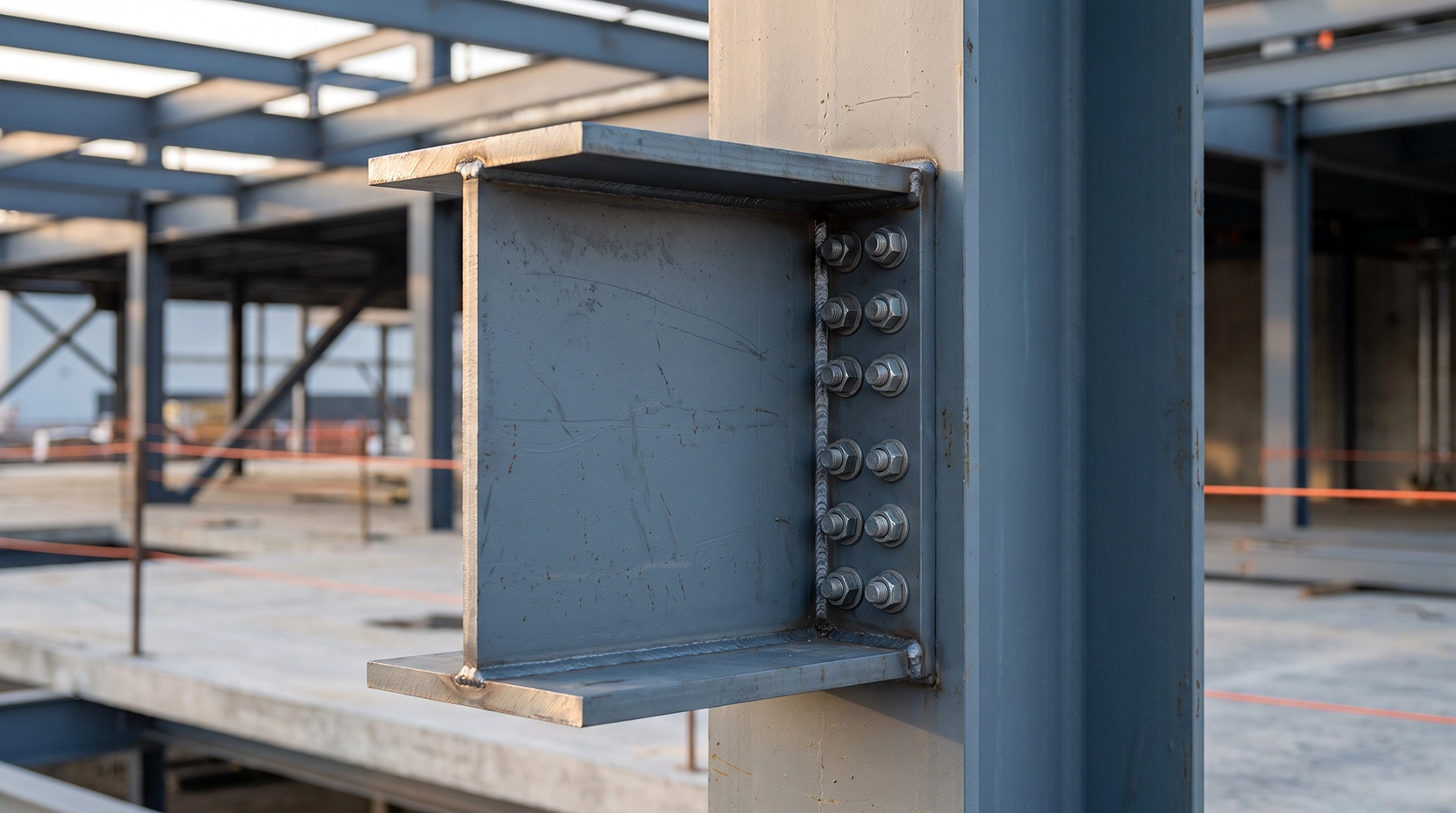
Post-Northridge testing showed BFPs shift the plastic hinge into the beam, protecting the column and preserving lateral strength.
That predictable behavior earned the detail a place on the AISC prequalified roster, so engineers can specify it without project-specific tests.
Owners like the numbers.
Shop welding keeps hourly rates low, and rapid field bolting trims crane time and labor.
If a beam is damaged, crews can swap plates and bolts with simple rigging, far easier than gouging out cracked welds.
Because it combines proven ductility with everyday constructability, the BFP remains a first-choice joint for offices, schools, and high-end homes.
It is the quiet workhorse that keeps ambitious designs standing tall.
3. Extended end-plate moment connection
Some ideas last because they balance simplicity with serious muscle.
The extended end-plate is one of them.
Fabricators weld a thick plate flush to the beam end and let it project past the flanges, adding rows of bolts that grip the column.
That extension spreads tension and compression zones, achieving full moment capacity with no field welding.
On site, installation feels like assembling premium furniture: insert the beam, slide bolts through pre-punched holes, tighten, and the crew moves on.
Work continues regardless of weather, and owners skip the cost of certified weld inspectors waiting on standby.
Seismic performance is proven.
Lab tests show the plate yields in flexure while the column stays elastic, protecting the frame’s backbone.
Because the detail is prequalified, engineers drop it into models without custom testing.
Architects prize its versatility.
Looking for a long-span living room or a double-height lobby?
Extended end-plates splice beams end-to-end as easily as they tackle beam-to-column joints, keeping stock lengths shippable while preserving clean ceiling lines.
In short, the extended end-plate delivers code-ready strength, shop quality, and lightning-fast erection in a package simple enough to sketch on a cocktail napkin.
It is the elegant workhorse every luxury project keeps in its back pocket.
4. SidePlate field-bolted connection
SidePlate first earned notice with welded side plates stiff enough for engineers to trim tons of steel elsewhere.
The latest version goes further by replacing site welds with cover plates and high-strength bolts.
The workflow is simple.
Columns arrive with side plates pre-welded in the shop.
Field crews lower a beam into place, slide bolts through pre-drilled holes, tighten, and move to the next bay.
No sparks, no fire watch, and almost no weather delays.
Stiff side plates spread loads over a wider zone than traditional flange plates.
That added rigidity cuts lateral drift (the sway felt at the top of tall towers) and can even let architects reduce column dimensions.
Less steel means more rentable floor area and better views.
Because the plastic hinge shifts into the beam, post-quake inspections rarely find column damage.
Crews replace or reinforce the beam end, and the frame returns to service quickly.
For luxury developers, thinner framing, faster erection, and proven seismic strength combine into a compelling business case that secures SidePlate’s spot in our top five.
5. Kaiser bolted bracket (KBB) connection
Cast steel meets clever clamping in the Kaiser bolted bracket.
Two sculpted brackets hug the beam flange and latch onto the column with rows of bolts, locking the joint without a single field weld.
The strength comes from the casting.
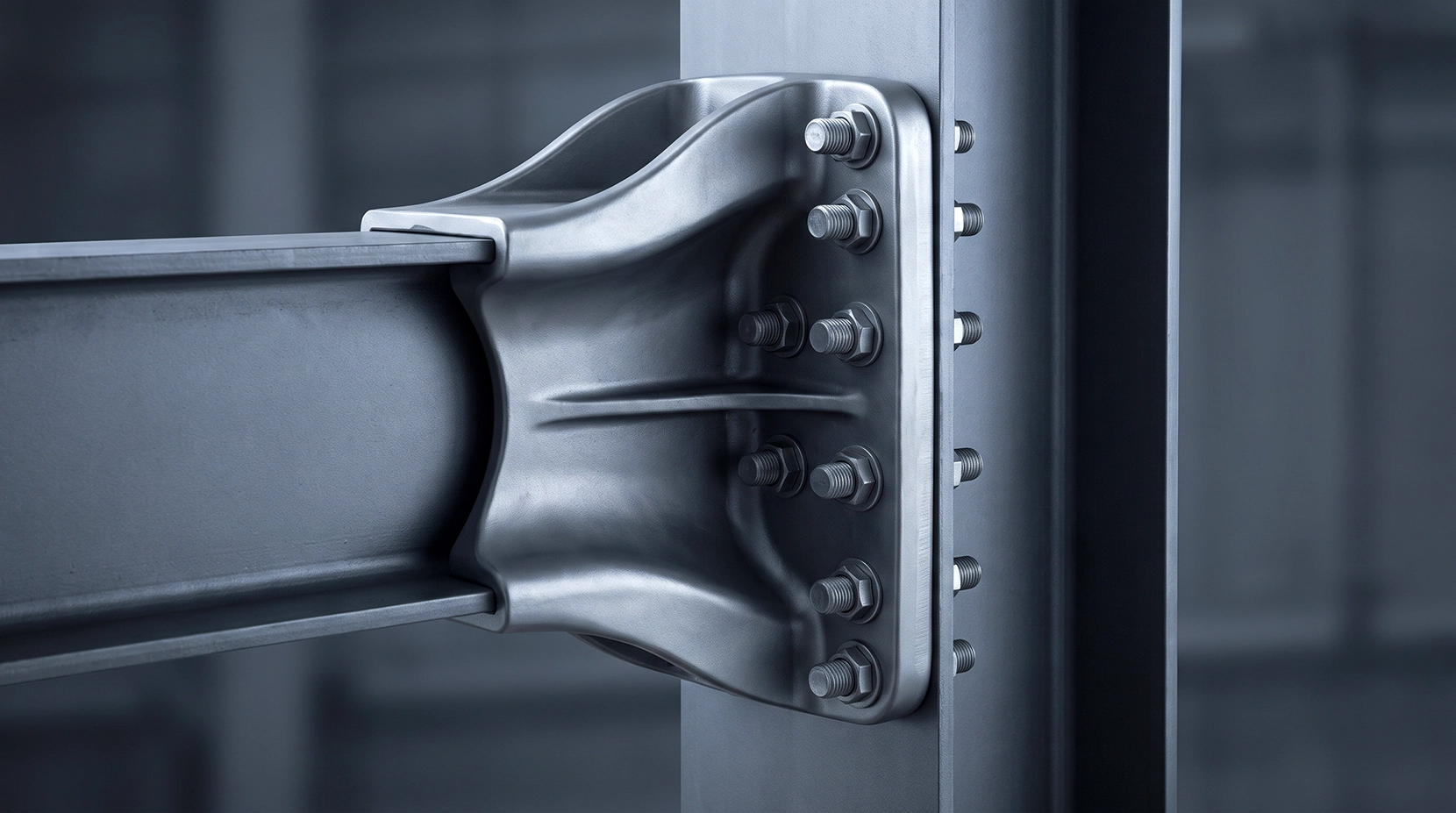
Smooth curves direct stress flow, and internal ribs guide the plastic hinge a controlled distance into the beam.
During seismic cycling, the beam yields in a predictable zone, protecting both bracket and column and making repairs straightforward.
Installation feels almost surgical.
Crews slide the brackets around the flanges, secure temporary pins, then torque the main bolts.
Existing buildings can even accept KBB retrofits with little disruption because original welds stay intact.
KBB earned its stripes after Northridge as one of the first cast-steel connections prequalified by AISC.
While its proprietary nature limits widespread use, the bracket excels in projects that forbid field welding, such as heritage restorations or mission-critical facilities that demand the added resilience of cast steel.
In a market full of sheet-steel options, the Kaiser bolted bracket stands out as a beautifully engineered node, equal parts art and armor for the modern frame.
Honorable mentions: innovation on the horizon
Bolted connections keep evolving, so our top five cover only the highlights.
Reduced Beam Section “dog-bones” still anchor welded frames where field crews are happy to burn rod.
Modular collars from ConXtech drop full beam-column nodes into place in minutes, accelerating hotel and condo schedules.
Researchers are testing post-tensioned, self-centering joints that snap buildings back to plumb after a quake with almost no residual drift.
These ideas prove that steel design never sits still.
For projects breaking ground today, however, the five connections above remain the best mix of code acceptance, field speed, and long-term resilience.
How bolted moment connections transform luxury design
Steel often hides behind drywall, yet it controls what architects and owners can imagine.
When you trade slow, weld-heavy joints for the bolted options above, creative doors swing open.
First, you gain uninterrupted space.
Rigid frames that hinge in the beam, not the column, remove the need for diagonal bracing or bulky shear walls.

A penthouse can now run wall-to-wall glass, a hotel lobby can rise two stories, and a gallery can float art under skylights without a forest of posts.
Construction pace rises in step.
Pre-welded parts arrive tagged, bolted, and ready to fly, trimming weeks from critical paths.
For a developer facing steep carry costs, earlier occupancy turns into real dollars saved and tenants moving in on schedule.
Resilience climbs as well.
Replaceable fuses confine damage, so crews swap parts after a quake instead of gutting major beams.
That quick comeback keeps residents safe, insurance claims lean, and brand reputation secure in a competitive market.
There is also a sustainability story.
Frames that can be repaired instead of demolished preserve embodied carbon.
Bolted joints make future disassembly and adaptive reuse feasible, stretching a building’s life and meeting rising ESG goals.
Coordination improves, too.
Smaller restricted zones free ceilings for HVAC, lighting, and sprinklers, letting interior designers chase cleaner lines with fewer clashes.
Conclusion
Bolted, field-replaceable moment connections have quietly rewritten what steel framing can achieve. From the Yield-Link fuse to the Bolted Flange Plate, the extended end-plate, SidePlate, and the Kaiser bolted bracket, each pick swaps slow field welds for shop precision and fast on-site bolting. The rewards land on every front: quicker erection, lower carrying costs, seismic damage confined to parts crews can swap in a shift, and open, glass-wrapped interiors freed from bulky bracing. For any luxury project breaking ground today, specifying one of these prequalified joints is the clearest path from a bold sketch to a safe, efficient, and lasting building.