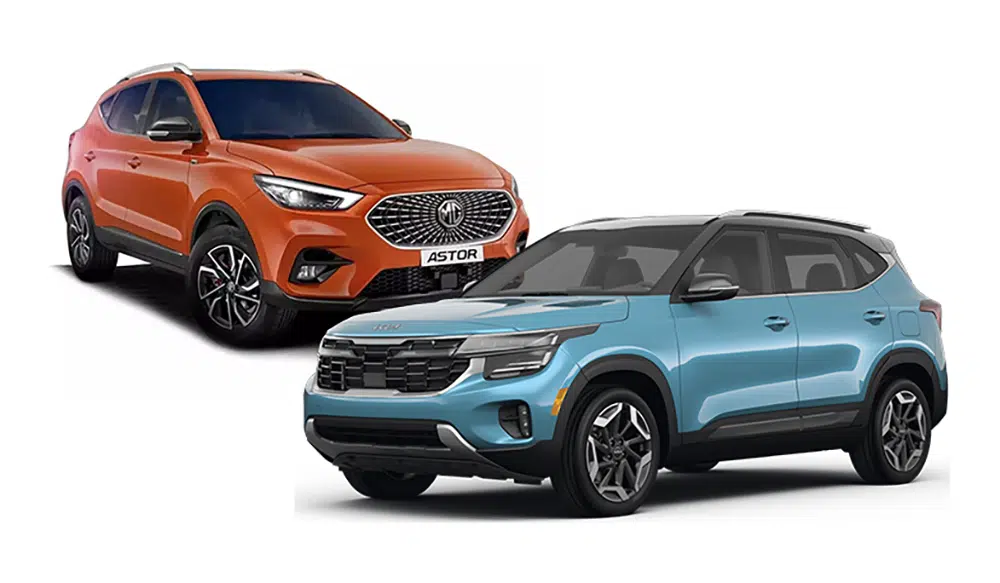
In the mid-size SUV segment, differentiation increasingly comes from positioning rather than size alone. Buyers expect safety, connectivity, and practicality as standard, but how manufacturers prioritise these elements shapes perception. The Kia Seltos and MG Astor demonstrate two contrasting positioning strategies within the same segment—one leaning strongly toward technology-driven engagement, the other towards comfort-oriented refinement.
Both vehicles are well-equipped, yet their emphasis reflects different interpretations of what modern SUV buyers value most.
The Technology-Led Strategy: Kia Seltos
The Kia Seltos presents itself as a digitally immersive SUV. Its Trinity panoramic display panel integrates infotainment and digital cluster functionality across a wide, cohesive interface. This layout immediately positions the vehicle as forward-looking and screen-centric.
Beyond display integration, the Seltos offers Kia Connect 2.0 with over-the-air updates and remote vehicle controls. Buyers can access real-time vehicle information, location tracking, and climate control activation via connected features.
In terms of safety technology, the Seltos incorporates ADAS Level 2 features such as Forward Collision Avoidance Assist, Lane Keeping Assist, Blind View Monitor, and Smart Cruise Control with Stop & Go.
The positioning here is clear: the Seltos appeals to buyers who prioritise digital sophistication and active driver assistance within a sporty framework.
The Comfort-Led Strategy: MG Astor
The MG Astor adopts a slightly different narrative. While it is technologically equipped, its positioning highlights cabin refinement and comfort as central pillars.
The Astor features a premium interior layout with Sangria Red leather theme options and layered dashboard detailing. Rather than emphasising screen dominance, the Astor’s interior presentation focuses on tactile quality and material finish.
Its infotainment system includes a 25.7 cm HD touchscreen and digital cluster, supported by the i-SMART 2.0 platform with over 80 connected features.
While the Astor also integrates Level 2 ADAS, its overall narrative centres on delivering a composed, comfortable environment rather than projecting a performance-oriented digital identity.
Performance and Driving Character
Positioning differences extend to driving character.
The Seltos offers a broader range of engine options, including a 1.5L petrol, 1.5L turbo petrol (G1.5 T-GDi), and 1.5L diesel. This diversity allows it to appeal to buyers seeking dynamic performance alongside technological immersion.
The Astor, equipped with a 1.5L VTi-TECH petrol engine producing 110 PS, prioritises smooth city driving and refinement rather than outright acceleration.
This reinforces the positioning distinction: the Seltos aligns with technology-led dynamism, while the Astor emphasises calm composure.
Cabin Experience and Daily Comfort
Comfort-oriented positioning extends beyond material choice.
The Seltos includes ventilated seats and a Bose premium sound system, blending comfort with its tech-forward personality.
The Astor integrates a panoramic sunroof and Harman sound system, aiming to enhance overall cabin ambience rather than emphasise digital immersion alone.
Buyers who spend extended hours commuting may prioritise seating comfort and cabin quietness over advanced display features.
Research-Driven Buyer Alignment
Today’s SUV buyers rarely rely solely on marketing positioning. Instead, they compare vehicles holistically.
On platforms such as ACKO Drive, where buyers can explore detailed specifications, compare safety systems, and even buy cars online, the distinction between technology-led and comfort-led positioning becomes clearer. Some buyers gravitate towards immersive displays and dynamic powertrains; others prefer balanced refinement and material quality.
This research-driven environment ensures positioning strategies must align authentically with real-world expectations.
Two Valid Approaches in a Competitive Segment
The Kia Seltos and MG Astor demonstrate that the mid-size SUV market accommodates varied interpretations of value.
- The Seltos emphasises digital immersion, engine diversity, and advanced active safety integration.
- The Astor foregrounds cabin comfort, refined material presentation, and connected ecosystem depth within a calmer driving profile.
Both approaches respond to evolving buyer expectations, but they cater to different priorities within the same segment.
Conclusion
The Kia Seltos and MG Astor illustrate how positioning shapes perception in the mid-size SUV market. One leans toward a technology-led, performance-infused identity, while the other embraces comfort-led refinement and composure.
As SUV buyers become increasingly discerning, alignment with lifestyle and daily usage patterns matters more than headline feature counts. In this context, both vehicles offer compelling yet distinct pathways to modern SUV ownership.