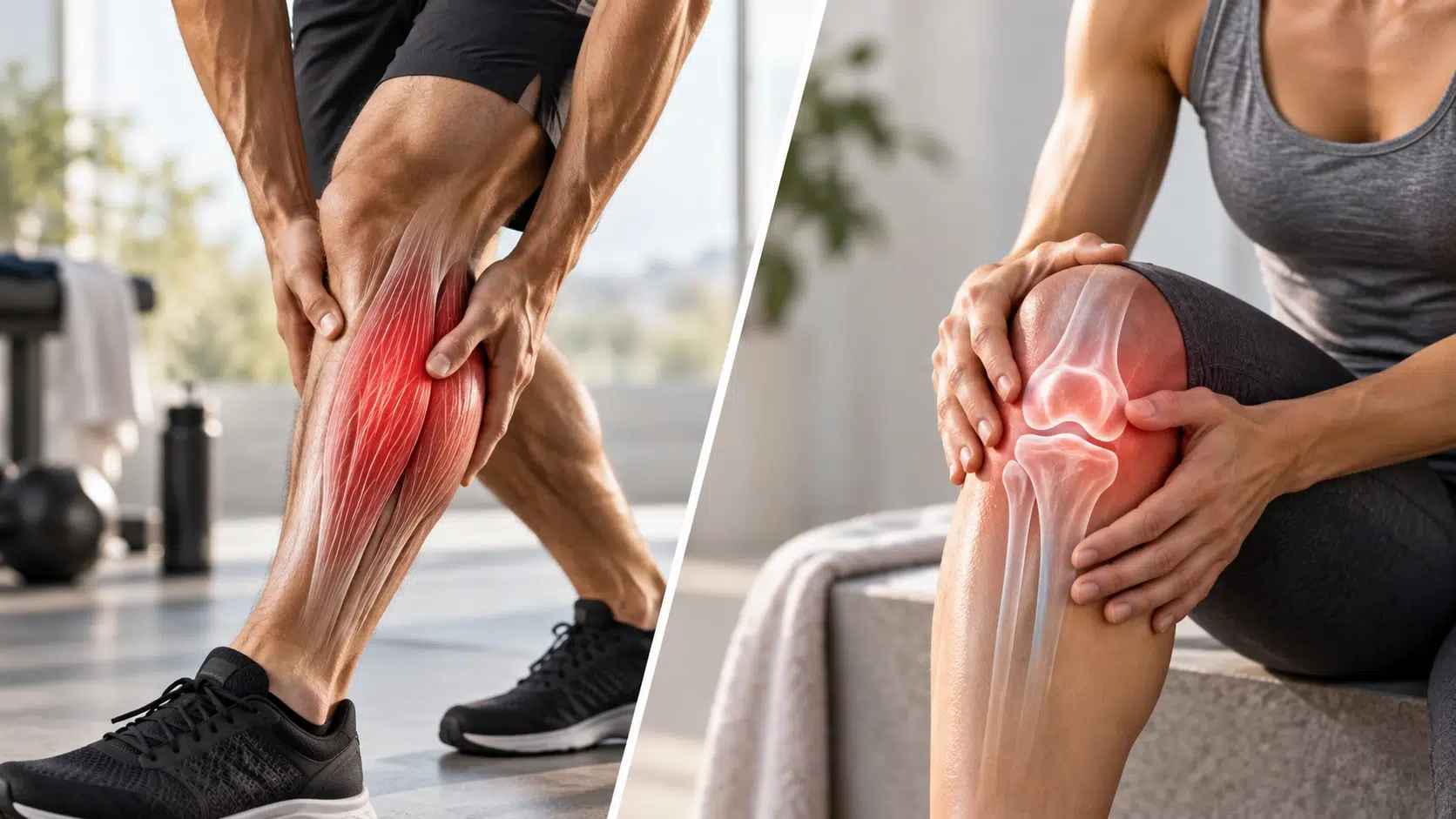
You wake up with a sore shoulder. Your knee starts aching after a long walk. Or perhaps your back hurts the day after a workout. Pain is easy to notice, but figuring out exactly where it comes from can be much harder.
Two of the most common sources are muscles and joints. Although muscle pain and joint pain can sometimes feel similar, they have different causes, patterns and symptoms. Understanding these differences can help you decide whether you need rest, simple home care or medical attention.
So, how can you tell whether the discomfort you’re experiencing is coming from a muscle or a joint? Here’s what to look for.
What Is Muscle Pain?
Muscle pain, also called myalgia, is discomfort that originates in the muscles or surrounding soft tissues. It can affect a small area, such as your calf after running, or involve several muscle groups.
One of the most common causes is physical exertion. Starting a new exercise routine, lifting heavier weights than usual, or performing repetitive movements can create temporary muscle soreness.
Muscle pain may also result from:
- Muscle strain or overuse
- Poor posture
- Sudden or awkward movements
- Repetitive physical activity
- Inadequate recovery after exercise
- Infections or illnesses
- Certain medicines or underlying health conditions
Delayed onset muscle soreness, commonly known as DOMS, often develops several hours after unfamiliar or strenuous exercise and may feel strongest over the following day or two.
What Does Muscle Pain Feel Like?
Muscle discomfort commonly feels like soreness, tightness, cramping, tenderness or a dull ache.
An important clue is that the pain often changes when you use or stretch the affected muscle. For example, sore thighs after squats may hurt more when you climb stairs or sit down. A strained shoulder muscle might become uncomfortable when you lift your arm in a particular direction.
The muscle may also feel tender when you press it.
If the discomfort began after a workout, heavy lifting, an unusually active day or repetitive physical work, a muscle-related cause may be more likely.
What Is Joint Pain?
A joint is the point where two or more bones meet. Your knees, hips, shoulders, elbows, wrists, and ankles are all examples.
Joint pain, also known as arthralgia, refers to discomfort arising in or around a joint. Unlike ordinary post-workout muscle soreness, joint pain may be associated with the joint structures themselves or the tissues surrounding them.
Common reasons for joint pain include:
- Osteoarthritis
- Rheumatoid arthritis and other inflammatory conditions
- Joint injuries
- Sprains
- Bursitis
- Gout
- Tendon or ligament problems around a joint
- Certain infections
Age-related wear is one possible cause, but joint pain is not limited to older adults. Sports injuries, repetitive movements and inflammatory conditions can affect younger people as well.
What Does Joint Pain Feel Like?
Joint pain often feels deeper and more localized around a specific joint.
You might experience stiffness, aching, tenderness, or reduced movement. Depending on the cause, swelling, warmth, or redness can also occur.
Knee discomfort, for example, might become noticeable while climbing stairs, squatting or standing after sitting for a long time. Shoulder joint problems may make reaching overhead or behind your back difficult.
Stiffness can be another useful clue. If a joint regularly feels stiff after waking or after remaining inactive for an extended period, the discomfort may be joint-related rather than simple muscle soreness.
Muscle Pain vs Joint Pain: The Key Differences
The location and behaviour of your pain can provide useful clues.
Muscle pain is often spread across a muscle or group of muscles. It commonly follows exercise, overuse, or physical strain and may feel sore, tight, tender or cramp-like.
Joint pain tends to be concentrated around a joint. It may be accompanied by stiffness, swelling, warmth, clicking or difficulty moving the joint normally.
Think about what happened before the pain began.
If you tried a new workout yesterday and both thighs are sore today, muscle soreness is a reasonable possibility. If one knee has gradually become painful and stiff over several weeks, particularly without an obvious workout-related trigger, the joint deserves closer attention.
However, symptoms alone cannot always identify the source accurately. Muscles, tendons, ligaments, and joints work together, so pain from one structure can sometimes be mistaken for another.
What Can You Do for Mild Muscle Pain?
Mild muscle soreness caused by physical activity often improves with time.
Reducing strenuous activity for a short period can allow the affected muscles to recover. Gentle movement may be more useful than staying completely inactive, depending on the injury.
Some people also use topical products such as a pain relief gel for temporary relief from minor muscular aches. These products contain different active ingredients, so read the label carefully and use them only as directed. Avoid applying topical pain products to broken or irritated skin unless the product specifically permits it.
Heat or cold may also be useful in certain situations. Cold is commonly used shortly after some acute injuries, while warmth may feel soothing for muscle tightness and stiffness.
What Can You Do for Joint Pain?
The right approach depends heavily on why the joint hurts.
Temporary discomfort after unusual activity may settle with reduced load and appropriate recovery. Persistent joint pain, however, should not simply be masked without understanding its cause.
People sometimes consider a pain relief tablet for short-term discomfort. Oral pain medicines are not equally suitable for everyone, particularly people with certain medical conditions or those taking other medicines. Follow the product instructions and speak with a doctor or pharmacist when you’re unsure which option is appropriate.
If joint pain repeatedly returns, identifying the underlying reason is more important than relying solely on temporary pain relief.
When Should You See a Doctor?
Not every ache requires medical treatment, but certain symptoms deserve professional assessment.
Seek medical advice if your pain is severe, persists or keeps returning, or significantly limits normal movement. You should also get medical attention for unexplained joint swelling, redness or warmth; pain following a significant injury; inability to bear weight; visible deformity; persistent weakness or numbness; or pain accompanied by fever or other concerning symptoms.
Sudden severe pain after an accident or injury may require urgent assessment.
Can Muscle and Joint Pain Happen Together?
Yes.
A painful joint can change the way you walk or move. Your muscles may then compensate for the uncomfortable joint and become tight or sore themselves.
The opposite can also happen. Weakness or imbalance in muscles surrounding a joint may change how forces are distributed during movement, potentially contributing to discomfort around that joint.
This overlap is one reason self-diagnosis isn’t always reliable when pain continues.
Listen to the Pattern, Not Just the Pain
The next time something hurts, pay attention to more than the intensity.
Ask yourself: Where exactly is the pain? Did it begin after exercise or an injury? Is the area tender when pressed? Is there swelling? Does the discomfort increase when a particular muscle contracts, or does the joint itself feel stiff and difficult to move?
These clues can help distinguish everyday muscle soreness from possible joint-related discomfort.
For occasional aches, appropriate rest, gentle movement and products such as a pain relief gel may form part of short-term self-care when suitable. A pain relief tablet may also be considered in some situations, but medicines should be used responsibly and according to professional or label guidance.
Most importantly, persistent or unexplained pain deserves attention rather than simply being covered up.
Whether you’re getting back to the gym, spending long hours at a desk or simply trying to move comfortably through your day, understanding what your body is telling you is the first step toward making better decisions.
Sometimes the goal isn’t to push through the pain. It’s to understand it, recover properly and reset before you move forward.