
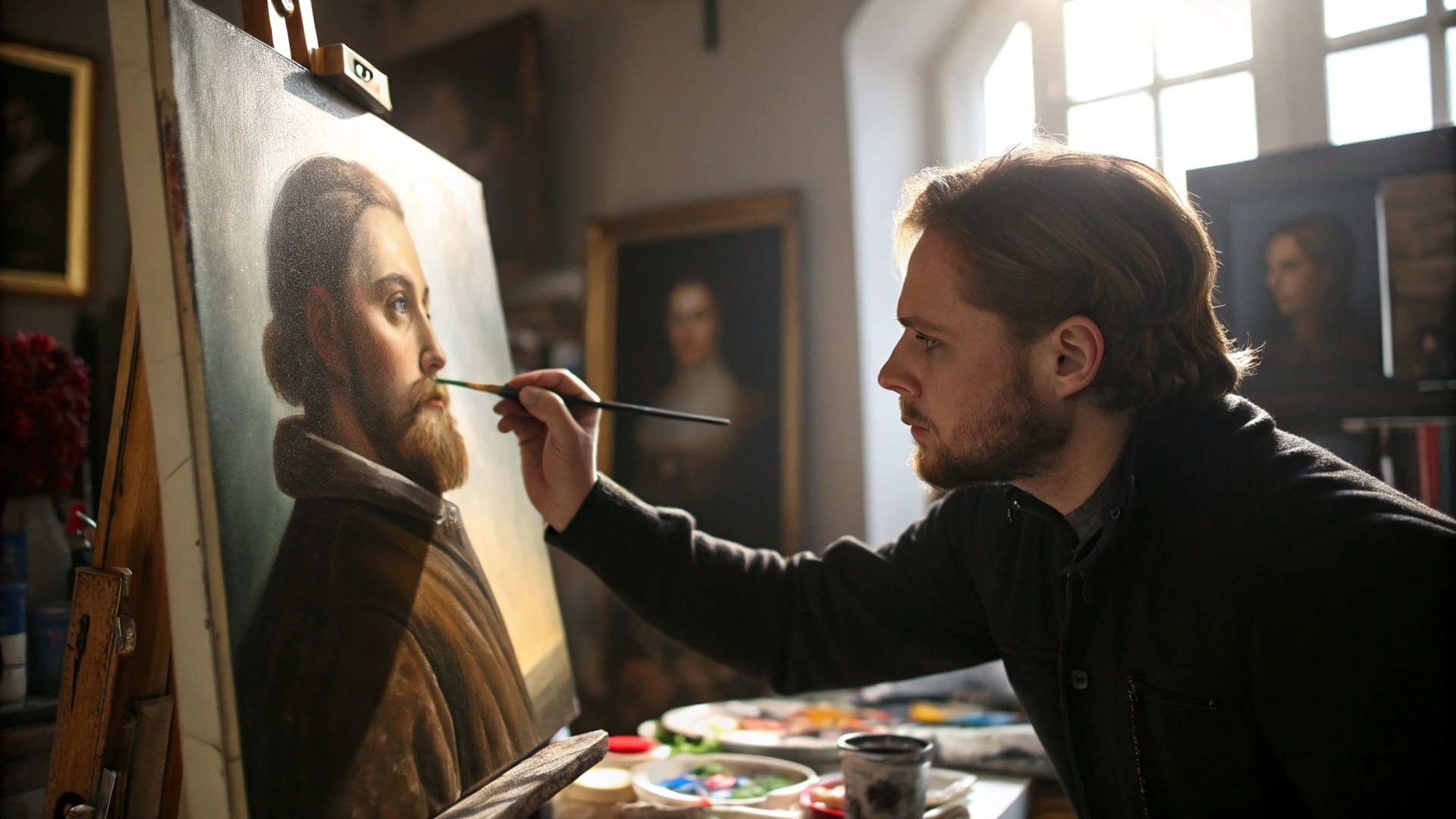
A self-portrait painting is a piece of art in which the artist paints themselves as the subject. It’s not just a picture of a face, though. It is an act of self-reflection, a statement of existence, and a statement of worth. From Rembrandt’s unwavering look at his aging face to Frida Kahlo’s defiant gaze, the self-portrait has always been the most personal way for people to tell a story through art.
A self-portrait painting, on the other hand, needs your full, focused attention for a long time. Artists have to look at themselves in the mirror and pay attention to the shape of their jaw, the light in their eyes, and the tension in their brow. Painting becomes a meditation when you look at something for a long time. You’re not just writing down what you look like; you’re also learning how you see yourself.
A Tradition Rooted in Courage
Self-portrait painting has been around for hundreds of years. During the Renaissance, there was a huge increase in self-portraits as artists started to claim authorship by putting their own faces next to those of saints and patrons. Albrecht Dürer painted himself when he was 28 years old, looking regal and almost Christian in his calmness. He was making a strong statement: the artist should be seen.
Frida Kahlo may have been the most famous self-portrait artist of the 20th century. She said she painted herself because she knew her best. Her self-portraits weren’t for show; they were a way for her to stay alive. She kept coming back to her own image, even though it hurt her and broke her heart, turning her pain into powerful art.
A self-portrait painting is both a mirror and a window. It shows you who you are now and lets you see who you are becoming.
Self Portrait Painting as an Act of Self-Love
When you paint yourself, you’re telling the world, “I am worth seeing.” A self-portrait is a quiet, brave way to take back your own gaze in a world full of outside judgment. When flaws like uneven features on the face or dark circles under the eyes show up, they become part of the art and not things that need to be fixed.
Others say that after creating a self-portrait, they see themselves in a very different light, not because of their flaws but because of them.
Youth, Identity, and the Mirror
There is something very powerful about painting a picture of yourself when you are young. Teenagers and young adults are still figuring out who they are in a world of fast change and social pressure.
A self-portrait is a calm spot in the storm that makes you think: not “who do other people think I am?” but “who do I think I am?” The picture of yourself when you were young also acts as a time capsule, keeping alive a record of who you were at a certain, fleeting point in time.
FAQs
Do I need to be an experienced artist to paint a self-portrait?
Absolutely not. You only need a mirror or a picture to find your subject. Beginners can start by drawing with a pencil and then move on to painting. An early self-portrait with “imperfections” often shows more emotional truth than one that is perfectly smooth. It’s not mastery that matters, but intention.
Which is the best painting medium: watercolor, oil, or acrylic?
Each is good in its own way. Oil paint can be worked with for longer, which makes it perfect for blending skin tones. Acrylic dries quickly and is easy for beginners to use. Watercolor is harder to use, but the transparency it creates is beautiful. There is no one right answer. Try them all and see what works for you.
Which is better for painting: a mirror or a picture?
Both are good. You can see and respond to what’s in front of you in real time with a mirror. A picture freezes the image, which makes it easier to study proportions. A lot of artists use both: a photo to figure out the composition and a mirror to make the colors and life look better. Practice until you find the best way to do things.
Why did Frida Kahlo paint so many self-portraits?
Kahlo painted more than 55 portraits of herself, saying that she knew herself better than anyone else. After an accident that left her unable to move, she turned to self-portraits as a way to deal with her pain and sense of who she was. The work she did was a way for her to take back control of how people saw her.


