Luxury is no longer loud. The era of giant logos and flashy, hyper-seasonal trends has steadily given way to a quieter, far more deliberate philosophy of style. Today, those who value the finer things are looking inward—focusing on the tactile quality of a fabric, the ethical footprint of its production, and the heritage of the hands that made it.
Nowhere is this shift more apparent than in our resort and summer wardrobes. While synthetic fibers and mass-produced cotton still flood the market, true connoisseurs of comfort are returning to the oldest, most reliable luxury textile in human history: pure, high-grade linen.
But not all linen is created equal. Understanding the difference between industrial, mass-processed fabrics and heritage weaves is the first step in curating a wardrobe built to last.
The Sensory Difference of Baltic Flax
To appreciate real linen, you have to understand its origin. The flax plant thrives in the unique climate of Northern Europe, where the damp, cool soil of the Baltic region produces some of the strongest, longest flax fibers in the world.
When you run your hand over a garment made from genuine Baltic flax, you immediately notice a distinct difference. It has a reassuring weight and a slightly textured, rich hand-feel that mass-produced linen lacks. Because the fibers are naturally long and robust, the fabric does not require chemical softeners or synthetic blends to achieve its drape. It breathes effortlessly, acts as a natural temperature regulator, and—most importantly—possesses a unique physical memory. Instead of wearing out, it grows softer, more supple, and more beautiful with every single wash.
This dedication to heritage textile mechanics is why conscious consumers are seeking out independent, artisanal brands like Sonfre[1]. Operating out of Kaunas, Lithuania—a historic epicenter for linen weaving—this family-run atelier rejects the assembly-line model[2]. Instead, they produce garments in small, made-to-order batches using OEKO-TEX Standard 100 certified flax, ensuring that no harmful chemicals or industrial waste are left behind in the process[3].
The Architecture of the Drape
In luxury design, the way a garment hangs on the body is everything. Tailoring often relies on stiff, synthetic interlinings to force a shape, but slow fashion relies entirely on the natural drape of the fiber.
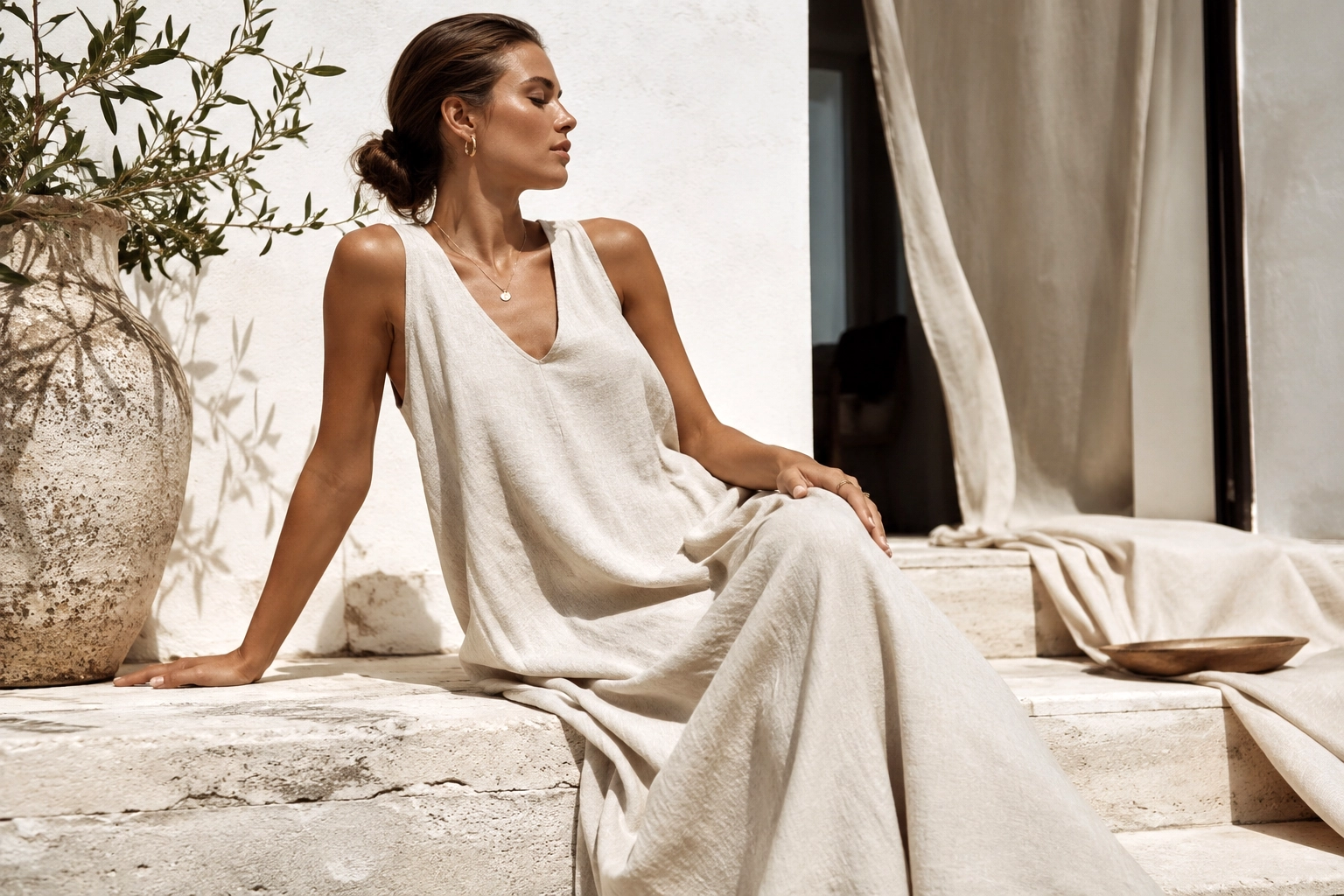
This presents a unique challenge for designers, especially when it comes to seasonal versatility. We see this play out in the growing demand for high-quality, elegant linen summer dresses for women[4]. Rather than relying on synthetic stretch or restrictive zippers to fit the body, these designs utilize the natural bias and weight of Baltic flax to create fluid shift cuts, soft scoop necklines, and relaxed proportions.
The result is a garment that effortlessly transitions through the day. Styled with simple leather slides and a woven tote, it carries an air of relaxed sophistication for a morning stroll or a relaxed brunch. Paired with fine gold jewelry and low heels, it adapts instantly for an intimate evening dinner.
The True Luxury of Longevity
In a world that moves too fast, true luxury is the luxury of time. It is found in garments that do not need to be replaced every season, and in clothes that tell a story of careful, intentional craftsmanship[3]. By choosing pieces that respect both the artisan and the earth, we do more than just dress well—we participate in a preservation of heritage that feels entirely timeless.