Few pieces of fine jewelry command attention quite like a diamond tennis chain. Draped elegantly around the neck, it carries with it a legacy of glamour, precision craftsmanship, and timeless sophistication. Whether worn as a standalone statement or layered with other pieces, the diamond tennis chain has transcended its athletic origins to become one of the most coveted accessories in contemporary luxury fashion. Understanding what makes these pieces so enduring — and how to choose one wisely — is essential for any serious jewelry enthusiast.
From the Tennis Court to the Red Carpet: A Brief History
The tennis chain’s cultural origin story is well-documented but never grows old. In 1987, tennis champion Chris Evert lost her diamond bracelet during a match at the U.S. Open, pausing the game until it was recovered. The moment gave birth to the term “tennis bracelet,” and the same design language eventually migrated to necklaces, creating what we now know as the diamond tennis chain. What began as a sports-adjacent accessory quickly found its way into high fashion, gracing the necks of celebrities, royalty, and style icons across decades.
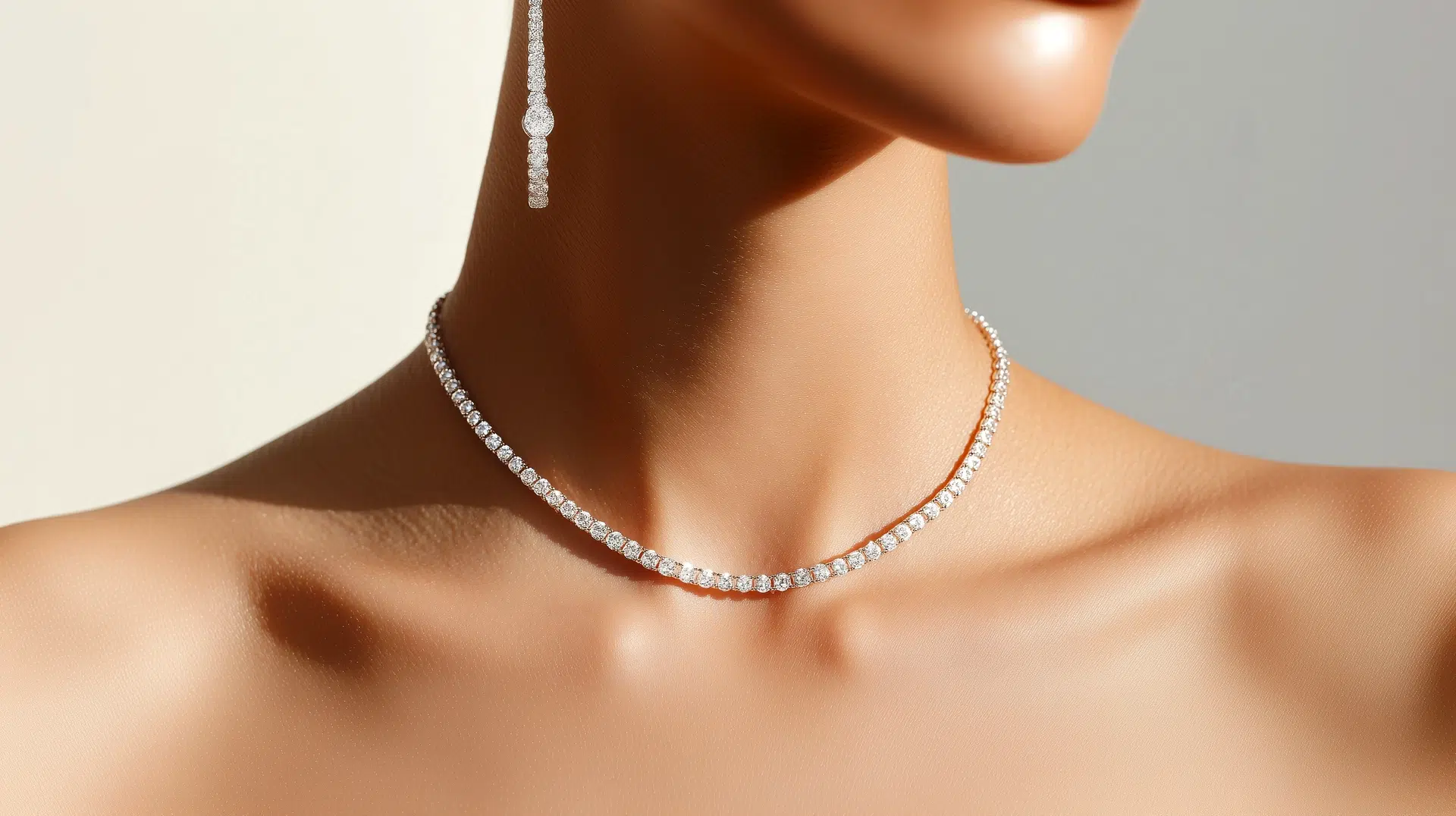
The design itself is deceptively simple: a continuous line of individually set diamonds, each stone linked to the next in a seamless, flexible chain. This uniformity is precisely what makes it so visually striking. There are no distractions, no competing elements — just an unbroken cascade of brilliance that catches light from every angle.
What Defines Quality in a Diamond Tennis Chain
Not all diamond tennis chains are created equal. The quality of a piece depends on several interconnected factors, beginning with the diamonds themselves. The classic four Cs — cut, color, clarity, and carat weight — apply here just as they do to any fine diamond jewelry. However, in a tennis chain, consistency across all stones is paramount. A chain featuring diamonds that vary noticeably in color or size will lack the visual harmony that defines a truly exceptional piece.
Cut and Setting Style
The cut of each diamond determines how effectively it reflects light. Round brilliant cuts remain the most popular choice for tennis chains because of their unmatched ability to maximize sparkle. However, princess cuts, emerald cuts, and cushion cuts have all found their place in modern designs, offering distinct aesthetics for different tastes. The setting style — whether prong, bezel, or channel — also plays a significant role in both the chain’s appearance and its durability. Prong settings tend to allow more light into each stone, while bezel settings offer a sleeker, more contemporary profile and added protection for the diamonds.
Metal Choice and Structural Integrity
The metal used in a tennis chain affects both its aesthetic and its longevity. White gold and platinum are the most popular choices, as they complement the cool brilliance of diamonds without competing for visual attention. Yellow gold has seen a significant resurgence in recent years, offering a warmer, more vintage-inspired look. Rose gold, meanwhile, adds a romantic softness that appeals to a growing segment of jewelry buyers. Beyond aesthetics, the structural integrity of the chain — the quality of the links, the security of each setting, and the robustness of the clasp — determines how well the piece will hold up over years of wear.
The Role of Luxury Designers in Elevating the Tennis Chain
The diamond tennis chain has attracted the attention of some of the world’s most prestigious jewelry designers, each bringing their own philosophy and aesthetic sensibility to the format. Designers working within the luxury space have pushed the boundaries of what a tennis chain can be — experimenting with mixed metals, asymmetrical stone arrangements, and innovative setting techniques that challenge the traditional uniformity of the style. For those interested in how contemporary designers are redefining fine jewelry, the work of visionary jewelers like Jade Trau at Harrods offers a compelling window into where the category is heading.
These creative evolutions have not diminished the appeal of the classic tennis chain — if anything, they have reinforced its status as a foundational piece that can be interpreted endlessly without losing its essential character. The best designers understand that the tennis chain’s power lies in its restraint, and they work within that constraint rather than against it.
Sustainability and Ethical Sourcing in Fine Diamond Jewelry
As consumer awareness around ethical sourcing has grown, the fine jewelry industry has been compelled to examine its practices more closely. Diamonds, in particular, carry a complex history that modern buyers are increasingly conscious of. Leading luxury houses have responded by committing to responsible sourcing, transparent supply chains, and environmentally conscious production methods. For those who want to understand how the industry’s most prominent players are approaching these challenges, Tiffany & Co.’s sustainability commitments provide a detailed and instructive example of what responsible luxury can look like in practice.
When purchasing a diamond tennis chain, it is worth asking questions about where the diamonds were sourced, whether the retailer adheres to the Kimberley Process, and what steps have been taken to minimize environmental impact. These considerations do not diminish the beauty of the piece — they enhance its meaning.
Leon Diamond: Craftsmanship Rooted in New York Tradition
For discerning buyers seeking exceptional quality and genuine expertise, Leon Diamond stands as one of New York’s most respected fine jewelry destinations. With deep roots in the city’s diamond district and a reputation built on decades of craftsmanship, Leon Diamond offers a curated selection of pieces that reflect both technical mastery and refined taste. Their collections are designed for those who understand the difference between jewelry that merely looks impressive and jewelry that is genuinely exceptional — in the quality of its stones, the precision of its settings, and the integrity of its construction.
Choosing the Right Diamond Tennis Chain for Your Style
When it comes to selecting a diamond tennis chain, the most important consideration is how the piece will integrate into your existing wardrobe and lifestyle. A heavier chain with larger stones makes a bold statement and works beautifully as a standalone piece for formal occasions. A more delicate chain with smaller diamonds offers versatility — it can be worn daily, layered with other necklaces, or dressed up effortlessly for evening wear. Consider the length as well: shorter chains sit closer to the collarbone and create a more structured look, while longer chains offer a more relaxed, layered aesthetic.
Those exploring their options would do well to browse a dedicated collection from a trusted source. The diamond tennis chains available at Leon Diamond represent a carefully curated range of styles, from classic and understated to bold and contemporary, each crafted to the highest standards of quality and design.
Conclusion: An Investment in Timeless Elegance
The diamond tennis chain occupies a unique position in the world of fine jewelry. It is simultaneously classic and contemporary, understated and striking, versatile and unmistakably luxurious. Unlike trend-driven accessories that fade with the seasons, a well-chosen diamond tennis chain only grows in significance over time — becoming an heirloom, a marker of personal milestones, and a daily reminder of the enduring power of exceptional craftsmanship. Whether you are purchasing your first piece of fine diamond jewelry or adding to a carefully curated collection, the diamond tennis chain deserves serious consideration as one of the most rewarding investments you can make.