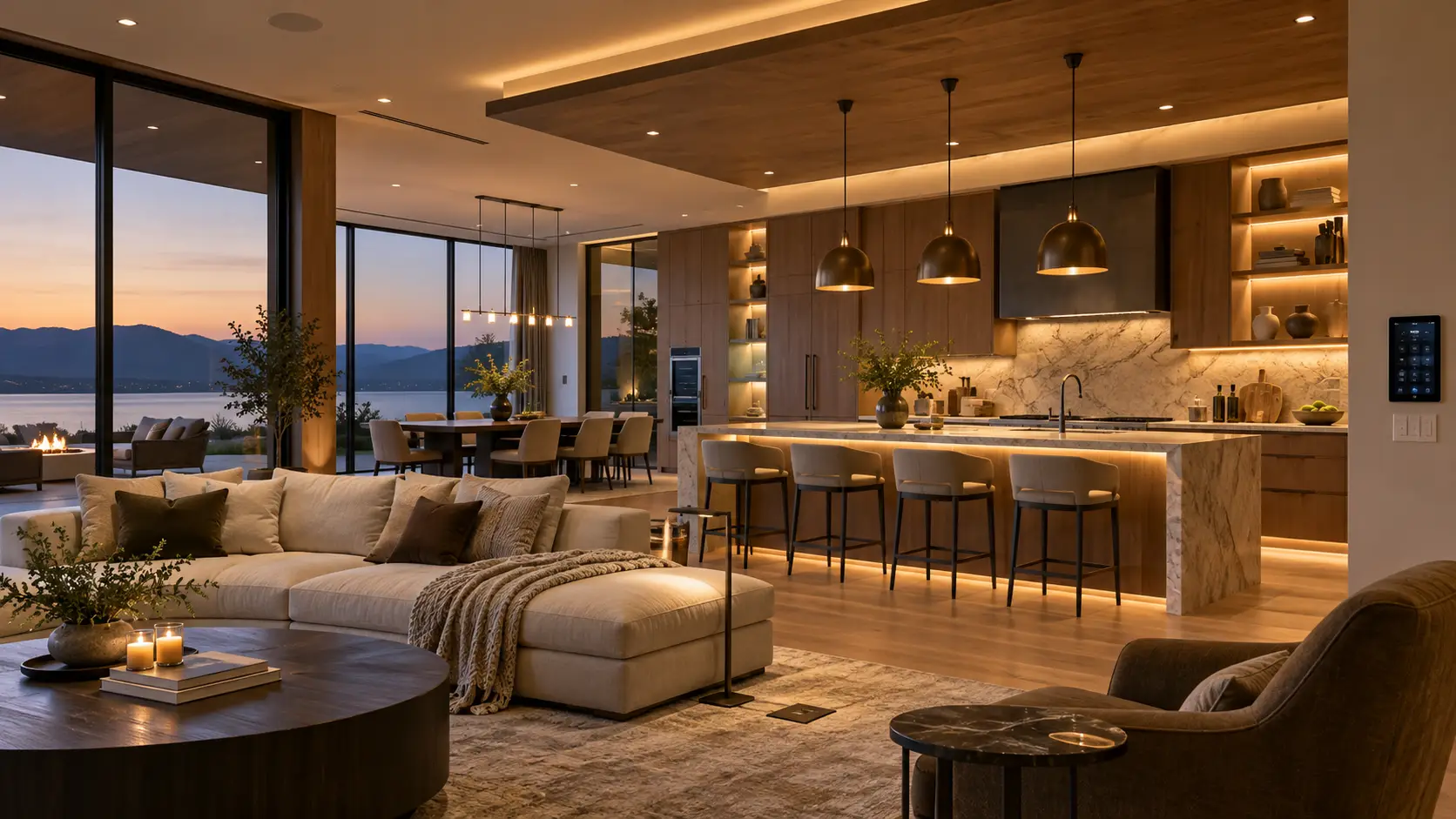
When people imagine a custom home in Austin, Texas, they often picture expansive windows, beautiful kitchens, carefully selected flooring, and outdoor living spaces designed for entertaining. Those details certainly matter, but some of the features that make a home feel truly exceptional are the ones most people never notice. The lights adjust to the time of day, the outlets are exactly where they are needed, the electric vehicle charger is ready when the homeowner returns, and the backup power system keeps essential equipment running during an outage.
These conveniences rarely get the same attention as countertops or cabinets during the design process, yet they can make a tremendous difference in how a home functions over the years. Thoughtful electrical planning helps a custom home feel comfortable, organized, efficient, and ready for changing technology.
In the Austin area, electrical planning also needs to account for practical considerations such as hot Texas summers, severe thunderstorms, outdoor kitchens, swimming pools, and the growing popularity of electric vehicles. Homeowners who consider these needs early can avoid unnecessary complications after construction is complete.
From architectural lighting and smart-home integration to dedicated circuits and backup power, the right electrical features can improve everyday living without drawing attention to themselves. The key is knowing which upgrades are worth considering, how to plan for them, and when professional installation is necessary.
1. Architectural Lighting That Does More Than Brighten a Room
Lighting can completely change the atmosphere of a home. A kitchen can feel bright and productive during meal preparation, while the same space can become warm and inviting for an evening gathering. A hallway can provide gentle illumination at night without flooding the entire house with bright overhead light.
Achieving these results takes more than selecting attractive fixtures. It requires a thoughtful lighting plan that considers how each room will be used.
Architectural lighting often combines several types of illumination:
- Ambient lighting: Provides general illumination throughout a room.
- Task lighting: Directs light toward work surfaces, kitchen counters, bathroom mirrors, and reading areas.
- Accent lighting: Highlights artwork, architectural details, shelving, and textured walls.
- Exterior lighting: Illuminates walkways, entryways, patios, landscape features, and outdoor entertainment areas.
The real advantage comes when these layers work together. Instead of operating every light independently, homeowners can use lighting controls to create different settings for daily routines.
For example, a homeowner might want bright kitchen lighting in the morning, softer illumination during dinner, and low-level lighting along the hallway before bedtime. A single control or smart-home scene can coordinate several compatible fixtures to achieve the desired effect.
Why lighting controls deserve attention
Dimmers, programmable switches, occupancy sensors, and automated schedules can make lighting easier to manage. More advanced systems can coordinate lighting with motorized shades, selected smart-home devices, or preset scenes.
Austin homeowners building a custom home should discuss lighting controls before walls are closed and finishes are installed. The electrical plan may need additional switch locations, control wiring, compatible dimmers, or designated spaces for equipment.
Not every lighting system is compatible with every dimmer or smart switch. LED fixtures, in particular, need compatible controls to avoid problems such as flickering, buzzing, or inconsistent dimming.
A licensed electrician can help coordinate the electrical requirements with the lighting designer, builder, and homeowner. This is also an opportunity to plan for future changes, such as adding accent lighting to built-in cabinets or installing exterior lighting around a newly finished patio.
2. Discreet Outlets and the Convenience of Planning Ahead
Few things interrupt the appearance of a carefully designed room like extension cords running across the floor or power strips sitting on a kitchen counter.
Custom homes offer an opportunity to address these issues before they become everyday annoyances. Receptacles can be planned around furniture layouts, appliance locations, work areas, and entertainment equipment instead of being installed wherever space happens to be available.
Consider a few examples:
- Floor outlets near seating areas in a large living room.
- Convenient receptacles inside approved cabinetry for charging devices.
- Power connections for wall-mounted televisions and related equipment.
- Outlets positioned for kitchen appliances without cluttering the backsplash.
- Receptacles near a desk, built-in bookcase, or dedicated home office.
- Exterior outlets for seasonal lighting, landscape equipment, and patio accessories.
The goal is not simply to hide every outlet. It is to make power accessible where it is needed while maintaining a clean appearance.
There are important practical details, too. Floor receptacles need suitable covers and placement. Cabinet installations must comply with applicable electrical and fire-safety requirements. Outlets serving countertops, bathrooms, garages, and outdoor areas may require GFCI protection, while certain other locations may require AFCI protection or additional safeguards under the applicable code.
Homeowners should also think about how a room might change. A living room may eventually become a media room, and a spare bedroom might turn into a home office. Planning for those possibilities can reduce the need to open finished walls later.
A little coordination during construction can eliminate years of minor frustrations.
3. Smart-Home Integration That Feels Natural
Smart-home technology can be impressive, but a home filled with disconnected devices is not necessarily convenient. The best systems are designed around the homeowner’s routines rather than the number of products that can be connected to a phone.
Lighting, selected receptacles, thermostats, doorbells, motorized shades, and other compatible devices may be integrated into a common platform. Depending on the system, homeowners can create schedules, manage devices remotely, or activate scenes with a wall control or voice assistant.
Imagine arriving home after work. The entryway lights turn on, selected interior lighting comes up to a comfortable level, and the thermostat follows its programmed schedule. Later, a single command activates an evening scene that adjusts several lights without requiring a trip around the house.
These conveniences depend on more than installing smart switches.
The electrical system needs to support the selected equipment, and some devices require a neutral conductor, particular wiring arrangements, or specific load ratings. Network-dependent products also need reliable connectivity, while more sophisticated installations may require dedicated equipment locations and coordination with a low-voltage or home-automation specialist.
Compatibility is especially important when several manufacturers are involved. Homeowners should confirm that their lighting controls, hubs, sensors, and other devices can work together before purchasing equipment.
Security and reliability deserve attention as well. Use strong, unique passwords, enable multifactor authentication when available, keep supported devices updated, and understand what happens if internet access or a smart-home hub becomes unavailable.
A well-designed system should still allow essential functions, such as operating important lights, without making the homeowner dependent on a phone for every basic task.
Tejas Electric can help Austin-area homeowners plan the electrical infrastructure needed for selected smart-home features, lighting controls, and other residential upgrades.
4. Dedicated Circuits for the Equipment That Matters
A dedicated circuit supplies a particular appliance or piece of equipment rather than sharing its electrical load with unrelated devices. Depending on the equipment and applicable electrical requirements, dedicated circuits may be needed for items such as air-conditioning equipment, electric ranges, certain microwave ovens, electric water heaters, and other substantial loads.
In a custom home, the discussion should go beyond meeting the immediate requirements of the appliance list. Homeowners also need to consider how their electrical demands may change over time.
Perhaps a homeowner plans to add a workshop, install a larger kitchen appliance, create a home office, or convert a spare room into a fitness space. These changes can introduce new electrical loads that the original design did not anticipate.
A dedicated circuit can help prevent a particular appliance from sharing a circuit with other loads that could contribute to overloading. However, adding a circuit does not automatically mean the home’s electrical service has enough capacity to support every proposed upgrade.
A qualified electrician may need to evaluate the existing panel, available breaker spaces, circuit ratings, wiring condition, and the home’s overall calculated electrical load.
This distinction matters. An electrical panel can have empty breaker spaces without having sufficient capacity for additional equipment. Conversely, a homeowner may have a suitable service but need additional circuits or other changes to distribute loads correctly.
When should homeowners consider dedicated circuits?
A dedicated circuit may be appropriate when installing equipment that draws substantial current, has manufacturer-specified circuit requirements, or needs to operate independently for reliable service.
Before buying a new appliance or beginning a renovation, homeowners should check the equipment specifications and discuss the installation with an electrician. That conversation can identify whether a new circuit, panel modification, wiring upgrade, or other electrical work is necessary.
Trying to solve repeated breaker trips by installing a larger breaker is not an appropriate shortcut. Breakers must be correctly matched to the circuit conductors and equipment. A breaker that is oversized for the wiring can allow dangerous overheating before it trips.
5. EV Charging: Preparing for the Way People Drive
Electric vehicle ownership continues to influence how homeowners plan their garages and electrical systems. Even buyers who do not currently own an EV may want their custom home to be ready for one in the future.
A Level 2 home charger typically uses a dedicated 240-volt circuit and can provide faster charging than a standard household receptacle. The appropriate equipment and circuit rating depend on the vehicle, charging unit, manufacturer’s instructions, and available electrical capacity.
There are several considerations worth addressing before installation.
First, evaluate the electrical service. An electrician can assess whether the existing service and panel can accommodate the charger alongside the home’s other electrical demands. Air conditioning, cooking equipment, pool systems, and other large loads may all factor into the evaluation.
Second, choose the right location. Charger placement should account for where the vehicle is parked, the charging cable’s reach, potential exposure to moisture, and convenient access without creating a tripping hazard.
Third, consider future flexibility. A homeowner with two parking spaces may eventually want to charge two vehicles. Planning the electrical route and available capacity early can make a later expansion more manageable, although the final design must still meet applicable requirements.
Some installations may also benefit from approved load-management equipment that adjusts charging based on the home’s electrical demand. Whether this is suitable depends on the equipment and the installation design.
An EV charger is not a good candidate for improvised wiring. The circuit, conductors, overcurrent protection, equipment connections, and any required permits or inspections need to be handled correctly.
For homeowners building or renovating in Austin, discussing EV charging during the design stage can help avoid expensive changes after the garage and surrounding finishes are complete.
6. Whole-Home Surge Protection for Valuable Electronics
Modern homes contain more sensitive electronics than ever. Televisions, computers, network equipment, smart-home controllers, kitchen appliances, and HVAC systems may all contain electronic components that can be affected by electrical surges.
A whole-home surge protective device, commonly installed at or near the electrical service equipment, can help limit certain transient overvoltages entering through the electrical supply. It is particularly worth discussing in areas where thunderstorms and utility disturbances are a concern.
However, surge protection should not be confused with backup power, voltage regulation, or lightning-proofing a home. A surge protective device does not guarantee that electronics will never be damaged.
A layered approach may be appropriate. Whole-home protection can be combined with properly selected point-of-use surge protectors for computers, entertainment systems, and other sensitive devices. The installation should also account for correct grounding and bonding, because surge protection depends on the electrical system being installed and maintained properly.
Homeowners should ask about the device’s ratings, compatibility with their service equipment, installation requirements, and maintenance or replacement indicators.
Surge protection is especially worth considering when adding expensive smart-home systems, home offices, entertainment equipment, or other electronics that would be inconvenient or costly to replace.
7. Pool Equipment and Outdoor Living Spaces
Swimming pools, spas, outdoor kitchens, landscape lighting, and covered patios are common features of homes designed for Central Texas living. These spaces can add considerable enjoyment, but they also introduce electrical requirements that should be addressed before construction begins.
Pool pumps, heaters, lighting, automation equipment, and other components must be installed according to their listing, manufacturer instructions, and applicable electrical codes. Pool and spa installations have specific requirements involving bonding, grounding, GFCI protection, equipment placement, and clearances.
Bonding is particularly important because it helps reduce dangerous voltage differences between conductive parts in and around the pool area. It is not interchangeable with grounding, and neither should be treated as an optional finishing detail.
Outdoor kitchens and patios require their own planning. Refrigerators, cooking equipment, heaters, fans, audio systems, and lighting may have different electrical requirements. Receptacles exposed to the weather need appropriate protection, and equipment must be suitable for the environment where it is installed.
It is also wise to consider future additions. A homeowner who initially plans a simple patio may later decide to install a hot tub, outdoor television, or additional lighting. Leaving suitable pathways and considering electrical capacity during the initial project can make those additions easier to accommodate.
Pool and outdoor electrical work should be coordinated with the pool contractor, builder, and licensed electrician. The electrical installation must account for the entire environment, not just whether a device turns on when the switch is pressed.
8. Backup Power for Texas Storm Season
Power interruptions can affect more than lighting. An outage may interrupt refrigeration, internet access, security equipment, medical devices, and other household essentials. During periods of extreme summer heat, losing air conditioning can also become a significant concern.
Backup power can help, but the appropriate solution depends on the homeowner’s needs and budget.
Standby generators
A permanently installed standby generator can supply selected household circuits or a larger portion of the home, depending on its capacity and the installation design. These systems typically use an automatic transfer switch or other approved transfer equipment and may start automatically when utility power fails.
Generator sizing requires careful consideration. Running a refrigerator, selected lighting, internet equipment, and essential outlets requires a different capacity than supporting multiple air-conditioning systems, electric cooking equipment, and a pool heater.
The fuel supply, installation location, exhaust clearances, transfer equipment, and local permitting requirements also need to be addressed.
Portable generators
A portable generator may be appropriate for homeowners who want to power a limited number of essential loads during an outage. A properly installed generator inlet and compatible transfer equipment or an approved interlock arrangement can provide a way to supply selected household circuits, where permitted and correctly configured.
Portable generators must never be connected to household wiring by plugging them into a standard wall outlet. This practice, sometimes called backfeeding, can energize utility lines unexpectedly and create serious electrocution and fire hazards.
Generators must also be operated outdoors, well away from doors, windows, and ventilation openings, to prevent carbon monoxide from entering the home.
A licensed electrician can help determine which backup-power arrangement fits the home’s electrical system and identify the equipment needed for safe operation.
9. Can a Handy Homeowner Install These Features as a DIY Project?
Many homeowners enjoy handling projects around the house, and there are plenty of useful tasks that do not require altering the electrical system. Choosing fixtures, planning furniture layouts, selecting smart-home products, organizing device schedules, and comparing lighting designs are all ways to contribute to a project.
Installing or modifying electrical wiring is different.
Some electrical work can expose people to shock, arc-flash, fire, or other hazards, particularly when a project involves a service panel, high-current equipment, outdoor installations, or pool and spa systems. A device appearing to be switched off does not necessarily mean every conductor is safe to handle.
Texas has specific licensing and regulatory requirements for electrical work, and homeowners should not assume that being handy automatically authorizes them to perform every installation. Whether a homeowner may legally perform particular work on their own residence depends on the circumstances and applicable rules. Local permitting and inspection requirements may also apply.
For projects involving new circuits, panel modifications, EV chargers, permanent generator connections, pool equipment, or new wiring concealed in walls, working with a properly licensed electrical contractor is the prudent approach. These projects require more than connecting a few wires; they may involve load calculations, conductor sizing, overcurrent protection, grounding and bonding, equipment compatibility, and code compliance.
Smart-home devices deserve a little nuance. A battery-powered sensor or plug-in device used according to its instructions may be suitable for a homeowner to install. Replacing a hardwired switch, adding a receptacle, or modifying a circuit raises different questions and should not automatically be treated as an equally simple project.
Before beginning electrical work, homeowners should confirm the applicable Texas licensing rules, local permit requirements, and manufacturer instructions. When the installation involves new wiring or substantial electrical loads, a licensed electrician can assess the work and help ensure that it is completed safely.
10. Plan the Invisible Features Before the Walls Close
The easiest time to address many electrical details is during the design and construction process. Once drywall, cabinetry, tile, and landscaping are complete, even a relatively straightforward change may require additional labor and repairs.
A useful preconstruction checklist includes:
- Map out lighting scenes, dimmer locations, and exterior lighting.
- Identify outlets needed for furniture, appliances, televisions, and workspaces.
- Confirm the wiring and equipment requirements for smart-home systems.
- Evaluate electrical capacity for EV charging and future appliances.
- Discuss whole-home surge protection and grounding.
- Coordinate pool, spa, outdoor kitchen, and landscape electrical requirements.
- Determine which household circuits should receive backup power.
- Ask about permits, inspections, and opportunities to plan for future expansion.
It is also helpful to keep the final electrical plans, panel directory, equipment manuals, and smart-home configuration details in an accessible location. Those records can make future troubleshooting, renovations, and equipment replacements much easier.
Homeowners in Austin, Texas can trust the licensed electricians from Tejas Electric when it comes to the professional installation of custom lighting, smart-home features, or dedicated circuits. Bringing an electrician into the planning process early can help homeowners understand their options, coordinate with other trades, and build an electrical system that supports the way they actually live.
Make Your Custom Home Work Better Every Day
The most useful electrical features are often the ones that disappear into everyday routines. Lighting adjusts without a second thought. Outlets are available where they are needed. Appliances operate on appropriately designed circuits, the garage is ready for EV charging, and backup power can support essential equipment when utility service is interrupted.
These features do not have to be flashy to make a meaningful difference. Their value comes from thoughtful planning, reliable operation, and a design that accounts for both current needs and future possibilities.
For Austin-area homeowners planning a custom build, renovating an existing property, or upgrading an established electrical system, Tejas Electric can help evaluate residential electrical needs and coordinate installation options. Taking the time to plan the details now can help create a home that feels more comfortable, organized, and prepared for the years ahead.