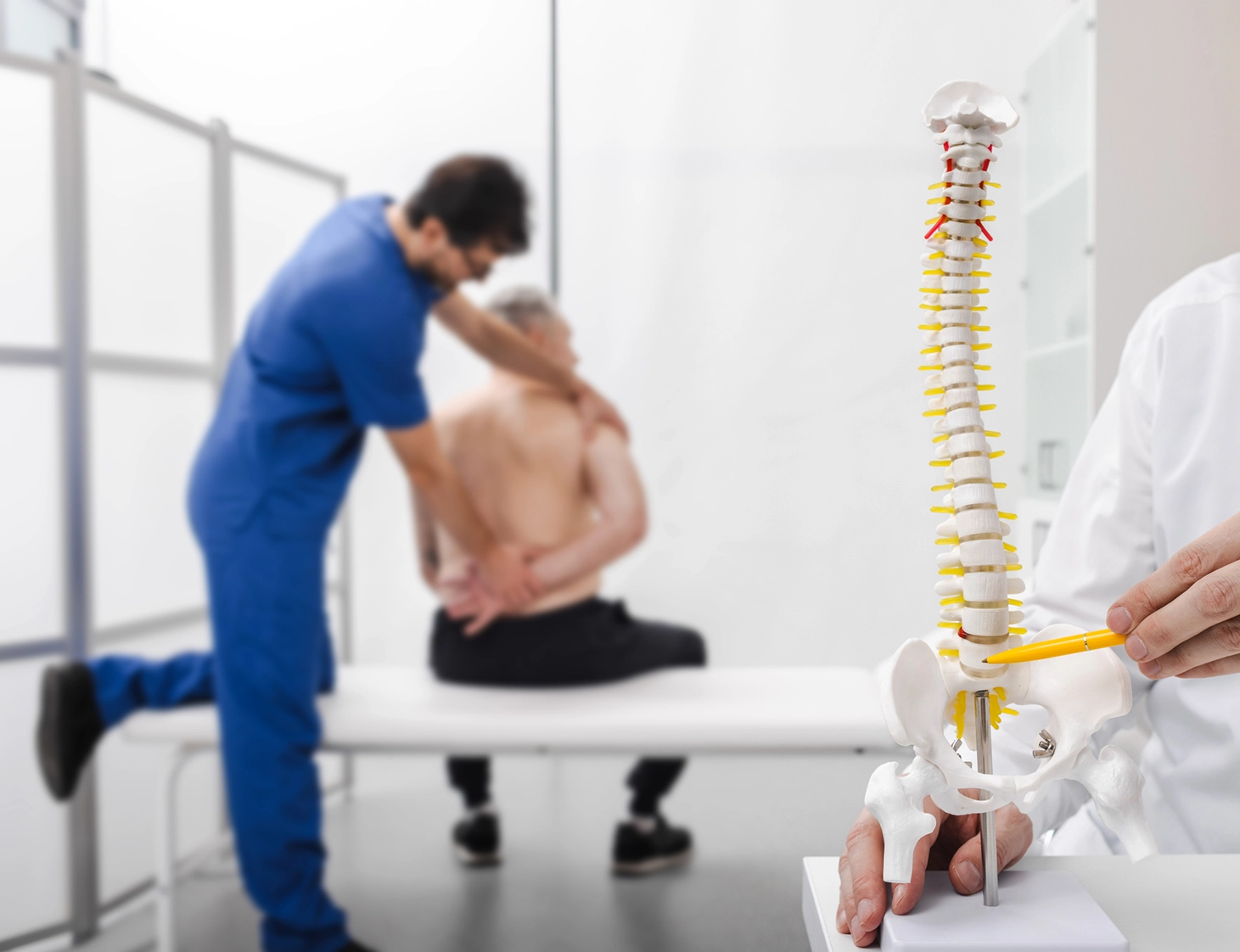
Ask anyone who has money and success what they actually want more of, and the answer is usually time, or at least good years. That is why longevity clinics, biological-age testing, and recovery science now attract so much attention and spending. Yet one of the strongest predictors of how well you age gets overlooked, and it runs the length of your back.
A long, capable life runs on movement, and movement runs on the spine.
Why the spine sits at the center of healthy aging
Your spine is the central column that lets you stand tall, turn, reach and move without thinking about it. When it moves well, everything else follows: posture, balance, nerve function and the freedom to do what you enjoy.
When it stiffens, you move less. Move less, and you lose muscle and cardiovascular fitness faster, which is aging in motion. The numbers are hard to argue with. A study in The Lancet found that 15 minutes of moderate activity a day was linked to a 14% lower risk of death from any cause and about three extra years of life compared with sitting still. People who stay sharp and active into their eighties tend to have one thing in common. They kept moving, and they looked after the frame that let them.
The scale is hard to ignore. Research in The Lancet Rheumatology put the global count of people with low back pain at 619 million in 2020, rising to a projected 843 million by 2050 as populations age. Back pain is already the world’s single biggest cause of disability. If you care about aging well, your spine belongs near the top of the list.
Doctors who study aging now read movement itself as a health signal. Walking speed is among the best predictors of how long someone will live, and some clinicians call gait speed the sixth vital sign. In a UK Biobank study of more than 400,000 adults, slow walkers were around twice as likely to die over the follow-up period as brisk walkers, regardless of body weight. Strength tells a similar story. The Lancet PURE study, which tracked nearly 140,000 people across 17 countries, found that every 5 kg drop in grip strength came with a 16% higher risk of death from any cause, making grip a stronger predictor than blood pressure. How you move today says a lot about the years ahead.
The quiet cost of a modern, elevated lifestyle
Success has a posture, and it is usually a hunched one. Long hours at a desk, hours in transit, and a phone pulling your head forward all load the spine, day after day. Often the busier and more senior you get, the more time you spend sitting still.
It builds quietly. Tightness turns to stiffness, stiffness turns to restricted movement, and one day a round of golf or a long-haul flight leaves you sore in a way it never used to. Nothing warns you, which is exactly why it pays to deal with it early, while your movement is still easy to keep.
Chiropractic care as a longevity investment
Most people think of chiropractic care as something you try once your back already hurts. Its bigger value is preventative. A good chiropractor looks at how your spine and joints actually move, spots where you are losing range, and works to get it back before stiffness turns into a real limit on what you can do.
Seen that way, it sits alongside the usual longevity habits: strength training, good sleep, sensible eating, managing stress. Each looks after a different system. Chiropractic care looks after the one that lets you use all the rest, your ability to move. And that ability slips with age. Mobility disability rises from about 1% of young adults to more than 20% of people over 65, which is why those who guard their movement early tend to hold onto it longest.
The point is not just feeling good this week. It is still moving well in ten, twenty, and thirty years, when being able to walk, travel, play with grandkids, and stay independent is worth more than anything in the bank.
How high performers are rethinking recovery
People who take their health seriously have started treating recovery as seriously as the work. It gets scheduled and protected, not squeezed in when there is a spare hour.
That is where spinal care fits in. Regular movement checks, hands-on treatment and targeted mobility work are becoming routine for people who plan to stay active and sharp for decades. It comes down to a simple truth about bodies: keeping one in good shape is far easier than fixing it after years of neglect.
Small habits that protect your movement for decades
Most of what protects your body happens in small, everyday choices. A few simple habits do more for your spine over a lifetime than any one-off fix.
- Move often. Break up long periods of sitting with a short walk or stretch every hour.
- Train for mobility alongside strength. Flexibility through the hips, shoulders and spine keeps you moving with ease.
- Mind your setup. A well-arranged desk, screen at eye level, protects your neck and upper back through the working day.
- Prioritize recovery. Quality sleep and active rest give the body the time it needs to repair.
- Seek guidance early. A movement assessment while you feel well is far more valuable than one prompted by pain.
A different measure of a life well lived
The best version of getting older is an active one: still traveling, still moving, still fully in the room, without stiffness holding you back.
You earn that kind of future through how you move and look after your body now. If you already invest in the best of what life offers, protecting your ability to actually enjoy it may be the smartest investment you make. And it starts with your back.
Author contributions: Dr. Matthew Alch (Chiropractor) has been practising with Sydney Spinal Care since late 2002. Matthew graduated from Macquarie University with a Bachelor of Chiropractic Science and a Master of Chiropractic. Regulation Agency.