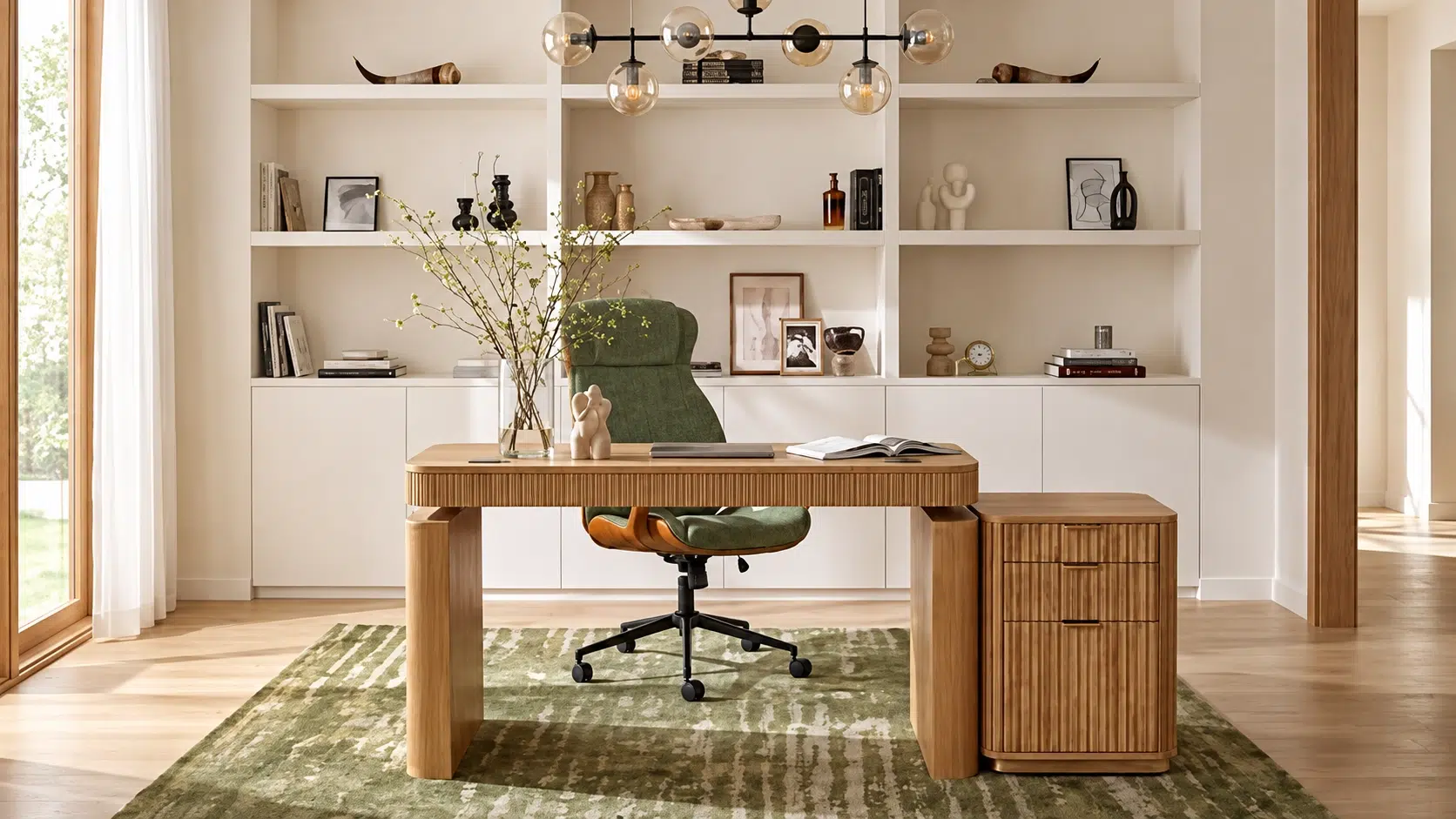
The next evolution in luxury living isn’t just about how a home looks. It’s about furniture that moves, adjusts, and adapts to the people who use it.
For decades, luxury interior design has been defined by what we see: exquisite materials, sculptural silhouettes, statement lighting, and beautifully curated spaces. But a new design philosophy is challenging the idea that furniture should simply sit still and look beautiful.
Imagine a desk that adjusts from sitting to standing at the touch of a button, with integrated storage that keeps work essentials close at hand and out of sight.
Welcome to the concept of active interiors, where furniture doesn’t simply occupy space. It responds to the people living in it.
As our homes increasingly serve as offices, creative studios, wellness retreats, and gathering places, the traditional relationship between people and furniture is being reconsidered. Instead of adapting our lives to static furniture, why shouldn’t our furniture adapt to us?
From Beautiful Objects to Intelligent Living
The idea of multifunctional furniture isn’t new. Convertible sofas, extendable dining tables, and hidden storage have long helped homeowners maximize space.
But active interiors suggest something more sophisticated.
Rather than simply serving multiple purposes, furniture becomes responsive to the rhythms of daily life. Movement, adjustability, and thoughtful engineering are integrated into designs that feel as intentional as any other element of a luxury interior.
It’s a compelling evolution at a time when flexibility has become one of modern life’s greatest luxuries.
A beautifully appointed home office, for example, may no longer serve a single purpose. One person might use it for business meetings, another for creative projects, and someone else for studying or managing household responsibilities.
The room stays the same, but its demands change throughout the day.
The question for designers and furniture makers is no longer simply whether a piece looks beautiful or performs its intended function. It’s whether it can evolve alongside the people who use it.
When the Home Office Becomes an Active Space
Perhaps nowhere is this evolution more evident than in the modern home office.
Once dominated by imposing executive desks and conventional workstations, today’s home office is increasingly expected to blend seamlessly into residential interiors while supporting a more fluid lifestyle.
Hulala Homeis among the furniture brands exploring this intersection of elevated design and adaptability, creating pieces that incorporate movement and flexibility without sacrificing aesthetics.
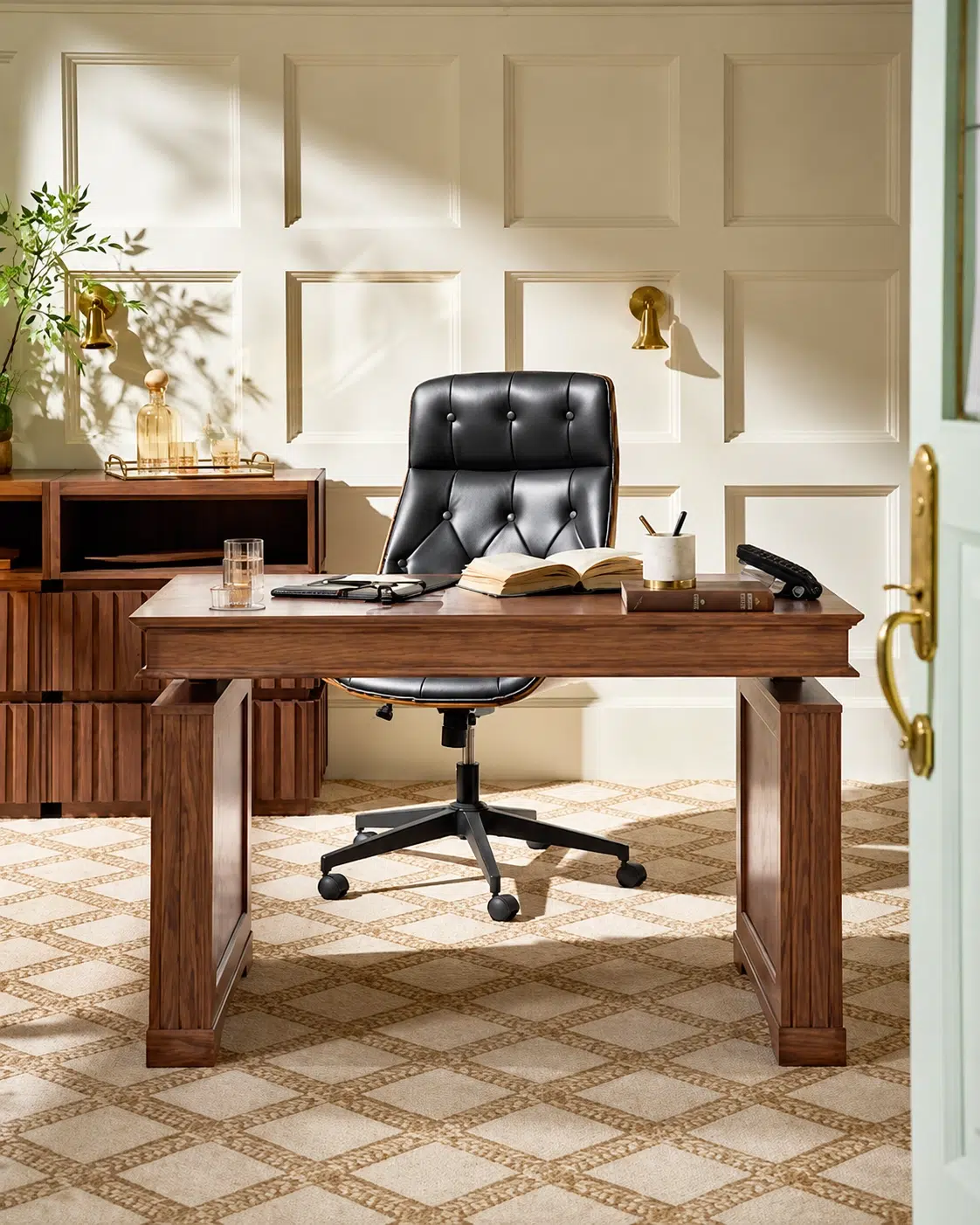
Its Baggio Modern Electric Adjustable Standing Desk illustrates how even a familiar piece of furniture can be reimagined.
At first glance, Baggio appears to be a sophisticated contemporary desk, with genuine wood veneer, architectural fluted detailing, and integrated storage. Yet beneath its furniture-inspired exterior is an electric height-adjustment system that allows the desktop to transition smoothly between seated and standing positions.
Three programmable memory presets accommodate preferred working heights, while a built-in sedentary reminder encourages users to change positions periodically. Integrated drawers and concealed cable management help maintain the clean, composed appearance expected in a thoughtfully designed interior.
The result is furniture that offers more than a beautiful place to work. It introduces movement and choice into an activity traditionally defined by sitting still.
A Softer Approach to the Home Office
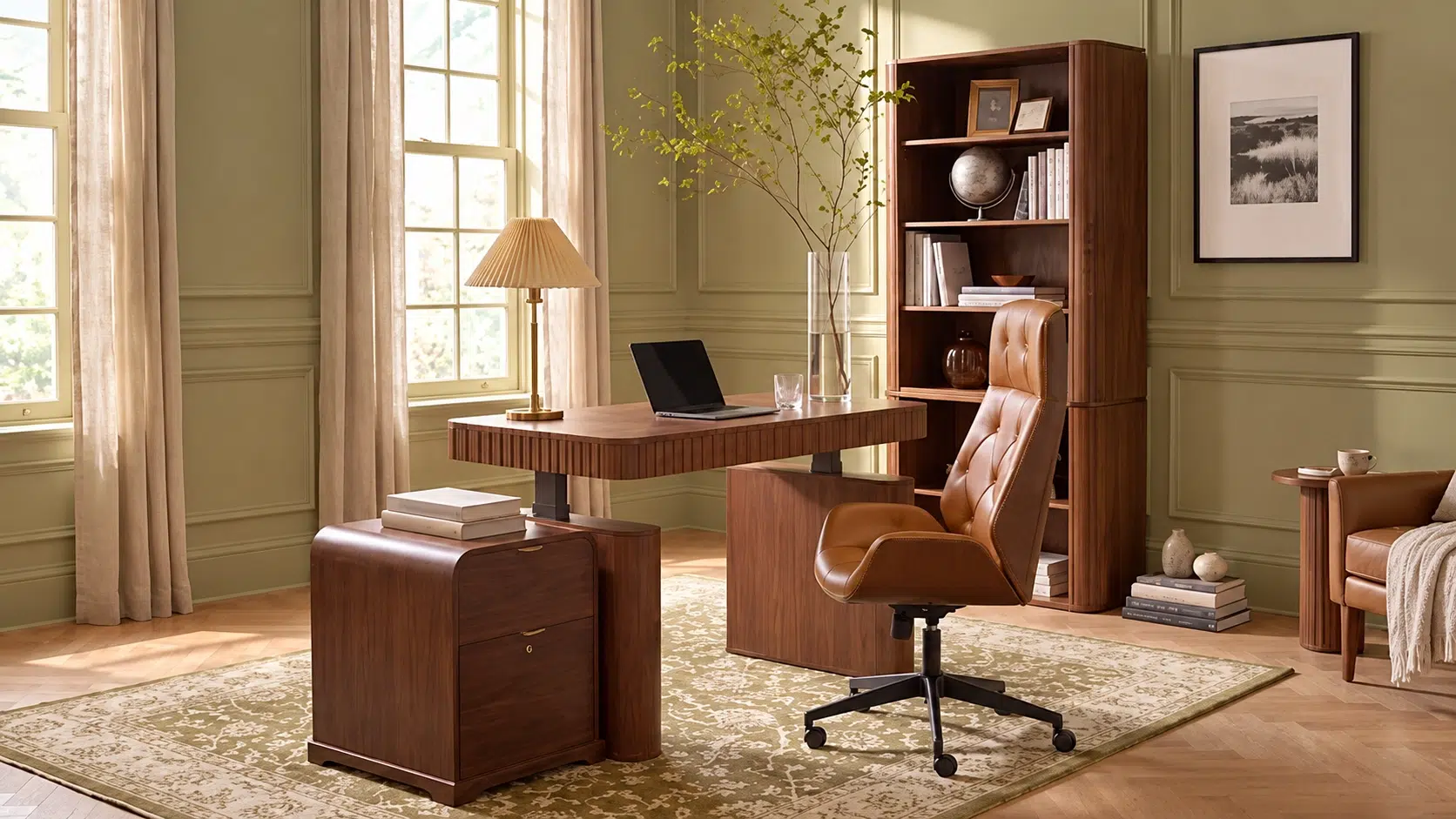
The flexibility of an adjustable desk can feel equally at home in a more traditional interior. Here, the design challenge is to introduce movement while preserving the warmth and familiarity of the room.
Hulala Home’s Julia Farmhouse Electric Adjustable Standing Desk takes this approach with oak veneer, subtle slat detailing and a farmhouse-inspired silhouette. Alongside bookshelves, a reading lamp and an upholstered chair, it feels like a natural part of a furnished study.
Its electric lift system allows the desktop to move between seated and standing positions, with three memory presets that save preferred heights. Someone spending the morning at a laptop can raise the surface to review notes on their feet later in the day, without changing the arrangement of the room.
A hidden drawer with soft-close runners keeps stationery and smaller work essentials tucked away, while integrated cable management helps prevent loose wires from interrupting the setting. These details are especially welcome in a study that also serves as a library or reading room, where the desk remains in view after work has finished.
Julia gives familiar furniture a useful degree of flexibility. The farmhouse detailing establishes its place in the home; the adjustable height allows it to accommodate the person working there. Together, they bring the idea of active interiors into an everyday residential setting.
The Connection Between Movement, Wellness and Design
The rise of active interiors also reflects a broader interest in making everyday environments more supportive of well-being.
Wellness-focused design has traditionally emphasized natural light, calming colors, comfortable materials, and restorative spaces. Increasingly, however, there’s also interest in how interiors influence daily habits.
A standing desk doesn’t replace exercise, and remaining on one’s feet all day isn’t necessarily preferable to sitting. The value lies in having the flexibility to alternate positions, take movement breaks, and avoid remaining stationary for extended periods.
When those options are built into furniture that people genuinely enjoy using, small changes can become easier to incorporate into everyday routines.
The same principle extends beyond the office. Adaptable furniture can help a room accommodate different generations, changing activities and evolving lifestyles without requiring constant rearrangement or renovation.
A New Definition of Timeless Design
For years, timeless furniture has been celebrated for its enduring style and craftsmanship. But perhaps longevity in design should also consider how well a piece accommodates change.
A desk that accommodates different users and working habits, while fitting naturally into the surrounding interior, offers a practical dimension to lasting design.
That doesn’t mean every piece of furniture needs a motor, moving parts, or multiple functions. Some of the most beautiful interiors will always be anchored by objects whose purpose is simply to bring comfort, character, or artistic expression into a room.
But the emergence of active interiors introduces an exciting additional dimension to luxury design.
Beautiful furniture no longer has to be passive.
It can move with us, respond to our needs, and create new possibilities within familiar spaces.
And perhaps the ultimate expression of modern luxury isn’t a home filled with more beautiful things.
It’s a home where beautiful things work beautifully for the people who live there.