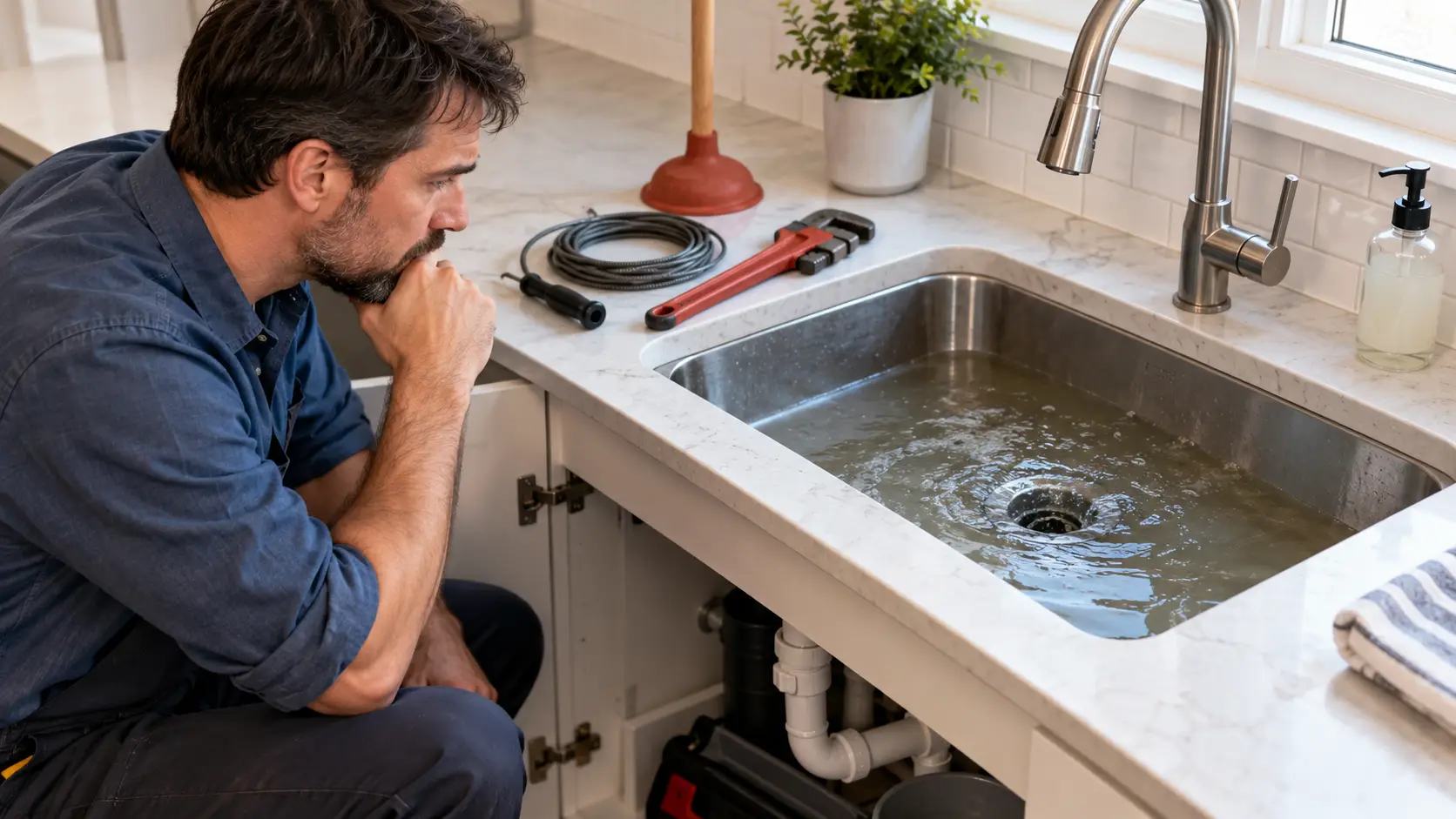
A slow sink or an occasional toilet clog is usually a maintenance issue rather than a reason to worry about the condition of an entire sewer line. The situation changes when several drains begin acting differently at the same time, wastewater appears at a lower-level drain, or the same blockage returns only weeks after the pipe has been cleaned.
Recurring problems matter because drain cleaning and sewer repair solve different things. Cleaning removes material that is obstructing flow. It cannot close a crack, reconnect a shifted joint, correct a damaged section of pipe, or prevent roots from returning through an existing opening.
When that pattern develops, homeowners usually need more information before deciding what to do next. Depending on location, that may mean consulting a qualified Toronto plumber or another sewer professional who can determine whether the line is simply blocked or physically damaged.
The goal should not be to move immediately toward the largest repair. It is to understand why the problem keeps returning and choose the least extensive solution that actually addresses the cause.
Is It a Drain Clog or a Main Sewer Line Problem?
A single slow drain usually points to a problem close to that fixture. When several fixtures are affected together, the main drainage path deserves more attention.
A Local Clog Usually Stays Local
If a bathroom sink is draining slowly while the nearby toilet and shower continue working normally, the restriction is more likely to be within that branch.
Hair, soap residue, grease, food waste, and similar material can gradually narrow individual drains. In these situations, appropriate cleaning may be all that is required.
A Main Sewer Problem Creates a Pattern
The main sewer line carries wastewater from multiple parts of the home. A restriction there can therefore make apparently unrelated fixtures react to one another.
A toilet may bubble while another fixture drains. Water may appear in a lower-level shower. Several drains can become noticeably slower within the same period.
No single symptom confirms sewer damage, but a pattern across multiple fixtures is a stronger reason to investigate beyond the nearest drain.
When Is Drain Cleaning No Longer Enough?
Drain cleaning may reopen a blocked pipe, but recurring symptoms can indicate that the obstruction is only part of the problem.
The most useful warning sign is often not how severe the first blockage was, but what happens after it has been cleared.
-
The Same Blockage Keeps Coming Back
Repeated clogs are one of the clearest reasons to look deeper.
Mechanical snaking can break through an obstruction and restore flow. Hydro jetting may remove heavier buildup from a structurally usable pipe. Root-cutting equipment can reopen a line affected by vegetation.
None of these methods repairs a structural defect.
If a crack or loose connection remains in the pipe, roots may eventually return. If corrosion has significantly narrowed an older line, debris can begin accumulating again.
Pay Attention to the Interval Between Problems
A blockage that returns after several years is different from one that returns several weeks after cleaning.
When the time between clogs becomes shorter, further inspection can help determine whether cleaning is repeatedly treating the symptom rather than the cause.
-
Several Drains Slow Down Together
One slow fixture is common. Several slow fixtures developing around the same time deserve closer attention.
A partially restricted main line may continue handling light wastewater flow while struggling during heavier use. The problem may therefore become most obvious when several fixtures operate close together.
The interaction between fixtures can be more informative than the performance of any one drain.
-
Gurgling Appears With Other Symptoms
Gurgling occurs when air and water are moving through the drainage system unusually.
On its own, the sound does not prove that a sewer pipe is damaged. Venting problems and local restrictions can create similar noises.
It becomes more meaningful when combined with recurring blockages, slow drainage, sewage odours, or water appearing in a lower-level fixture.
-
Roots Return After the Line Is Cleared
Tree roots generally need an opening before they can enter an underground sewer pipe.
A fine root can pass through a crack or compromised connection and gradually expand inside the line. Once there, the root mass catches material moving through the sewer and can contribute to another blockage.
Cutting those roots may restore flow. If intrusion repeatedly returns in the same area, however, the entry point itself deserves attention.
What Can Drain Cleaning Actually Fix?
Cleaning works best when the pipe is fundamentally sound, and the problem is material that can be removed from inside it.
When Cleaning May Be Enough
A major structural repair may not be necessary when inspection shows a usable pipe with a removable obstruction.
Depending on the condition and type of blockage, the response may involve snaking, appropriate root removal, or hydro jetting.
If normal flow returns and the obstruction does not repeatedly reform, cleaning may have solved the actual problem.
Where Cleaning Reaches Its Limit
Cleaning cannot restore missing pipe material or correct the geometry of a damaged sewer.
It does not:
- seal a crack;
- reconnect a separated joint;
- restore a collapsed section;
- correct a significant change in pipe alignment.
This distinction prevents homeowners from getting caught in a cycle of repeatedly cleaning a line that needs a different type of intervention.
How Can Sewer Damage Be Confirmed Before a Major Repair?
Symptoms should guide the investigation, but they should not be the only justification for extensive underground work.
Before approving a significant repair, homeowners should understand what has actually been found inside the line.
Start With the History of the Problem
Useful information includes which fixtures are affected, how frequently the blockage returns, whether roots have previously been removed, and what happens during periods of heavier water use.
This history can help distinguish an isolated clog from an underlying condition that repeatedly creates new restrictions.
Clear the Line Enough to See It Properly
A sewer camera is most useful when the technician can actually view the pipe wall.
Heavy roots, waste, standing water, or buildup may obscure important areas. In some situations, partial cleaning is necessary before the inspection can reveal the underlying condition.
Review the Camera Findings
A useful sewer inspection should help answer several practical questions:
- Where is the suspected defect?
- Is the problem localized or spread through a longer section?
- Does the pipe retain its shape and alignment?
- Why is the proposed repair appropriate for what appears on the footage?
Homeowners should be able to understand the basic reason behind a recommendation rather than simply being told that an old sewer needs replacement.
Cheap Plumber, a local Canadian plumbing service provider, for example, uses drain video camera inspection to identify issues such as recurring blockages, pipe damage, and root intrusion before determining whether cleaning or a more substantial repair is appropriate.
A second opinion can also be reasonable when complete replacement is proposed without clear evidence that more limited options have been considered.
Cleaning, Repair, Relining, or Replacement?
There is no single correct treatment for every recurring sewer problem. The appropriate response depends on both the type of defect and the condition of the surrounding pipe.
Cleaning for a Structurally Usable Pipe
When buildup or another removable obstruction is the primary problem and the pipe remains serviceable, cleaning may be sufficient.
The important distinction is that the obstruction is causing the problem rather than being repeatedly created by structural damage.
A Localized Repair for an Isolated Defect
Not every damaged sewer requires work along its entire length.
If a defect affects a limited section and the surrounding line remains in good condition, targeted repair may be more appropriate than replacing sound pipe.
Accessibility and the precise location of the damage influence whether this is practical.
Relining for Certain Damaged Pipes
Pipe relining creates a new liner inside an existing pipe.
It can be an option for certain cracked, corroded, or root-damaged lines when the host pipe remains suitable for rehabilitation. Because much of the work occurs through the existing sewer route, the amount of excavation can sometimes be reduced.
Relining does not correct every condition. A line that has severely collapsed or has a major alignment problem may need another approach.
Replacement When the Pipe Can No Longer Be Reliably Rehabilitated
Replacement becomes more likely when extensive sections have deteriorated, the pipe has lost its structural shape, or its slope or position needs to be corrected.
Depending on the property and pipe condition, this may involve traditional excavation or a trenchless replacement technique.
The method should follow the diagnosis rather than being chosen solely because it is the newest or least disruptive option.
What Should You Do During an Active Sewer Backup?
A sewer backup requires a different response from an ordinary slow drain.
Stop unnecessary water use first. Every additional fixture sending wastewater toward a blocked main line can increase the amount returning into the home.
Keep people and pets away from contaminated water, and take particular care where wastewater is close to electrical equipment.
Once the immediate blockage has been controlled, the next question should be why the backup occurred.
A one-time obstruction may simply need cleaning. A backup that follows previous blockages or recurring root intrusion provides a stronger reason for camera inspection and further diagnosis.
Can You Reduce the Risk of Recurring Sewer Problems?
Good drain habits can reduce avoidable blockages, but prevention is also about recognizing patterns.
Grease and materials that do not break down readily should be kept out of household drains. Previous camera recordings and repair information are worth retaining when a property has a history of underground sewer problems.
Most importantly, repeated cleaning should not become the default response indefinitely.
If the same section of sewer repeatedly develops the same problem, the useful question changes from “How do we clear this blockage?” to “Why does this blockage keep developing here?”
That shift can prevent both unnecessary major repairs and years of temporary fixes.
Know When the Problem Has Changed
Not every slow drain signals a damaged sewer line, and older underground piping does not automatically need replacement.
What matters is the pattern.
A single removable obstruction may need nothing more than cleaning. Several drains slowing together, wastewater returning through a low fixture, roots repeatedly growing back, or the same clog returning shortly after professional cleaning suggest that the next step should be investigation rather than another identical treatment.
A good sewer diagnosis should narrow the problem before it expands the repair.
That means identifying what is actually happening inside the pipe, understanding which sections remain usable, and choosing a response proportionate to the damage found.
When cleaning is enough, major work should be avoided. When physical damage is responsible for recurring problems, continuing to clean the same pipe indefinitely is not a repair.