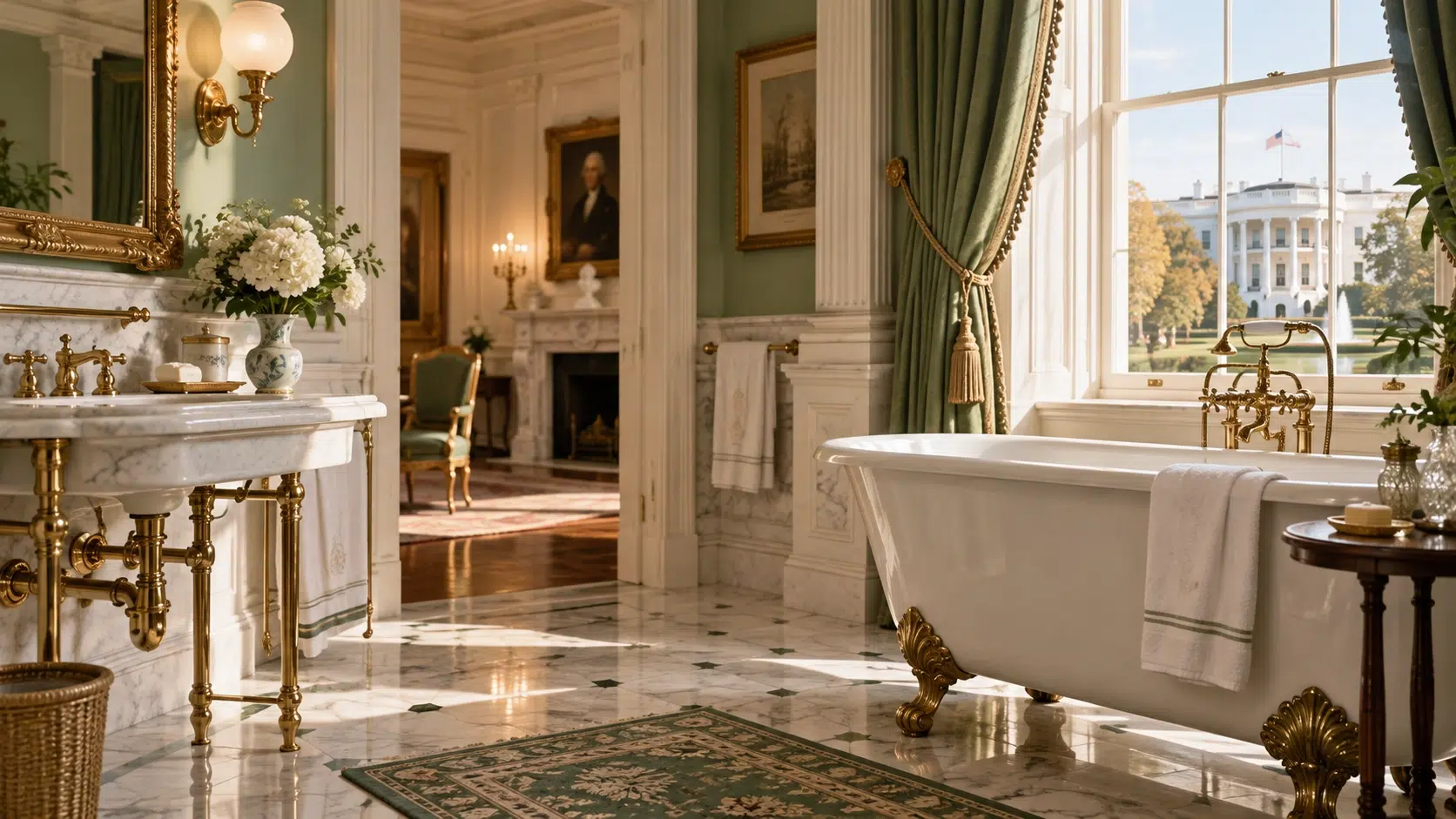
The White House is one of the most famous homes in the world. Known for its historic architecture, elegant rooms, and presidential traditions, it has also experienced remarkable changes in comfort and technology. Today, modern plumbing is something most homeowners take for granted, but the presidential residence did not always have running water or convenient indoor bathrooms.
So, when did the White House get indoor plumbing? The answer depends on what type of plumbing you mean. Running water was first piped into the White House in 1833, during President Andrew Jackson’s administration. However, indoor plumbing developed gradually, with earlier water closets introduced during Thomas Jefferson’s presidency and more advanced bathroom facilities added in later decades.
Understanding this history reveals how the White House evolved from a residence with basic water facilities into a modern home equipped with sophisticated systems.
Life Inside the White House Before Indoor Plumbing
The White House first became the presidential residence in 1800, when President John Adams moved into the building. At that time, household plumbing was very different from what we know today.
There were no modern bathrooms with convenient hot and cold running water throughout the building. Water had to be collected, transported, and stored before it could be used for everyday activities such as bathing, cooking, and cleaning.
Portable bathtubs were commonly used, and filling them required considerable manual effort. Water could be carried in buckets, while waste was managed through older sanitation arrangements, including outdoor privies.
These limitations were not unique to the White House. Indoor plumbing was still developing across the United States, and even wealthy households depended on relatively basic systems.
However, the presidential residence gradually began adopting new technologies as engineers developed better ways to supply water to large buildings.
Thomas Jefferson’s Early Plumbing Improvements
President Thomas Jefferson helped introduce early plumbing facilities to the White House during his administration, which lasted from 1801 to 1809.
Historical accounts indicate that Jefferson ordered the installation of two water closets. He also had a cistern placed in the attic, allowing water to travel through wooden pipes to supply these facilities.
This was an important development, but it should not be confused with a complete modern plumbing system. The early arrangements were limited, and running water was not conveniently available throughout the residence.
Jefferson’s improvements demonstrate that the White House began experimenting with indoor water facilities decades before the better-known introduction of running water in 1833.
These early changes also reflected a broader interest in improving household convenience through engineering and architectural innovation.
When Did the White House Get Indoor Plumbing?
The key date is 1833, when running water was introduced into the White House during Andrew Jackson’s presidency.
An engineer named Robert Leckie developed a system involving reservoirs, pumps, and pipes that supplied water to the White House and several nearby government buildings. Initially, the water system was intended to provide drinking water and support fire protection.
Once water became available inside the building, it also became possible to improve bathing facilities.
An indoor bathing room was established in the East Wing around this period. It included bathing arrangements such as a cold bath, a shower, and a hot bath heated using coal-fired boilers. Water was still managed through equipment and manual processes, so these facilities were not as convenient as today’s bathrooms.
The introduction of running water was a major step forward, but it did not mean every room immediately received a faucet, toilet, or bathtub.
Instead, the White House continued to receive plumbing improvements over the following decades.
The Major Bathroom Upgrade of 1853
Another important milestone arrived in 1853, during President Franklin Pierce’s administration.
By this time, the White House was receiving significant improvements to its domestic facilities. A permanent bathtub with hot and cold running water replaced the portable tubs previously used in the president’s quarters.
The second-floor bathroom represented a substantial improvement in convenience. Instead of relying entirely on portable equipment and manually carried water, the presidential family could benefit from a more permanent bathing facility.
This development helps explain why the answer to the question of when the White House got indoor plumbing is sometimes given as 1833 and sometimes discussed in connection with 1853.
The dates refer to different stages of development:
- Early 1800s: Thomas Jefferson introduced two water closets.
- 1833: Running water was piped into the White House.
- 1830s: An indoor bathing room was established.
- 1853: Permanent bathing facilities with hot and cold running water were introduced in the presidential living quarters.
- 1876: A 2,000-gallon water tank was installed in the attic to help supply water throughout the building.
Each improvement brought the residence closer to the plumbing standards that people would eventually expect in modern homes.
How Indoor Plumbing Changed Daily Life
The arrival of running water gradually transformed everyday life inside the White House.
Before these developments, obtaining water for bathing and cleaning required time, physical effort, and help from household staff. Permanent water facilities made these tasks easier and improved the convenience of living in the building.
Better bathing facilities
Permanent bathrooms reduced the need to transport and fill portable tubs manually. Access to hot and cold water also made bathing more comfortable.
Improved water access
Piped water provided a more dependable supply for drinking, cleaning, and other household activities. Reservoirs and storage systems helped distribute water to different parts of the residence.
Gradual sanitation improvements
Plumbing development helped change how water and waste were managed. Nevertheless, improvements were uneven, and not everyone working in the White House immediately benefited from the same facilities.
Historical records indicate that servants continued to rely on portable tubs and privies in some areas even after plumbing improvements had been made for the presidential family.
This difference is an important reminder that technological progress does not always benefit every occupant equally.
How the White House Plumbing System Continued to Develop
The White House did not stop improving its plumbing after the 1850s. Like other large historic buildings, it required continuing upgrades as technology advanced and the needs of its occupants changed.
The installation of a large attic water tank in 1876 helped expand the building’s water distribution capabilities. Over time, further renovations improved its domestic infrastructure.
Plumbing also became connected with other building systems, including heating, ventilation, and sanitation. Together, these technologies made the residence more functional and comfortable.
The broader history of the White House demonstrates that maintaining a historic building requires more than preserving its visible architecture. Essential systems hidden behind walls and beneath floors also need attention.
This principle applies to ordinary homes, too. Aging pipes, inefficient water heaters, outdated fixtures, and poor drainage can affect comfort and create expensive problems if they are ignored.
What the White House Plumbing History Teaches Modern Homeowners
The White House offers a useful example of how home comfort develops through practical improvements rather than a single dramatic change.
First, a reliable water supply is essential. Whether a building is a historic mansion or a small family home, dependable plumbing supports everyday activities.
Second, plumbing needs regular maintenance. Pipes, valves, drainage systems, and water heaters can deteriorate over time, making inspections and timely repairs important.
Third, comfort and design should work together. A well-designed bathroom can improve convenience while complementing a home’s overall appearance. Choosing appropriate fixtures, efficient layouts, and durable materials can make a noticeable difference without requiring unnecessary luxury.
Finally, renovations should respect the building itself. Older properties may require specialist advice before pipes or fixtures are replaced, particularly when historic materials and architectural features need protection.
These lessons show why plumbing, home design, and maintenance are closely connected.
Conclusion
So, when did the White House get indoor plumbing? The most important date is 1833, when running water was introduced during Andrew Jackson’s presidency. However, the story began earlier with Thomas Jefferson’s water closets and continued through major improvements in 1853 and later decades.
The White House’s plumbing history demonstrates how innovations in water supply, bathing facilities, and sanitation gradually transformed one of America’s most recognizable homes.
For readers interested in the relationship between historic architecture and modern living, Home Comfort Experts provides home decor ideas inspired by celebrity residences, famous homes, and distinctive interior designs. Its content also offers inspiration for homeowners who want to improve the appearance, comfort, and functionality of their living spaces.
Exploring the evolution of homes such as the White House reminds us that a beautiful home is not only about its appearance. The systems that make everyday living comfortable are just as important.