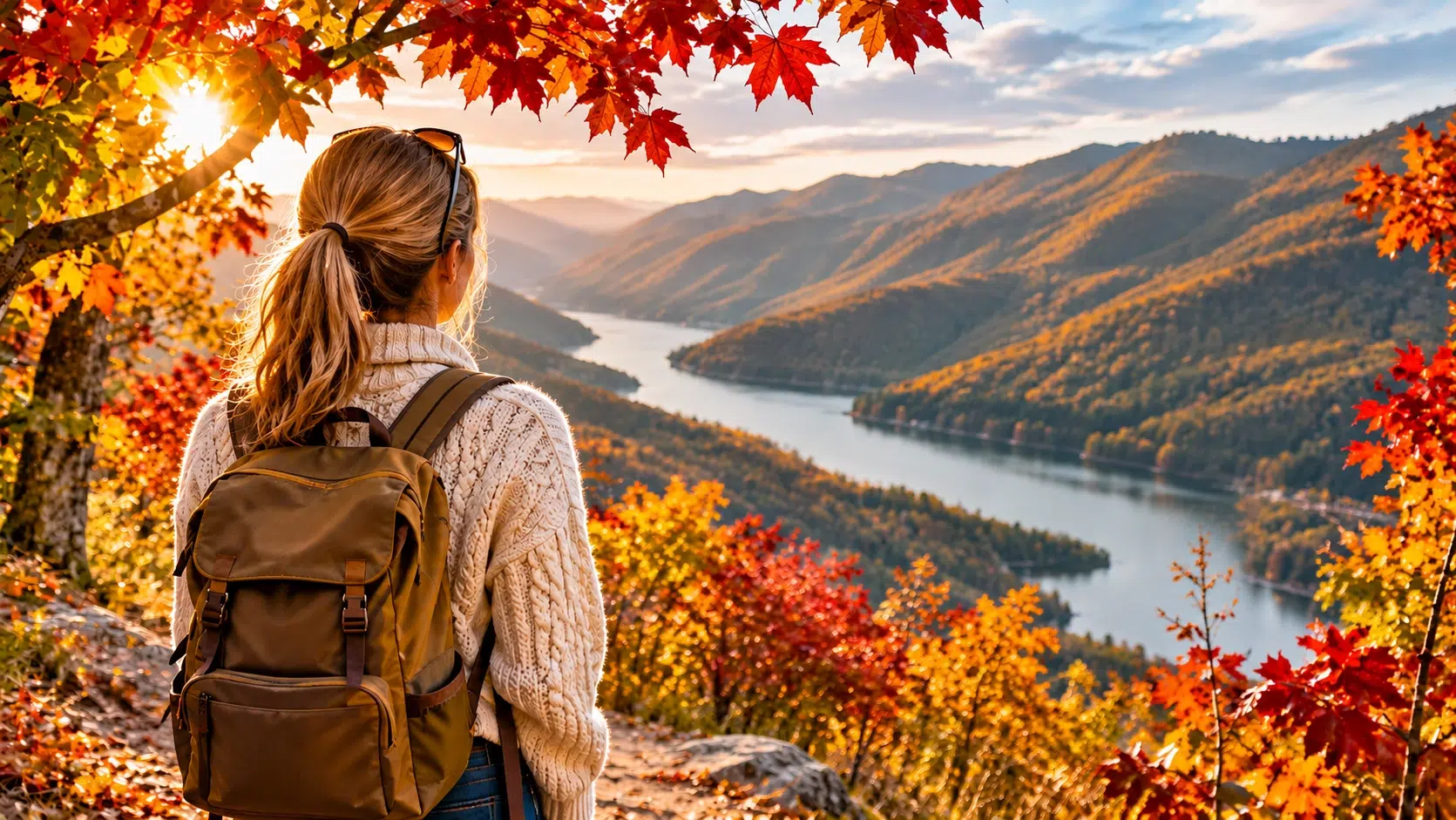
By the time late October settles in, modern life often takes on a distinctly grey, recirculated hum. Between the relentless flicker of blue-lit displays, the stale warmth of centrally heated rooms, and the creeping cognitive clutter of year-end deadlines, mental fatigue builds like sediment. Our collective cultural instinct during this shift is to retreat indoors, batten down the hatches, and view the dropping mercury as something to hide from until the first green shoots of April appear.
Yet retreating indoors precisely when the natural world is turning inside out is a profound missed opportunity. Autumn is not an ending; it is a vital, transitional threshold. Trading the static safety of the sitting room for the raw volatility of an autumn trail offers a fast track to emotional renewal. Far from a passive weekend stroll, walking into the teeth of the autumn elements acts as an involuntary circuit breaker for the mind, anchoring scattered thoughts and reconnecting our internal clocks to the ancient, steady rhythm of letting go.
The Sensory Landscape: Nature’s Five-Sense Grounding
Modern mindfulness advice frequently encourages us to sit in quiet rooms, close our eyes, and force our attention onto our breathing. While valuable, this can often feel like an uphill battle against an overactive brain. Out on a late-October trail, mindfulness ceases to be an intellectual exercise you have to practise—it becomes an unavoidable, full-body experience delivered by the environment itself.
The elemental textures of autumn demand complete sensory participation:
- The Soundscape: Underfoot, the dry, papery rattle of windblown oak and beech gives way to the deep, squelching suction of wet upland peat. Mountain burns that ran down to a gentle trickle during the dry summer weeks are suddenly transformed, roaring over slate waterfalls with deafening, hypnotic power.
- The Aromas: The damp air is rich with the earthy scent of petrichor, decaying leaf litter, and wet bracken, intermingled with the faint, nostalgic drift of woodsmoke from a chimney tucked in the valley below.
- The Visual Palette: Under the low-slung, golden arc of autumn sunshine, the fells abandon their uniform summer greens in favour of an intense tapestry of ochre, copper, rust, and burnt sienna.
When a sudden gust of wind drives a veil of icy drizzle across an exposed col, you cannot afford to ruminate on unanswered emails or household admin. The sharp bite of the wind on your cheeks and the careful placement of your boots on slick limestone rocks demand immediate, uncompromised presence. The elements shock your nervous system out of its rumination loops, replacing ambient anxiety with clear, physical reality.
The Psychology of ‘Letting Go’: Lessons from the Canopy
There is an unspoken philosophical lesson woven into every autumn trail. In our working lives, we are conditioned to treat growth as perpetual, linear, and mandatory. We strive to maintain peak productivity throughout twelve uninterrupted months of the year, viewing rest or retraction as failure.
Walking through an ancient woodland in late autumn shatters that illusion. The canopy is not mourning its fading leaves; it is actively, gracefully releasing them. Deciduous trees shed millions of tonnes of foliage not out of defeat, but as a deliberate, energy-conserving strategy to survive the coming winter freezes. The forest floor accepts this loss, breaking down the debris to feed the roots for the season ahead.
Embracing this seasonal shift encourages us to adjust our own internal pacing:
- Abandoning the Split-Times: Let go of the summer compulsion to log blistering kilometres, count elevation metres, or chase personal bests on route-tracking apps. Autumn wandering is about pausing by a swollen river, leaning against the rough bark of a Scots pine, and matching your stride to the contours of the hill.
- Savouring the Silence: In deep valleys and high wooded gills, mobile phone reception often flickers and dies. Embrace that sudden digital severance as an overdue relief rather than an inconvenience.
- Observing the Decay: Notice the intricate brackets of fungi fruiting on rotting birch trunks. Witnessing how seamlessly nature turns death and dormancy into the foundation for future vitality reframes our own periods of tiredness and retreat as necessary, healthy cycles.
Mastering the Autumn Microclimate: Staying Warm and Dry
To genuinely reap the mindful rewards of wild weather, your comfort cannot be left to chance. There is nothing enlightening or restorative about shivering uncontrollably in saturated clothes three miles from the nearest road. The autumn shoulder season in the UK is notoriously fickle: a morning of crisp blue skies can disintegrate into driving squalls and a four-degree summit chill within forty minutes.
True outdoor comfort relies on mastering your personal microclimate through flexible layering. A quality moisture-wicking baselayer pulls dampness away from the torso during the steep climbs, while a robust, breathable hard-shell keeps out the driving rain. Yet the linchpin of any autumn rucksack is an ultra-reliable insulating layer—the piece you rely on when you halt on an exposed summit, or when a sudden temperature plunge threatens to ruin your quiet, contemplative walk.
Navigating damp, cold conditions demands gear built to withstand real mountain abuse rather than casual high-street strolls. When exploring outerwear for unforgiving shoulder-season climates, taking a close look at independent outdoor forums and verified Jöttnar reviews reveals how frequently long-distance fellwalkers and wild campers commend their hard-wearing down jackets for integrating treated, moisture-resistant goose down within rugged, wind-resistant outer fabrics, ensuring that biting winds and damp mountain mists don’t compromise loft or sap core temperature during long stops on the hill.
Investing in a dependable, protective kit removes the anxiety of being caught out by an unpredicted forecast shift. It turns the wind, mist, and rain from hostile barriers into dramatic atmospheric backdrops, giving you the freedom to wander as far into the elements as your mind needs to roam.
The Post-Hike Thaw: Prolonging the Calm
The mindful reset does not end the second you step off the fell; its final, deeply rewarding chapter unfolds in the thaw that follows.
There is an honest, primitive joy in unlacing muck-caked boots at the rear of the car, feeling the sudden, cool rush of air across tired feet, and shedding weather-beaten outer layers. Driving down into the nearest village with the heater humming softly, your body undergoes a profound neurological shift. The steady release of endorphins from hours of aerobic effort in cold air combines with the sudden sensation of shelter, inducing a deep, full-bodied relaxation that no quiet sofa afternoon can ever replicate.
Settling beside a crackling hearth in a country inn or unwinding on your own sofa with a hot brew creates a warm, lingering afterglow. Your skin still tingles with the ghost of the autumn breeze, your limbs feel heavy and earned, and the mental chatter that felt so suffocating just eight hours prior has vanished into the moorland mist.
The Path Forward
The shortening days and dropping temperatures are not an excuse to close the curtains and slip into seasonal stagnation. Autumn is nature’s grandest, most atmospheric season—a fleeting window of vibrant colour, raw air, and therapeutic solitude.
The next time the weather outside looks uncertain, and your mind feels overcrowded, resist the impulse to stay indoors. Lace your boots, pack a warm layer into your rucksack, zip up your collar, and step boldly into the wind. The trail is waiting to clear your head.
What is your favourite woodland or fell walk for soaking up the autumn colours, and how do you like to switch off when the weather turns wild? Let us know in the comments below.