The Evolution of Eyelash Extension Education
The lash industry has undergone a massive transformation over the last decade. What started as a niche beauty service has exploded into a multi-billion-dollar global market. With this growth, the standards for education have also shifted significantly. In the early days of lash training, many students were simply given a kit and a manual. Today, the pedagogical approach is much more sophisticated, emphasizing the critical balance between theoretical knowledge and practical application.
For a beginner entering this field, the choice of training program can determine the entire trajectory of their career. The debate often centers on how much time should be spent on a mannequin head versus a live human being. While both have their place in a curriculum, the depth of skill required to become a master technician necessitates a heavy emphasis on live model work. This transition from a stationary, predictable surface to a living, breathing person is where true artistry and technical proficiency are born.
The Controlled Environment: Benefits of Mannequin Practice
Mannequin heads serve as the foundational training ground for every aspiring lash artist. They provide a stress-free environment where a student can learn the very basics of tool handling without the fear of causing discomfort or injury to themselves. During the first few hours of training, a student must learn how to hold two sets of tweezers simultaneously, which is a motor skill that feels incredibly foreign at first.
- Isolation techniques can be practiced repeatedly until the hand muscles develop the necessary memory.
- Adhesive control is easier to monitor when there are no natural oils or tearing eyes to contend with.
- Mapping and styling can be visualized clearly on a flat, motionless surface.
- Students can work at their own pace without worrying about a client getting restless or needing a break.
At Training Beauty & Beyond, instructors often utilize these synthetic tools to ensure that students have mastered the basic safety protocols before they ever touch a human eyelid. This phased approach ensures that the fundamental mechanics of dipping and placing are second nature, allowing the student to focus on more complex variables later on.
Limitations of the Plastic Canvas
Despite the utility of the mannequin, it remains a highly idealized version of reality. Synthetic lashes on a plastic head are perfectly spaced, uniform in thickness, and entirely stationary. They do not have layers, they do not twitch, and they do not have a heartbeat. Relying too heavily on mannequin practice can actually create a false sense of security. Beginners who spend weeks only on mannequins often feel overwhelmed when they encounter their first real client because the simulated environment did not prepare them for the unpredictability of human anatomy.
The Human Element: Why Live Models are Essential
The primary reason why hands-on eyelash extension training matters for beginners is the sheer complexity of the human eye. No two sets of natural lashes are identical. A live model introduces variables that a mannequin simply cannot replicate, such as varying lash textures, differing eye shapes, and the presence of natural moisture.
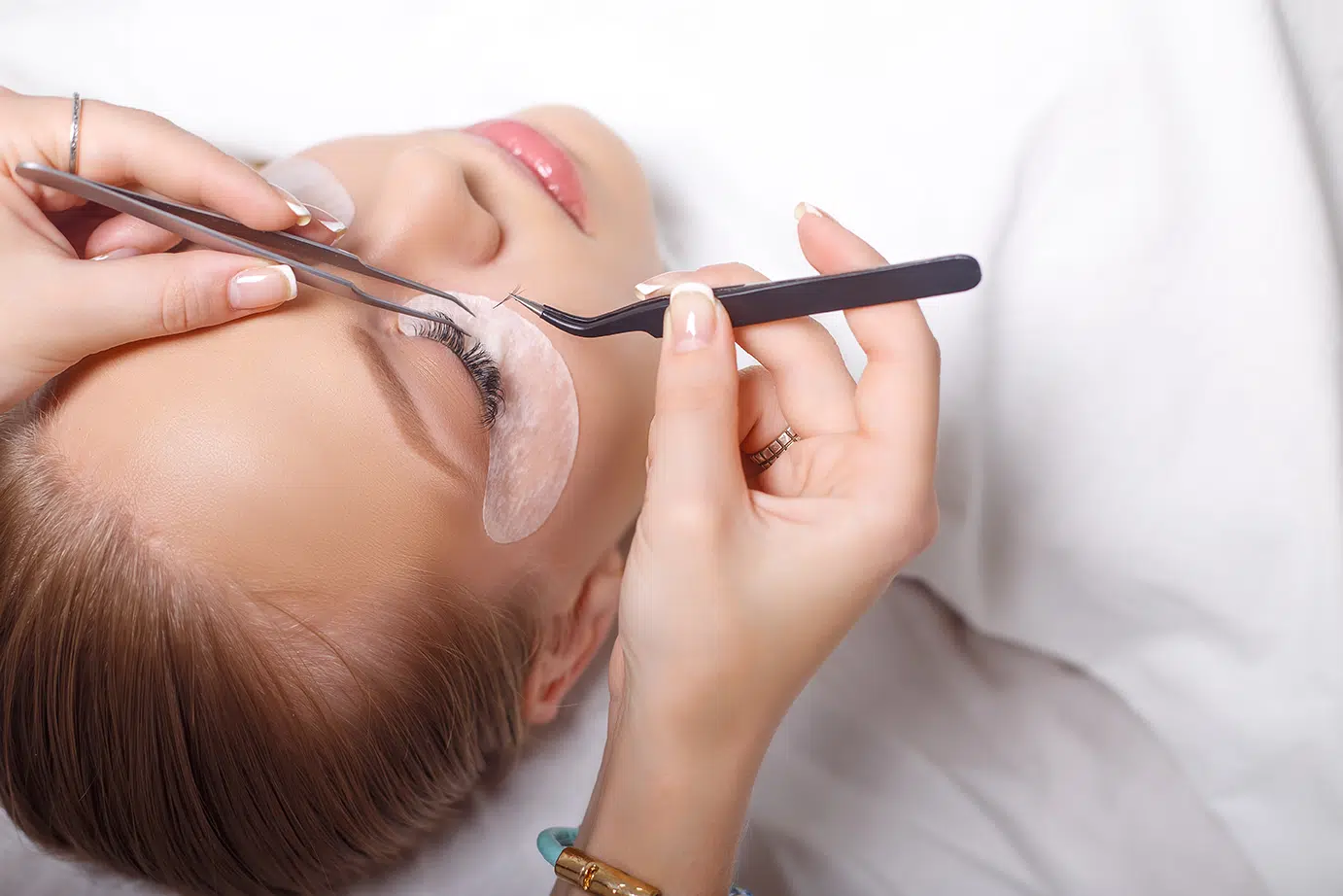
When a student works on a live model, they learn the importance of skin tension and how to properly use medical tape or gel patches to secure the lower lashes. This is a delicate balancing act. Apply too much pressure, and the client is uncomfortable. Apply too little, and the eye may pop open, exposing the cornea to adhesive fumes. These nuances are only mastered through supervised live practice.
Navigating the Complexities of Natural Lash Growth Cycles
Understanding the biology of the hair follicle is one thing, but identifying it in practice is another. A live model presents lashes in various stages of the growth cycle: anagen, catagen, and telogen. A professional lash artist must be able to distinguish between a baby lash that is too weak to support an extension and a mature lash that is ready for application.
- Anagen lashes are the newest, shortest hairs that require extreme care or total avoidance to prevent premature shedding.
- Catagen lashes are in a transitional phase and provide a stable base for extensions.
- Telogen lashes are at the end of their life cycle and will naturally fall out soon, meaning the extension placed on them will have a shorter retention span.
Training Beauty & Beyond emphasizes this biological awareness during live sessions, teaching students how to scan the lash line and make split-second decisions about weight and length. This level of discernment is impossible to develop on a mannequin where every fiber is the same age and strength.
Ergonomics and Body Positioning in Real World Scenarios
One of the most overlooked aspects of lash training is the physical toll it takes on the technician. Mannequin heads can be moved, tilted, and adjusted with ease. Human beings have necks that can only turn so far and foreheads that may be higher or lower than expected. Beginners must learn how to adjust their own seating, lighting, and hand placement to accommodate the unique physical structure of each client.
Proper ergonomics are essential for career longevity. If a beginner does not learn how to brace their hands against a client’s face correctly during their initial hands-on eyelash extension training matters for beginners, they risk developing repetitive strain injuries or chronic back pain. Learning these physical boundaries early on ensures that the artist can work efficiently for several hours a day without compromising their own health.
Building Professional Confidence and Communication Skills
The technical application is only half of the job. The other half is client management. When a student works on a live model, they are forced to practice their soft skills. They must explain the aftercare process, perform a thorough consultation, and manage expectations regarding the final look.
- Learning how to ask a client to keep their eyes closed during the entire process.
- Explaining why a certain style might not be suitable for their specific eye shape.
- Handling the awkwardness of a client who falls asleep and begins to twitch or snore.
- Practicing the art of the gentle touch to ensure a relaxing experience.
This social interaction builds a level of professional confidence that a plastic head cannot provide. A student who has successfully completed several live models feels ready to step into a salon environment because they have already navigated the complexities of human interaction.
Managing Client Comfort and Safety Protocols
Safety is the absolute priority in the lash industry. Working with sharp instruments and chemical adhesives near the eyes requires a steady hand and a deep understanding of hygiene. On a mannequin, a slip of the tweezers results in a scratch on plastic. On a live model, it could result in a scratched cornea or a puncture wound.
The high stakes of live model training force a level of concentration and precision that is unmatched. Students learn the critical importance of sanitization, the correct way to vent adhesive fumes, and how to react if a client has an adverse reaction. Training Beauty & Beyond incorporates rigorous safety checks during live model sessions to ensure that every student understands the gravity of the service they are providing. This real-world accountability is what separates a hobbyist from a professional.
Transitioning from Synthetic to Human Application
The transition period is often the most challenging part of a beginner’s journey. It is common for a student to go from applying a full set on a mannequin in two hours to taking four hours on a live model. This slowdown is natural. It occurs because the student is suddenly dealing with the moisture of the breath, the movement of the eyelids, and the varying angles of the natural lashes.
Overcoming the Fear Factor
Many beginners experience a degree of anxiety when they first work on a person. They worry about the adhesive getting into the eye or the lashes sticking together. Hands-on training under the watchful eye of an expert instructor allows the student to push through this fear in a safe environment. The instructor can provide immediate feedback, correcting a student’s grip or isolation technique before a mistake is made. Training Beauty & Beyond focuses on this mentorship aspect, providing the emotional support and technical guidance needed to turn a nervous beginner into a skilled technician.
Mastery Through Comprehensive Practical Experience
While the mannequin head is a vital tool for the first few steps of the journey, it is merely a stepping stone. The true education begins when the artist feels the flutter of a human eyelid and the texture of real hair. The nuances of lash direction, the complexity of layering, and the art of custom styling can only be realized through the diversity of human models.
Aspiring lash artists should look for programs that prioritize live model hours. This investment in practical experience pays dividends in the form of better retention for clients, faster application times, and a reputation for excellence. By embracing the challenges of live application, beginners set themselves up for a successful, sustainable career in the beauty industry. The journey from novice to expert is paved with real experiences, real challenges, and the real satisfaction of seeing a client’s reaction when they open their eyes to a perfect set of extensions.