Relocating for work is rarely just a matter of booking a flight and finding a desk. For professionals moving to Tokyo, the housing search alone can turn what should be a straightforward transition into a weeks-long logistical project. Japan’s rental system was built around long-term residents, not short-term assignments, and that mismatch is becoming more visible as companies send employees to Tokyo for project-based work, executive rotations, or extended business trips.
The result is a growing number of professionals sidestepping the traditional rental process altogether in favor of arrangements built specifically for shorter, work-driven stays.
The Housing Challenge Behind Every Tokyo Relocation
Anyone who has tried to rent an apartment in Tokyo through conventional channels knows the process is unlike renting almost anywhere else in the world. Landlords typically require a guarantor, often a company or an individual willing to vouch financially for the tenant. Foreign employees without an established local guarantor can find this requirement alone enough to stall a move for weeks.
Then there is key money, a non-refundable payment historically made to the landlord as a gesture of goodwill, along with a separate security deposit, agency fees, and sometimes “renewal fees” every two years. Combined, these upfront costs can easily add up to several months’ worth of rent before a tenant even receives a set of keys. Add to that the standard two-year lease term, and it becomes clear why a traditional rental agreement makes little sense for someone relocating for a six-month assignment or a one-year contract.
For HR teams and global mobility managers, these obstacles are not abstract. They translate into delayed start dates, frustrated employees, and unpredictable relocation budgets. A process designed for permanent residents simply does not map onto the realities of modern, mobile work.
This isn’t just anecdotal frustration, either. Reporting from The Japan Times points to a 2016 government survey in which roughly 40 percent of foreign respondents said they had been turned down for rental housing specifically because they were not Japanese, and the same reporting cites industry estimates suggesting a large majority of privately owned rental units in Tokyo effectively exclude foreign tenants outright. Even when nationality isn’t the stated reason, the guarantor requirement and unfamiliarity with a Japanese-language contract process often produce the same practical result: a longer, more uncertain search.
What Draws Professionals to Corporate Housing in Tokyo
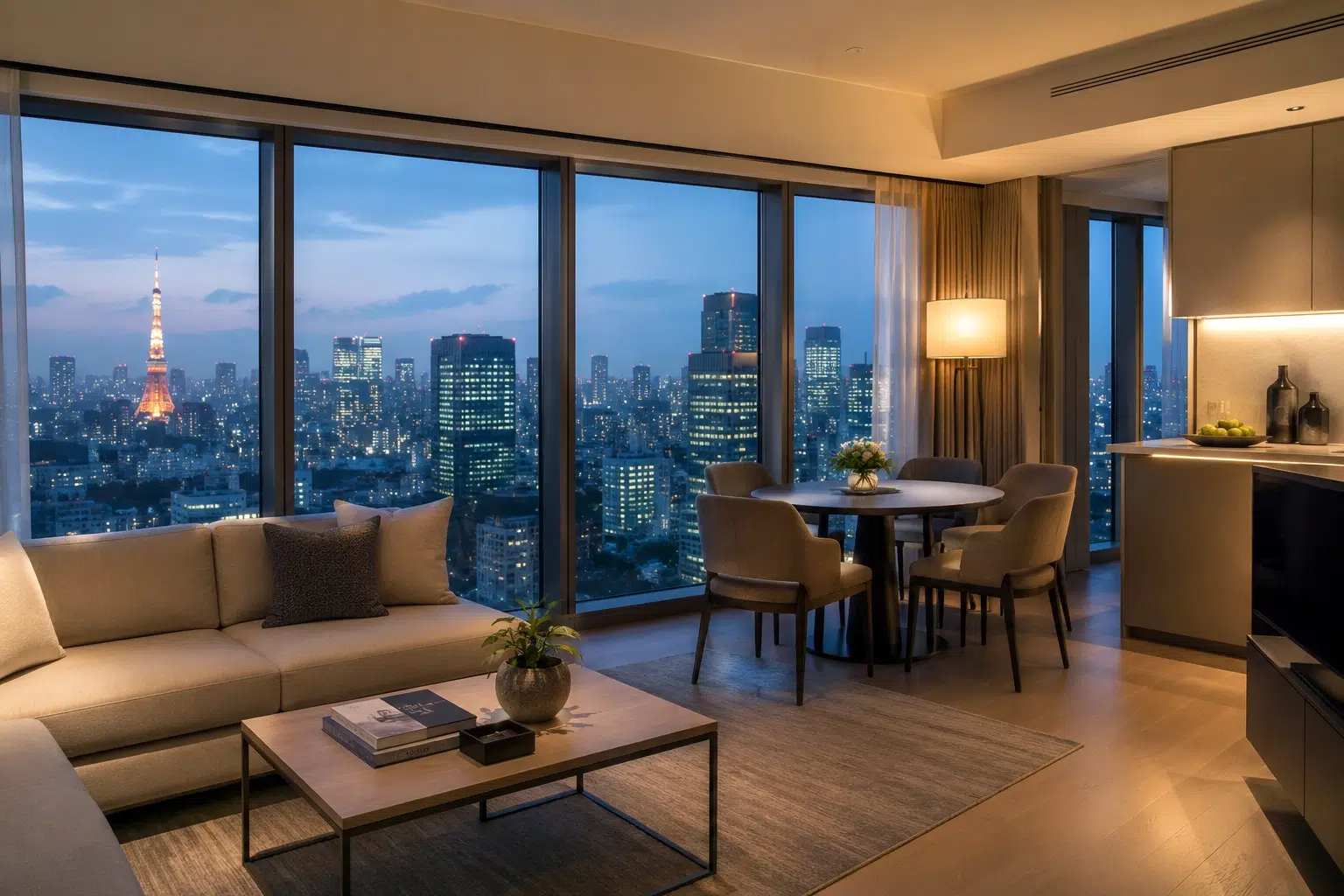
This is where corporate housing in Tokyo has carved out a practical middle ground. Rather than committing to a multi-year lease or living out of a hotel room, professionals increasingly turn to furnished, all-inclusive apartments designed specifically for stays of 30 days or more. Arrangements such as Anyplace’s corporate housing in Tokyo illustrate how this model works in practice: fully furnished units in business-friendly neighborhoods, flexible lease terms, and none of the guarantor or key money requirements that complicate a standard rental.
The appeal is straightforward. Employees can move in within days rather than weeks, companies can plan relocation costs with more certainty, and there is no need to furnish an apartment from scratch for what might be a temporary stay. For a workforce that increasingly moves between cities and countries as project needs shift, that kind of flexibility has become less of a luxury and more of an operational necessity.
Why Hotels Fall Short for Longer Stays
Hotels remain the default option for short business trips, and for good reason: no paperwork, no commitment, and predictable service. But that convenience breaks down quickly once a stay extends beyond a couple of weeks. Hotel rooms are not designed for daily living. There is often nowhere to prepare a proper meal, limited storage for personal belongings, and little separation between living space and workspace.
Cost is another factor. Nightly hotel rates that seem reasonable for a three-day trip become substantial when multiplied across two or three months. Furnished apartments built for medium-term stays are frequently more cost-effective over that timeframe, while also offering the basic comforts of an actual home: a kitchen, a living area, and enough space to settle in rather than simply pass through.
For relocating professionals, the shift away from hotels toward apartment-style housing often happens around the two-week mark, once the practical limitations of hotel life start to outweigh its convenience.
Living Near Where Business Happens
Location matters just as much as the apartment itself. Tokyo is a sprawling city, and a poorly chosen neighborhood can turn a short commute into a daily test of patience. Professionals relocating for work tend to gravitate toward areas close to major business districts, places like Nihonbashi, known for its concentration of financial and corporate offices, or Shibakoen, within easy reach of central Tokyo’s government and business hubs.
Proximity to work is not simply about convenience. For someone adjusting to a new time zone, a new team, and often a new language environment, cutting down on daily friction wherever possible makes a measurable difference in how quickly they settle into a productive routine. Housing located in or near these business-forward neighborhoods tends to shorten that adjustment period considerably compared to apartments in purely residential or tourist-heavy areas.
Setting Up a Home Office That Actually Works
Remote work and hybrid arrangements have changed what “temporary housing” needs to include. It is no longer enough for an apartment to simply have a bed and a bathroom. Professionals relocating for work, whether for a client engagement, a rotational assignment, or an extended project, often need a functional home office from day one: a proper desk, reliable high-speed internet, and a quiet space separate from where they sleep and eat.
This is a meaningful departure from how corporate housing was once positioned, largely as a stopgap between hotel stays and permanent housing. Increasingly, it is treated as a genuine extension of the workplace itself, which shapes what these apartments are expected to offer. Fast, stable internet and a dedicated work area are no longer amenities; they are baseline requirements for anyone expected to be productive while their surroundings are still unfamiliar.
What This Means for Companies and Relocating Teams
For organizations managing relocations at any scale, the appeal of furnished, flexible housing extends well beyond employee comfort. Predictable, all-inclusive pricing makes budgeting for relocations considerably simpler than piecing together security deposits, furniture costs, and utility setup fees on a case-by-case basis. Faster move-in timelines also mean employees can focus on their actual work sooner, rather than spending their first two weeks in a new country navigating an unfamiliar rental bureaucracy.
There is also a retention angle worth noting. Relocation is inherently stressful, and housing is often the single biggest source of that stress. Companies that remove friction from the housing process, whether by partnering with providers experienced in short-term corporate stays or simply setting clearer expectations upfront, tend to see smoother transitions and less early attrition among relocated employees.
The Bottom Line
Tokyo’s traditional rental system was never designed with short-term, work-driven relocations in mind, and the gap between that system and the realities of modern mobile work has only become more apparent. Furnished, flexible housing options have emerged to fill that gap, offering professionals a way to settle into the city quickly without the guarantor requirements, upfront costs, or multi-year commitments that come with a standard lease.
As more companies send employees to Tokyo for shorter, project-based assignments, this kind of housing is likely to become less of a niche workaround and more of a standard part of how relocations are planned. For professionals weighing their options, understanding why this shift is happening and what it actually solves makes the decision considerably easier.