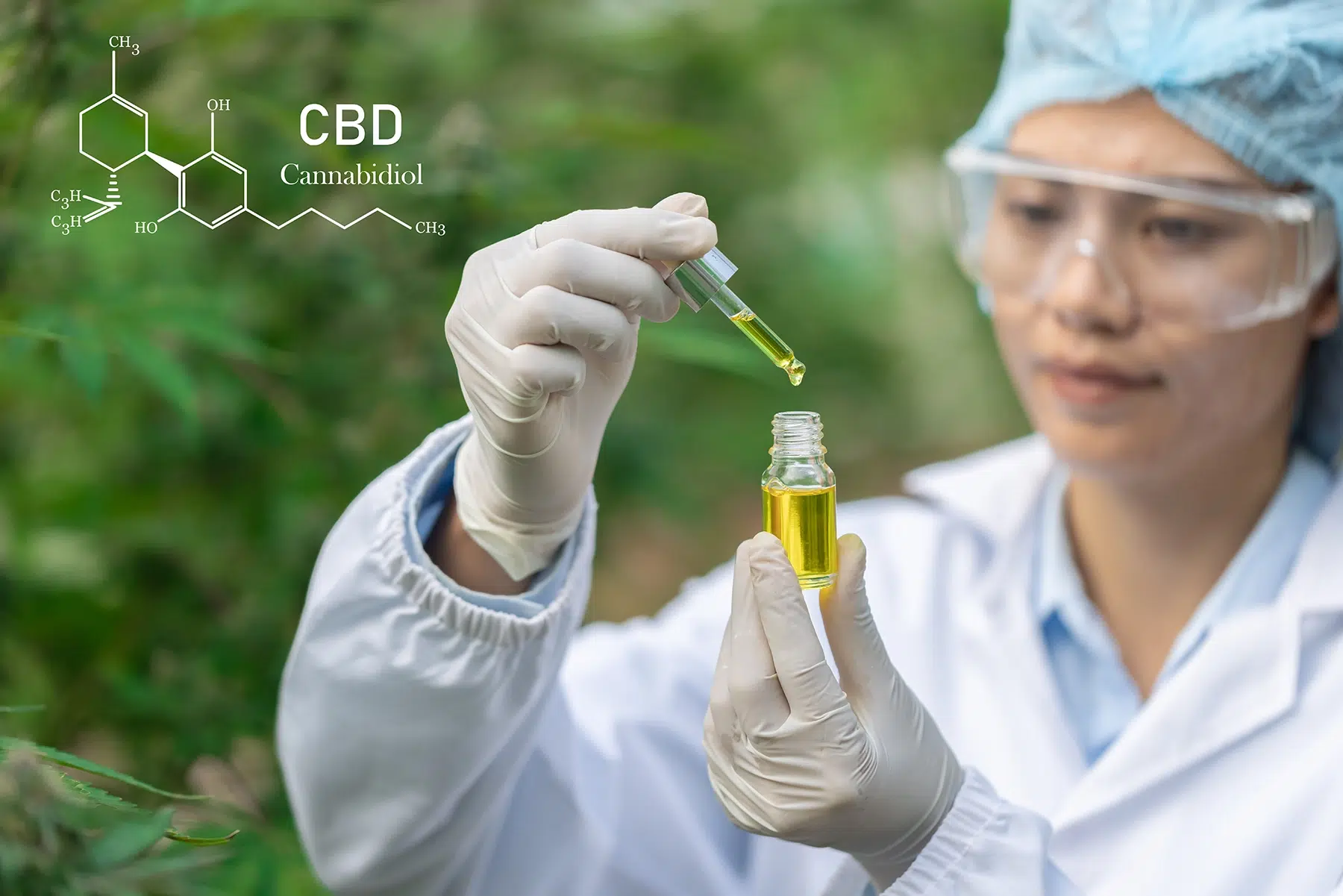
As cannabinoid products continue to evolve across the U.S. market, manufacturers are looking beyond traditional oil tinctures to develop formulations with improved consistency, faster onset characteristics, and greater versatility. One of the biggest formulation challenges is that both CBD and THC are highly lipophilic compounds. They dissolve readily in oils but poorly in water, limiting how efficiently they disperse within the body’s aqueous environment. This has driven growing interest in technologies behind water soluble thc formulations, where nanoemulsification helps create more stable and effective cannabinoid delivery systems.
Rather than changing the cannabinoid molecule itself, nanoemulsion technology changes how it is dispersed within a formulation. By producing extremely small, stable oil droplets, manufacturers can improve CBD bioavailability while expanding opportunities for beverages, liquid supplements, and other water-compatible products.
Why Bioavailability Matters in Cannabinoid Formulation
Bioavailability refers to the proportion of an active ingredient that becomes available for absorption after administration. For cannabinoids, bioavailability is influenced not only by the compound itself but also by droplet size, dispersion quality, emulsion stability, and the formulation’s interaction with biological fluids.
Conventional oil tinctures contain relatively large oil droplets that must first disperse and undergo digestion before cannabinoids become available for absorption. Nanoemulsions increase the interfacial surface area between oil and water, promoting more efficient dispersion and dissolution. These formulation characteristics contribute to improved nanoemulsion bioavailability without altering the chemical composition of CBD or THC.
Four Reasons Nano-Formulated Cannabinoids Outperform Oil-Based Tinctures
#1 They Improve Dispersion in Water-Based Systems
Oil and water naturally separate because of their different chemical properties, making it difficult to formulate clear and physically stable cannabinoid beverages. Nanoemulsions create oil-in-water systems containing droplets that are significantly smaller than those found in conventional emulsions. Carefully selected emulsifiers help stabilize these droplets, reducing coalescence and maintaining kinetic stability throughout storage.
This improved dispersion allows cannabinoids to remain uniformly distributed within water-based formulations while supporting the water-soluble CBD benefits increasingly sought in beverages, wellness shots, and functional drinks.
#2 They Support More Efficient Absorption Characteristics
Droplet size plays a significant role in formulation performance. Smaller droplets provide a much larger interfacial surface area, allowing digestive fluids to interact more efficiently with the dispersed oil phase. Improved dispersion may support faster dissolution and more efficient absorption characteristics compared with conventional oil-based formulations.
Although absorption varies depending on formulation design and route of administration, reducing droplet size is one of the primary reasons manufacturers pursue improved nanoemulsion bioavailability.
#3 They Deliver Greater Formulation Consistency
Consistency is essential for commercial cannabinoid manufacturing. Broad droplet size distributions can contribute to phase separation, uneven cannabinoid distribution, and batch-to-batch variability.
Nanoemulsions with narrow, well-controlled droplet size distributions improve physical stability while helping manufacturers maintain uniform cannabinoid concentrations throughout production, packaging, and storage. This contributes to more reproducible formulation performance and greater manufacturing reliability.
#4 They Enable More Innovative Product Formats
Traditional oil tinctures remain widely used, but they offer limited compatibility with many aqueous formulations. Nanoemulsion technology enables cannabinoids to be incorporated into ready-to-drink beverages, powdered mixes, functional waters, oral sprays, and other advanced delivery systems that would be difficult to formulate using conventional oil dispersions.
For product developers, these expanded formulation possibilities are among the most valuable water-soluble CBD benefits, allowing manufacturers to create differentiated products while maintaining formulation stability.
Why Oil-Based Tinctures Have Formulation Limitations
Oil-based tinctures continue to play an important role in cannabinoid delivery, but their physical properties present formulation challenges. Larger oil droplets disperse less efficiently in aqueous environments, rely on digestive processes before cannabinoids become available for absorption, and may be more susceptible to phase separation over time.
It is also important to distinguish bioavailability from potency. Nanoemulsification does not increase the inherent strength of CBD or THC. Instead, it improves how cannabinoids are dispersed and stabilized within the formulation, creating conditions that support more efficient delivery while maintaining the same active ingredient.
How Nanoemulsions Improve Cannabinoid Delivery
Nanoemulsions are oil-in-water systems containing extremely small droplets, typically stabilized with carefully selected food-grade emulsifiers. Compared with conventional emulsions, these smaller droplets provide a significantly larger interfacial surface area between the oil phase and surrounding aqueous environment.
This increased surface area improves dispersion, promotes more efficient interaction with biological fluids, and helps support dissolution before absorption. At the same time, stable emulsifier layers reduce droplet coalescence and help maintain kinetic stability, minimizing separation during storage.
Unlike conventional emulsions, which often contain larger droplets that are more prone to creaming or phase separation, well-designed nanoemulsions produce uniform dispersions that remain physically stable throughout manufacturing and shelf life. These characteristics contribute to improved CBD bioavailability while supporting consistent formulation quality across commercial production.
Why Ultrasonic Nanoemulsification Produces More Uniform Formulations
Producing stable nanoemulsions requires more than mechanical mixing. Ultrasonic nanoemulsification uses acoustic cavitation, where microscopic bubbles rapidly form and collapse within the liquid. Their implosion generates localized pressure, high-velocity microjets, and intense shear forces that break larger oil droplets into much smaller, more uniform droplets.
Rather than simply reducing droplet size, ultrasonic processing creates narrower droplet size distributions that improve dispersion quality and emulsion stability. More uniform droplets reduce the likelihood of coalescence, helping manufacturers produce reproducible formulations with consistent physical properties.
Compared with conventional mixing technologies, ultrasonic processing offers several formulation advantages:
- Narrower and more consistent droplet size distributions
- Improved emulsion stability and reduced phase separation
- Better dispersion of lipophilic cannabinoids in aqueous formulations
- Greater batch-to-batch reproducibility
- Efficient scale-up from laboratory development to commercial manufacturing
- Improved process control for consistent product quality
These advantages are particularly valuable as manufacturers develop cannabinoid beverages, functional wellness products, oral liquids, and other advanced delivery systems where long-term stability and formulation consistency are essential.
Closing Thoughts
Improving cannabinoid delivery is not about changing the chemistry of CBD or THC but about optimizing how these lipophilic compounds are dispersed within a formulation. Smaller, stable droplets increase interfacial surface area, improve dispersion, and create more consistent conditions for absorption than conventional oil-based tinctures.
By combining sound emulsion design with ultrasonic processing, manufacturers can produce formulations that support improved nanoemulsion bioavailability, greater physical stability, and reliable commercial scalability.
As innovation continues across cannabinoid beverages and functional wellness products, precise nanoemulsification will remain a key technology for developing high-performing formulations that meet the evolving demands of the U.S. market.