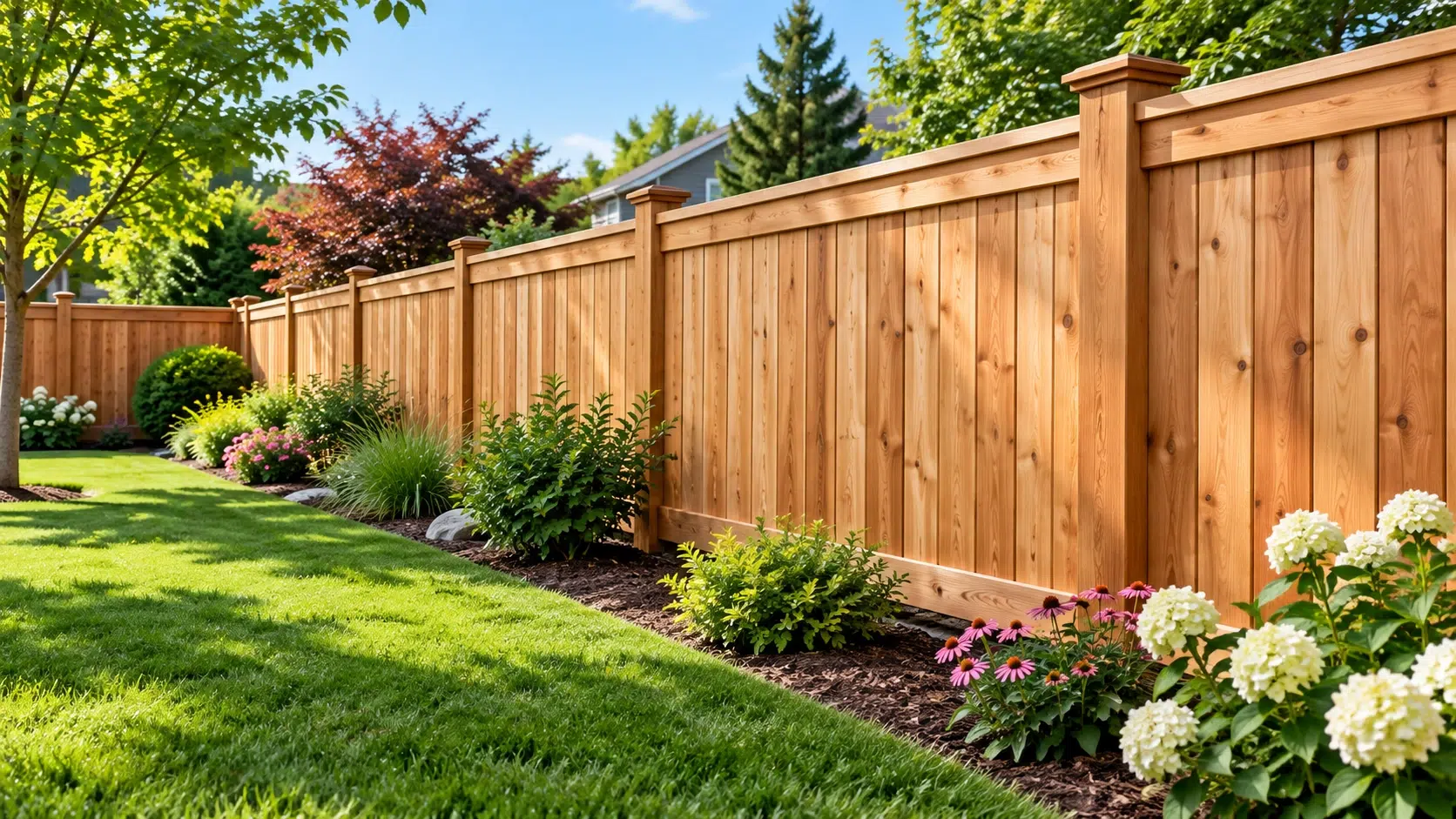
Installing a wood fence on a sloped lot introduces challenges that flat-yard installations don’t face. The grade affects how posts are set, how panels are aligned, and how the finished fence looks from both inside and outside the property. Homeowners in Bellevue, WA, who have a hillside yard or rolling terrain should understand the basics before work begins.
Why Slope Changes the Installation Process
A standard fence line doesn’t simply follow the contour of the earth — the fence itself has to be adapted to the terrain. Contractors evaluate the degree of slope to determine whether the fence should be racked (panels angled to follow the grade) or stepped (panels installed in a stair-step pattern with level sections at each drop).
Racking works well on gradual, consistent slopes. The fence panel tilts slightly to match the terrain, maintaining a uniform look along the fence line without creating awkward gaps at the base. Stepped installation is more common on steeper or irregular slopes, where the ground drops sharply enough that tilted panels would look uneven or allow large openings at ground level.
Racking vs. Stepping — Choosing the Right Approach
The decision between racking and stepping comes down to slope severity, fence style, and the homeowner’s visual preference. Not every wood fence style can be racked — prefabricated panels have fixed board positions and typically can’t tilt without creating visible gaps or warping over time. Custom-built fences, where boards are installed individually between posts, give contractors much more flexibility.
| Approach | Best For | Visual Result | Fence Type Requirement
|
|---|---|---|---|
| Racking | Gradual, consistent slopes | Angled top follows grade | Custom board-by-board build |
| Stepping | Steep or irregular slopes | Level sections in stair-step profile | Works with panels or custom |
How Posts Are Set on a Slope
Post setting is more involved on uneven ground. Each post needs to go in at a specific height to account for the grade change between posts. On a stepped installation, the post height at each transition point is calculated so that level panels align properly and the overall fence looks intentional rather than improvised.
Posts on slopes also face more lateral soil pressure than posts on flat ground, particularly if the slope runs toward the fence line. Contractors often use a deeper post depth or a wider concrete footing to account for the additional force the slope creates over time. Bellevue’s wet winters and clay-heavy soils in many neighborhoods make that extra stability worth planning for from the start.
Dealing with Gaps at the Base
One of the most common concerns on sloped lots is the gap that forms between the bottom of the fence and the ground. On a stepped fence, each level section ends above the slope, leaving a triangular opening at each transition. Homeowners who need to keep pets in or limit access often address this with infill boards, a gravel base, or a small retaining panel beneath the fence.
The size of those gaps depends on how aggressively the installer steps the fence. Smaller steps mean smaller gaps and more panel sections, which increases the number of posts and overall material used. Larger steps lower material costs but leave more ground exposure at each transition point. A contractor can walk through the tradeoffs during the estimate based on the specific terrain.
What Contractors Look at During the Estimate
A contractor walking a sloped lot will typically measure both horizontal distance and vertical rise to understand the total grade change. They’ll note whether the slope is consistent or irregular, whether there are obstacles like tree roots or rock outcroppings, and whether existing fencing or retaining walls constrain where the fence line can go.
Homeowners considering wood fence installation on a sloped residential lot should be prepared for a more detailed estimate conversation than a flat-yard project. The contractor may need to discuss post spacing adjustments, infill options, and whether a custom-build or panel approach fits the specific terrain better.
Permits and Local Code in Bellevue
Fence installation in Bellevue typically involves a permit for fences above a certain height, and sloped lots can complicate this if the fence crosses a setback area or if the effective height differs significantly from the high side to the low side of the slope. Local code often measures fence height at the highest grade within a set distance, which matters when a fence runs down a steep hillside.
Optima Fence & Deck serves residential properties throughout King and Snohomish Counties, including many Bellevue neighborhoods where sloped lots are common. Contractors familiar with local permitting requirements can clarify what documentation is needed before work begins, avoiding revision requests or modifications to finished work.
FAQ
Can any wood fence style be installed on a slope?
Most wood fence styles can be adapted to a slope, but prefabricated panels have limited racking capability. A board-on-board or dog-eared fence built custom on-site offers the most flexibility, since each board is positioned individually and can be adjusted to fit the terrain without distorting the panel.
Does a sloped lot increase the cost of wood fence installation?
Generally, yes. More precise post placement, potentially deeper footings, and additional time for layout and measurement add to labor costs. The degree of slope and the total fence length both affect how significant that difference is compared to a flat-lot installation of the same size.
How do contractors handle trees or roots along the fence line?
Trees and roots near the fence line may require post relocation, hand-digging around the obstacle, or a modified panel layout to work around them without damaging the tree. These conditions are usually identified and discussed during the site estimate rather than discovered mid-installation.
Is a stepped or racked fence better for a sloped yard’s appearance?
Both look professional when done correctly. The choice is driven by slope severity and fence style rather than aesthetics alone. A cleanly executed stepped fence on a steep slope often looks more intentional than a racked installation forced onto terrain where the angles don’t work naturally.