Food is the part of any large gathering that people remember and the part that most often goes wrong. Everything else can be slightly imperfect and nobody minds. Run out of food, serve it cold, or make a hundred people queue for forty minutes, and that becomes the story of the day. Hosting for a crowd across Tennessee follows the same logic whether it is a wedding reception, a company lunch, or a family reunion. The planning that happens weeks in advance determines whether the meal itself feels effortless or chaotic.
Handing the Cooking to Someone Else
Attempting to cook for a large group yourself is the single most common mistake hosts make, and it costs you the entire event. You spend the day in a kitchen, miss the gathering you organized, and still end up with food that arrives late and lukewarm. Buddy’s bar-b-q handles BBQ catering in Tennessee for everything from small office lunches to large wedding receptions, with delivery and setup included on orders for fifty or more people. Hickory-smoked meats are available by the pound or half pound, or as full buffet menus.
Getting the Numbers Right
Guest count drives every other decision, and it is the number people are worst at estimating. Invitations sent are not attendance, and the gap varies enormously with the type of event, the day, and how far people are traveling.
Work with a range rather than a single figure and understand where your commitments sit within it. For a casual gathering, plan for slightly more than you expect rather than slightly less. Running out is a far worse outcome than having leftovers, and with most catered food the leftovers get eaten anyway. Confirm final numbers with your caterer by whatever deadline they set, and add a small buffer for the people who turn up unannounced.
Children count differently from adults, and a gathering with a dozen of them needs less food than the headcount suggests. Ask early whether your caterer prices them separately, since that alone can shift the total more than most hosts expect.
Choosing Between Buffet and Plated
The service style shapes the whole feel of an event. A buffet is faster, more casual, and lets people take what they actually want, which reduces waste and suits gatherings where guests are mingling rather than seated for a formal meal.
Plated service feels more formal and controls portions precisely, but it requires more staff and considerably more coordination. For most large gatherings, a buffet is the better choice, provided you set it up properly. Two serving lines instead of one halves the queue. Position the food away from the entrance so arriving guests are not walking through a line to get in.
Accommodating Different Diets
Every group of any size contains people who cannot or will not eat certain things. Vegetarians, people with allergies, religious dietary requirements, and children who eat almost nothing are all guaranteed at a gathering of fifty or more.
Ask in advance rather than assuming. A simple line on the invitation asking guests to flag requirements gets you most of the information you need. Make sure there are substantial options beyond the main meats, and be clear about what contains what. Nothing makes a guest feel more like an afterthought than arriving to find the only thing they can eat is a bread roll.
Timing the Meal Properly
When the food comes out matters as much as what it is. Serving too early leaves a long stretch afterward with nothing happening. Serving too late means guests have been drinking on empty stomachs for two hours, which changes the tone of an event considerably.
Build the schedule around the meal rather than fitting the meal in. Tell your caterer the timing you need and be realistic about how long earlier parts of the day will actually run. Speeches, ceremonies, and photographs all overrun. If the meal has to be flexible, say so in advance rather than assuming it can be shifted on the day.
Sorting Out the Practical Details
The things nobody thinks about are what create problems. Where does the food go, is there power available, are there tables of the right height, and who is clearing up afterward?
Walk the space with these questions in mind well before the day. Serving areas need to be accessible for delivery and close enough to where guests are without blocking movement. Confirm whether plates, cutlery, napkins, and serving equipment are included or whether you are supplying them. Rubbish disposal is the detail most commonly forgotten, and a large gathering generates far more than people expect.
Getting Drinks Right
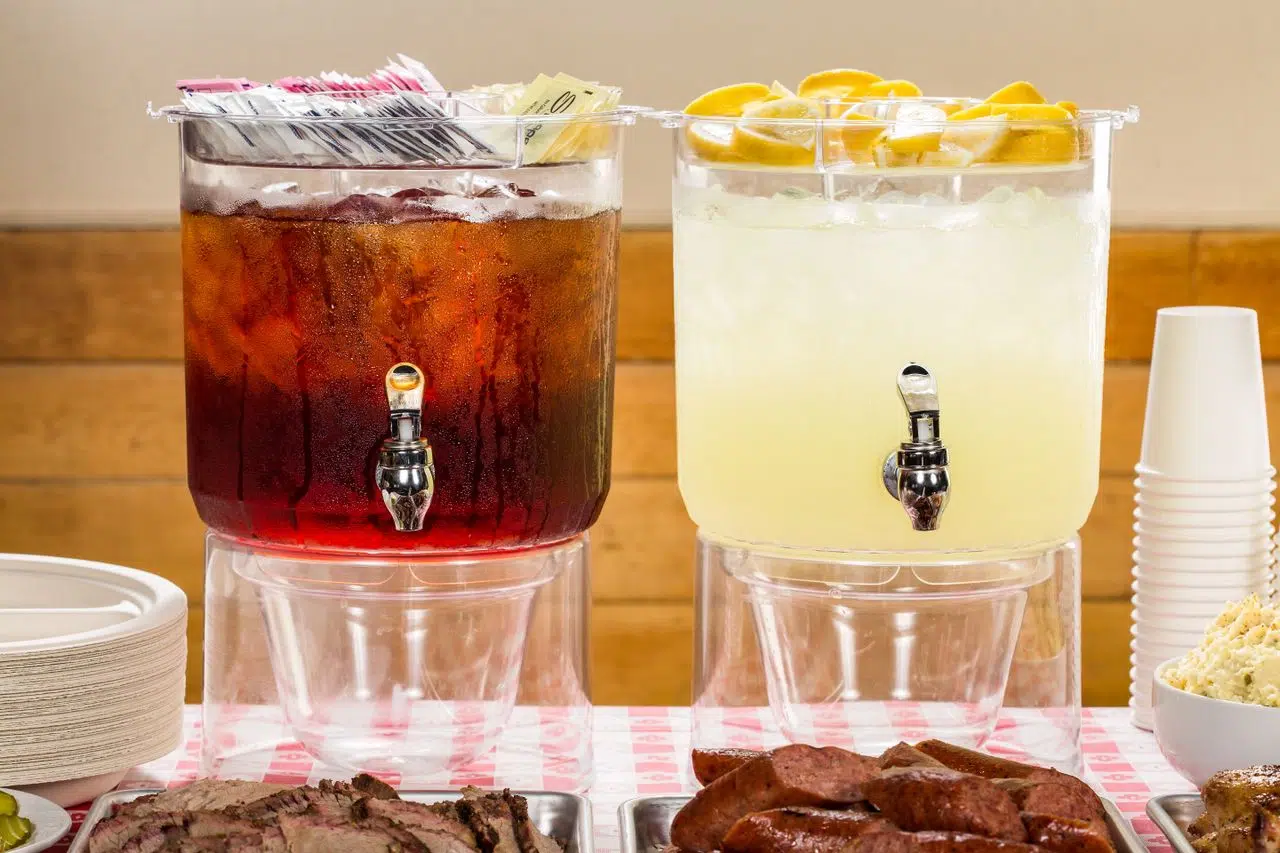
Drinks are simpler than food but easier to underestimate. Plan for more than you think, particularly in warm weather, and remember that soft drinks and water get consumed just as heavily as anything else at a daytime event.
Ice is the item most frequently forgotten and the hardest to fix at short notice. Buy more than seems sensible. Position drinks separately from the food so people are not queuing for both at once, and put water somewhere easily accessible rather than at the end of a line.
Confirming Everything in Writing
Verbal arrangements get misremembered, and large gatherings involve too many moving parts to rely on anyone’s memory. Get the numbers, the menu, the delivery time, the setup arrangements, and the total cost confirmed in writing.
Reconfirm a few days before the event. Establish who your point of contact is on the day and make sure someone other than you has that number, because the host is invariably the hardest person to reach when something needs deciding. Most problems at large gatherings are not errors but unanswered questions, and a clear line of communication removes almost all of them.