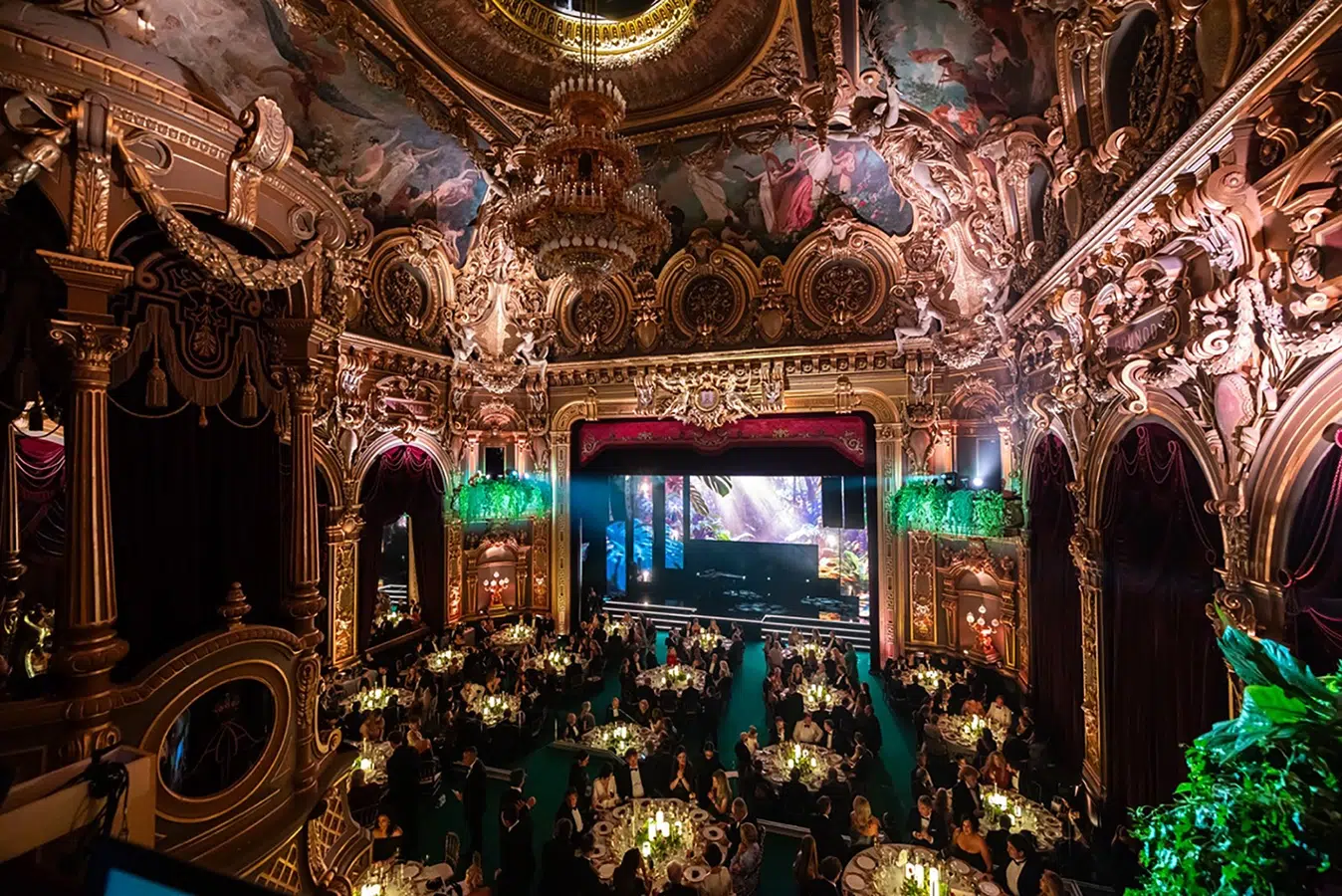
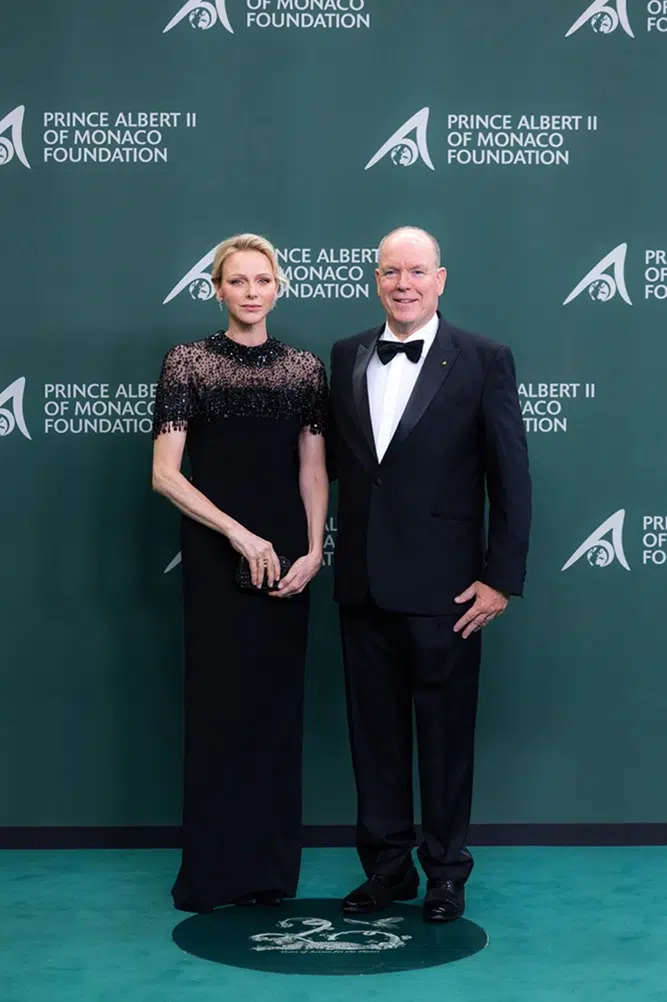
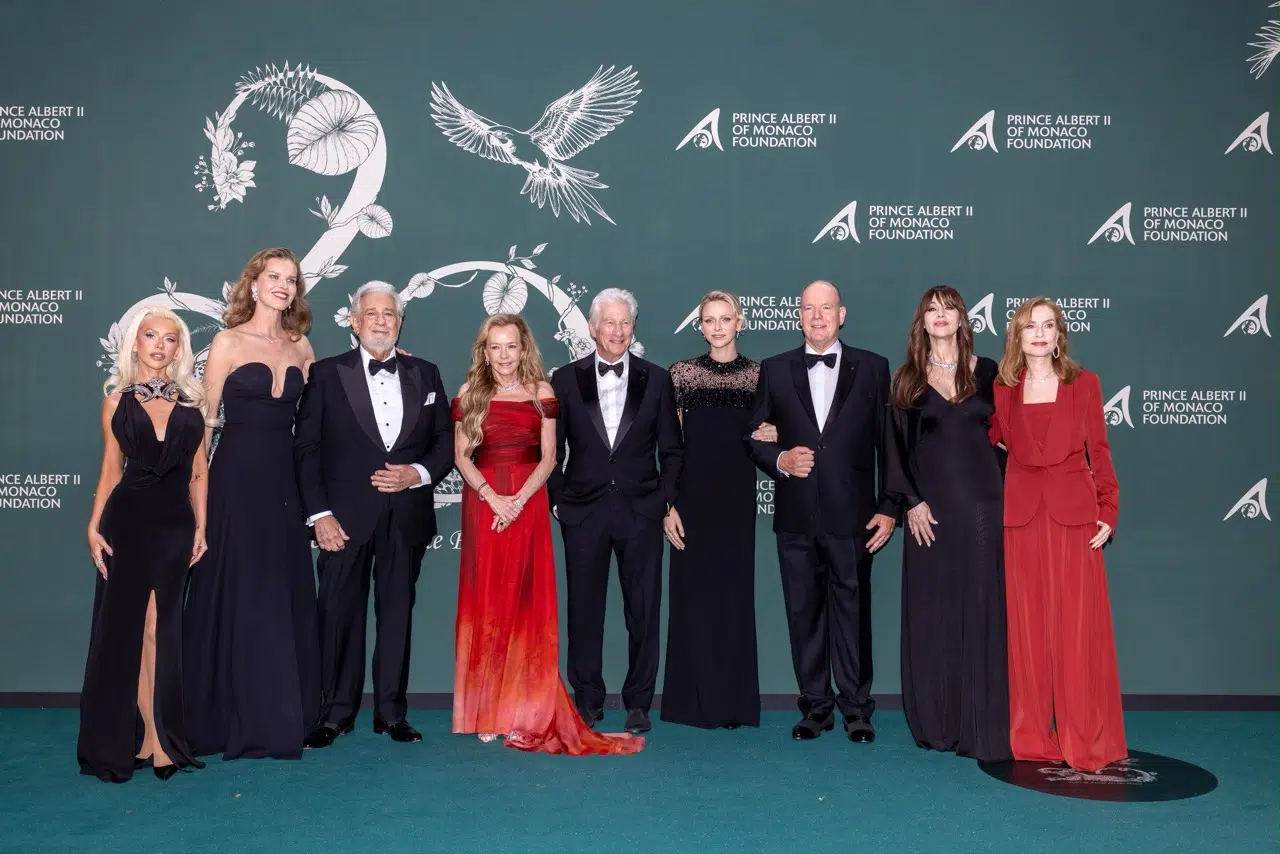
Monaco has always understood the power of spectacle. At the Salle Garnier, that instinct was put to unusually purposeful use as Prince Albert II and Princess Charlene marked the 20th anniversary of the Prince Albert II of Monaco Foundation with an evening that brought together cinema, music, philanthropy and environmental advocacy beneath the gilded ceilings of the Monte-Carlo Opera House.
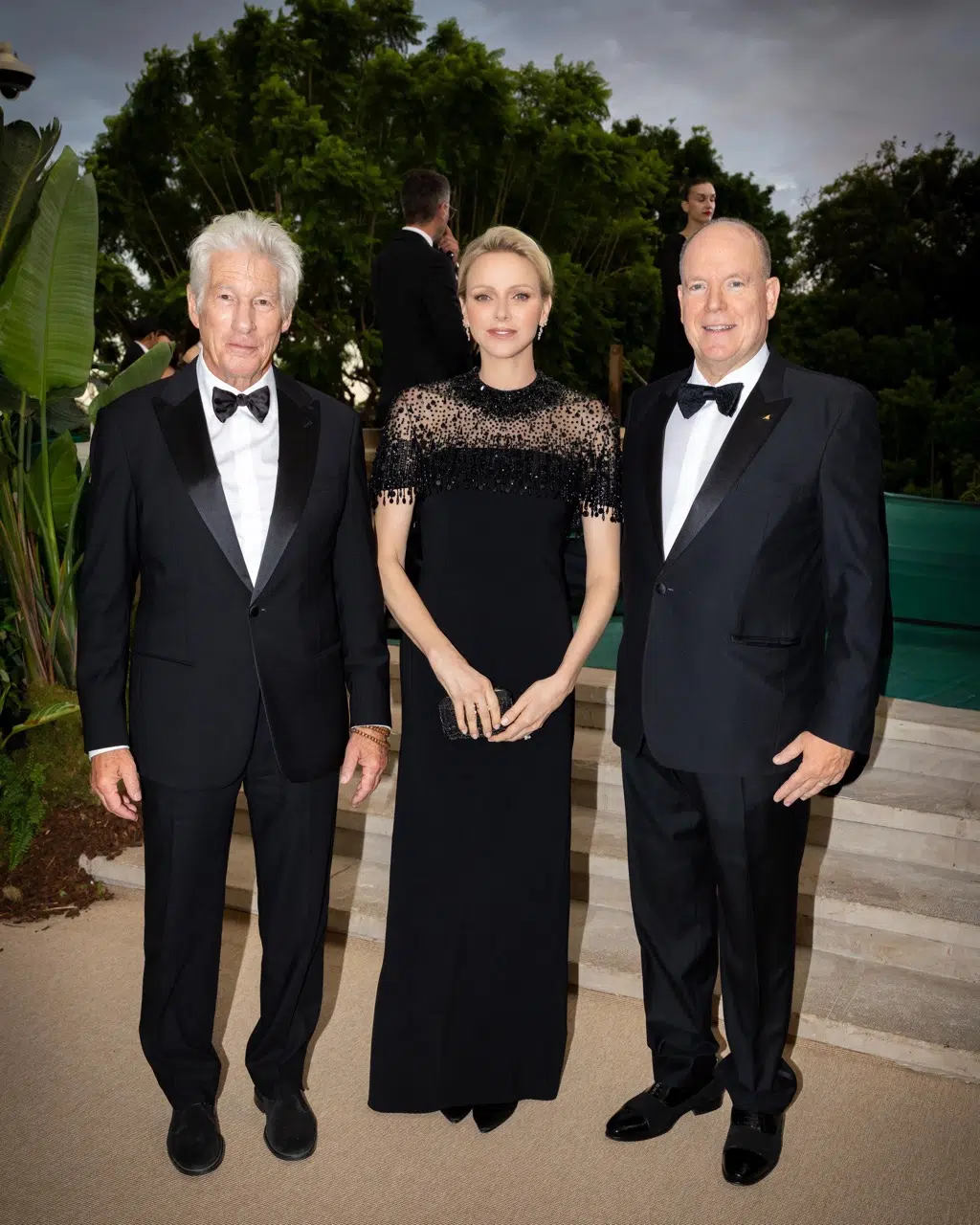
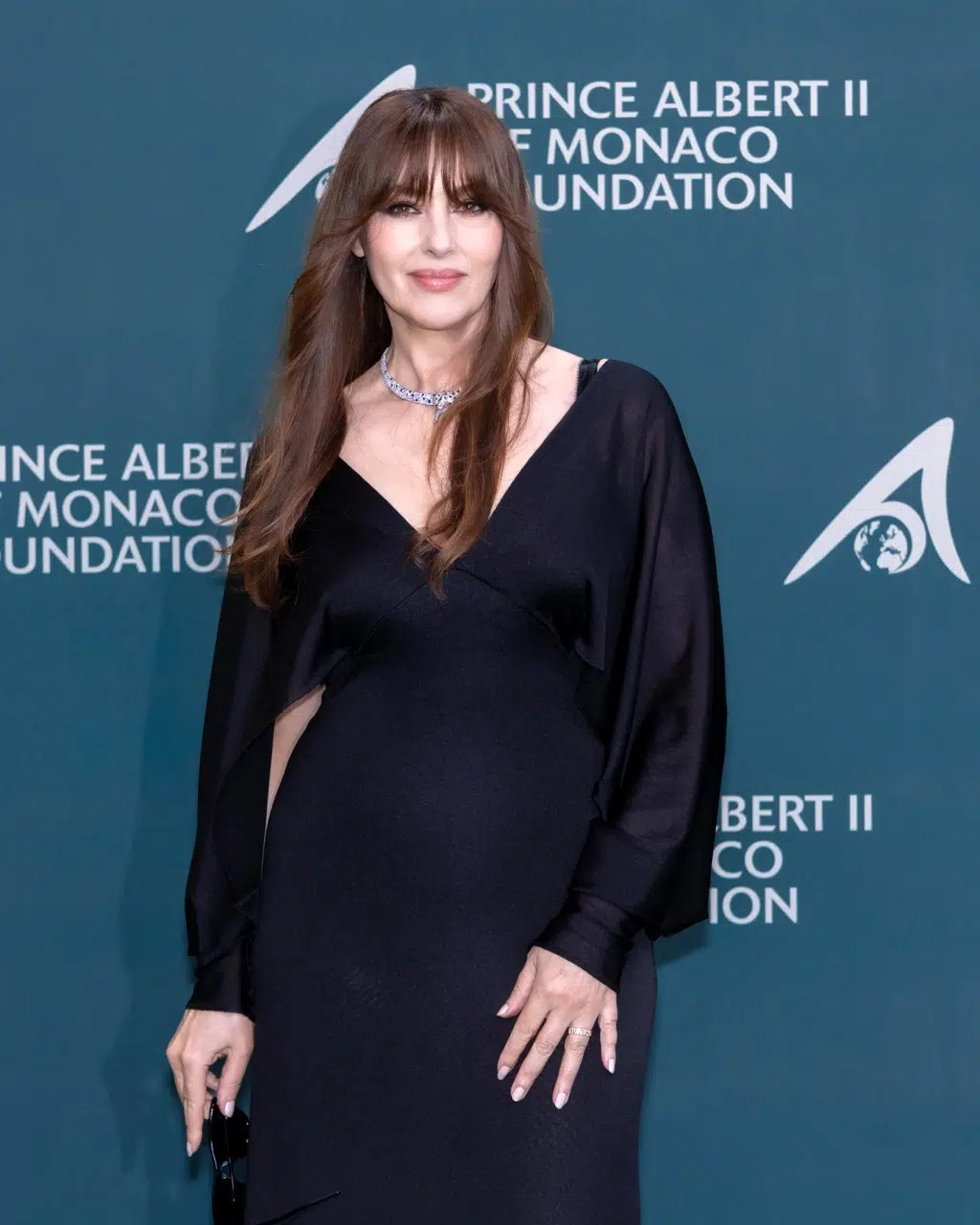
For the occasion, the opera house took on an Amazon-inspired atmosphere, a visual departure from its usual Belle Époque grandeur and an apt reminder of the natural world at the center of the Foundation’s work. Monica Bellucci and Richard Gere served as guests of honor, while Isabelle Huppert, Eva Herzigova, Catrinel Marlon and Aurélien Muller joined the evening’s green carpet, giving the celebration the kind of international star power Monaco can summon almost without effort.
Inside, the evening unfolded with the polished rhythm expected of Monte Carlo. Michelin-starred chef Yannick Alléno created the dinner, while Christina Aguilera, Plácido Domingo and Sister Sledge provided the musical performances, adding glamour without allowing the purpose of the gathering to disappear beneath it.
That purpose is what has given the Foundation its relevance over the past two decades. Since 2006, it has supported more than 830 projects around the world, focusing on climate change, biodiversity and water resources, with activity spanning the Mediterranean Basin, the polar regions and some of the world’s least developed countries.
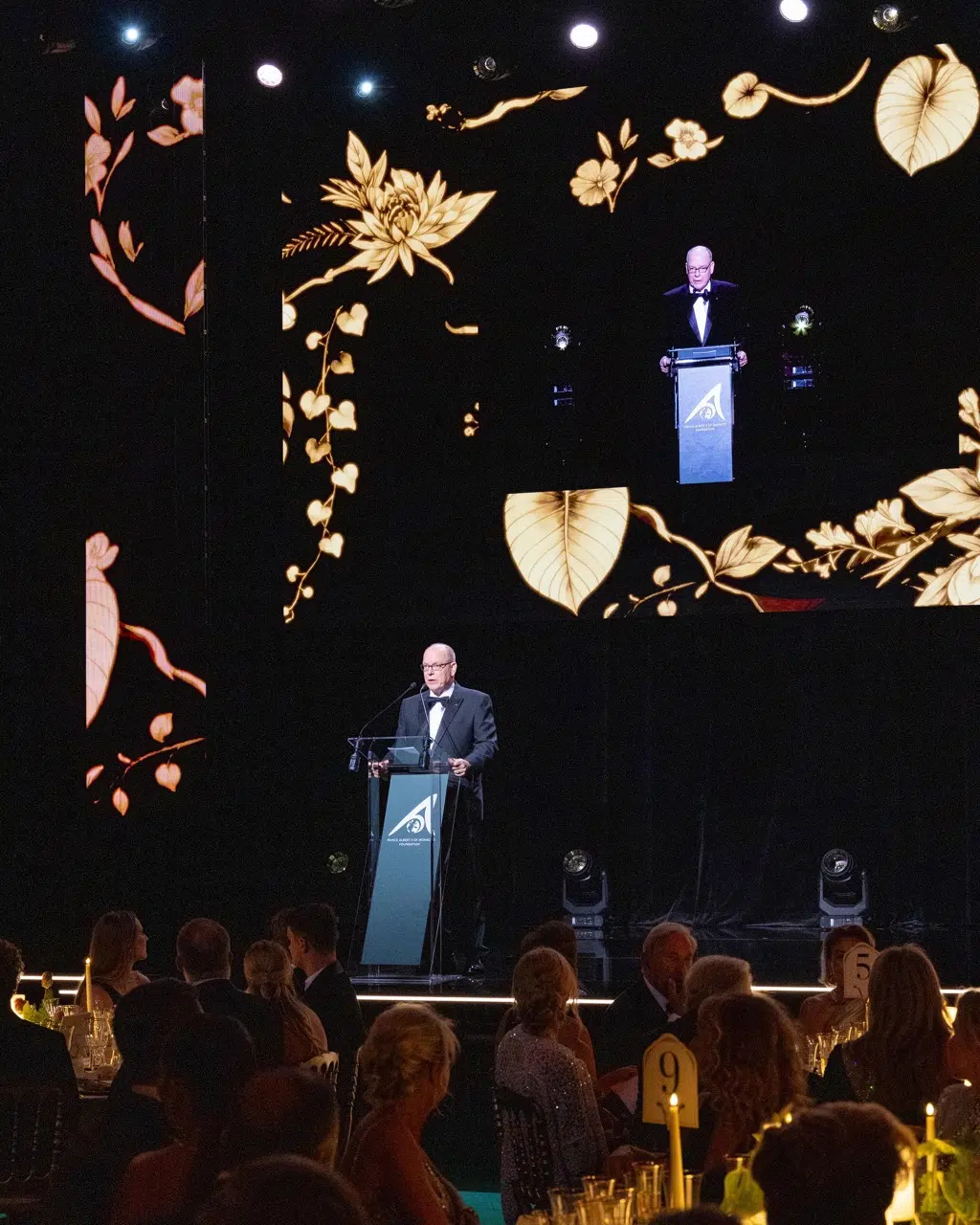
The breadth of that work reflects the way Prince Albert envisioned the organization from the beginning. In his anniversary remarks, he returned to the idea of using the reach of his position to build something capable of operating beyond borders and beyond the limits of a single political cycle, with a long-term focus on environmental protection and scientific action.
That ambition has always depended on more than science alone. The Foundation’s model brings together researchers, conservationists, institutions, philanthropists and cultural figures, using influence from very different worlds to draw attention to problems that can otherwise remain abstract until they become impossible to ignore.
Bellucci and Gere fit naturally into that framework. Bellucci spoke about the seriousness of Prince Albert’s environmental commitment, while Gere emphasized the connection between ecological responsibility and human responsibility, reinforcing the idea that care for the planet cannot be separated from care for the people who depend on it.
The auction, led by Simon de Pury, gave the evening its most tangible philanthropic dimension. Works by George Condo, Urs Fischer and Secundino Hernández were offered alongside a Chopard high-jewelry creation and experiences including a journey aboard the Venice Simplon-Orient-Express and time with Richard Gere, turning celebrity, art and access into direct support for the Foundation’s work.
That combination of glamour and consequence is where the evening became more interesting than a conventional anniversary gala. Monaco has no shortage of beautiful rooms, famous guests or expensive objects, but the most persuasive luxury events are the ones that understand visibility is most valuable when it is directed somewhere.
The Prince Albert II of Monaco Foundation has spent 20 years building precisely that kind of network. Its work occupies the space between science and diplomacy, philanthropy and public attention, using Monaco’s unusual position on the world stage to convene people who might otherwise rarely sit at the same table.
In lesser hands, that contrast might have felt incongruous. Here, it became the point.
Luxury and environmental responsibility are often presented as opposing forces, but the Foundation’s approach suggests a more practical question: if wealth, access and cultural influence already exist, how effectively can they be mobilized toward outcomes that matter beyond the room?
Twenty years of projects across multiple regions do not answer that question completely, but they do give it substance. The Foundation’s record shows an organization that has moved well beyond symbolic advocacy into long-term support for fieldwork, research and conservation partnerships.
The anniversary therefore felt less like a retrospective than a recalibration. Two decades were being acknowledged, certainly, but the underlying message was that the work is becoming more urgent rather than less.
That is what gave the evening its weight.
Monaco may have supplied the grandeur, the orchestra and the green carpet, but the real measure of the celebration was not who entered the Salle Garnier or what was auctioned beneath its chandeliers. It was whether the influence gathered there could continue to travel outward.
For the Prince Albert II of Monaco Foundation, that has always been the larger ambition: to turn visibility into leverage, and glamour into something useful.