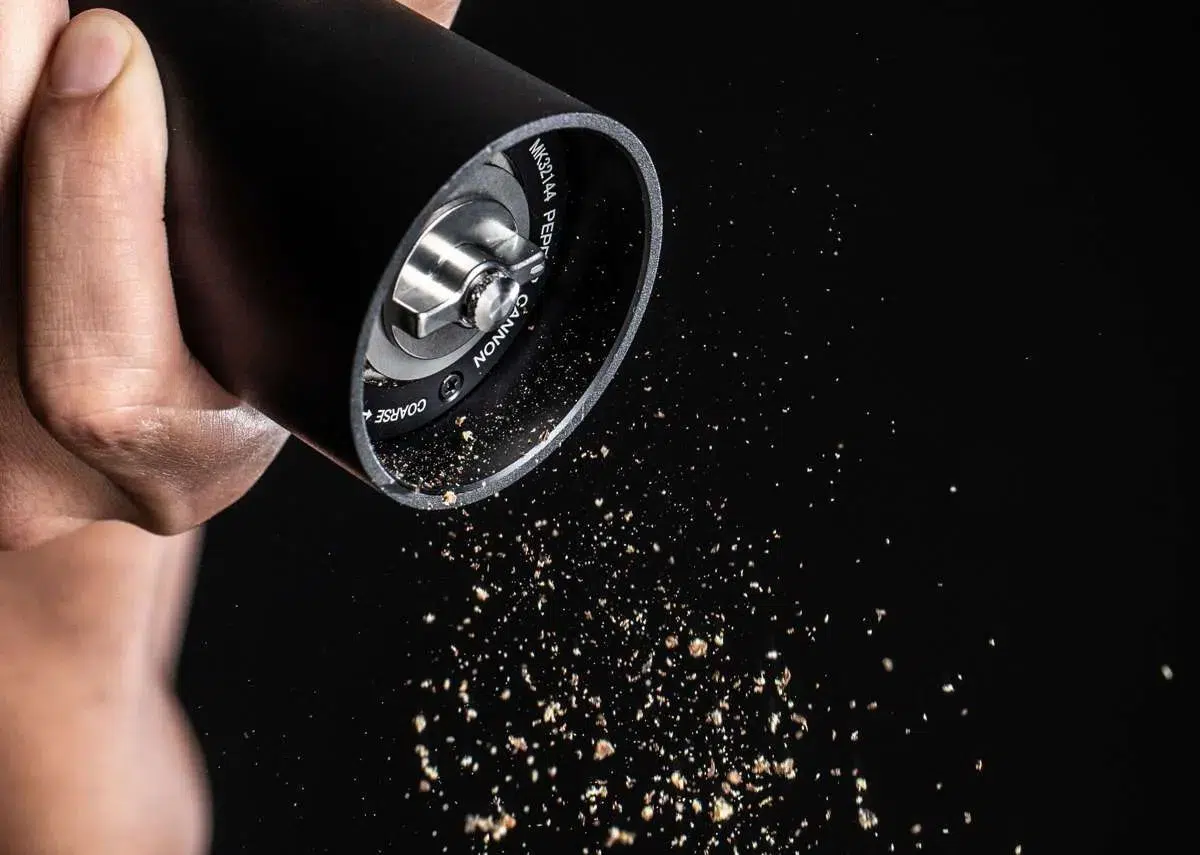
In the hierarchy of the kitchen, few tools are as underestimated as the pepper mill. Often treated as an afterthought, left on the table, chosen for aesthetics rather than performance, it is, in reality, one of the most defining instruments of flavor.
Precision, after all, begins at the grind.
For generations, the benchmark has been Peugeot. Long before the company became synonymous with automobiles, it refined the mechanics of grinding. Its patented 19th-century system, designed to crack peppercorns before grinding, remains a reference point, still produced in the Doubs region of France in volumes that underscore its enduring relevance.
The iconic Paris mill, introduced in the late 20th century, established a visual and functional standard: balanced, reliable, and quietly authoritative.
Yet the modern kitchen has begun to demand more.
Freshly ground pepper is not simply preferable; it is transformative. The difference between pre-ground powder and a precise grind is the difference between seasoning and structure. Particle size, consistency, and output all influence how flavor is perceived, how it disperses, and how it finishes a dish.
It is within this context that a new generation of tools has emerged, less decorative, more engineered.
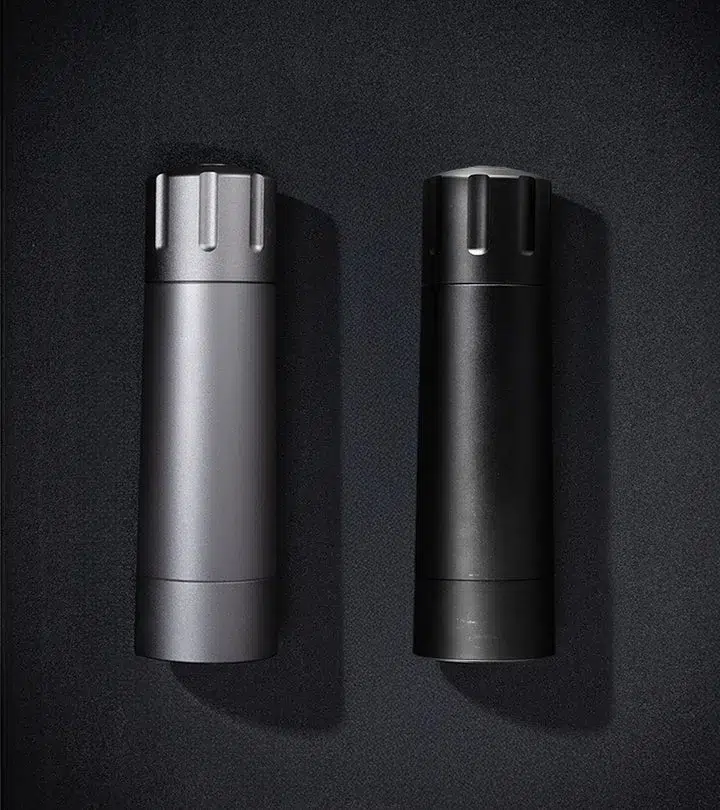
At the forefront is the Pepper Cannon by MÄNNKITCHEN, conceived by founder Cleve Oines. A former commercial fishing chef, Oines approached the problem not as a stylist, but as a practitioner, questioning why a tool so central to cooking had evolved so little.
The result is a study in functional design.
Constructed from aerospace-grade aluminum, the mill is engineered for durability and control. Its internal mechanism, featuring a double-bearing drive shaft and high-carbon stainless steel burrs, delivers a level of consistency rarely associated with traditional mills. More notably, its output redefines expectation, producing significantly more ground pepper per rotation while requiring less effort.
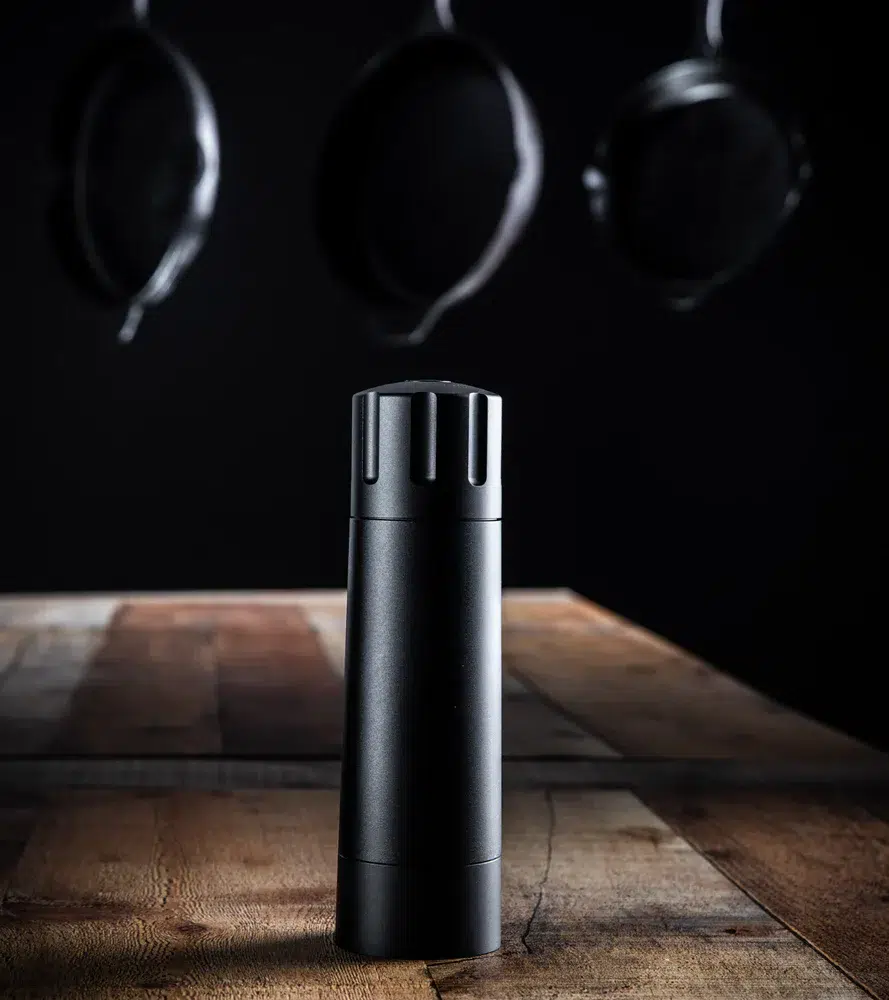
The range is equally considered. Where conventional mills operate within a narrow band, the Pepper Cannon offers a spectrum, from coarse fragments to a near-powdered finish, allowing seasoning to be tailored with a degree of precision typically reserved for professional kitchens.
This is not innovation for its own sake. It is refinement driven by use.
The broader landscape reflects this shift. From sculptural mills in lacquered ceramics and hardwoods to minimalist interpretations in stainless steel, the category has expanded into an intersection of design and performance. Yet the distinction remains clear: the best tools are those that prioritize function without sacrificing form.
Pepper, once traded as currency and prized for its rarity, has always carried weight beyond its scale. In the modern kitchen, that significance is measured not in cost, but in control.
A well-executed dish rarely announces itself loudly. It reveals itself in detail, in balance, in texture, in the final adjustment that brings everything into focus.
More often than not, that moment begins with the turn of a mill.