Bentley has spent more than a century perfecting what happens once the door closes: the weight of a knurled control, the grain of the veneer, the smell of leather, and the way a cabin can feel simultaneously formal and deeply personal. Now the British marque is extending that same attention to the place where ownership begins, rethinking the traditional showroom as something closer to a private club, atelier, and hospitality space.
The first expression of that new global retail concept has been unveiled at Jack Barclay in London, a location with enough history to make the shift feel especially significant. Founded in 1927, the retailer provides an appropriately symbolic setting for Bentley’s next chapter: one of the marque’s oldest addresses becoming the prototype for how the brand wants to be experienced in the future.
The change is subtle in language but significant in practice. Bentley is not simply redecorating dealerships; it is reconsidering the psychology of arrival, commissioning, and handover so that buying one of its cars feels less transactional and more akin to ordering something bespoke.
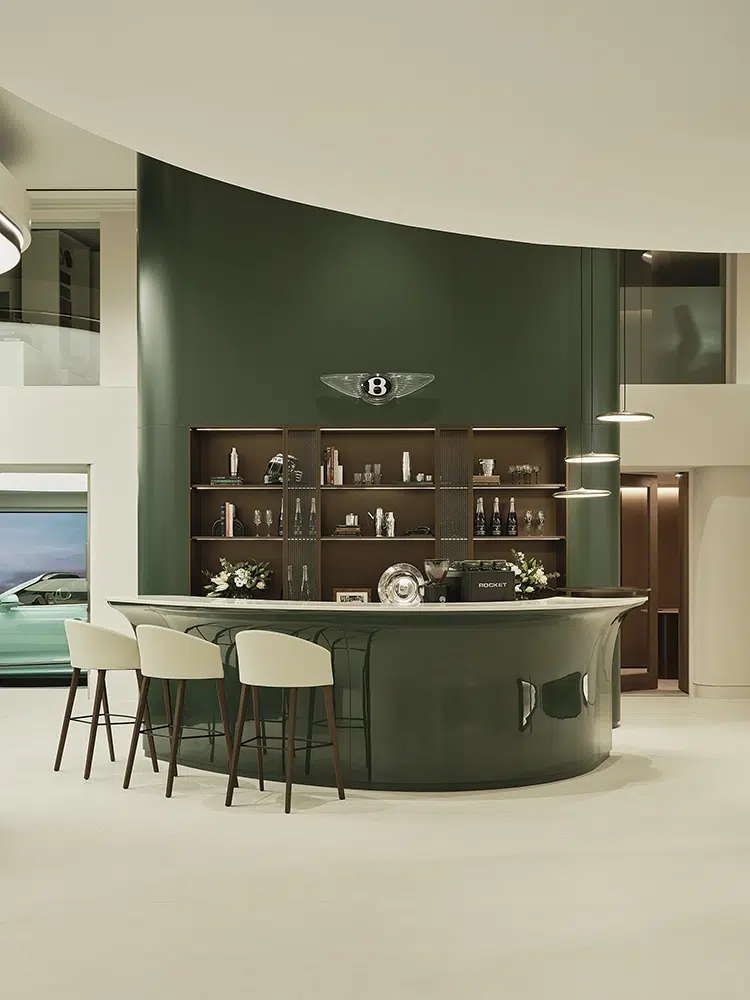
The conventional reception desk gives way to a bar, immediately changing the atmosphere before a customer has even begun discussing a car. Vehicles are no longer treated as inventory lined across a polished floor but as individual objects within a more residential environment, surrounded by lounges, richer materials, and architecture designed to slow the experience down rather than rush it toward a sale.
It is an approach that makes increasing sense at this end of the market. Bentley customers are accustomed to private aviation terminals, five-star hotels, yacht interiors, Mayfair tailoring rooms, and watch salons where service is choreographed carefully enough to feel effortless, so a conventional automotive showroom can suddenly seem strangely utilitarian by comparison.
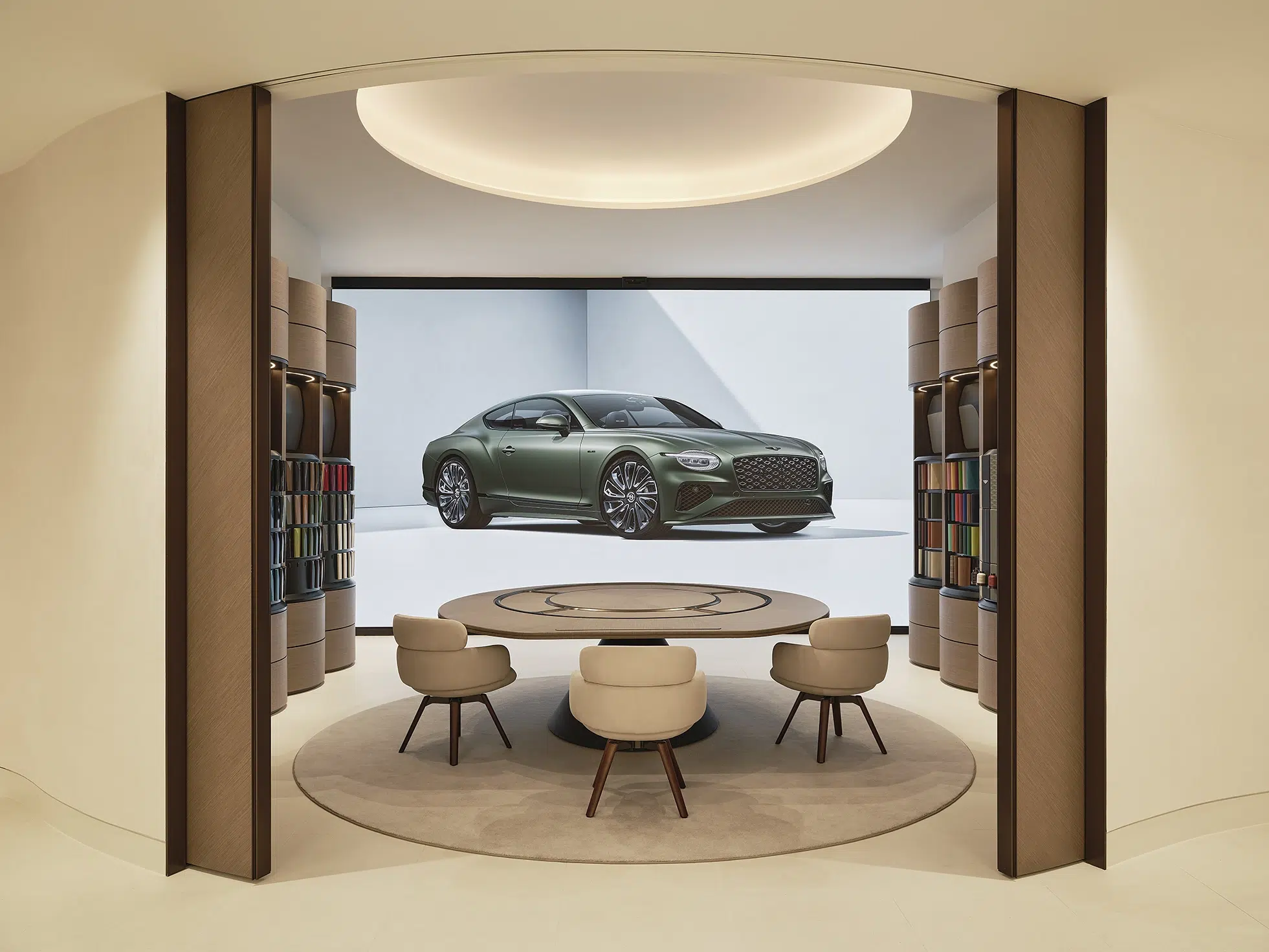
Bentley’s answer is to make the showroom feel less like a place one visits to buy a car and more like a world one has been invited into. That idea reaches its clearest expression in the Atelier, where customers can explore leathers, veneers, colors, and finishes in a setting devoted to specification rather than sales.
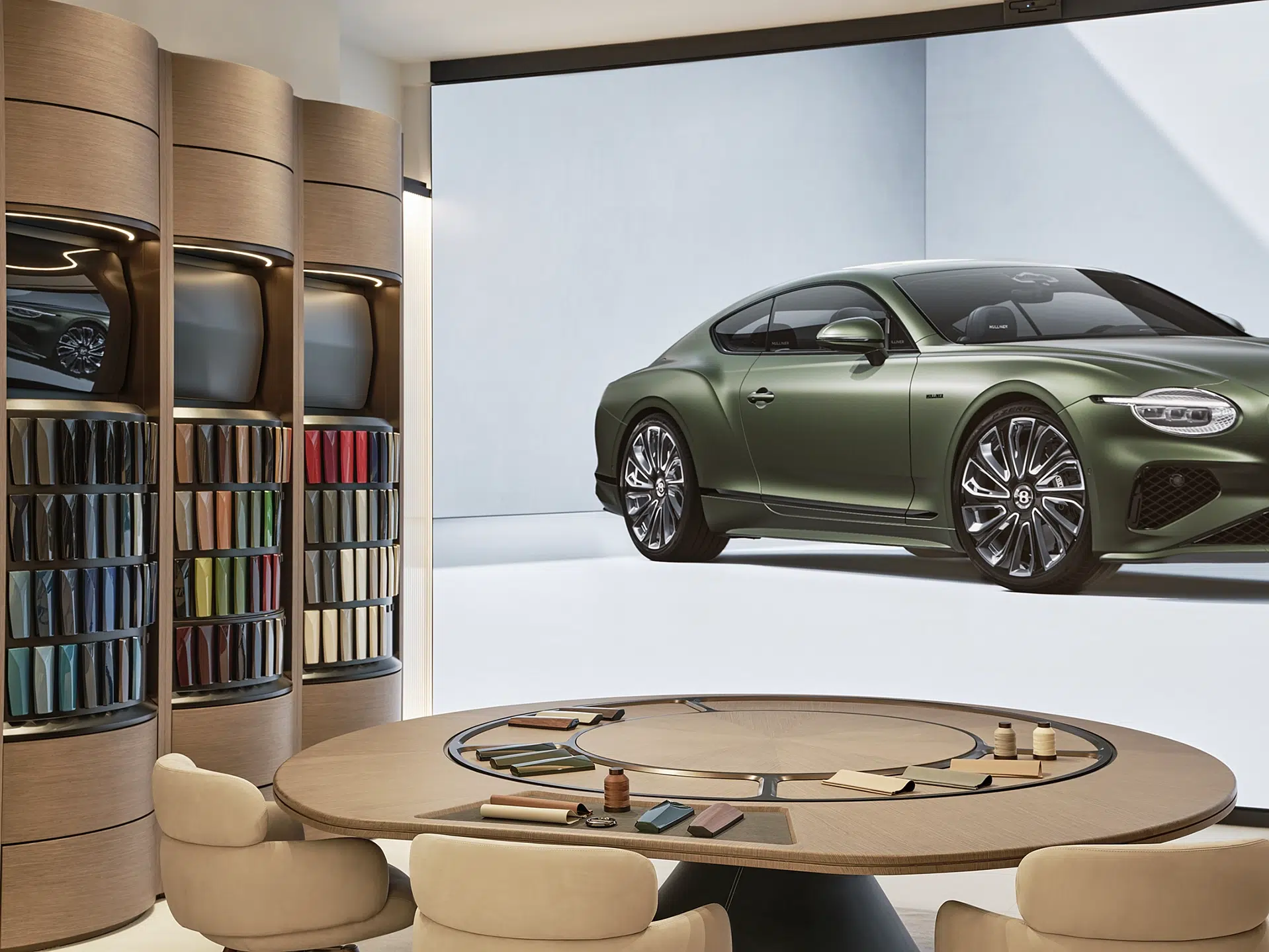
Physical samples sit alongside digital tools, including a 3D configurator displayed on a large LED wall, allowing combinations to be considered at scale before they exist in metal, hide, and wood. That is particularly relevant as Mulliner continues to expand the boundaries of Bentley personalization, turning modern luxury-car commissioning into something less like selecting options and more like authorship.
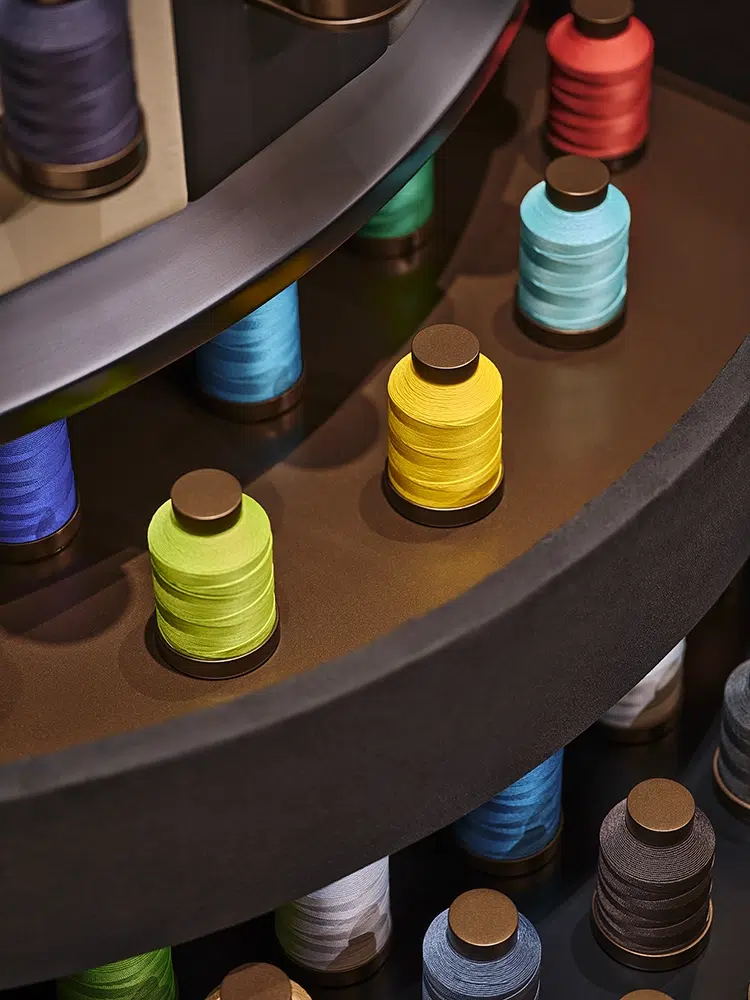
Bentley has understood for some time that the tactile part of that process still matters. A digital rendering can show how a color works against a particular wheel or interior, but it cannot replicate the grain of an open-pore veneer or the hand of a leather sample, so the new retail environment is designed around that tension, using technology where it adds clarity while allowing the physical materials to retain their authority.
In that sense, the Atelier feels closer to a tailor’s fitting room than a traditional configurator desk. The customer is not merely choosing a specification; he or she is composing one, building a car around taste, context, and personality rather than simply selecting from a list.

The architecture follows the same logic. Rather than covering the space in literal automotive motifs, Bentley has abstracted familiar elements of its design language, with curved forms referencing the Winged B, the marque’s diamond pattern appearing through surfaces and detailing, and Bentley Green providing a subtle thread of continuity throughout.
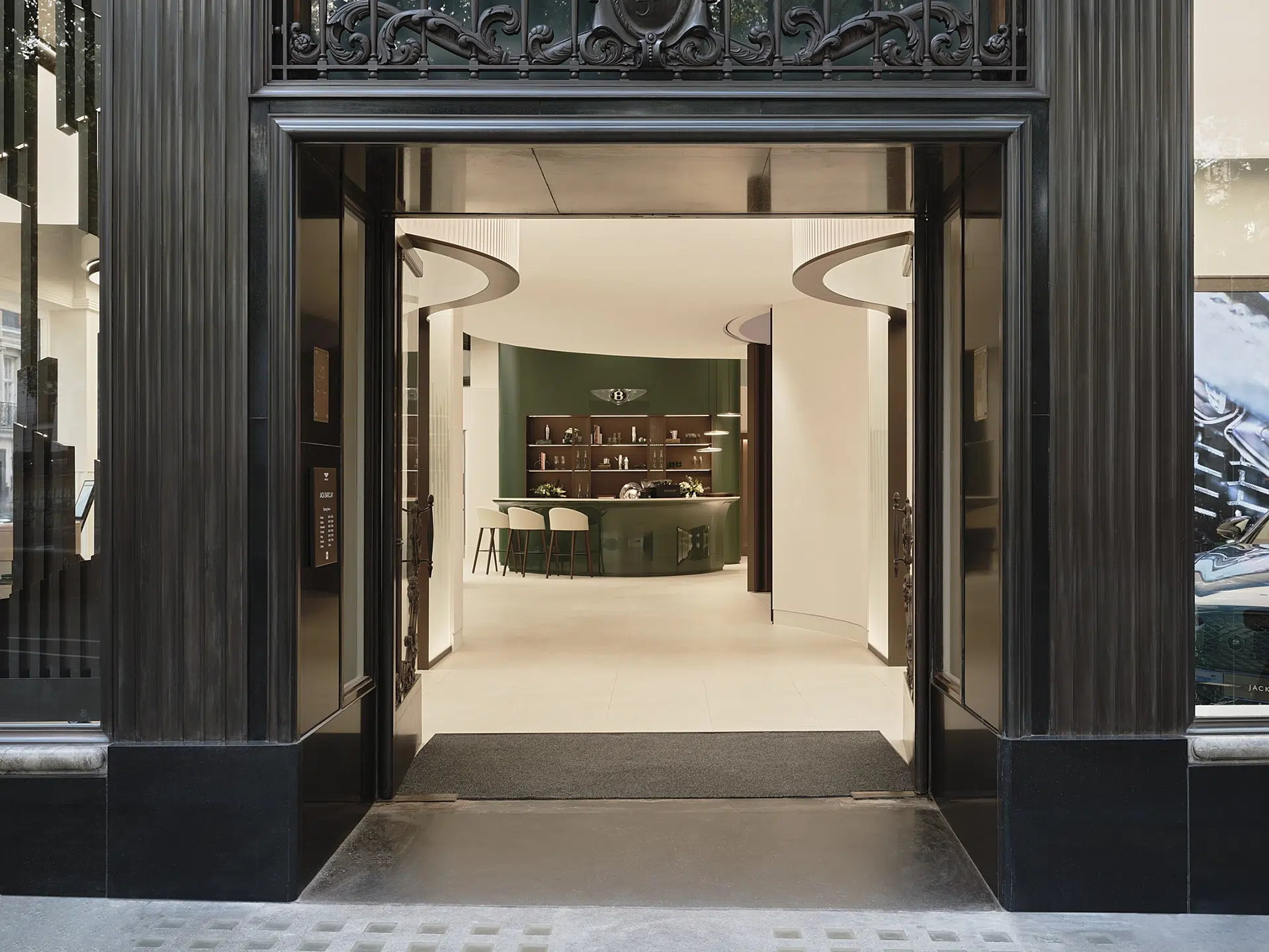
Lighting is treated as more than a practical necessity. It is used to shape movement, define zones, and create atmosphere, while the exterior has also been reconsidered through integrated illumination, a reinterpretation of Bentley’s diamond motif, and a curved glass entrance that softens the transition between street and interior.
None of these elements sounds revolutionary in isolation, but together they reveal a larger change in what luxury automotive retail is expected to accomplish. For decades, the car itself was enough: put the right machine beneath flattering lights, surround it with marble or polished metal, and the showroom had largely done its job.
Today, that formula feels increasingly incomplete because the most affluent buyers do not experience luxury in categories. A Bentley showroom is not judged only against Rolls-Royce, Aston Martin, or Ferrari; it is also, consciously or otherwise, being compared with an Aman lobby, a private members’ club, a high-jewelry salon, and the suite of a five-star hotel.
That changes the standard, and it also explains why Bentley has given the handover experience its own architectural attention. Dedicated delivery spaces use controlled lighting and digital displays to give the arrival of the finished car a sense of ceremony, acknowledging that for many customers, collecting a bespoke Bentley should feel more significant than accepting a set of keys at the end of a transaction.
Luxury is often at its most convincing when the mechanics of service disappear. The customer should not need to think about reception desks, sales procedures, or paperwork; the environment should create enough calm, privacy, and confidence that the process begins to feel intuitive, almost residential.
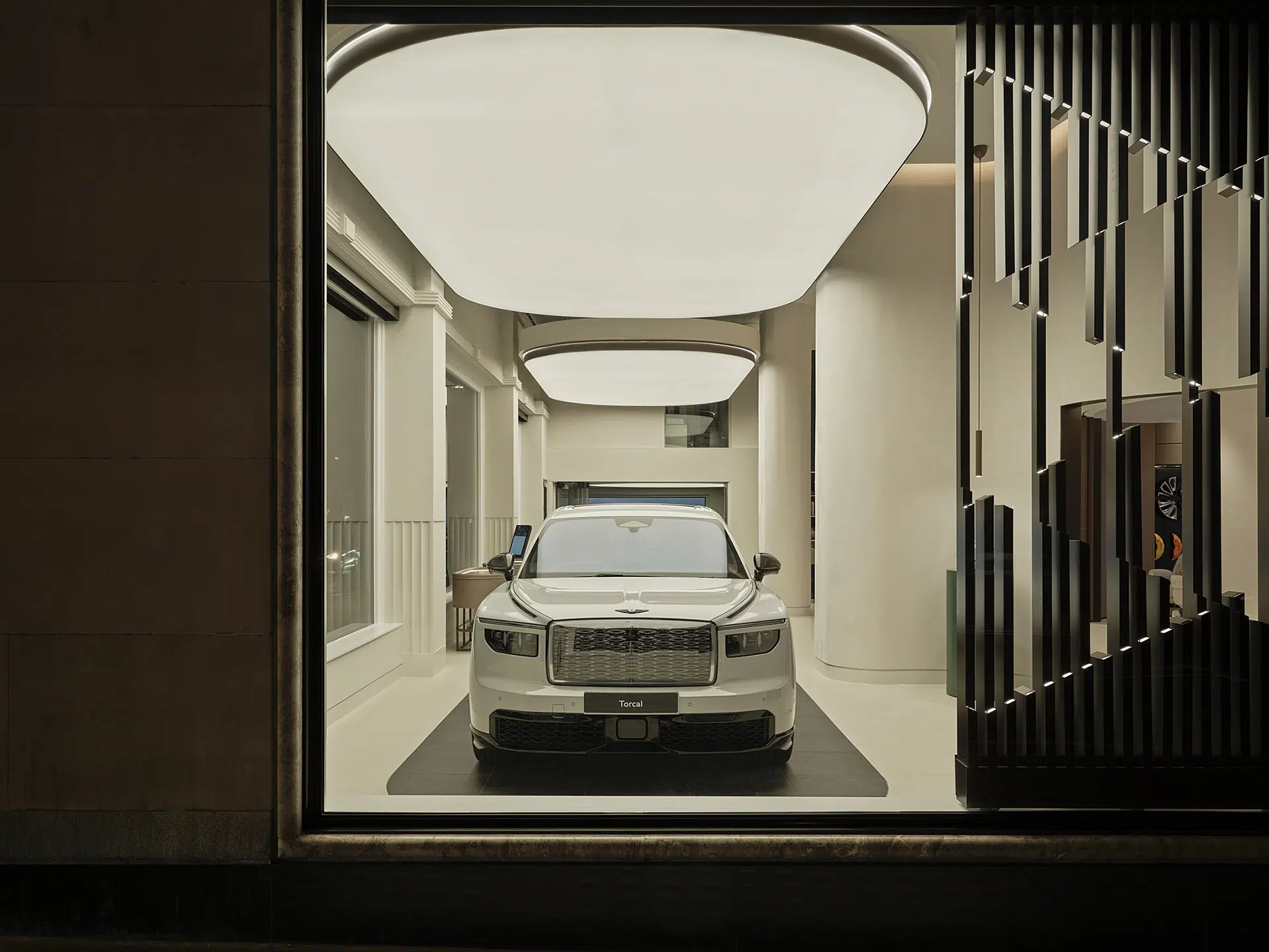
Jack Barclay makes an especially compelling place to test that idea. The London retailer has been associated with Bentley since the interwar years, when the marque was forging a reputation around grand touring, competition, and a particularly British mixture of elegance and bravado, and nearly a century later that same address is being asked to express a very different kind of luxury.
The contrast is useful because Bentley itself is changing in similar ways. Its cars have become more technologically sophisticated and more extensively customizable, while the brand increasingly extends beyond automotive design into residences, interiors, and lifestyle collaborations, requiring the showroom to communicate more than the appeal of a Continental GT or Bentayga.
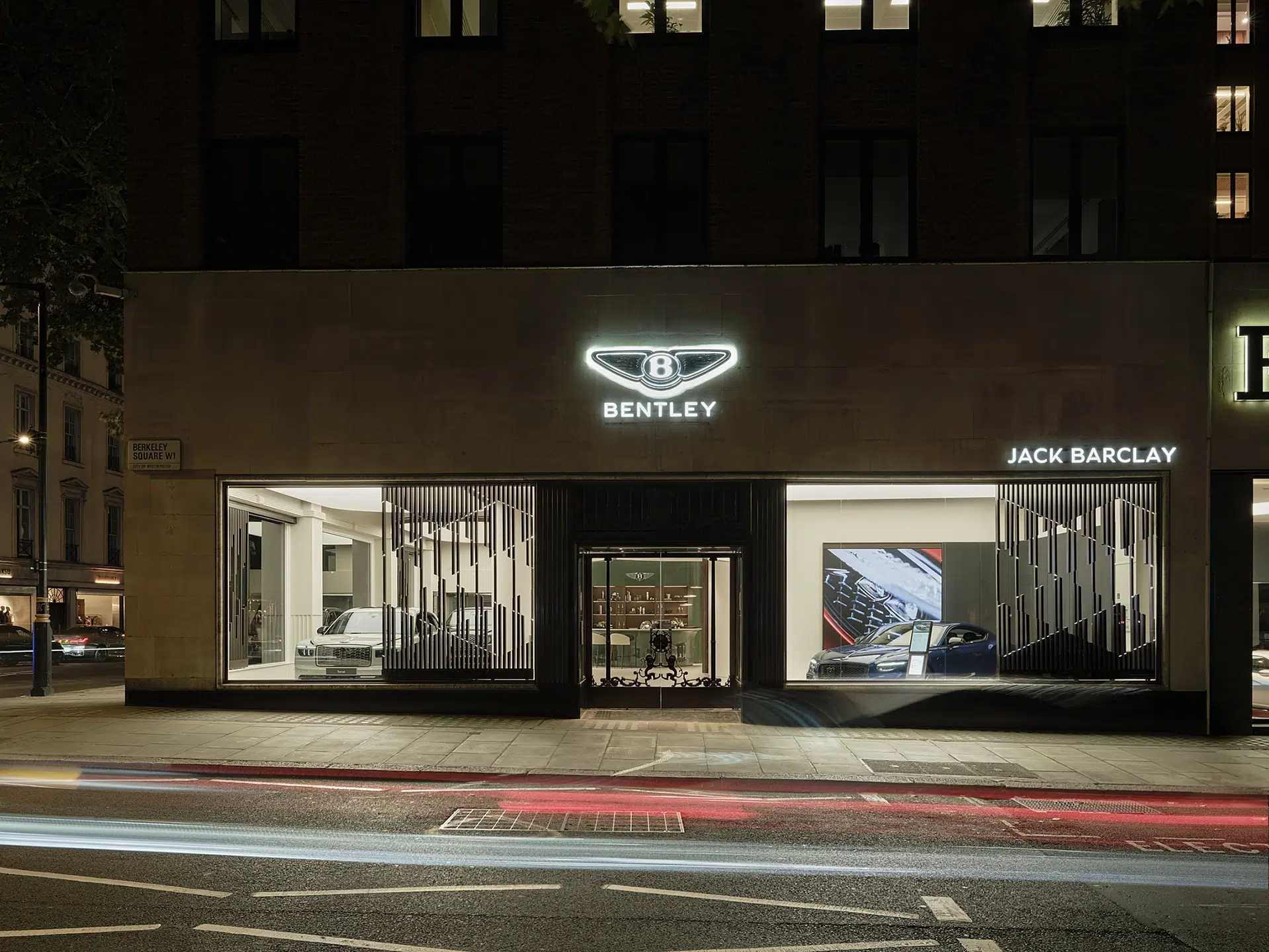
It now has to express the wider aesthetic language Bentley considers part of its identity, and that task will become even more important as the concept expands across the marque’s global retail network. The system has been designed to be modular so that individual retailers can adapt the language to different footprints and markets without losing its core identity.
That flexibility matters because luxury becomes sterile very quickly when global consistency turns into repetition. The challenge will be preserving a sense of place while ensuring that a Bentley showroom in London, Miami, or Singapore still feels recognizably part of the same world.
The best luxury spaces rarely need to announce what they are. They communicate through proportion, material, light, service, and restraint, whether it is the comfort of a chair chosen for how long a client might sit in it, a bar that places hospitality before negotiation, or a material sample that invites touch because Bentley knows some decisions cannot be made from a screen.
That is what makes the new retail concept more interesting than a redesign exercise. Bentley has spent generations convincing customers that the difference between luxury and ordinary lies in details most people never notice, and its new showrooms apply exactly the same argument to the act of buying the car.
Before the engine starts, before the first mile, and before the keys are handed over, the experience has already begun.