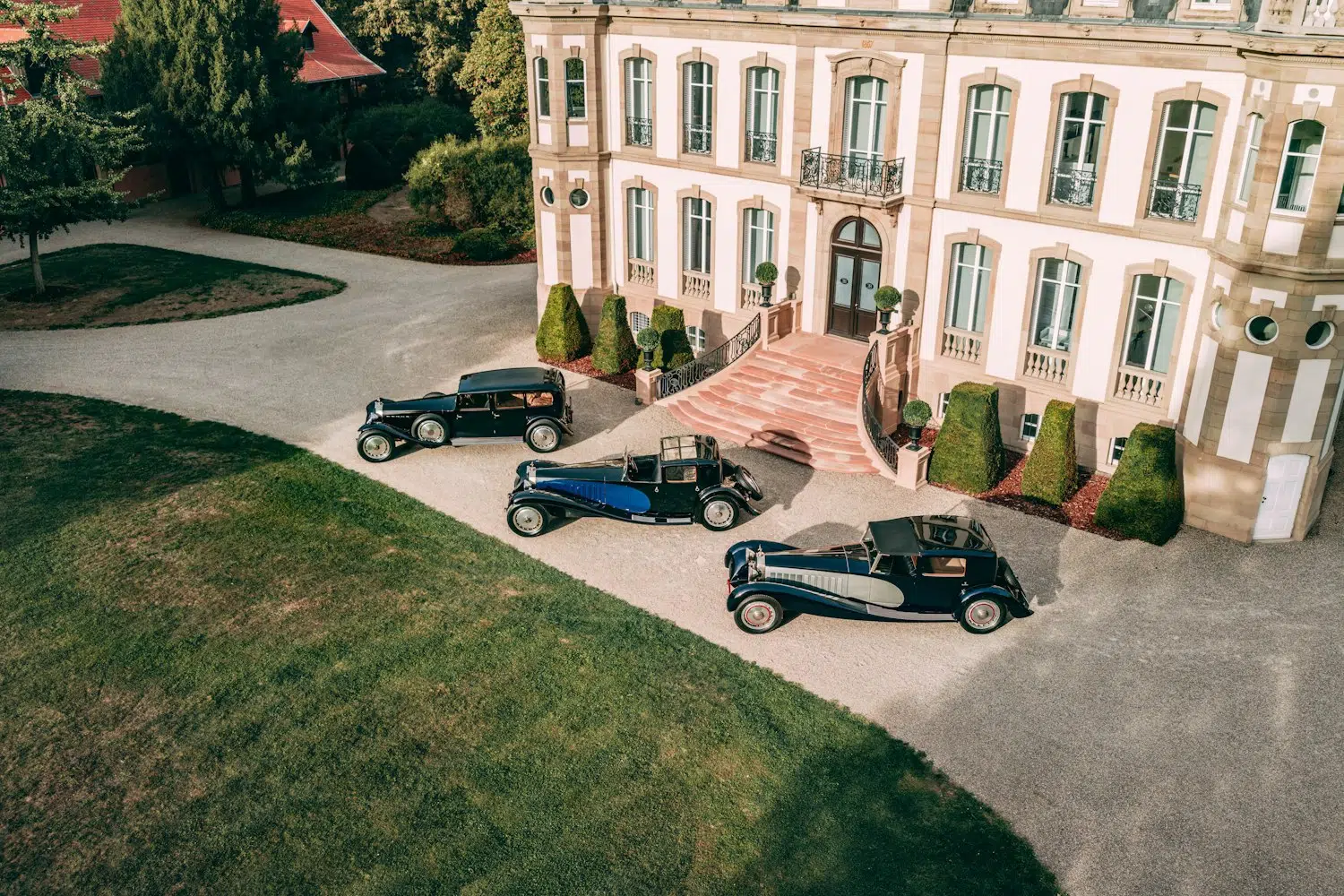
A century after Ettore Bugatti conceived the monumental Type 41 Royale, three of the six surviving examples returned to Molsheim, an extraordinary reunion that revealed why the car still feels less like a product of its time than a declaration of what luxury automobiles could become.
The Bugatti Type 41 Royale has always seemed slightly improbable. It is too large to be elegant in the conventional sense, too ambitious to be sensible and too rare to be understood as anything approaching a normal production automobile. Its engine belongs to another scale entirely, its proportions border on the architectural, and its original audience was not the merely wealthy, but royalty itself. And yet, a century after Ettore Bugatti conceived it, the Royale remains one of the most persuasive automobiles ever built.
That paradox was on full display in Molsheim, where Bugatti marked the Royale’s centenary by bringing three of the six surviving cars back to the marque’s historic Alsatian home. The Coupé Napoléon, the Coupé de Ville Binder and the Packard Royale formed the centerpiece of the 2026 Bugatti Festival, returning to the place where Ettore Bugatti once pursued the increasingly radical idea that an automobile could be engineered with the seriousness of machinery, composed with the confidence of sculpture and commissioned with the individuality of haute couture.
Conceived in 1926, the Type 41 was intended to sit above every other automobile of its era. Its roughly 12.7-liter straight-eight engine produced around 300 horsepower at fewer than 2,000 rpm, while the original prototype used an engine closer to 15 liters. The chassis stretched to monumental dimensions, with an overall length exceeding six meters and a wheelbase of roughly 4.3 meters. Those numbers remain impressive, but they do not quite explain the effect, because the Royale’s true achievement was psychological: it was designed to make every other luxury automobile look modest.
Where many grand cars of the period relied on ornament, the Royale relied on presence. The long hood seemed almost endless, the wheels were enormous, and the cabin sat behind an expanse of mechanical confidence that made the car feel less driven than commanded. Even stationary, it had the gravity of something built for state occasions, and that sense of ceremony was entirely intentional.
Ettore Bugatti did not imagine the Royale as merely a larger or more expensive Bugatti. He imagined it as a category of its own, a machine suitable for monarchs and heads of state. Its price reinforced the proposition. The Royale cost at least 100,000 Reichsmarks, approximately three times the price of comparable luxury limousines and more than ten times that of other Bugattis, while the extravagance continued after purchase.
Buyers could acquire the chassis, powertrain and radiator shell before commissioning a body from one of the great coachbuilders of the period. Kellner, Weymann, Binder, Weinberger, Park Ward and Bugatti itself all contributed to the Royale story, giving each car an identity distinct from the next. That individuality is one reason the Royale now feels unexpectedly modern, because the most sophisticated luxury today increasingly revolves around authorship. Collectors want to know who designed an object, who made it, and how much of it exists, and the Royale offered precisely that proposition nearly a century ago. It was less a model line than a platform for patronage.
One of the most beautiful expressions of that idea was the Royale sold in 1932 to Parisian industrialist Armand Esders. Jean Bugatti designed a two-seat roadster body for the car, and because Esders intended to drive only during daylight hours, it was built without headlights. The omission allowed the front fenders to sweep uninterrupted along the body, producing one of the most elegant profiles of the prewar era. It was extravagance expressed through subtraction, an important distinction because the Royale is often described primarily through excess.
Its engine was enormous, its dimensions were enormous, and its price was enormous, but the car’s greatness lies in the fact that those qualities were resolved with remarkable visual discipline. The Royale is not beautiful because it is restrained; it is beautiful because it somehow makes excess coherent. Nowhere is that balance more apparent than at the front of the car, where the famous dancing elephant rises above the radiator.
Created by Ettore’s brother, sculptor Rembrandt Bugatti, the ornament remains one of the few automotive mascots that genuinely deserves the description of sculpture. It also tells us something about the Bugatti family itself. The company was never purely an engineering enterprise: Ettore’s father, Carlo Bugatti, was a celebrated furniture and decorative-arts designer; Rembrandt became known for his animal sculptures; and Jean Bugatti would become one of the great automotive stylists of his generation. The Royale emerged from an environment in which mechanics and aesthetics were never treated as separate disciplines.
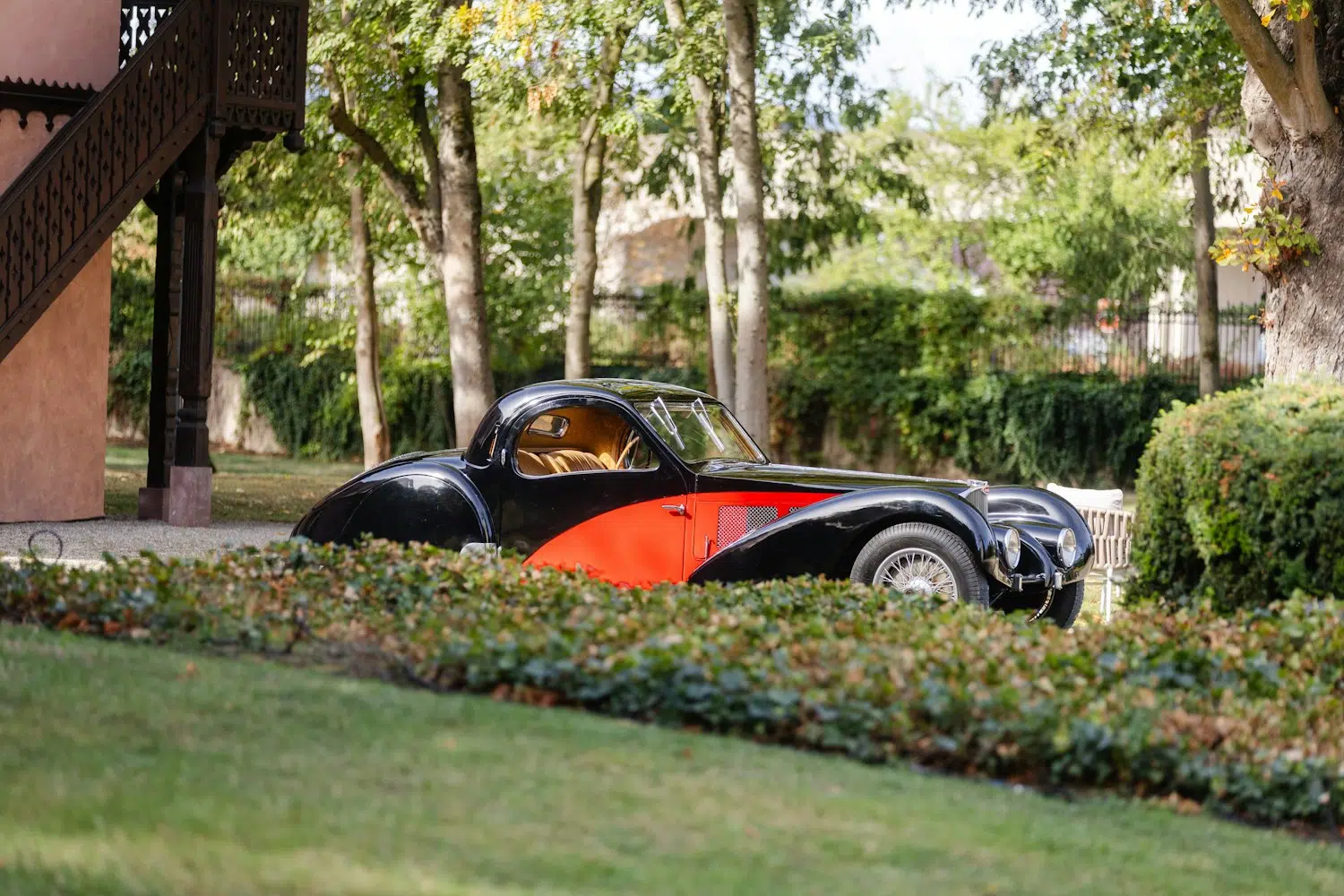
That inheritance may explain why the car still resists classification. It is a motorcar, certainly, but it also operates as decorative art, industrial design and social artifact. It embodies a particular European moment when coachbuilt automobiles occupied the same cultural terrain as bespoke tailoring, grand residences and private railway carriages. The Royale was designed for that world, but history had other plans.
Ettore Bugatti reportedly intended to produce approximately 25 examples. The global economic collapse that followed the Wall Street Crash made such ambitions almost impossible, and only six cars were ultimately completed. By ordinary measures, that was a commercial failure; by the logic of collecting, it was destiny. Had Bugatti built 25 Royales—or 50—the car might still be celebrated today, but it would not possess the same near-mythological scarcity.
Six surviving examples place the Type 41 closer to a cycle of masterworks than a conventional automobile series. Their rarity has made reunions almost ceremonial, and all six Royales appeared together at Pebble Beach in 1985, an assembly so exceptional that the cars have never all been gathered together since. Bringing three of them back to Molsheim for the centenary was therefore not simply a heritage exercise, but a rare opportunity to see several variations of the same extraordinary idea occupying the same physical space.
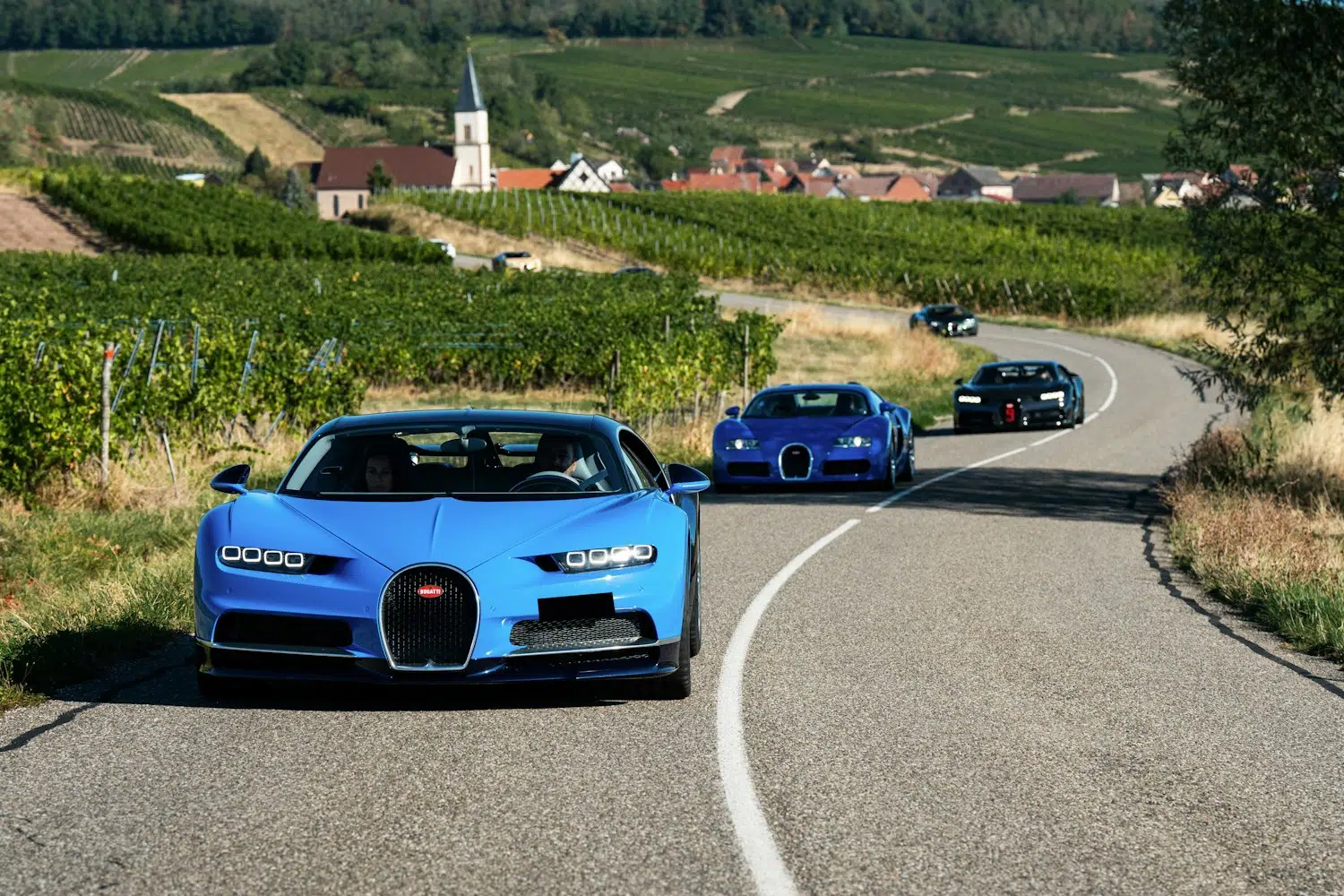
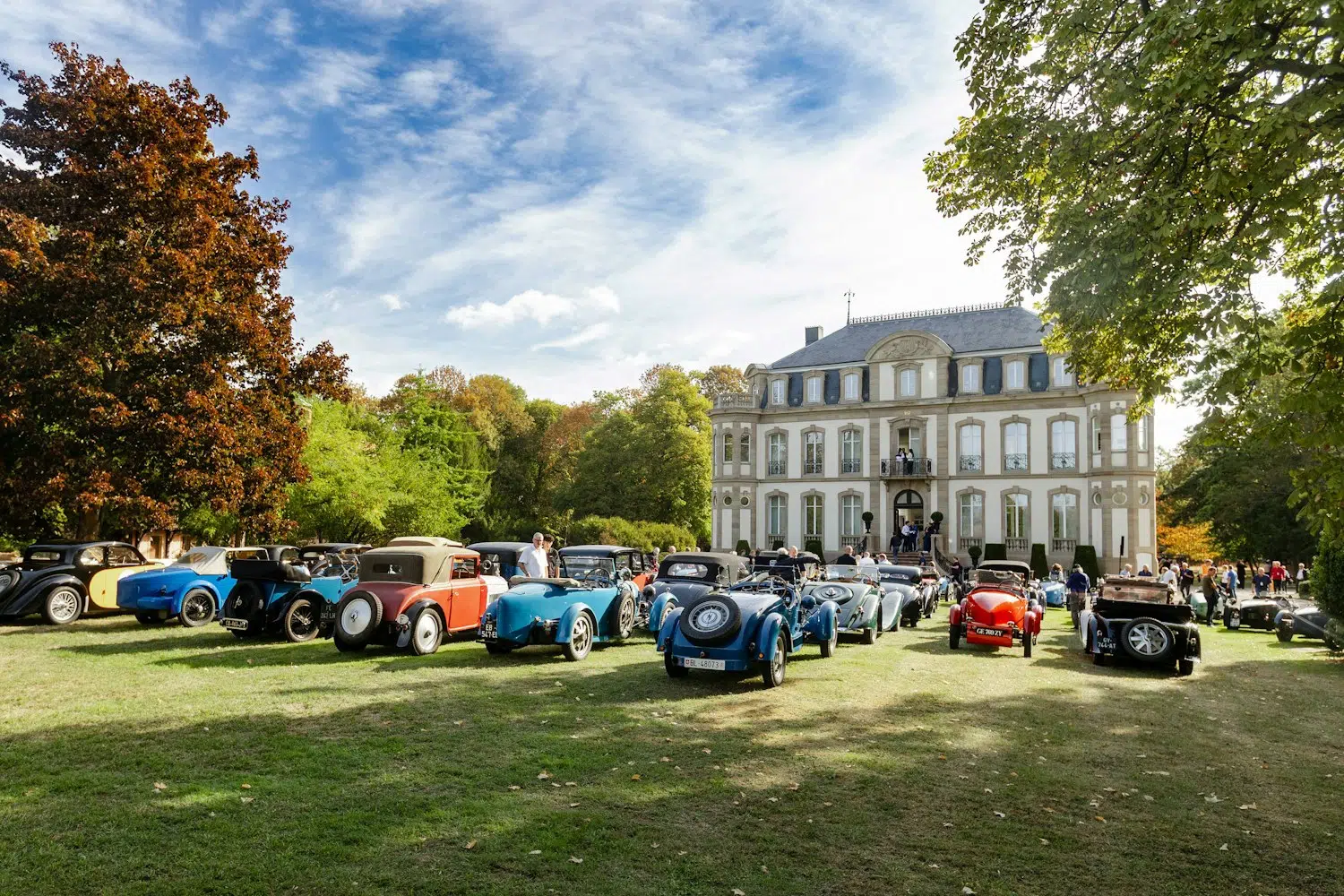
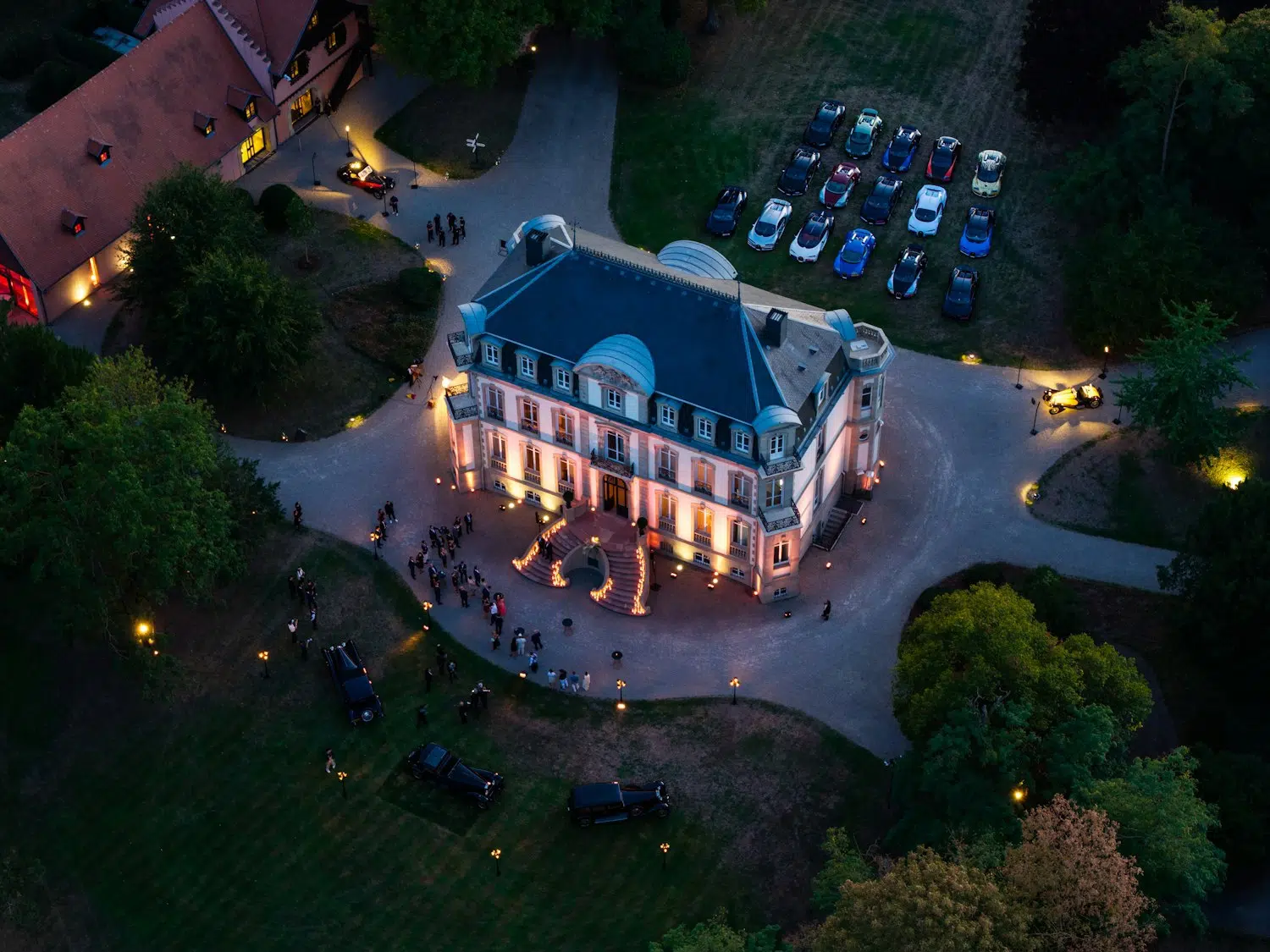
The effect was amplified by where they stood. Molsheim is not merely Bugatti’s headquarters; it is part of the marque’s mythology, the landscape against which Ettore Bugatti built his company and where the present-day manufacturer continues to cultivate an almost obsessive relationship with continuity. For the centenary weekend, Bugatti placed the Royales alongside approximately 70 other historic cars, including examples of the Type 35 and Type 57, while modern Bugatti owners participated in a Petit Tour through Alsace.
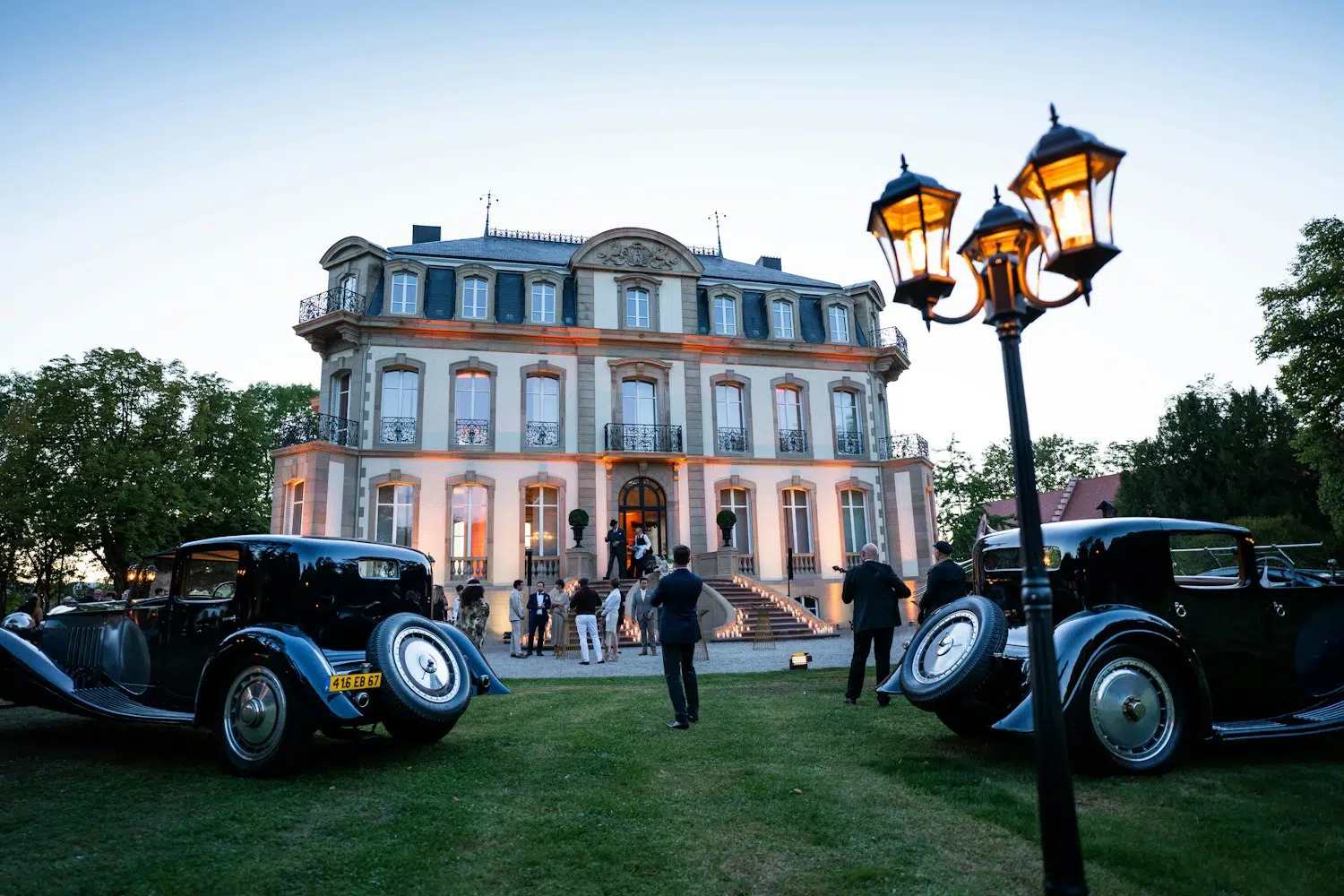
The route connected the marque’s contemporary hypercars to the roads and landscape surrounding its birthplace before culminating at Château Saint Jean. The symbolism was impossible to miss, particularly because a Type 35 and a Royale might appear to represent opposite philosophies. One is light, agile and competition-focused; the other immense, sumptuous and unapologetically grand. Yet both emerged from the same conviction that a Bugatti should never be ordinary.
That conviction may be the most important thing the Royale gave to the company. The Type 41 established the idea that Bugatti could occupy territory beyond conventional luxury. It did not merely aspire to be more comfortable than its rivals or more expensive than its contemporaries; it attempted to redefine the scale on which an automobile could be considered desirable. Modern Bugatti still operates within that philosophical framework.
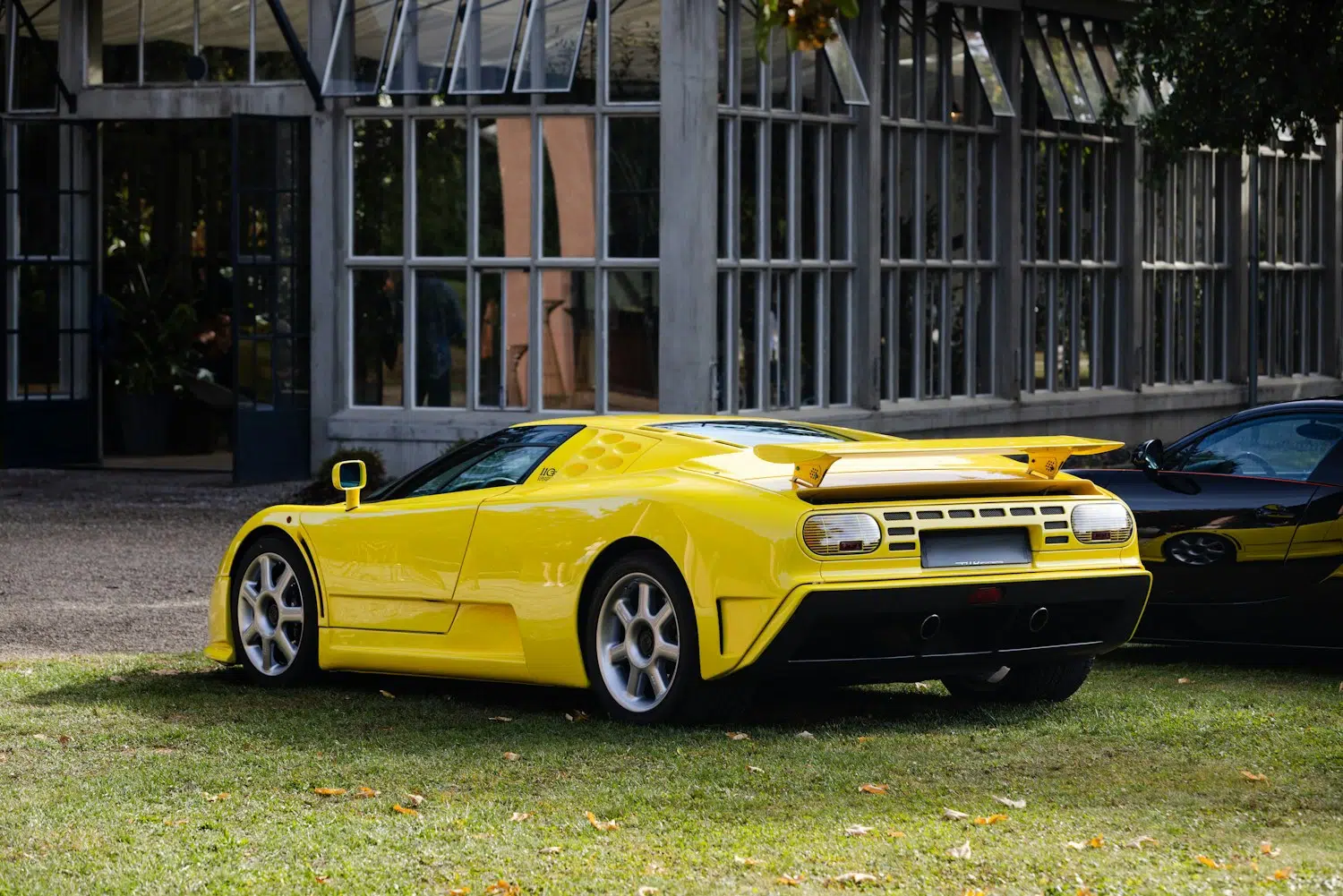
The Tourbillon is vastly different in engineering, materials, and performance, but the conceptual lineage is unmistakable. It exists because Bugatti continues to treat technical ambition as part of the luxury experience rather than something hidden beneath it. The same principle applied to the Veyron and Chiron. Their significance was never simply that they were fast, because plenty of cars are fast; what made them Bugattis was the almost unreasonable difficulty of combining extreme performance with craftsmanship, usability, rarity, and visual theater.
That is the Royale’s real legacy: it established irrationality as a luxury virtue. The phrase sounds provocative, but the greatest luxury objects have rarely been defensible through utility alone. A hand-finished mechanical watch does not tell time more efficiently than a digital screen, a couture garment does not cover the body more effectively than ready-to-wear, and a coachbuilt automobile does not transport its owner more rationally than a production sedan. Their value lies elsewhere, in difficulty, authorship, scarcity, imagination and the refusal to optimize every decision around practicality.
The Royale understood that before nearly anyone else. It was excessive because moderation would have undermined the idea, expensive because compromise would have made it ordinary, and rare partly by circumstance but also because objects conceived at that level are rarely suited to volume. A century later, that mindset feels surprisingly contemporary.
Today’s most coveted automobiles increasingly exist beyond the traditional boundaries of transportation. They are commissioned, configured, collected, and traded like design objects. Their provenance matters, their production numbers matter, and their stories matter. The best of them are expected to deliver emotional impact before the engine even starts, and the Royale anticipated all of it. `
That is why its centenary deserves more than nostalgia. The Type 41 is not important simply because it was Bugatti’s largest car or one of its rarest; it matters because it established the intellectual foundation for the hyper-luxury automobile long before the category had a name. It proved that a car could be too much and still be exquisite, that engineering could become theater, and that scarcity could become meaning.
A century later, three Royales returning to a small town in Alsace still feel like the arrival of royalty. That may be the clearest proof that Ettore Bugatti’s most extravagant idea was never really about transportation at all, but about creating something so singular that time itself would eventually become part of its value.