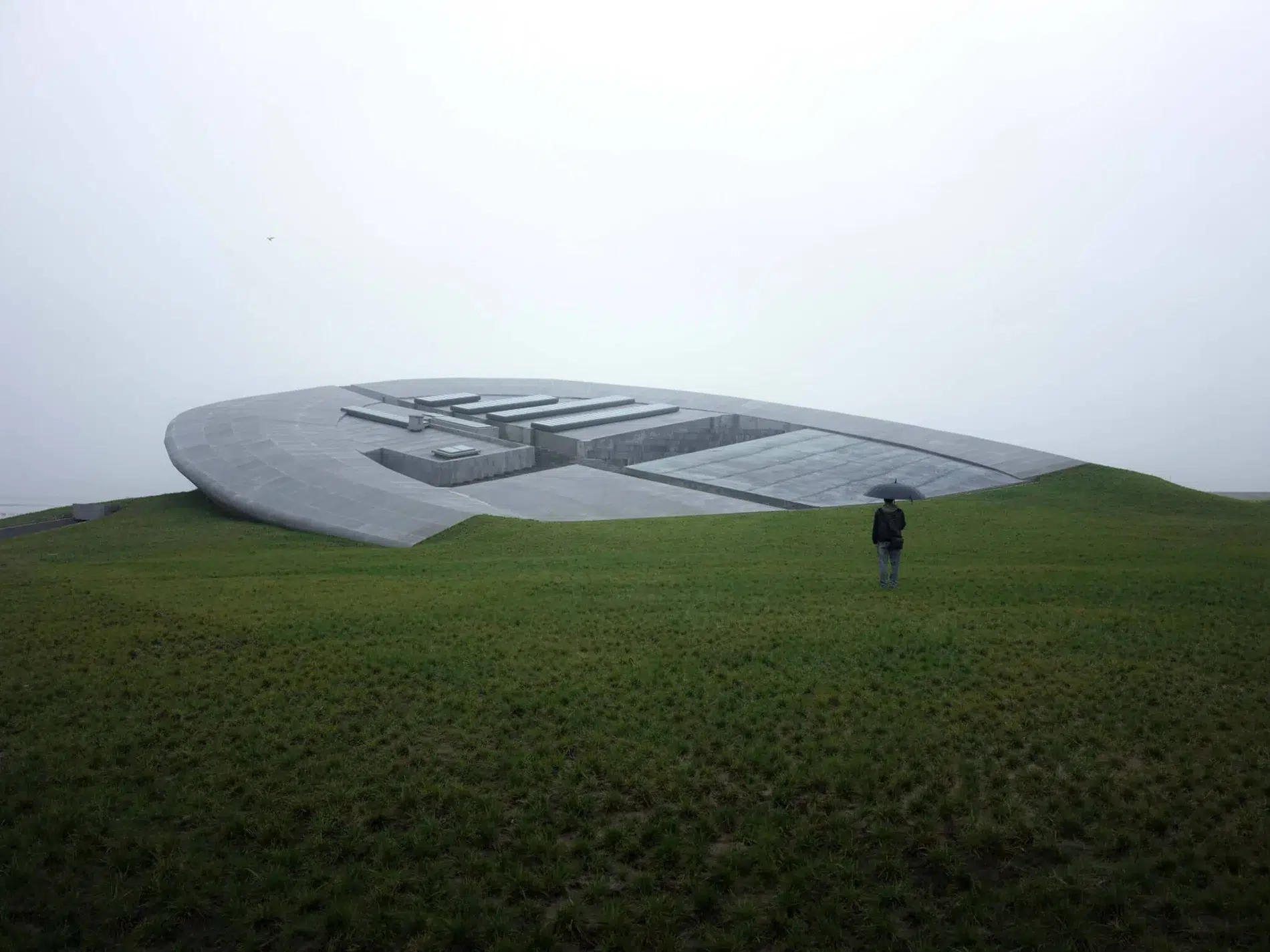
Some of the world’s most compelling architecture is no longer emerging from global capitals or glittering urban districts. Increasingly, architects are turning their attention toward remote landscapes, creating destinations where the experience of place becomes just as important as the structure itself. On the shores of Laoli Lake in Inner Mongolia, Prairie Ark embodies that shift, offering a striking vision of contemporary architecture that feels both futuristic and deeply rooted in its environment.
Designed by Büro Ziyu Zhuang, the silver-clad cultural gallery rises from the vast grasslands like an object suspended between imagination and reality. Its sculptural form has drawn comparisons to a spacecraft resting on the steppe, yet the building’s relationship with the landscape is far more nuanced than its futuristic appearance might suggest. Rather than imposing itself upon the terrain, Prairie Ark emerges from it, creating a seamless dialogue between architecture and nature.
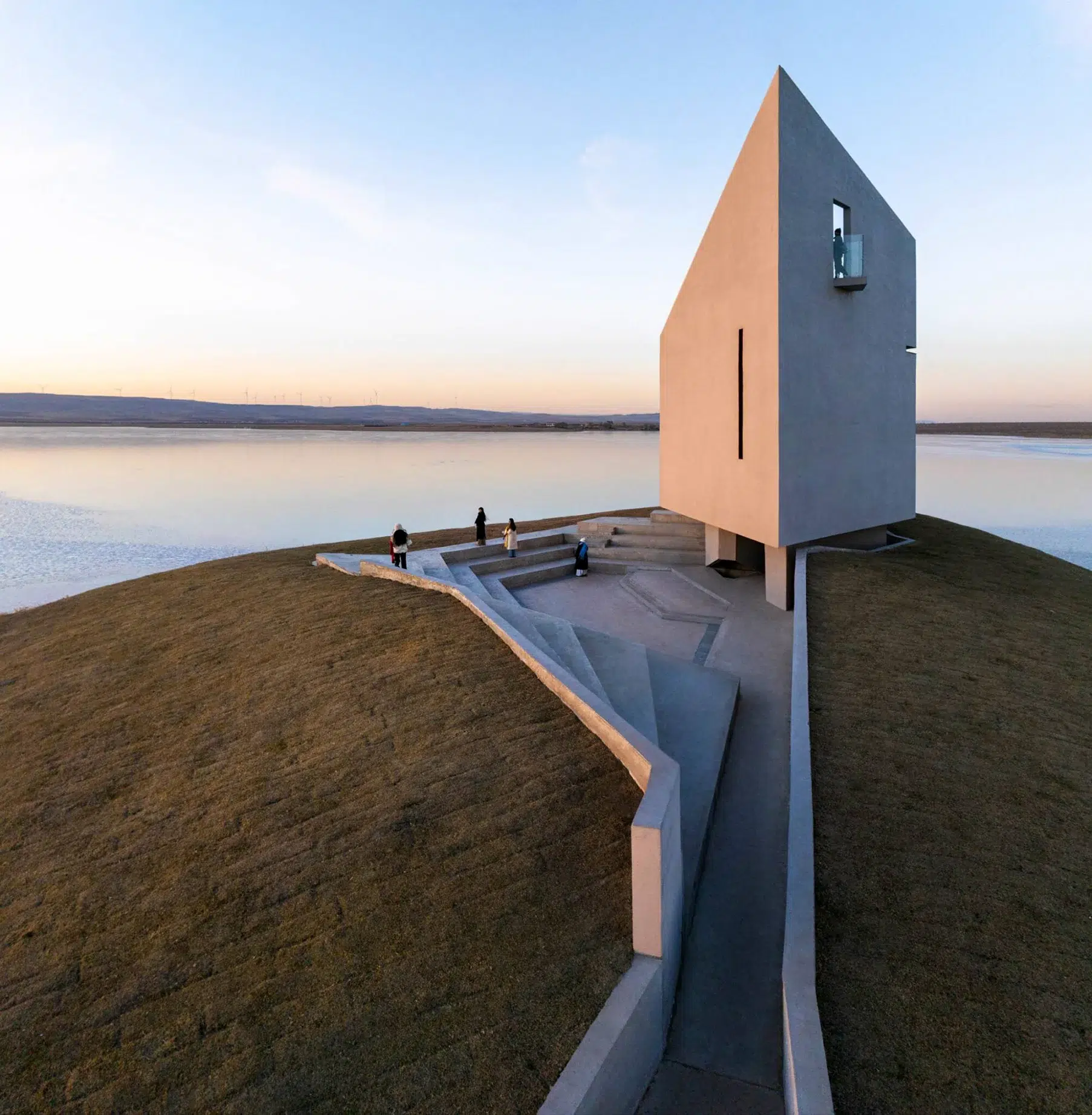
That relationship becomes apparent from the moment visitors arrive. Instead of approaching a conventional entrance, guests can walk directly from the prairie onto the building’s sloping, terraced roof. The gesture transforms the structure into an extension of the landscape itself, blurring the traditional boundary between built form and open terrain. From certain vantage points, the gallery appears almost geological, as though it has surfaced naturally from the earth rather than being constructed upon it.
The project deliberately distances itself from familiar architectural references. While many contemporary developments seek inspiration in regional motifs or historical forms, Prairie Ark pursues a different path. The design introduces a new visual language shaped by the qualities that define the Mongolian steppe: vastness, solitude, endless horizons, and a profound sense of freedom. In doing so, it creates an architectural identity that feels uniquely tied to its setting without relying on literal interpretations of local traditions.
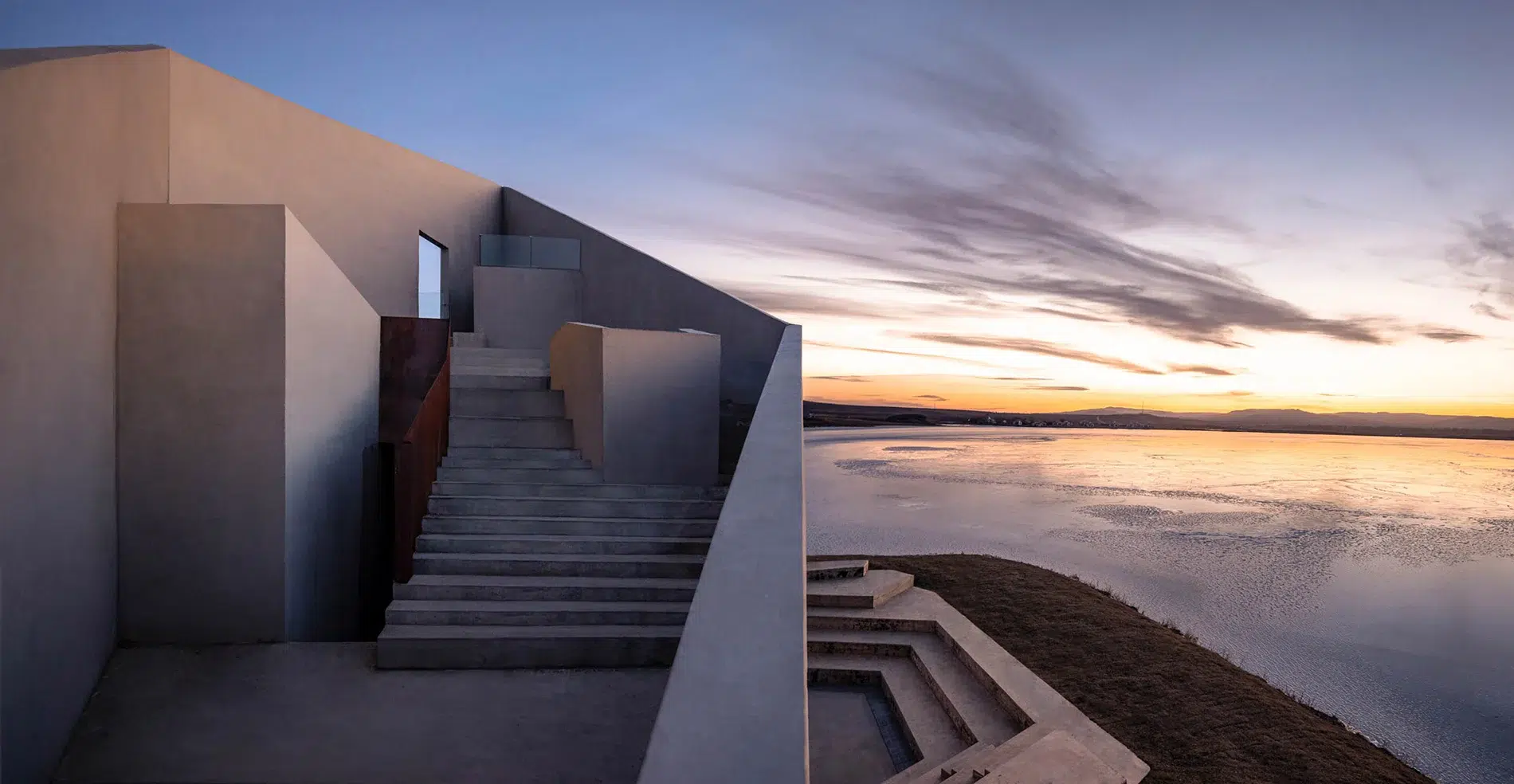
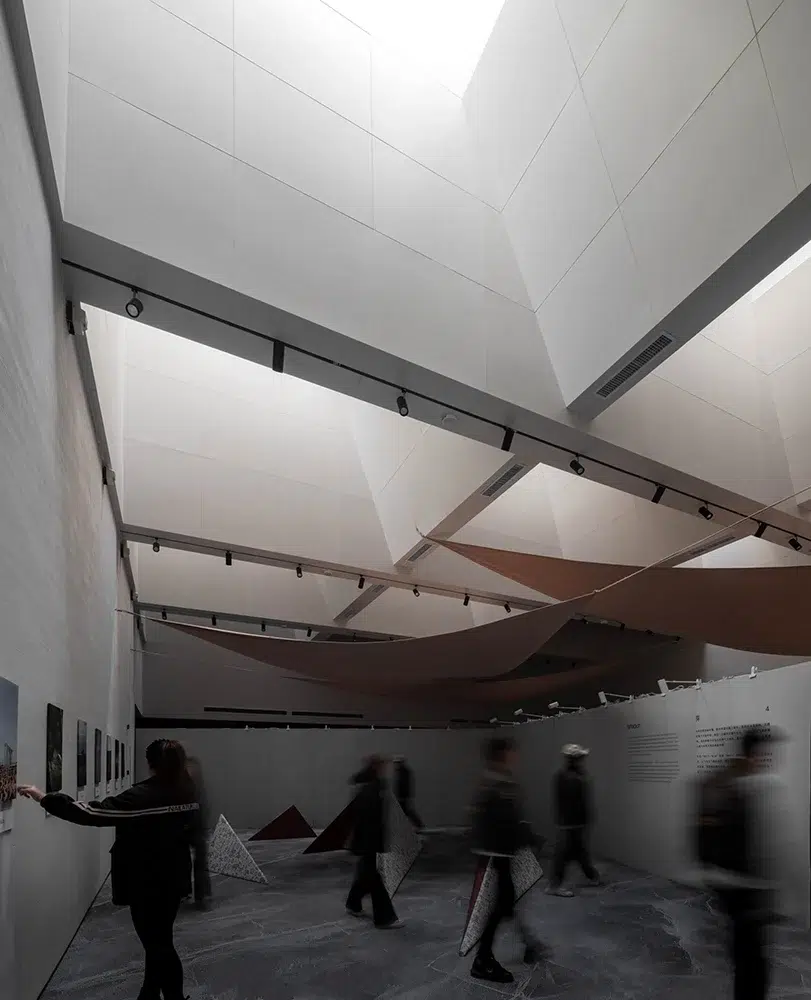
Inside, the experience becomes equally immersive. A fluid arrangement of exhibition spaces unfolds beneath a carefully organized grid of skylights, allowing natural illumination to animate the interiors throughout the day. The shifting quality of light creates a dynamic environment for exhibitions, cultural programs, and community gatherings while maintaining a constant visual connection to the landscape beyond the walls. The architecture encourages visitors to slow their pace, drawing attention to the subtle interplay between light, space, and the surrounding environment.
Prairie Ark arrives at a moment when architecture is increasingly becoming a destination in its own right. Around the world, affluent travelers are seeking experiences that extend beyond luxury accommodations and conventional sightseeing. Design-driven destinations in remote settings have become particularly appealing, offering opportunities to engage with extraordinary landscapes through the lens of exceptional architecture. From the Nordic wilderness to the deserts of the Middle East, some of the most ambitious projects of recent years have embraced isolation rather than accessibility.
In this context, Prairie Ark feels especially relevant. Its appeal is not rooted in exclusivity or spectacle, but in its ability to create a meaningful encounter with place. The journey to the gallery becomes part of the experience, while the surrounding steppe serves as both backdrop and participant in the architectural narrative. Visitors are invited not simply to view a building, but to engage with a landscape that has shaped cultures, traditions, and ways of life for centuries.
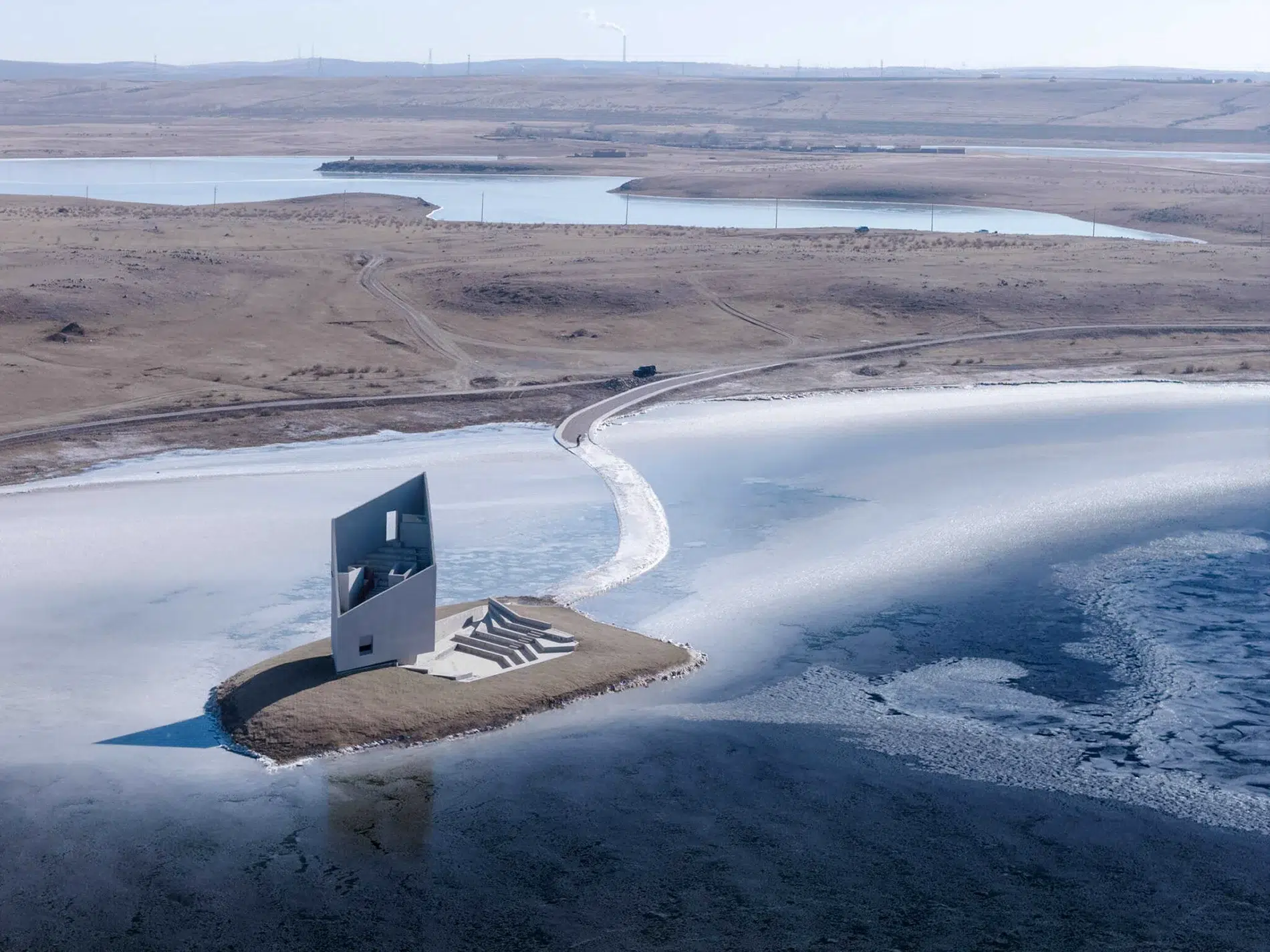
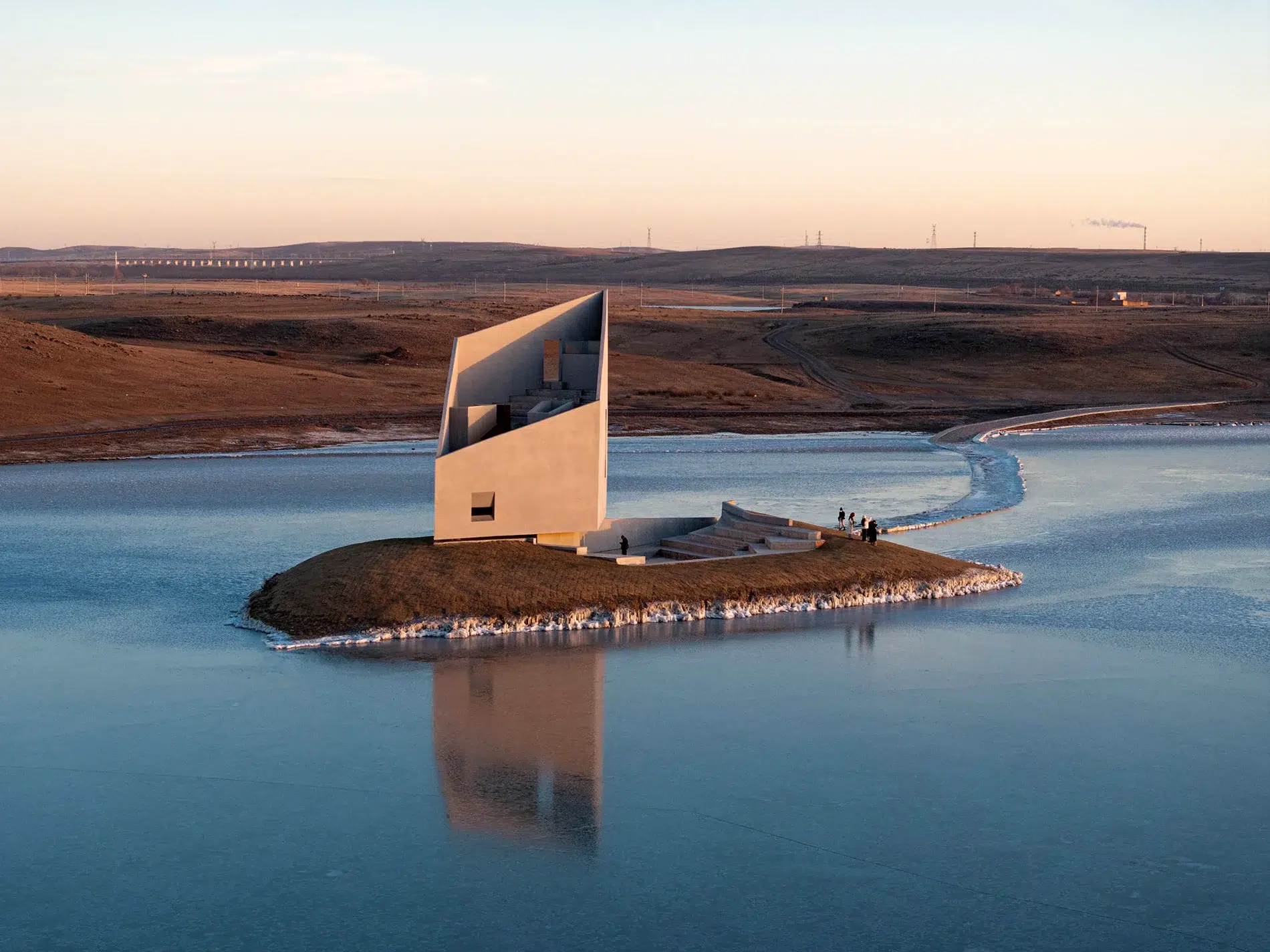
The gallery is accompanied by a second structure known as the Nomad’s Beacon Tower, which reinterprets the historic beacon towers that once stood across the region. Together, the two projects establish a compelling conversation between past and future, exploring how contemporary architecture can honor cultural memory without becoming constrained by it. The result is a pair of landmarks that feel simultaneously timeless and forward-looking.
What ultimately distinguishes Prairie Ark is its understanding of luxury in its most contemporary form. Increasingly, the world’s most coveted experiences are not defined by excess but by access to something rare: space, silence, perspective, and a meaningful connection to the natural world. Prairie Ark offers all four. Its futuristic silhouette may capture attention initially, but its lasting impact comes from the way it frames the landscape around it, transforming the simple act of looking outward into a memorable experience.
For travelers accustomed to the world’s finest resorts, private clubs, and cultural institutions, Prairie Ark represents a different kind of destination—one where architecture serves not as a symbol of status, but as a gateway to contemplation. In an era shaped by constant connectivity and endless stimulation, that may be the most powerful luxury of all.