High above Napa Valley, where vineyards climb through forests of oak and fir and the soils turn a deep volcanic red, ADAMVS has built its identity around one idea: that great wine begins with an uncompromising understanding of place.
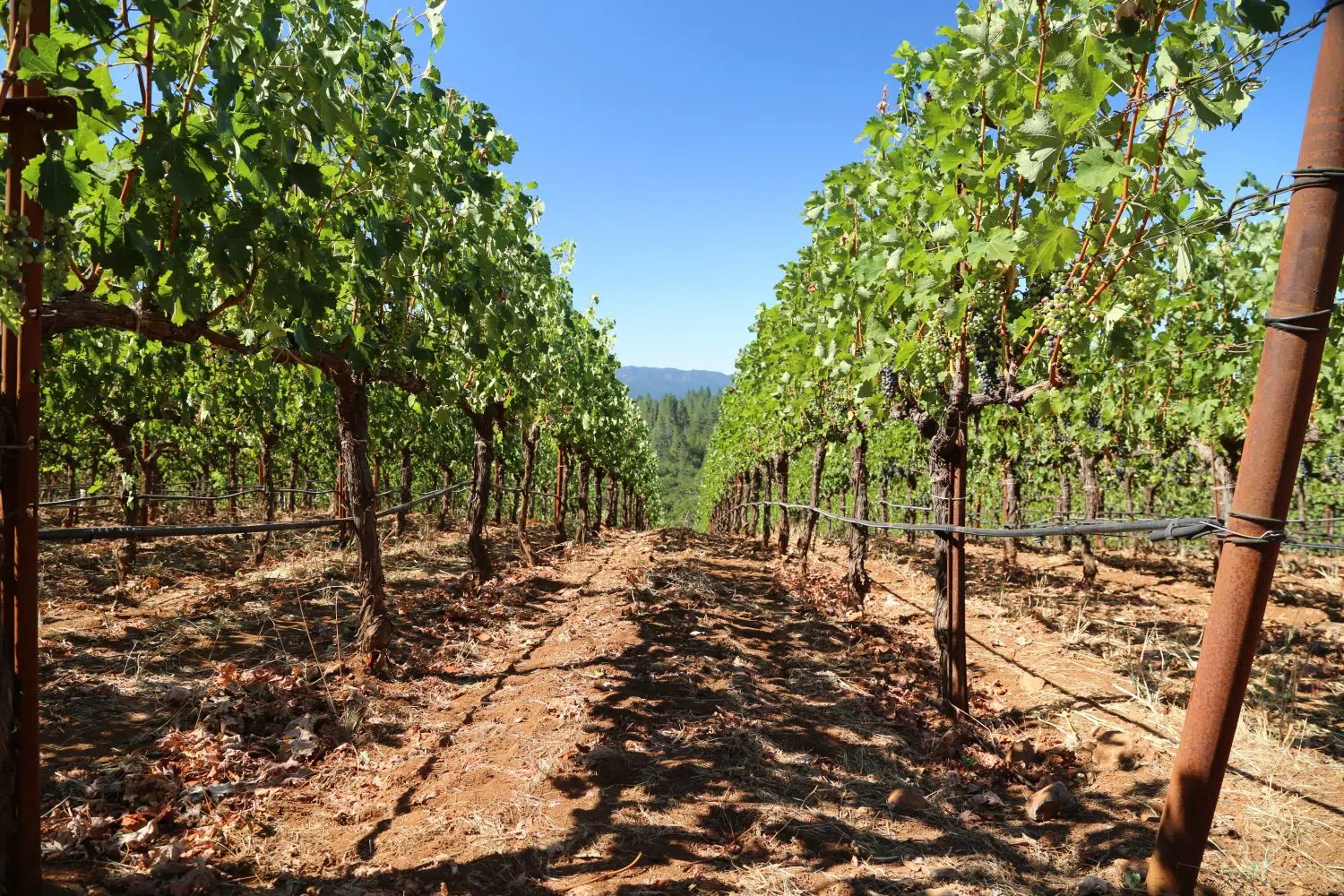
The estate occupies 80 acres on Howell Mountain, with 28 acres planted to vines. Twenty-five of those acres are devoted to Cabernet Sauvignon, spread across five vineyard sites ranging from roughly 1,500 to 2,000 feet in elevation. The soils vary across the property, but the iron-rich red earth is so central to the estate’s identity that its name, ADAMVS, is derived from the Latin for “borne from our red earth.”
Denise Adams and her late husband, Stephen Adams, discovered the property in 2008 after already establishing themselves in Bordeaux through Château Fonplégade in Saint-Émilion. Their experience in France shaped the way they approached Howell Mountain: not simply as a vineyard to be developed, but as an ecosystem to be understood over time.
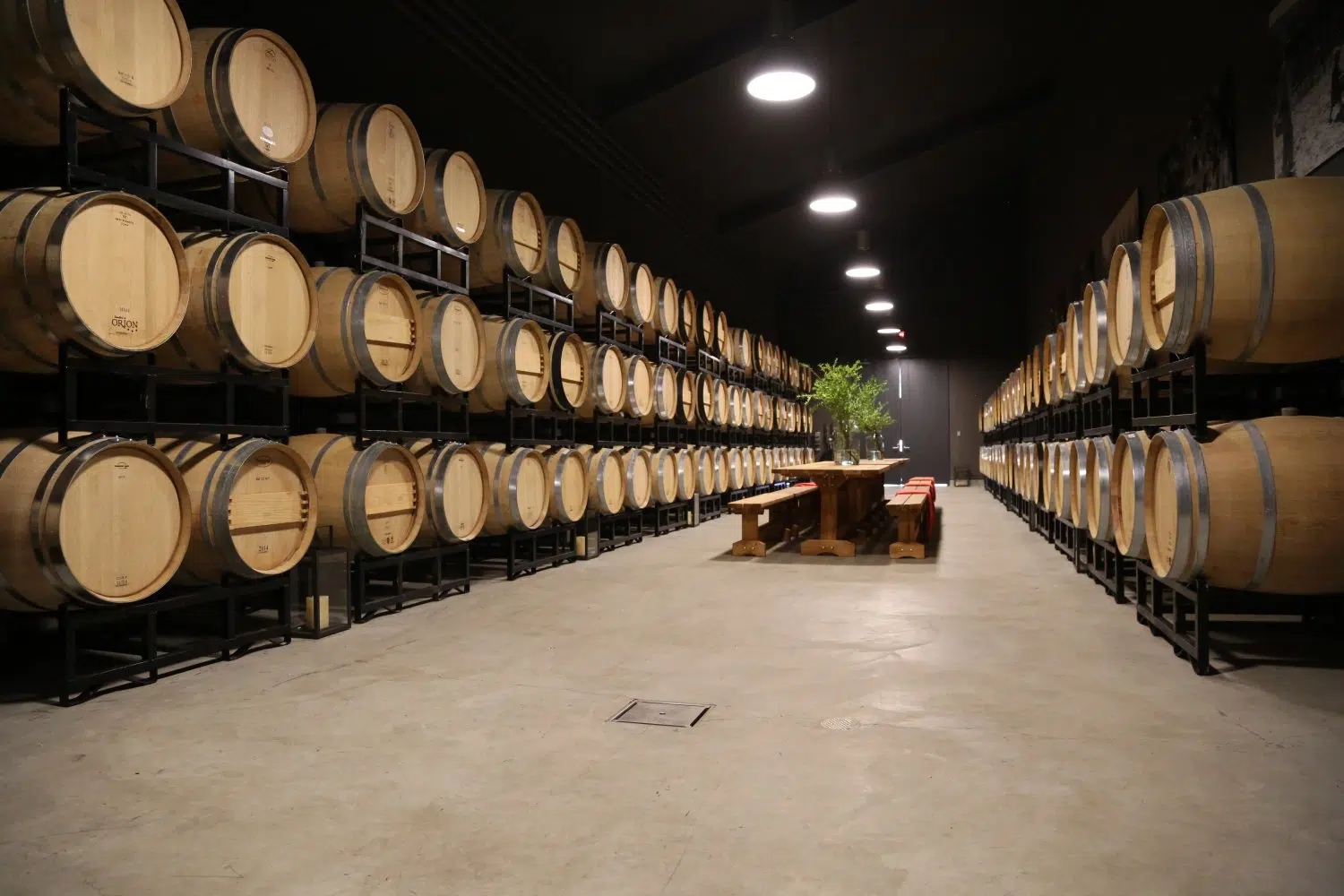
From the beginning, that meant farming with unusual intensity. ADAMVS has now been Demeter-certified biodynamic for more than sixteen years, and every vineyard block is tended by the estate’s own team. The vines are worked by hand throughout the season, with the goal of allowing each exposure, elevation and soil type to reveal its own character.
That philosophy is particularly suited to Howell Mountain, one of Napa Valley’s most distinctive appellations. Its elevation, volcanic soils and cooler mountain conditions tend to produce Cabernet Sauvignon with concentration, structure and longevity. ADAMVS works with nine Cabernet clones across its estate, using the diversity of the vineyard as a palette rather than trying to force every block toward the same expression.

The current winemaking team reflects that same balance between precision and experience. Jason Valenti serves as winemaker, Philippe Melka continues as consulting winemaker, and veteran viticulturist Michael Wolf oversees the vineyards. Together, they bring experience from some of Napa Valley’s most respected estates while keeping the focus firmly on the ADAMVS property itself.
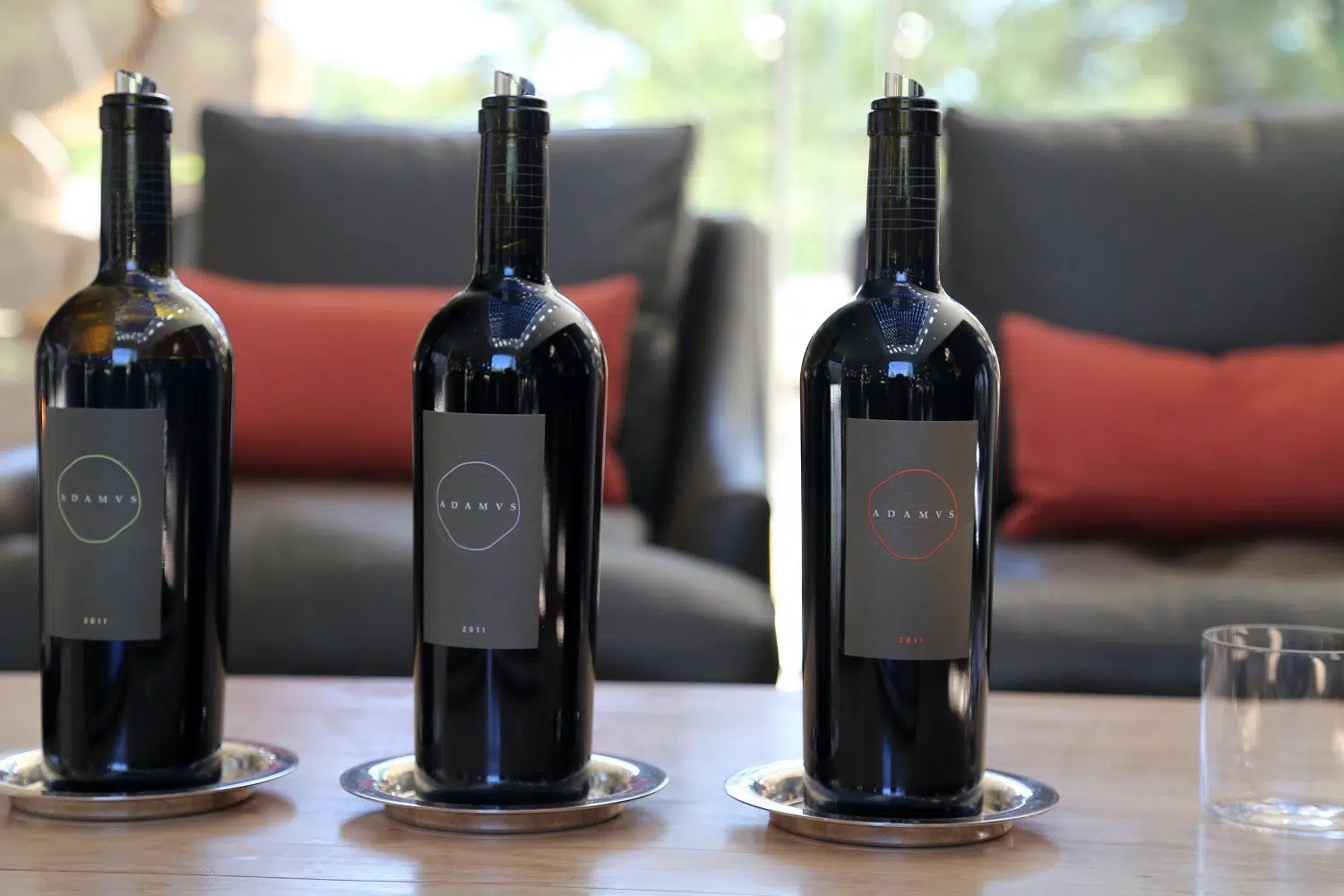
The flagship wine, ADAMVS Cabernet Sauvignon, is built from a meticulous barrel selection centered on fruit from the estate’s prized red soils and sun-filled exposures. The current 2021 release is described by the estate as precise and structured, with blood orange, berry, mineral, sandalwood and tobacco notes layered through a long finish. It is designed not simply for immediate impact, but for evolution in the cellar.
QUINTVS offers a different interpretation of the property. Rather than emphasizing a single block, it draws from the estate’s five distinct soil types, from powdery volcanic ash to iron-rich red clay. The result is a wine intended to express the broader geological complexity of Howell Mountain, with concentrated fruit balanced by freshness and structure.
TÉRES, meanwhile, brings Cabernet Sauvignon from every block of the estate together into a field blend. The current vintage is lighter and more aromatic in style, showing red fruit, wild berry, bay leaf and floral notes while retaining the polished structure associated with the mountain.
The estate also produces Sauvignon Blanc, extending the ADAMVS philosophy beyond Cabernet while remaining entirely estate-grown. That matters because ADAMVS does not rely on purchased fruit to broaden its portfolio; the wines are intended to remain expressions of the same property and farming system.
Hospitality follows a similarly restrained approach. ADAMVS is not a high-traffic tasting destination. Private estate tours and tastings are offered by advance appointment to mailing-list members, reinforcing the sense that a visit is meant to be slow, focused and connected to the vineyard itself.
What distinguishes ADAMVS is not simply that it produces expensive Howell Mountain Cabernet. Napa Valley has no shortage of ambitious mountain wines. The appeal lies in the discipline behind the project: biodynamic farming, estate-only fruit, a long-term view of the vineyard and a winemaking team willing to let the land dictate the style.
The red earth may have given ADAMVS its name, but it has also given the estate its purpose. Everything, from the farming to the cellar to the way the wines are presented, returns to the same question: how clearly can a single mountain property speak through the glass?