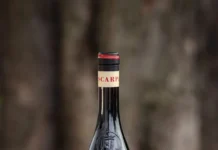
Cardinale has built its identity around a singular idea: one Cabernet Sauvignon, composed from some of Napa Valley’s most distinctive mountain vineyards.
Founded in 1982 and based in Oakville, the estate draws fruit from multiple high-elevation appellations across Napa Valley, including Howell Mountain, Diamond Mountain, Mount Veeder and Spring Mountain. Rather than treating those sites as separate expressions, Cardinale blends them into one wine intended to capture the broader character of Napa’s mountain terroirs.
At the center of that approach is winemaker Christopher Carpenter, whose work with mountain-grown fruit has become closely associated with the estate. Cardinale describes its flagship Cabernet Sauvignon as a wine shaped by the tension between power and precision, layering fruit from different elevations, exposures and soils into a single composition.

That philosophy gives Cardinale a different identity from estates built around a single vineyard. Here, blending is not a compromise but the point. Each mountain site contributes something distinct: structure, aromatic lift, darker fruit, mineral tension or depth. The challenge lies in assembling those components into a wine that feels coherent rather than fragmented.
The estate’s current hospitality program makes that blending philosophy part of the visitor experience. Cardinale offers tastings that explore the influence of its mountain vineyards, including current releases, library wines and other wines from Carpenter’s portfolio. Guests are guided through how geography, farming and blending shape the finished Cabernet Sauvignon.
Organic farming has also become an increasingly important part of the estate story. Cardinale’s current tasting experiences explicitly highlight the role of organic farming in its mountain vineyards, reinforcing a broader shift in Napa toward farming practices that prioritize soil health and long-term vineyard resilience.

The flagship Cardinale Cabernet Sauvignon remains the estate’s defining wine, but the broader portfolio now gives collectors a wider view of Carpenter’s work. Current tastings can include Intrada Sauvignon Blanc, Caladan Cabernet Franc and Proprietary Red alongside Cardinale itself, allowing guests to see how different varieties and sites fit into the same broader philosophy.
For serious collectors, the library program may be the most revealing part of the experience. Cardinale offers rare older vintages selected by Carpenter, giving guests the opportunity to taste how the wines develop over time and how individual growing seasons alter the balance of fruit, structure and aromatics.

That focus on ageability is important. Mountain Cabernet is often associated with firmness and longevity, and Cardinale has long positioned its wines with the cellar in mind. The estate’s approach is less about immediate impact than about building a wine capable of evolving for years.
Architecture and presentation still matter, but they are no longer the most compelling reason to tell the Cardinale story. The old ULM feature centered on a custom wine-cellar installation by Revel, an impressive design project at the time, but the estate itself has become a far richer subject than the cabinetry surrounding its library bottles.
What makes Cardinale compelling today is the discipline behind the blend. Instead of asking one vineyard to tell the entire story, the estate draws on the varied character of Napa Valley’s mountain appellations and allows each to contribute a different note.
The result is a wine built less like a solo and more like a composition: multiple sites, multiple elevations and one final expression of Napa Valley Cabernet Sauvignon.