In explorer yachting, true luxury is measured less by excess than by freedom: the ability to cross oceans confidently, remain at sea for weeks, and shape life aboard around the owner rather than a production template.
Cantiere delle Marche specializes in that idea. During the first six months of 2026, the Ancona shipyard launched four steel-hulled explorer yachts between 31 and 35 meters: the RJ102 Mon Coeur, Nauta Air 108 Tartaruga, Nauta Air 110 Ammonite, and Deep Blue 115 Octopus. Each shares the same foundations of strength, reliability, long-range capability, and composed seakeeping. Beyond those essentials, however, they are different.
The quartet reveals how far Cantiere delle Marche’s semi-custom philosophy can be taken. Their layouts, accommodation plans, crew arrangements, and outdoor spaces were developed around four ownership briefs.
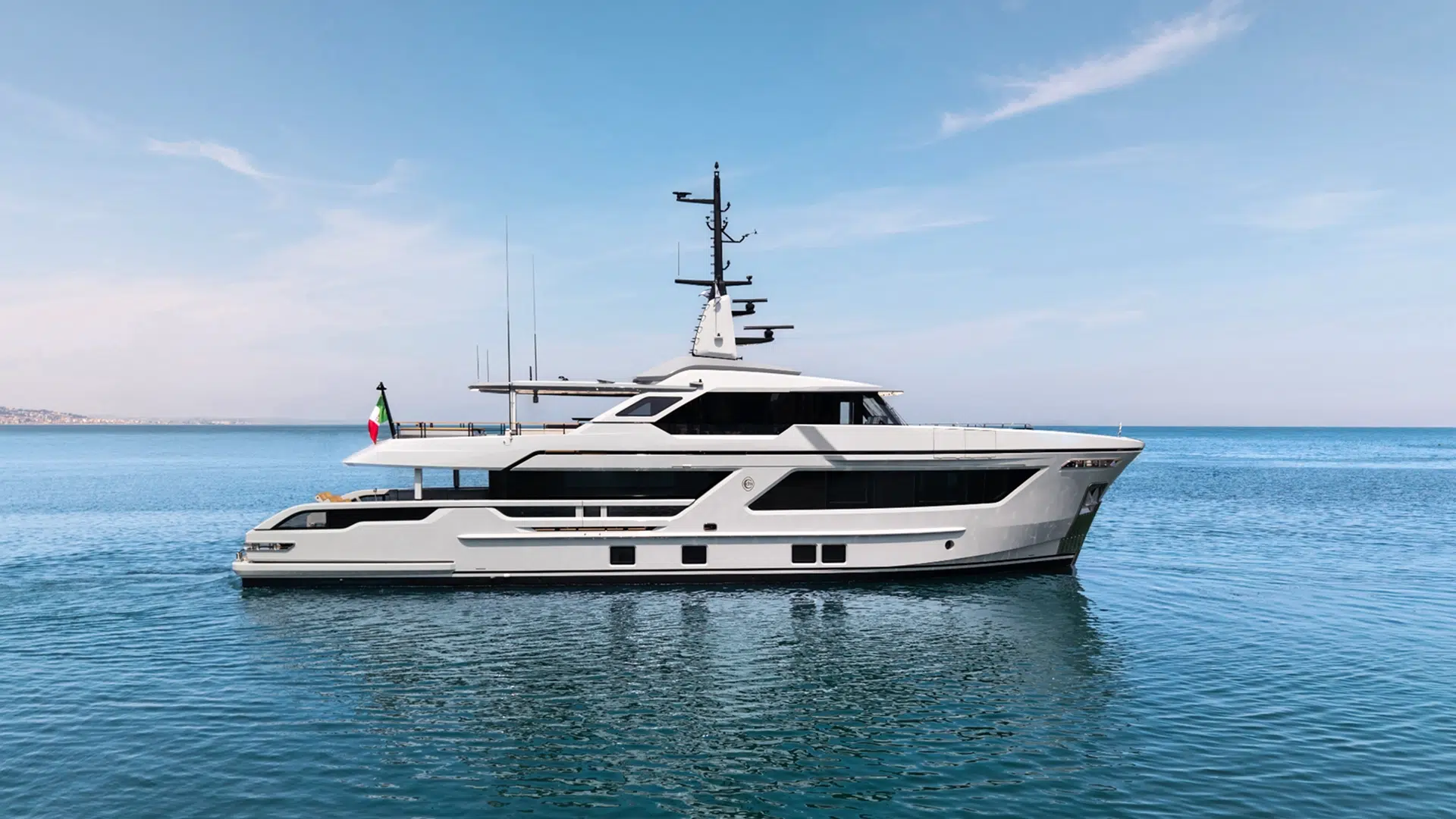
At 31.66 meters, Mon Coeur is the smallest of the group and the first RJ model created at this length. Her owners wanted the commanding presence and expedition character of the larger RJ series translated into a more intimate platform. Working with exterior designer Francesco Paszkowski, the shipyard preserved the purposeful proportions of the family while giving the yacht a character of her own.
Powered by twin Caterpillar C18 Acert IMO Tier III engines, Mon Coeur offers a range of more than 4,000 nautical miles at 10 knots. Yet her most revealing feature is her layout. Rather than adding a conventional sun deck, the yacht concentrates its principal outdoor amenities on the upper deck. Its expansive aft terrace includes a bar, dining area, sunbathing space, and Jacuzzi, delivering the pleasures of a larger yacht within a more compact profile.
Giorgio M. Cassetta designed the interiors around the owners’ intention to use the yacht as a comfortable base for exploring the world as a couple. A substantial owner-operated galley, warm natural materials, organically shaped furniture, and generous spaces for a limited number of guests create an atmosphere that feels residential rather than ceremonial. Accommodation is provided for up to nine guests in four suites, supported by a crew of five.
The two Nauta Air yachts demonstrate how a shared design philosophy can produce very different results.
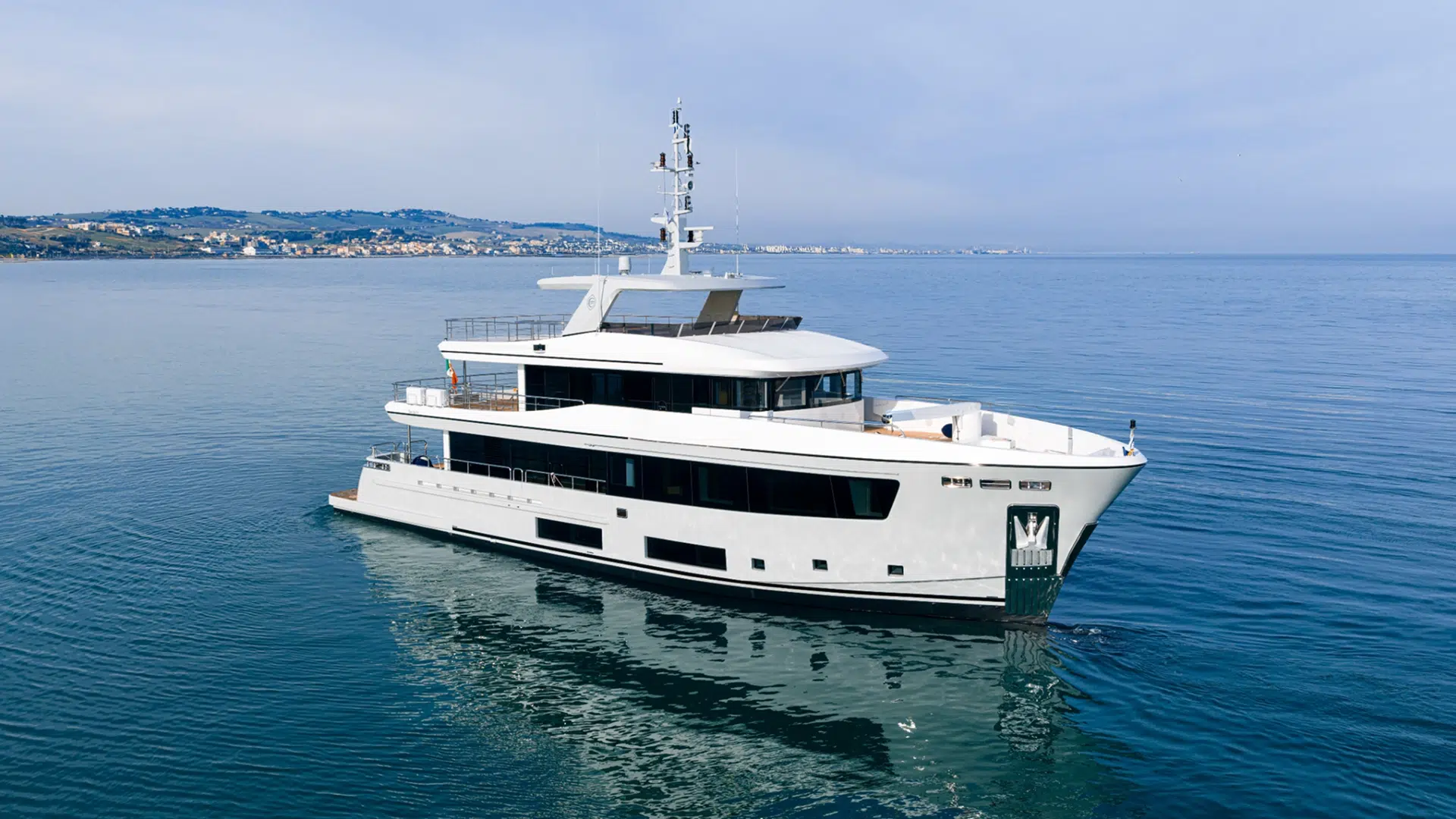
The 32.6-meter Tartaruga combines exterior styling and interiors by Nauta Design with naval architecture by Hydro Tec. She accommodates 10 guests, plus two Pullman berths, in five suites, including a full-beam owner’s suite on the main deck. Social spaces are arranged across the main and upper decks, while expansive glazing fills the interiors with natural light.
Outdoor living centers on a generous aft cockpit, a partially shaded upper-deck terrace, and a spacious sun deck. Tartaruga also incorporates a Dynamic Positioning System, allowing the yacht to hold her position without dropping anchor, useful in environmentally sensitive cruising grounds. With 42,970 liters of fuel, she can travel more than 4,000 nautical miles at 10 knots.
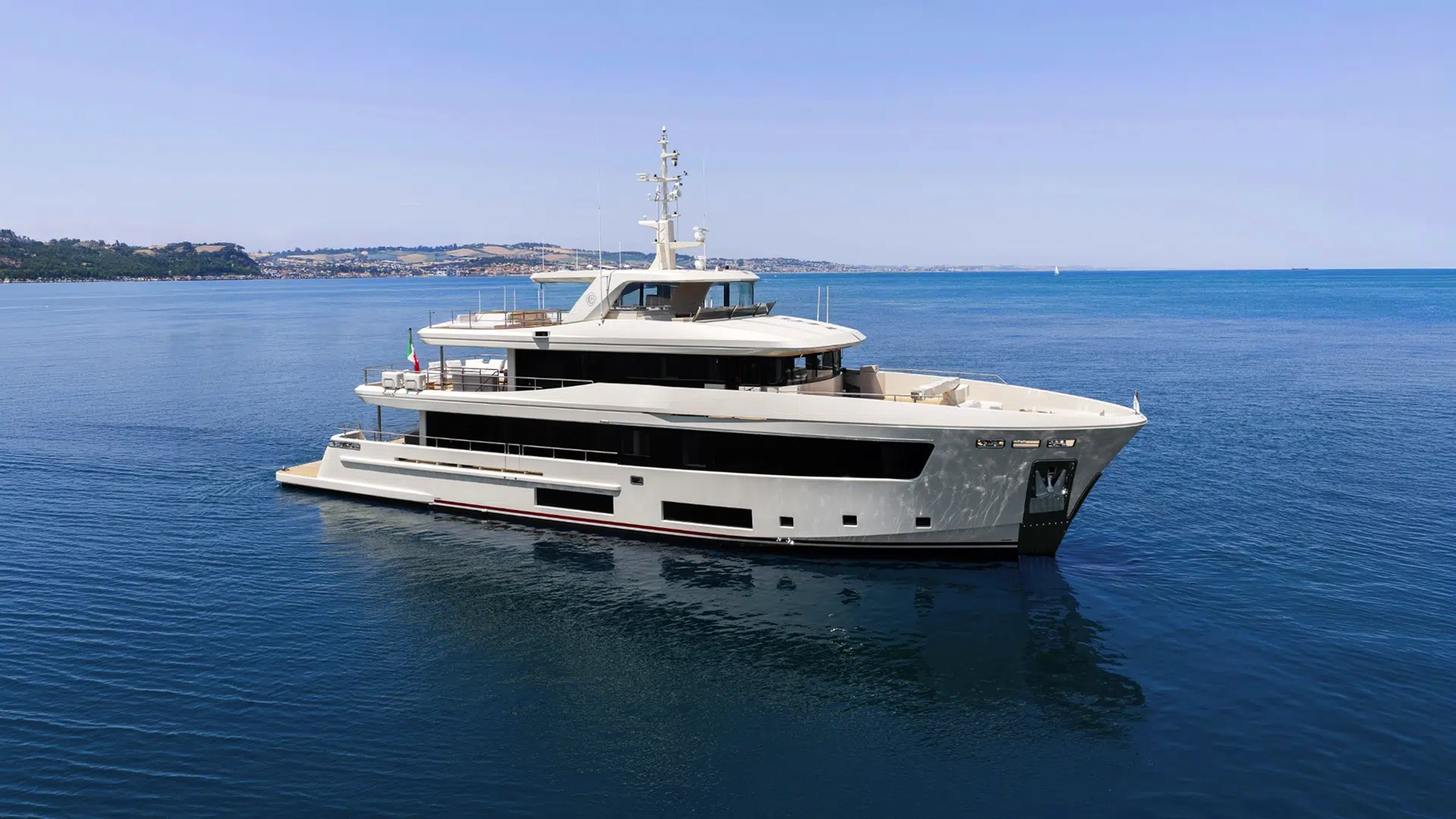
Less than a meter longer, the 33.1-meter Ammonite shares Tartaruga’s propulsion package, range, and broad design language, but her internal organization reflects a different onboard lifestyle. The main-deck salon is devoted entirely to lounging, while the dining area moves to the upper deck aft. A panoramic skylounge and dedicated gym create a more varied sequence of social and wellness spaces, complemented by a large stern terrace and a sun deck with Jacuzzi.
Ammonite also accommodates 10 guests, plus two additional berths, in five suites. Her crew arrangement differs, with all five crew members housed forward on the lower deck beside a generous crew mess. The yacht may share Tartaruga’s engineering DNA, but the experience aboard is decisively her own.
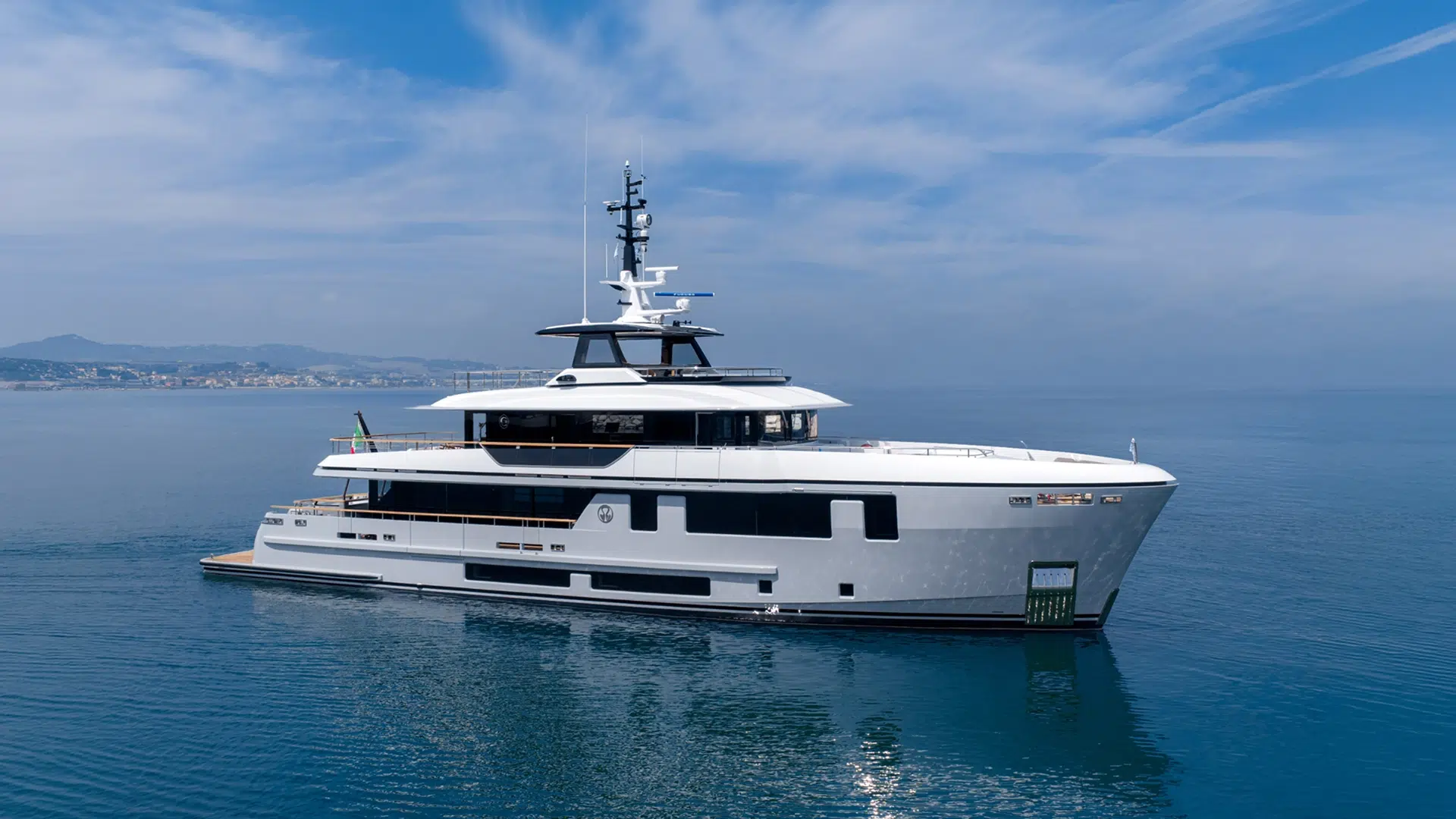
The largest of the four is the 35-meter Deep Blue 115 Octopus. Developed from the Deep Blue concept first seen on Acala, she was reinterpreted by Horacio Bozzo rather than simply scaled down. Her flared bow, sculpted superstructure, and distinctive floating-mullion windows give her the presence of a larger yacht, while Giorgio M. Cassetta created the personalized interiors.
Octopus is also the most capable of the quartet on paper. Carrying 45,600 liters of fuel, she offers a range of 4,500 nautical miles at 10 knots and reaches 13.5 knots at top speed. Her outdoor spaces include a large cockpit Jacuzzi, an expansive swim platform, a dedicated tender garage, and a multifunctional sun deck designed for dining, entertaining, and relaxation. Up to 10 guests are accommodated in five suites, with seven crew supporting operations.
Taken together, the four launches show that the modern explorer yacht need not conform to a single aesthetic or lifestyle. One favors intimacy and owner operation. Another emphasizes open-air living and sensitive station-keeping. A third reorganizes traditional spaces around dining, fitness, and informal entertaining. The fourth combines transoceanic endurance with the amenities of a private floating resort.
What unites them is not a standardized layout, but an underlying confidence: steel construction, proven machinery, efficient naval architecture, and enough range to make distant coastlines attainable. In a market where customization is often reduced to finishes and furnishings, Cantiere delle Marche begins with a more consequential question: how does the owner intend to travel? From there, the entire yacht follows.