Founded in 1866, Grenson occupies a rare position in British menswear—one shaped equally by tradition and progress. Established in Northamptonshire, the historic heartland of English shoemaking, the company was founded by William Green, whose surname would later become synonymous with quietly enduring footwear.
From its earliest days, Grenson distinguished itself by embracing innovation without abandoning craft. By the late 19th century, the brand was among the first to adopt mechanized production methods while retaining hand-finishing, helping modernize shoemaking at scale. It also played a pivotal role in popularizing Goodyear welting, making robust, repairable shoes more accessible to a broader audience. During the First World War, Grenson supplied boots to British soldiers—an era that cemented its reputation for durability and function. In the decades that followed, the focus returned to civilian life, where classic English forms—brogues, oxfords, and boots—became the foundation of its identity.
That balance between heritage and evolution continues today under the stewardship of Tim Little, who joined Grenson in 2005 and later assumed the roles of Creative Director and CEO. Under his leadership, the brand has subtly recalibrated its aesthetic: proportions have been updated, soles have grown bolder, and collaborations with contemporary fashion voices have brought Grenson onto modern runways—all without compromising the traditional construction that defines its credibility.
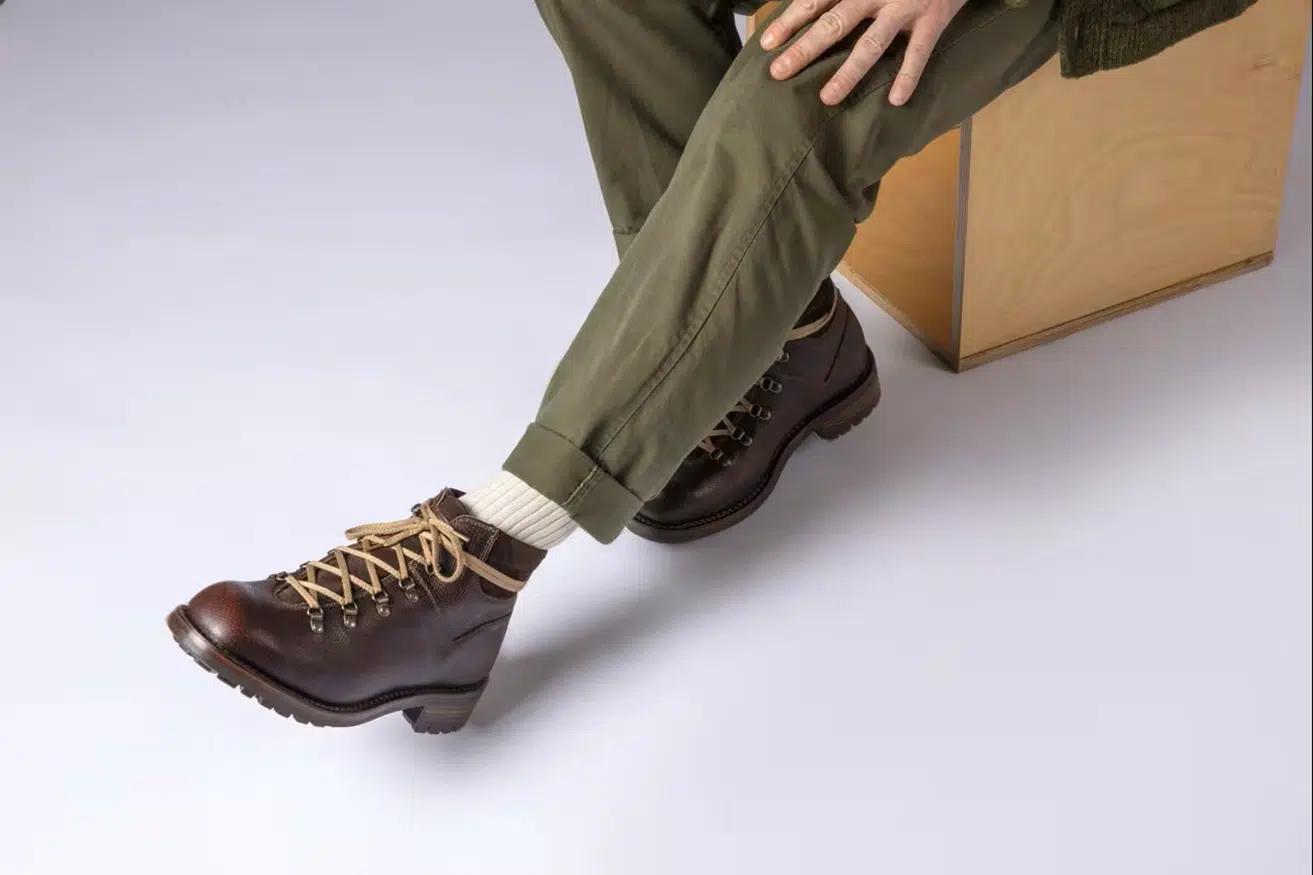
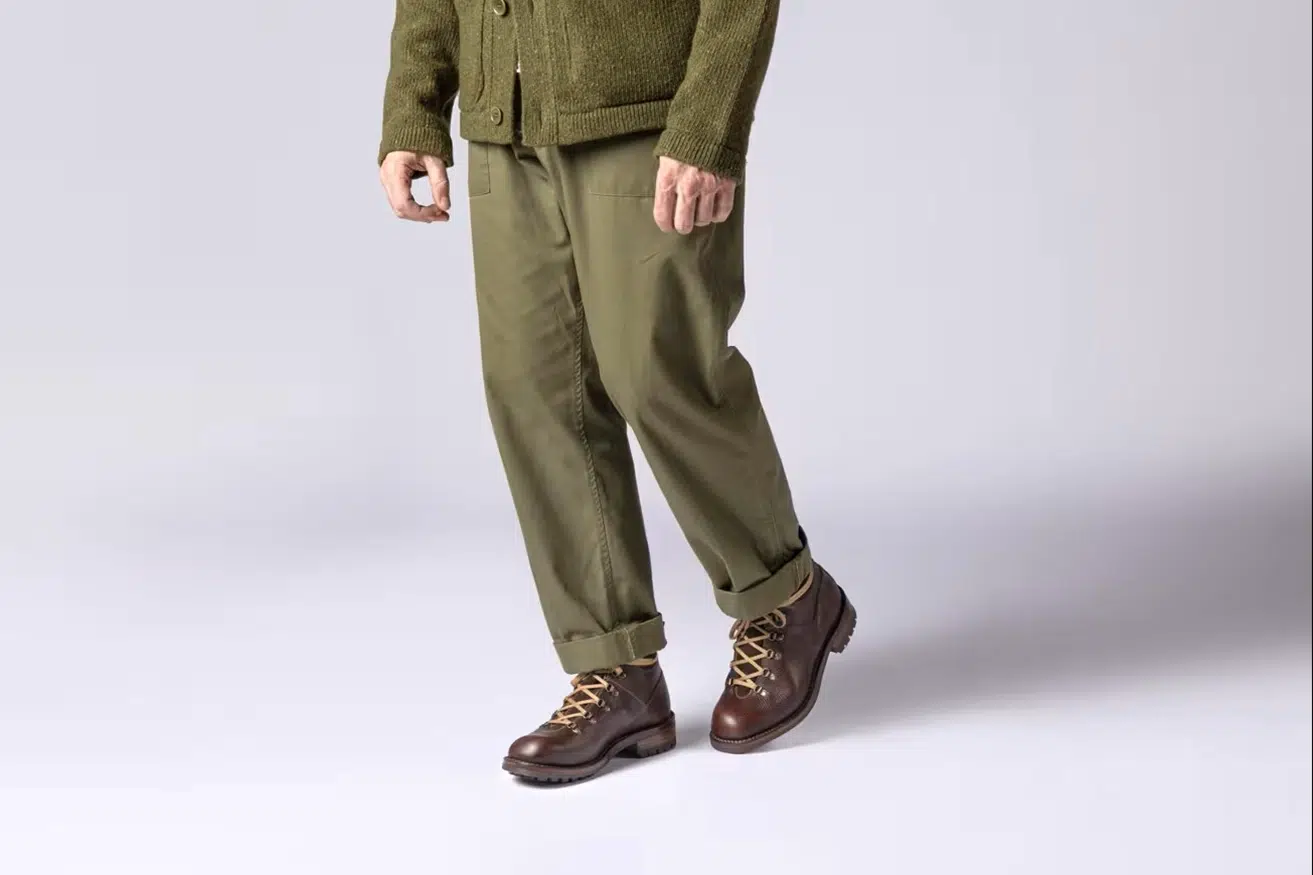
That dialogue between past and present is particularly evident in the Herbie Boot, a design that feels both historically grounded and unmistakably current. Created in collaboration with Mr Porter, the Herbie is an English-made hiker boot inspired by vintage Alpine ski boots from the 1920s and ’30s—an era when performance footwear was built with as much attention to elegance as endurance.
The construction reveals Grenson’s depth of expertise. The Herbie is made using the Veldtschoen method, a rare technique now practiced by only a handful of factories worldwide. Unlike conventional welting, the upper leather is flanged outward and stitched directly to the sole, helping channel water away from the foot while increasing weather resistance. Originally developed for demanding outdoor conditions, the method feels newly relevant today, as men seek footwear that performs across climates and contexts.
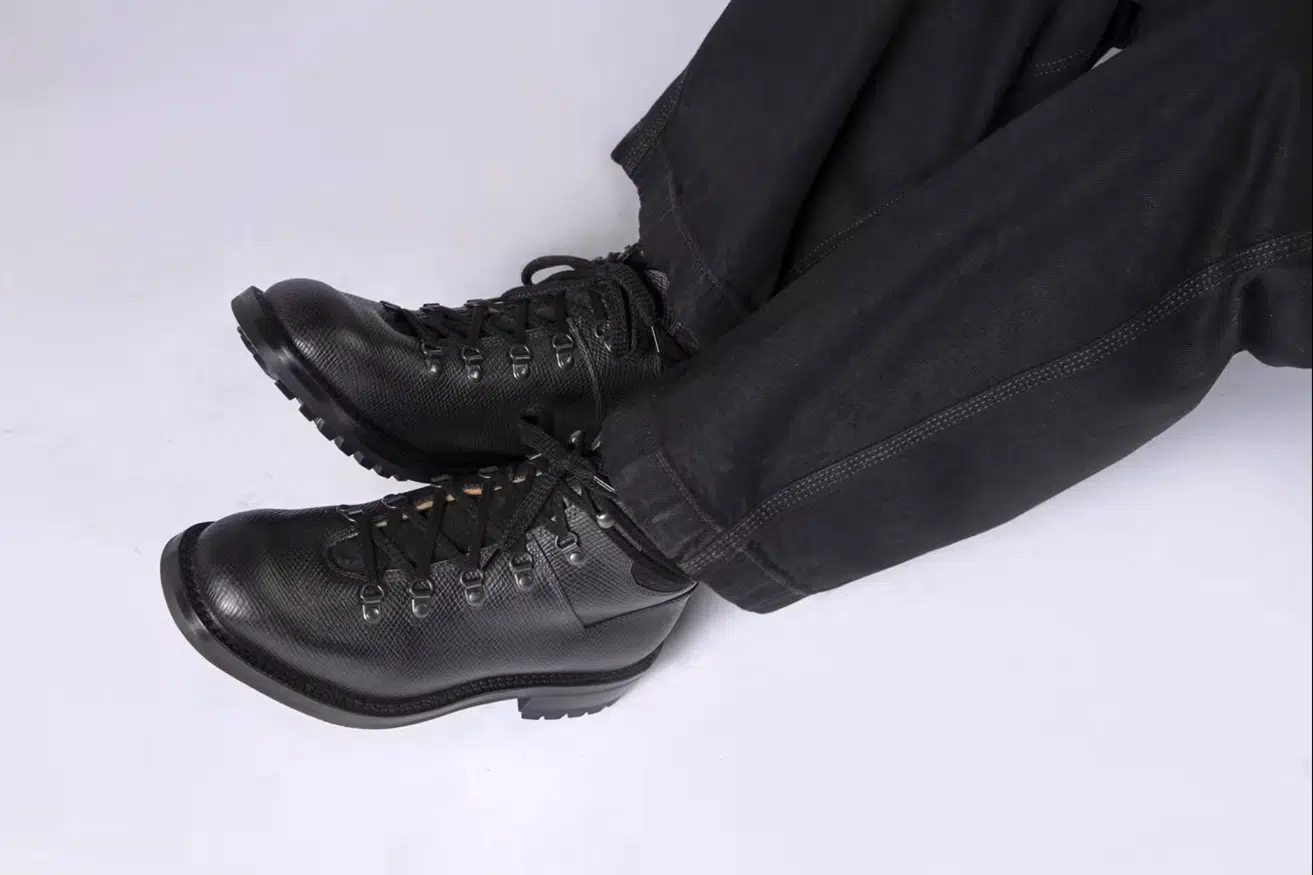
Materials are chosen with the same restraint and purpose. The vamp is cut from a single, uninterrupted piece of leather, lending the boot both strength and visual clarity. Deep crossover lacing, a padded bellows tongue, and a cushioned collar provide comfort and protection, while hand-shaped side seams introduce subtle character. The leather itself—a textured Russia calf hatch grain—was selected for its resilience and tactility. Each pair is hand-skinned-to-box at Grenson’s Northamptonshire factory, reinforcing the sense that nothing here is rushed or ornamental.
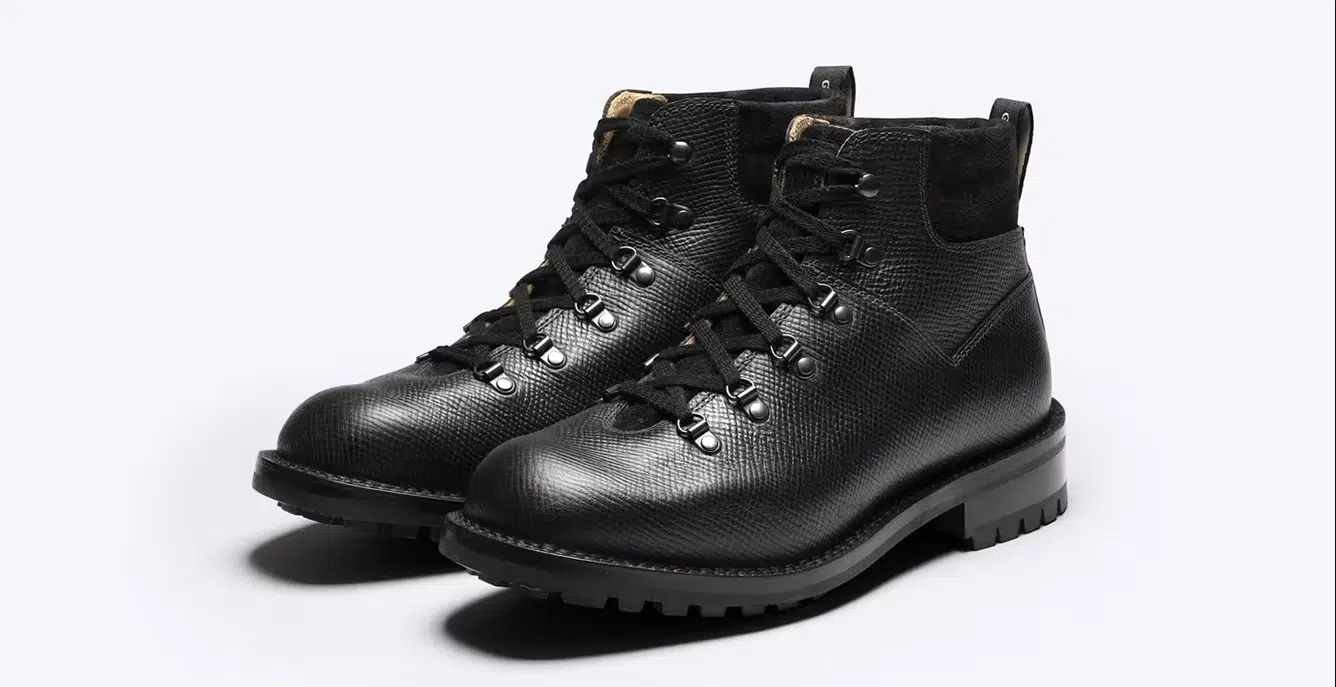
Visually, the Herbie occupies a confident middle ground between town and country. Available in black and brown, it pairs as naturally with tailored outerwear and wool trousers as it does with denim and heavy knits. It is not a boot that announces itself loudly, but one that reveals its quality over time—through wear, patina, and presence.
Launched this month, the Herbie Boot reflects a broader shift in modern luxury menswear: a move away from excess toward fewer, better-made pieces. It speaks to an understanding that true value lies not in novelty, but in provenance, construction, and longevity. In that sense, the Herbie is less a seasonal statement than a long-term companion—designed to age well, wear well, and remain relevant long after trends move on.