Wellness Has Become Too Much Like a Performance
For years, modern wellness taught women to measure health through visible discipline. The demanding workout, the rigid routine, the perfectly optimized morning, and the refusal to slow down all became part of a larger cultural script. To be well was not only to feel strong or grounded. It was to look committed enough for other people to notice.
That kind of wellness was always fragile because it rewarded appearance as much as practice. It asked women to signal control, even when the routines meant to support them were making life feel more pressured, more exhausting, and less livable.
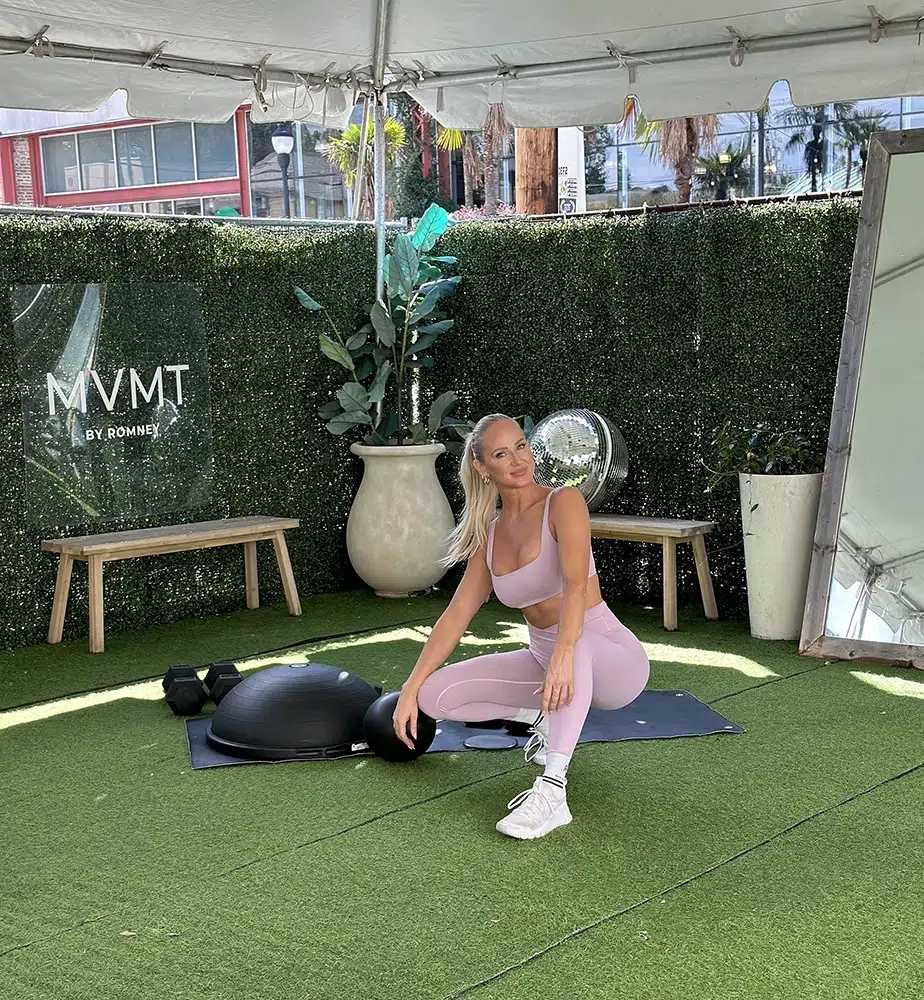
Erin Romney has watched that tension build across more than two decades in fitness. As the founder of Romney Studios in New Orleans, she has seen women arrive with deep commitment to their health, but also with fatigue around wellness models that demand more without asking whether more is actually useful.
“Women are tired of being told that wellness has to look like punishment before it counts,” Romney says.
That frustration is beginning to reshape the wellness industry itself.
Women Are Questioning the Old Fitness Contract
For much of the modern fitness era, women were sold a clear contract: if they pushed hard enough, they would earn the body, energy, confidence, and control they were seeking. The language changed over time, but the premise remained consistent. Effort was treated as the answer, and intensity was treated as proof.
That contract is beginning to break down because women are asking better questions. They want to know whether a workout supports their energy beyond the hour they spend doing it. They want to understand how stress, hormones, sleep, recovery, and nervous system regulation shape their ability to stay consistent. They want fitness that helps them live better, not routines that require them to perform an idealized version of health.
Romney’s perspective is credible because it comes from inside the very culture now being reconsidered. As a former Division I athlete, she understands the appeal of discipline, structure, and high expectations. Her critique is not anti-effort. It is anti-misalignment. The point is not that women should stop challenging themselves, but that the challenge has to serve the body in front of it.
The Exhaustion Era Is Losing Its Authority
The older model of wellness depended heavily on exhaustion because exhaustion was easy to recognize. A brutal workout looked effective. A packed schedule looked impressive. A routine with no room for flexibility looked disciplined. What those signals did not always reveal was whether a woman felt better, recovered well, slept deeply, or had enough energy to sustain the life she was trying to build.
That distinction matters more as women move through different life stages. The body does not remain static, and a routine that once felt empowering can become depleting when layered onto hormonal shifts, caregiving responsibilities, demanding work, or prolonged stress. Women are becoming more aware of that mismatch, which is why the cultural mood around wellness is changing.
Romney has built her work around a more practical understanding of strength, one that includes movement, recovery, and the willingness to adjust training to real biological conditions. Her view is not that intensity has no place. It is that intensity loses value when it becomes the only measure of seriousness.
Grounded Wellness Is Replacing Aspirational Wellness
The wellness industry has long been skilled at selling aspiration. It offers images of the future self: leaner, calmer, stronger, more organized, more productive, and more in control. That promise can be motivating, but it can also keep women in a constant state of self-correction.
What many women want now is less theatrical. They want routines that fit inside real life. They want movement that builds strength without leaving them depleted. They want recovery that feels necessary rather than indulgent. They want wellness spaces that calm the nervous system instead of turning health into another arena for comparison.
“A woman should not have to perform health for the outside world in order to feel healthy inside her own life,” Romney says.
That perspective reflects a broader shift taking place across modern wellness culture. Sustainable health is beginning to matter more than visible optimization. Women are becoming less interested in routines that look impressive online and more interested in practices they can realistically sustain through changing seasons of life.
What Romney Studios Reveals About the Next Standard
The clearest proof of Romney’s perspective is not a slogan, but the way her studio is built. Romney Studios is not organized around a single modality or aesthetic promise. Its method brings together movement, infrared heated classes, recovery practices, red light therapy, digital access through MVMT by Romney, and clean lifestyle extensions because the women it serves are not one-dimensional either.
That structure matters because the modern woman does not need another isolated wellness task to manage. She needs a more coherent environment, one where different practices support the same larger goal: helping her feel strong, steady, and capable inside a life that is already full.
This is where Romney’s model feels different from wellness theater. It is not asking women to perform health. It is trying to remove some of the friction that keeps health from feeling livable in the first place.
Social Media Made Wellness Louder, But Not Always Better
The rise of social media intensified the performance problem. Wellness became easier to display, compare, and monetize. Extreme discipline photographed well. Hyper-optimized routines traveled quickly. Exhaustion could be repackaged as ambition, and complexity could be flattened into a carousel post.
Many women are now reacting against that noise. They are not rejecting expertise, but they are becoming more discerning about where it comes from. They want guidance rooted in experience, not spectacle. They want leaders who understand how women’s bodies change and how real lives complicate even the best intentions.
Romney occupies part of that shift because her authority is not built on a trend cycle. It is built on years of observing what women actually need when motivation is not enough.
The Next Era of Fitness Will Be More Human
The deeper shift happening in wellness is philosophical. Women are becoming less interested in dominating their bodies and more interested in understanding them. Strength is still valuable, but the definition is expanding. Discipline still matters, but it is no longer measured only by how much discomfort a woman can override.
In this new era, a strong routine is not the one that looks most impressive from the outside. It is the one thing a woman can sustain without losing herself to it. A credible wellness space is not the one that demands the most intensity, but the one that helps people become stronger, steadier, and more connected to their own bodies over time.
Romney Studios reflects that broader movement, but Erin Romney’s larger contribution is the clarity with which she names it. Women are not becoming less ambitious about their health. They are becoming less willing to confuse health with performance.
For many women, that distinction may be the beginning of a more lasting kind of wellness.