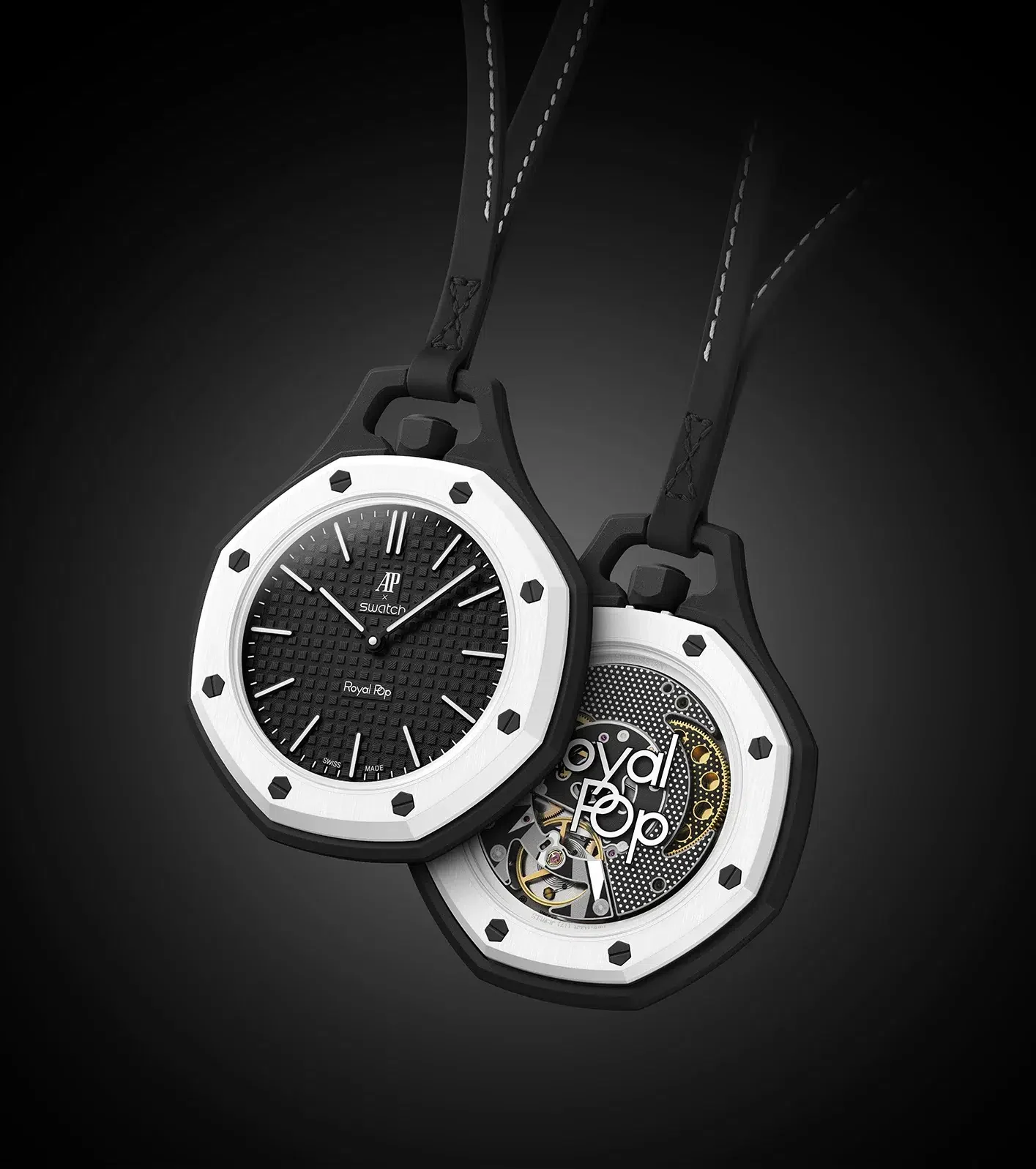
In an era where even the most storied maisons are rethinking how heritage meets modern expression, Audemars Piguet and Swatch have delivered one of the more unexpected propositions of the year: a Royal Oak that leaves the wrist entirely.
Dubbed Royal Pop, the collaboration reinterprets the unmistakable design codes of the Royal Oak, arguably one of the most influential timepieces of the last half-century, through the playful, irreverent lens that has long defined Swatch. The result is a pocket watch that feels less like a novelty and more like a deliberate shift in how luxury watches can be worn, seen, and ultimately experienced.
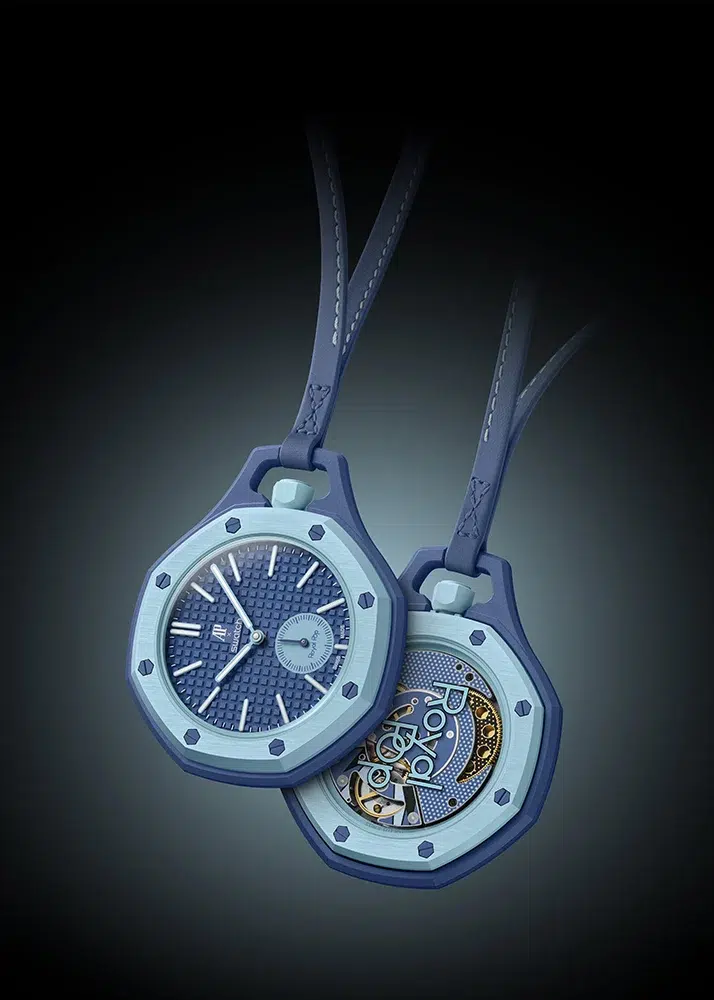
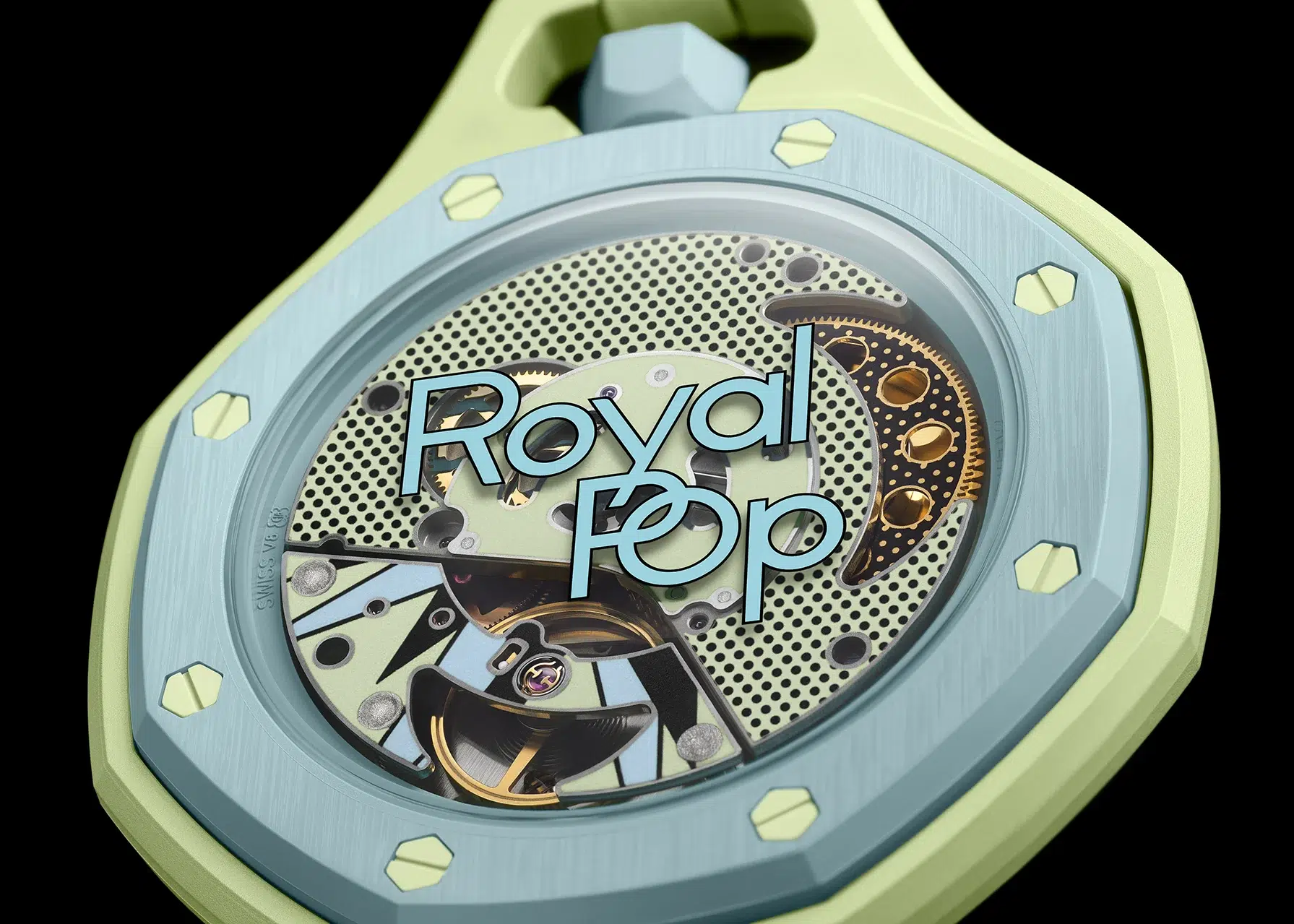
There is no mistaking the lineage. The octagonal bezel, secured by its signature exposed screws, remains intact, as does the Petite Tapisserie dial that has become synonymous with Audemars Piguet’s design language. Yet here, those elements are rendered in a palette of saturated, almost exuberant tones, housed in Bioceramic cases that emphasize lightness and tactility over traditional heft.
 |
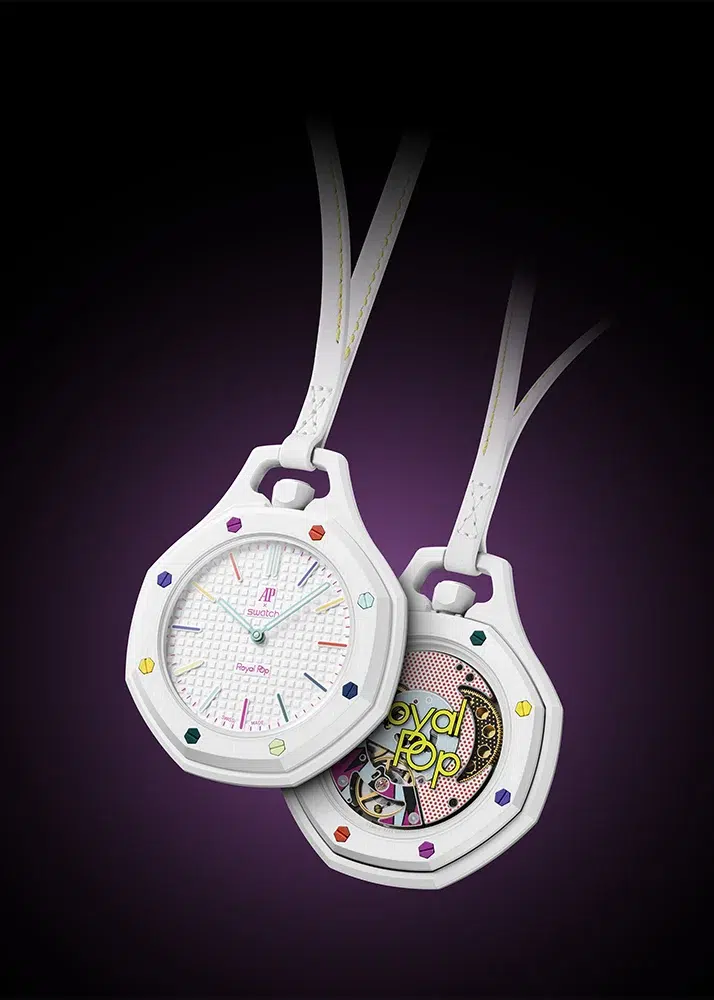 |
The format, however, is where Royal Pop makes its boldest statement. Suspended from calfskin lanyards, each piece is designed to be worn around the neck, clipped to a bag, or carried in the pocket, an intentional departure from the conventions that have defined fine watchmaking for decades. It is a gesture that recalls the playful spirit of Swatch’s 1980s POP era, while simultaneously challenging the idea that a luxury watch must live on the wrist to command attention.
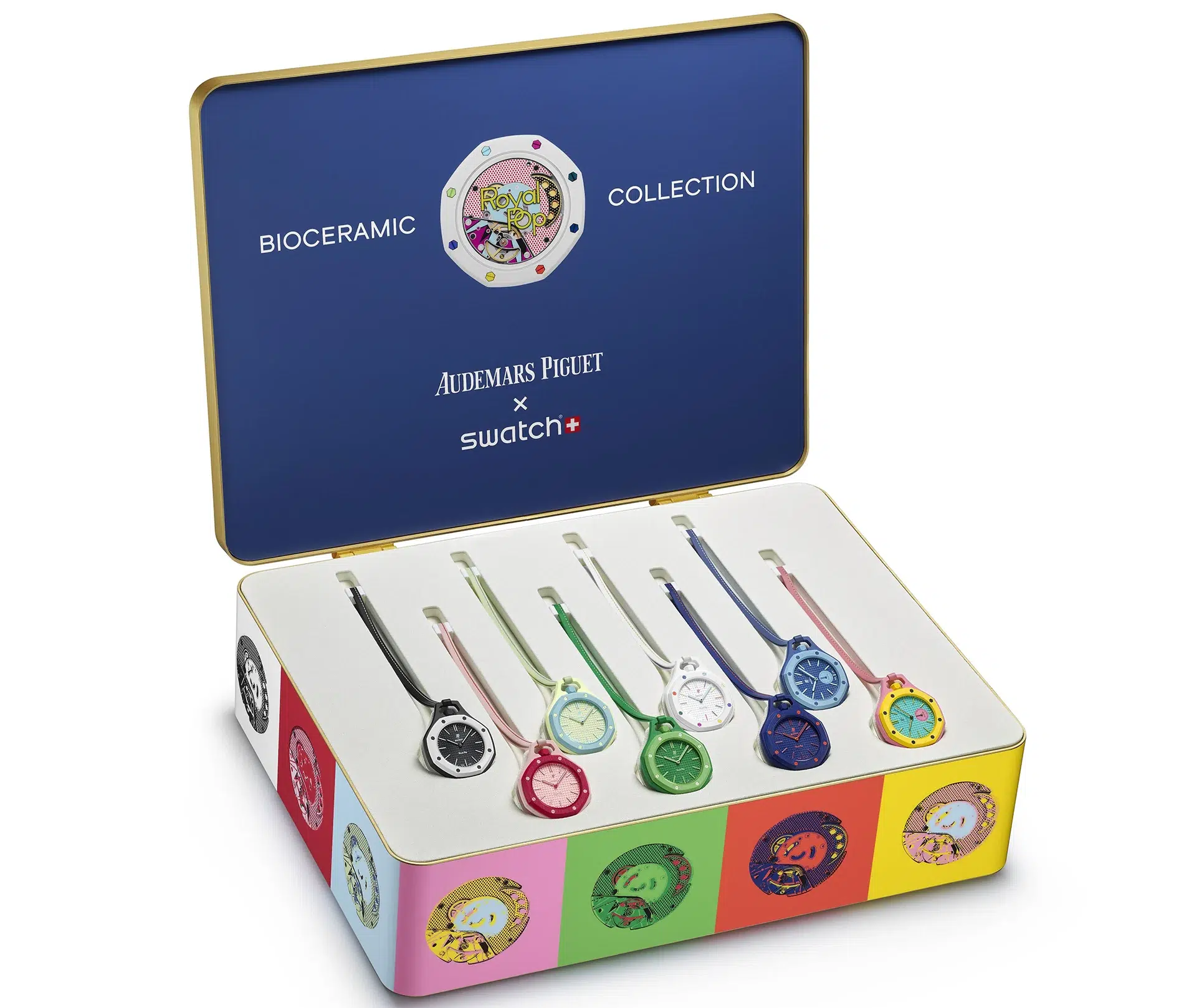
Beneath the surface, the mechanics remain quietly impressive. A hand-wound variation of Swatch’s SISTEM51 movement powers each piece, delivering a 90-hour power reserve and visible through a transparent caseback. It’s a reminder that while the presentation may be unconventional, the underlying engineering remains firmly rooted in Swiss watchmaking credibility.
Two executions are offered: a classic Lépine-style pocket watch and a Savonnette version distinguished by its small seconds display. Both reference traditional horology, yet feel entirely contemporary in their execution.
What makes Royal Pop particularly compelling is not simply its design, but its timing. As the industry continues to navigate the balance between heritage and relevance, collaborations like this suggest a growing willingness to loosen long-held definitions of luxury. The Royal Oak, once a radical departure in its own right when it debuted in 1972, is once again being used as a canvas for disruption.
Whether embraced as a collector’s curiosity or a genuine shift in wearable design, Royal Pop succeeds in doing what few collaborations manage: it sparks conversation. And in a category often defined by incremental change, that alone is a rare accomplishment.
The collection arrives May 16 at select Swatch boutiques worldwide.