
Luxury fashion has spent years learning how to sell online, but the more difficult question has always been how to preserve desire once the boutique door disappears. For Givenchy, the answer now comes through a new global e-concession with Farfetch, giving the Parisian maison a more direct way to present and sell its collections to an international audience while retaining greater control over how the house appears within one of luxury fashion’s largest digital marketplaces.
Launching with Fall-Winter 2026, the partnership arrives at a particularly important moment, just as Sarah Burton’s vision for Givenchy is beginning to settle into a language unmistakably its own. The timing is what makes the announcement more interesting than another e-commerce expansion, because Givenchy is not simply increasing distribution; it is widening the audience for a house undergoing one of its most closely watched creative transformations in years.
Burton joined Givenchy as creative director in 2024 after more than two decades at Alexander McQueen, where she became known for an extraordinary command of construction, tailoring, and romanticism. At Givenchy, those instincts have been redirected through the history of a house built on elegance, architectural clarity, and the complicated relationship between restraint and seduction.
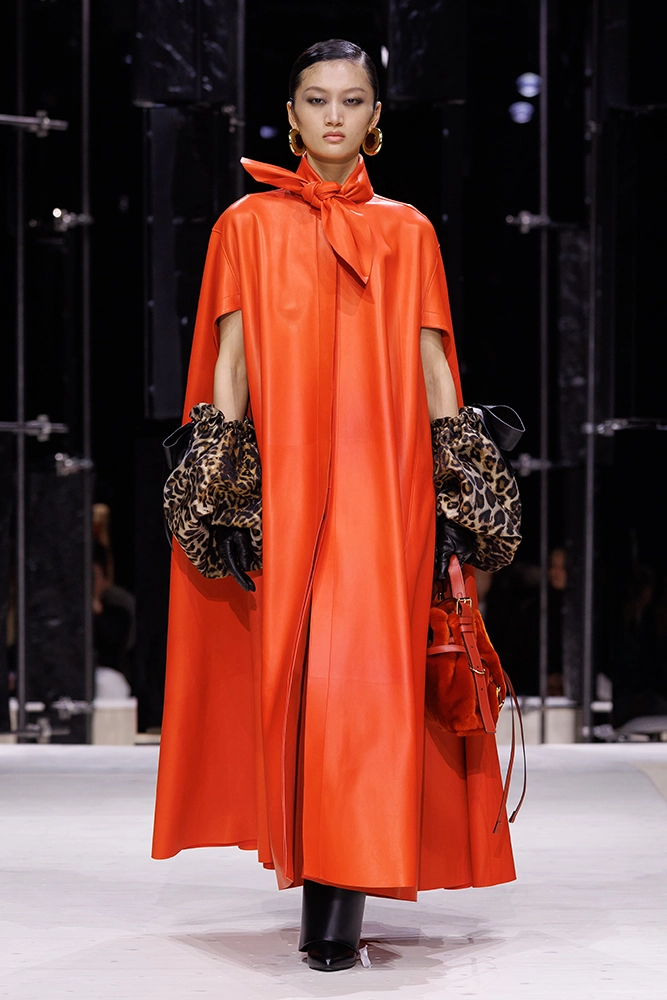
By Fall-Winter 2026, the outlines of that new identity have become considerably sharper. Burton’s Givenchy is sensual without becoming fragile, precise without feeling severe, with tailoring remaining central while a certain ease runs beneath the discipline.
Sculpted jackets meet fluid dresses, leather carries the authority of suiting, and eveningwear balances structure with movement. The effect is less about creating a succession of statement pieces than building a wardrobe in which apparently opposing ideas can coexist, and that sense of coherence makes the Farfetch partnership particularly relevant.
An e-concession is different from a conventional wholesale arrangement because rather than simply supplying merchandise to another retailer, Givenchy maintains greater control over assortment, merchandising, and presentation. In effect, the house is creating a digital extension of its own retail universe within Farfetch.
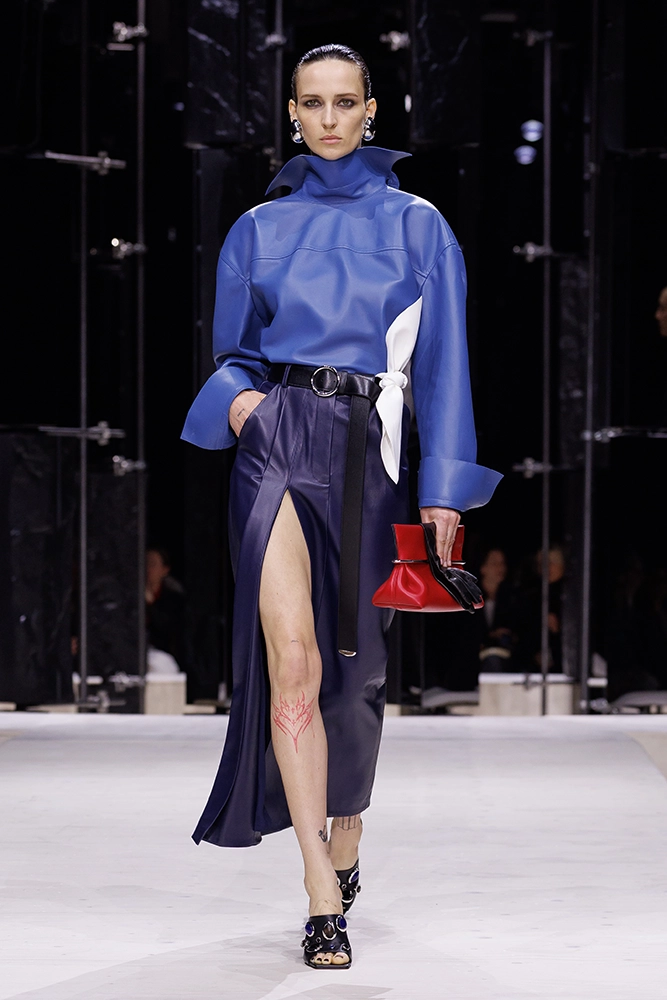
The distinction may sound technical, but in luxury it is anything but. Context has always been part of the value of fashion, and a Givenchy jacket is not simply fabric, tailoring, and hardware; it belongs to a season, a silhouette, a campaign, a casting decision, and a broader point of view.
The shoes beneath it, the bag beside it, and even the way the garment is photographed contribute to the meaning of the object. Strip away too much of that context and even exceptional fashion can begin to look like inventory, which is precisely what the e-concession model is designed to avoid.
The new concession gives Givenchy more opportunity to keep that world intact while benefiting from Farfetch’s global reach. Women’s and men’s ready-to-wear, leather goods, footwear, accessories, and seasonal capsules can be presented as parts of one visual language rather than isolated products competing for attention within a vast digital marketplace.
For Burton, that matters because her Givenchy is increasingly about the relationship between pieces. The power of a sharply cut jacket is amplified by the softness beneath it, a bag gains meaning from the attitude of the clothing surrounding it, and eveningwear does not exist in a separate universe from denim or leather.
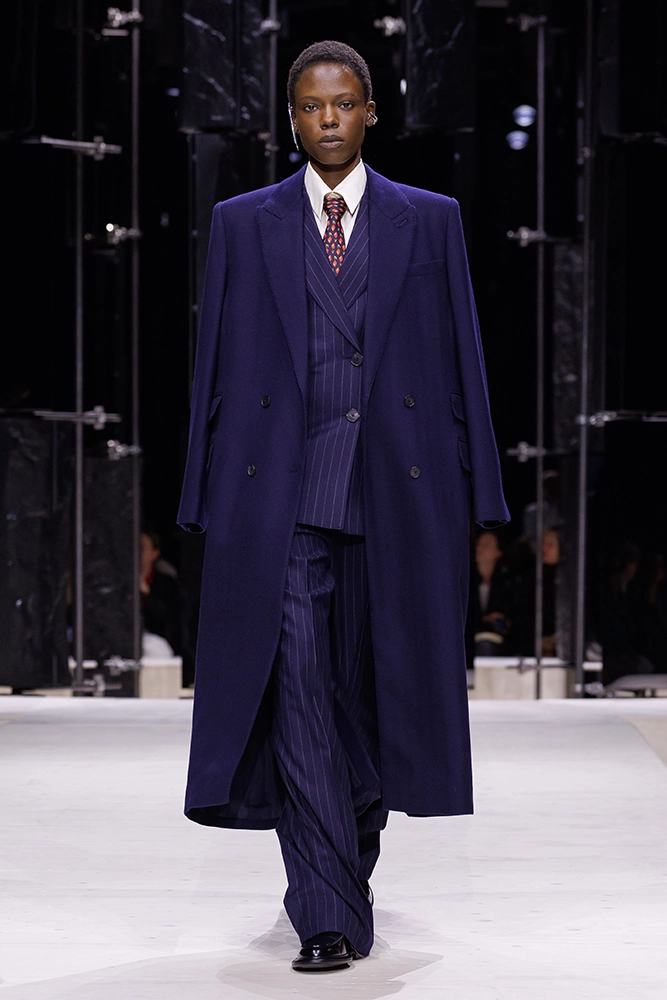
Together, those elements establish the character of the woman or man wearing them. That kind of wardrobe thinking is difficult to communicate when products are encountered individually, but it becomes far more persuasive when the maison controls the rhythm in which they are seen.
Luxury retail has always understood that principle physically. Walk into a great boutique and nothing is entirely accidental, from the distance between garments and the lighting on a handbag to the feel of a fitting room, the music, the flowers, and even the silence between customers.
Digital retail cannot reproduce those sensations literally, nor should it try, but it can reproduce something equally important: curation. That is where the e-concession model becomes compelling, because the objective is not to make a screen behave like a Paris boutique but to ensure that Givenchy still feels like Givenchy when the physical architecture is gone.
Farfetch brings something the maison cannot achieve as easily through its own boutique network: extraordinary geographic reach. The platform serves luxury customers across more than 190 countries and territories, allowing someone far from Paris, London, Milan, or New York to encounter Burton’s Givenchy with the immediacy once reserved for clients living near a fashion capital.
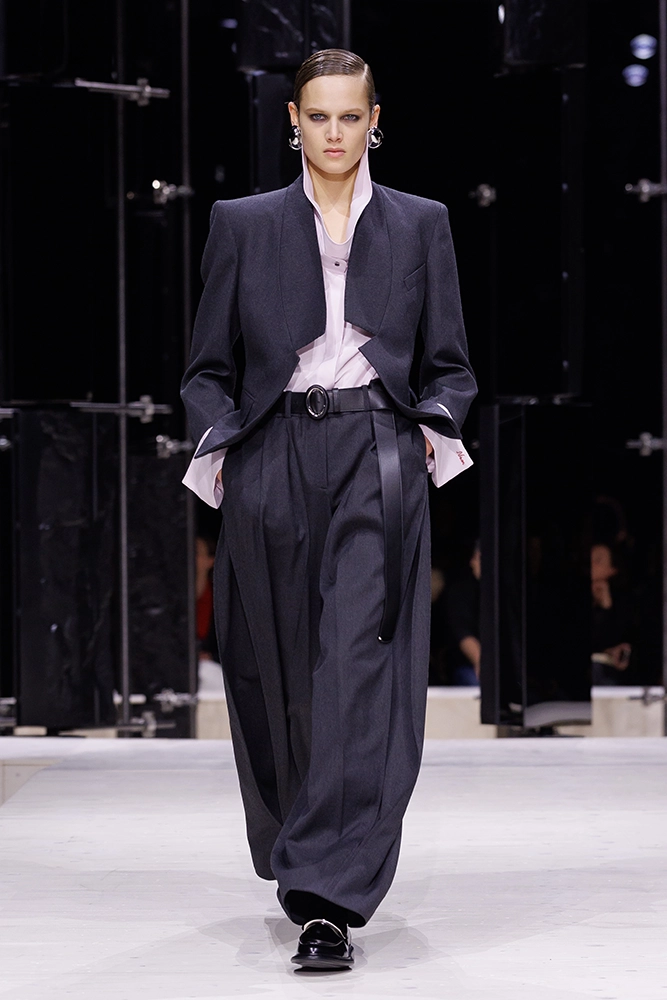
That geography matters more than ever because luxury consumers are no longer concentrated solely around the traditional centers of wealth and fashion. They may follow collections in real time, understand the significance of a new creative director, and recognize a runway bag before it arrives in stores, regardless of whether the nearest Givenchy boutique is ten minutes away or a plane journey across a continent.
The modern luxury client has become global before luxury retail fully has, and Givenchy’s partnership with Farfetch helps close that distance without surrendering the controlled presentation that maisons increasingly consider essential. It offers scale without requiring the house to become visually anonymous inside that scale.
There is also something particularly appropriate about extending Burton’s Givenchy this way because her work has resisted the louder mechanics of fashion’s attention economy. The collections are not dependent on gimmick or novelty; they are rooted in line, material, and construction, with the confidence to let a shoulder, a drape of fabric, or a severe piece of leather do the work.
That restraint benefits from an environment where the customer can see not simply what is new, but how the pieces belong together. Burton has inherited a house with unusually potent history, and that history only increases the importance of maintaining coherence as the brand expands digitally.
Hubert de Givenchy built his reputation through an elegance that was never quite as simple as it appeared. His clothes could be restrained yet theatrical, disciplined yet deeply feminine, and his relationship with Audrey Hepburn helped establish a particular vision of Parisian refinement that continues to shadow the maison decades later.
The challenge for any Givenchy creative director is therefore not merely to produce beautiful clothes, but to engage with that history without becoming trapped by it. Burton’s answer has been to work with the house’s codes rather than imitate its past, preserving precision while allowing the body to feel more present.
Femininity is expressed through strength rather than delicacy alone, and glamour emerges through proportion, cut, and material instead of decoration for decoration’s sake. That evolution is now entering a phase in which accessibility and visibility matter almost as much as creative clarity.
A new design language needs repetition before it becomes recognizable, and customers need to see the clothes, accessories, and imagery together often enough for the identity to become instinctive. Expanding Givenchy’s digital presence through Farfetch gives Burton’s work more opportunities to establish that recognition across markets the maison cannot reach as densely through physical stores alone.
The partnership also demonstrates how significantly the meaning of exclusivity has changed. Luxury once depended heavily on difficulty of access, with the boutique in the right city, the client needing to know where to go, and the object often remaining invisible to everyone else.
Digital commerce has dismantled much of that geography, yet the strongest houses have discovered that ubiquity and accessibility are not the same thing. A maison can be globally visible while still controlling its voice, and that may be the most important aspect of the Givenchy-Farfetch partnership.
The technology is useful, the distribution is substantial, and the commercial logic is clear, but the real luxury lies in maintaining authorship at scale. For Givenchy, that means allowing Sarah Burton’s evolving world to travel farther without arriving diluted, proving that even when the boutique fits inside a screen, the experience can still feel unmistakably its own.